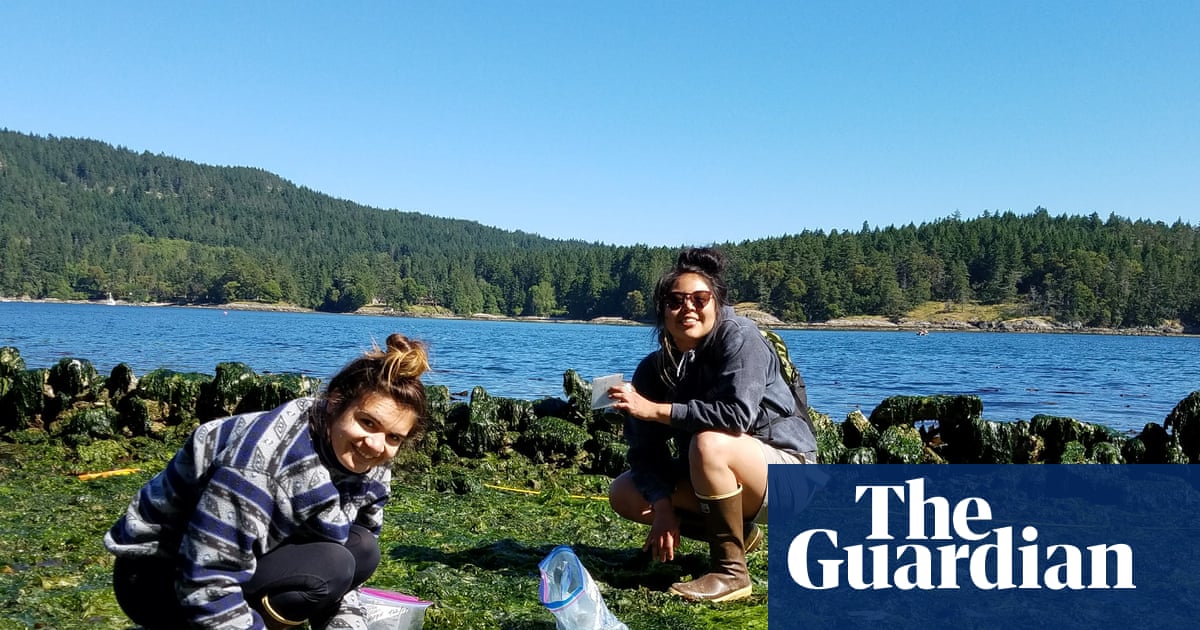
"Hatch's surveys in service of this reclamation are rooted in western scientific methodology and increase understanding about beach ecology and clam health. But, just as important, the data Hatch provides can help these nations obtain the local, state and federal permits they need to maintain or re-engineer these structures."
"Rather than dismissing Indigenous knowledge, more western scientists are discovering its viability for themselves and adjusting their research goals to embrace it. That represents a massive shift, according to Kyle Whyte, a professor of environmental justice at the University of Michigan and a member of the Citizen Potawatomi Nation."
"Clam gardens are an ancient technology used by Indigenous Americans. Scientific research shows these terraced gardens like these on Russell Island, British Columbia, for mollusks enhance biodiversity and help with coastal management."
Marco Hatch, a marine ecologist, collaborates with Indigenous communities to restore clam gardens in the Pacific Northwest. His surveys enhance understanding of beach ecology and clam health while aiding communities in obtaining necessary permits. This work supports the assertion of heritage and food sovereignty. A shift is occurring where western scientists recognize the value of Indigenous knowledge, moving away from viewing it as mythic. Clam gardens, an ancient Indigenous technology, are shown to enhance biodiversity and coastal management, reflecting a growing integration of Native and western scientific practices.
Read at www.theguardian.com
Unable to calculate read time
Collection
[
|
...
]