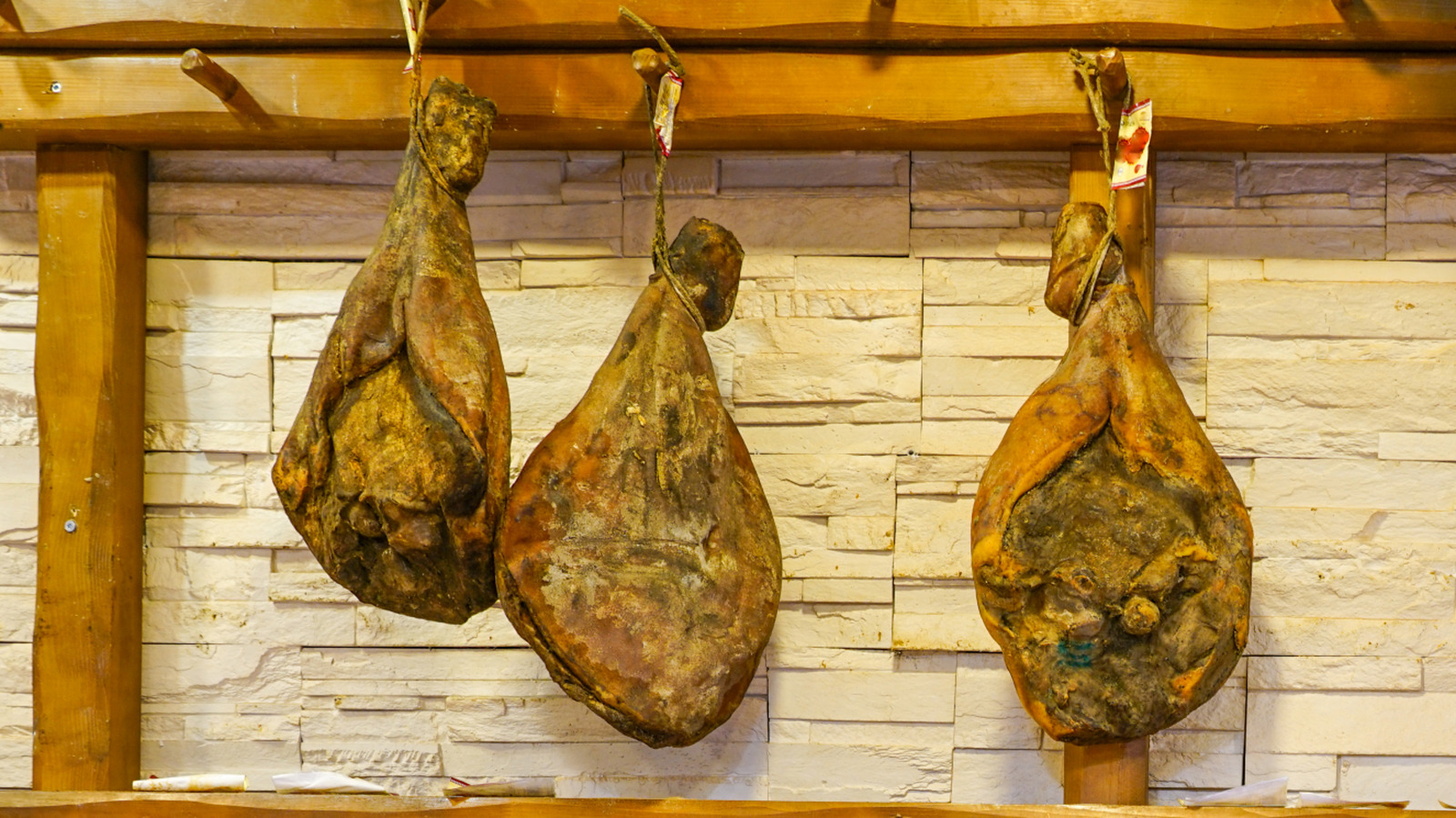
"According to the USDA, mold on a cured country ham is common and usually harmless. There is the potential for more dangerous molds, but it recommends washing the ham with water and scrubbing the moldy area with a stiff vegetable brush."
"Country ham is similar to Italian prosciutto and Spanish serrano ham because it is dry-cured. This is an ancient method of meat preservation that predates refrigeration and has stood the test of time."
"Even though country ham with mold on it is safe to eat, the mold itself should not be consumed. It should be removed because it could potentially be dangerous."
Mold on cured country ham is common and generally safe to eat. The USDA advises washing the ham and scrubbing the moldy areas. Country ham is dry-cured, a method that preserves meat without refrigeration. The process involves rubbing pork legs with salt and seasonings, then hanging them to cure for months. Mold growth occurs as the meat loses moisture. While the ham is safe, any mold should be removed, especially if it appears black, as it can be more dangerous than the typical greenish-blue mold.
Read at Tasting Table
Unable to calculate read time
Collection
[
|
...
]