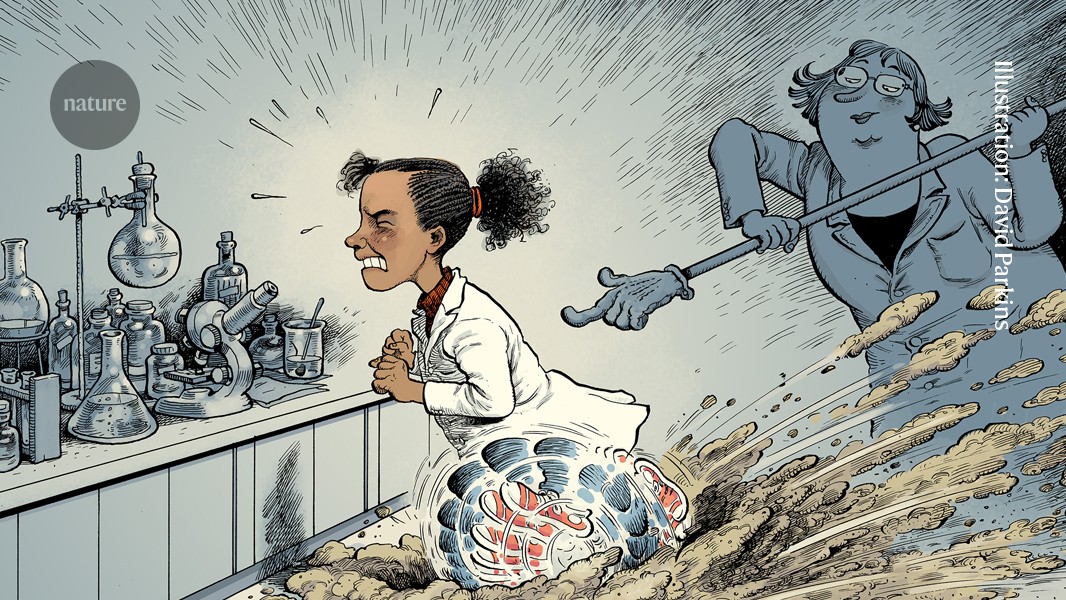
"From my own graduate work, I know that it's only when you hit an experimental roadblock that you get to refine your hypothesis and hone your technical skills. But my new graduate students feel like they've failed when their first experiments don't work as planned. It takes a special kind of perseverance to be an independent researcher, and I see this lack of confidence in many of my students."
"Studies indicate that up to half of graduate students report feeling anxiety, depression or burnt out during their training years. There's no doubt that frustration with the pace of research or a lack of confidence around dealing with thorny issues - experiments that return unexpected results and even doubts about whether a chosen research question or experimental approach is the right one - can contribute to a student spinning their wheels."
New principal investigators face the challenge of helping PhD students develop resilience and independent problem-solving skills when experiments fail. High-achieving students often lack experience with research setbacks and interpret failure as personal inadequacy rather than a normal part of scientific discovery. Graduate students experience significant anxiety and burnout during training, partly from frustration with research pace and lack of confidence handling unexpected results. Advisors must balance avoiding over-involvement while providing sufficient support to help students develop the perseverance necessary for independent research careers. Experienced PIs recommend building collaborative cultures where students learn from peers and mentors without having problems directly solved for them.
#graduate-student-mentorship #research-resilience-and-perseverance #phd-training-challenges #academic-advisor-practices #student-mental-health-and-burnout
Read at Nature
Unable to calculate read time
Collection
[
|
...
]