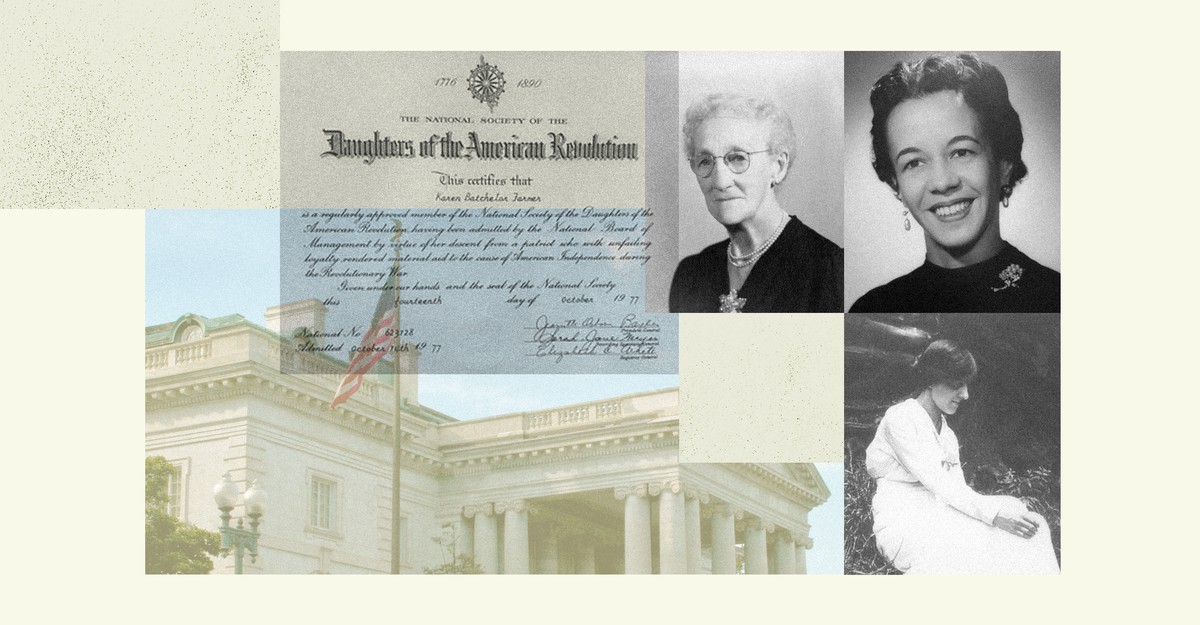
"Karen Batchelor's discovery of her eligibility for the Daughters of the American Revolution was surprising, given the organization's long history of racism and elitism."
"The Daughters of the American Revolution had faced national outrage in 1939 for barring Black opera singer Marian Anderson from performing, leading to Eleanor Roosevelt's resignation."
"At the time of Batchelor's discovery, DAR's membership was predominantly white, and the organization was criticized for its declining influence and reactionary positions."
"Critics noted that the resolutions made at DAR's annual Continental Congress were often dismissed as 'laughably reactionary,' reflecting the organization's struggle to remain relevant."
In 1976, Karen Batchelor, a Black mother, discovered her eligibility for the Daughters of the American Revolution (DAR) through her Irish ancestor who served in the Revolutionary War. Despite her family's negative views of DAR due to its history of racism, including barring Black performers like Marian Anderson, Batchelor's discovery highlighted the organization's declining influence and predominantly white membership. At that time, DAR faced criticism for its outdated positions and lack of relevance in contemporary society, with many dismissing its activities as reactionary and irrelevant.
Read at The Atlantic
Unable to calculate read time
Collection
[
|
...
]