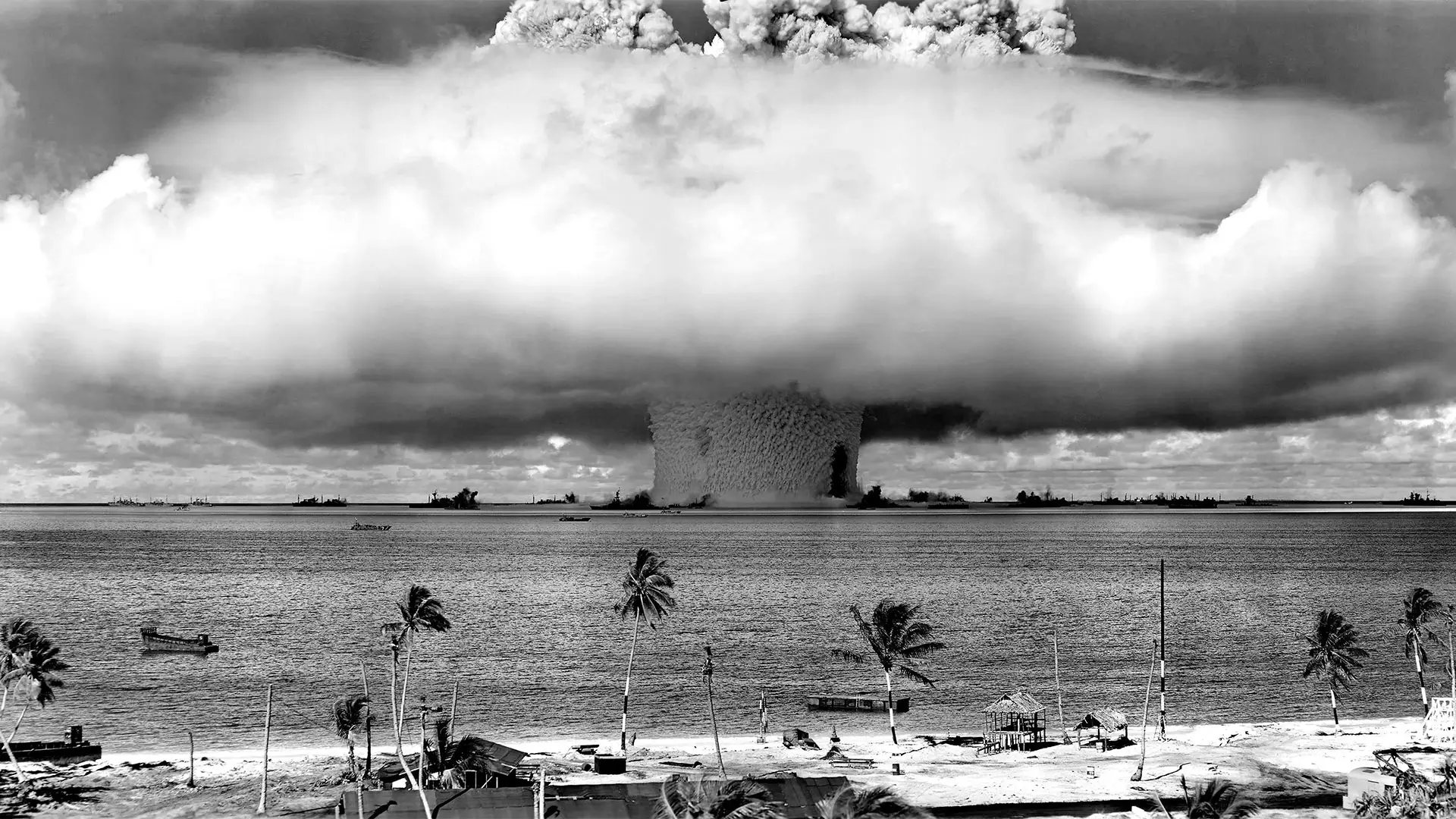
"Instead of fighting over a 21-mile-wide bottleneck forever, we cut a new channel through friendly territory. A dozen thermonuclear detonations and you've got a waterway wider than the Panama Canal, deeper than the Suez, and safe from Iranian attacks."
"The idea for a new canal to move oil from the Middle East had emerged two decades earlier, in the context of another Middle East conflict, the Suez crisis. In 1956, Egypt seized the Suez Canal from British and French control."
"But what if nuclear energy could be harnessed to cut an alternative canal through 'friendly territory'? That was the question asked by Edward Teller, the principal architect of the hydrogen bomb, and his fellow physicists at the Lawrence Radiation Laboratory."
Newt Gingrich proposed using nuclear bombs to create a new shipping canal to bypass Iranian threats in the Strait of Hormuz. This idea, linked to a satirical article, recalls past serious discussions about nuclear excavation for infrastructure. The concept of a canal to facilitate oil transport emerged during the Suez crisis in 1956, when Egypt seized the canal, impacting global commodity prices. Edward Teller and other physicists previously explored using nuclear energy for such projects during the Eisenhower administration, aiming to improve trade and geopolitical influence.
Read at Fast Company
Unable to calculate read time
Collection
[
|
...
]