Cancer
fromwww.nytimes.com
22 minutes agoWhat Is It Like to Get Cancer When You're Young?
Cancer is increasingly affecting individuals under 50, impacting their lives and relationships significantly.
The funds raised through Visionaries of the Year are used for research to advance lifesaving therapies like immunotherapy, genomics and personalized medicine, which are saving lives today.
When Ph.D. student LaShae Rolle felt a pain in her chest, she didn't think much of it at first. A little soreness made sense: she was working hard in the gym, preparing to bench press nearly 300 pounds for a powerlifting competition. The pain came and went, but then Rolle noticed a lump in her breast, a textbook warning sign of breast cancer. It was a red flag she was deeply familiar with from her own studies on cancer prevention and treatment.
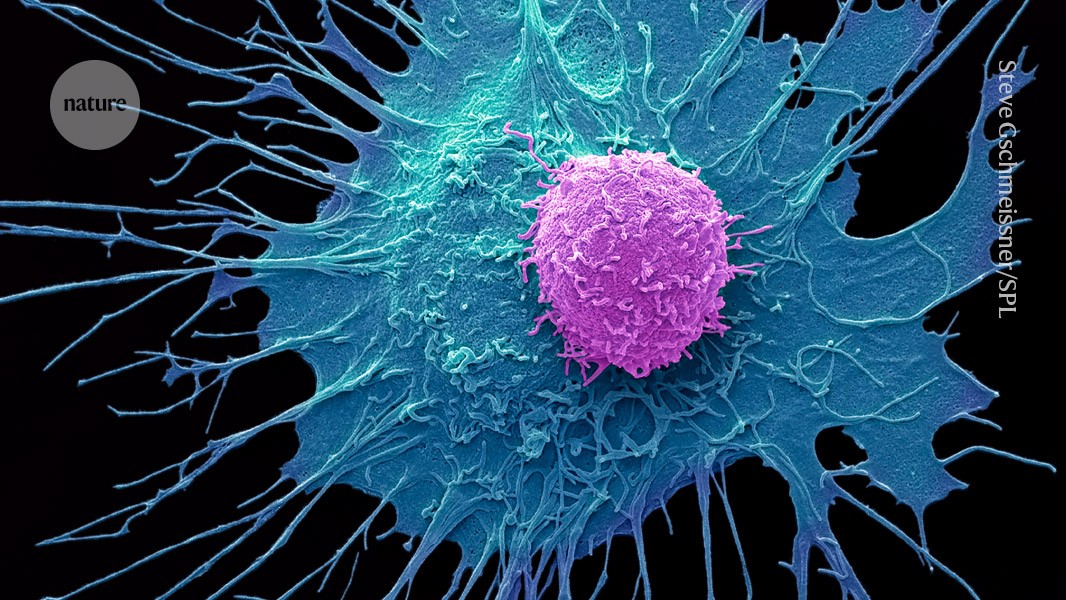
For years, scientists have viewed cancer as a localized glitch in which cells refuse to stop dividing. But a new study suggests that, in certain organs, tumors actively communicate with the brain to trick it into protecting them. Scientists have long known that nerves grow into some tumors and that tumors containing lots of nerves usually lead to a worse prognosis.
On Tuesday the American Cancer Society (ACS) released its annual report on cancer statistics in the U.S., and it offered a rare bit of good news: the proportion of people who were alive at least five years after a cancer diagnosis hit a record high. The report found that, among all cancer patients diagnosed between 2015 and 2021 in the U.S., the survival rate at the five-year mark relative to those who didn't have cancer was 70 percent.
New findings on cancer survival rates offer hope for the more than 2 million Americans diagnosed each year. Seven out of 10 Americans diagnosed with cancer now survive five years or more, according to the American Cancer Society, a 7 percent increase since the mid-1990s, when the rate stood at 63 percent. The survival rate data - from patients diagnosed with cancer between 2015 and 2021 - showed, significantly, that those with high-mortality cancers and advanced diagnoses had the largest gains.
Isla first went to the GP in July 2022 with a lump in her breast, but she was told it was likely to be benign and caused by hormonal changes. "She was told it was hormonal - a fibroadenoma - and she would grow out of it," Isla's father Mark said. Two years later, Isla became ill and was taken to hospital, where doctors suspected she had cancer and made an urgent referral for biopsies.
When Lisa Dutton was declared free of breast cancer in 2017, she took a moment to celebrate with family and friends, even though she knew her cancer journey might not be over. As many as one-third of people whose breast tumours are cleared see the disease come back, sometimes decades later. Many other cancers are known to recur in the years following an initial treatment, some at much higher rates.