#adjustable-eq
#adjustable-eq
[ follow ]

fromdesignboom | architecture & design magazine
1 week agoportable retrofuturistic sampler plays tracks through embedded speaker for on-the-go DJ set
The MPC Sample features a four-by-four grid of 16 RGB backlit pads that respond to pressure, allowing for dynamic sound manipulation. A full-color display and three knobs provide hands-on control over effects and sound.
Gadgets
fromDesign Milk
3 weeks agoThis Pared Down Stereo System Takes-on Cubist Dimensions
In Braque's paintings, collages, and prints, the polymath set out to distill bucolic landscapes and rural village scenes as broken up and then re-assembled geometric compositions; decidedly abstract yet still slightly recognizable representations. Through this revolutionary approach, he examined how objects could be depicted from multiple perspectives-multiple sources of light-as if superimposed portrayals of the same setting rendered at different times of day.
Design


Music production
fromYanko Design - Modern Industrial Design News
1 month agoElgato's Wave Next Connects Your Mic, Software, and Stream Deck - Yanko Design
Elgato's Wave Next simplifies creator audio by moving complex processing onto custom hardware, eliminating software complications and delivering polished sound directly to applications.
fromdesignboom | architecture & design magazine
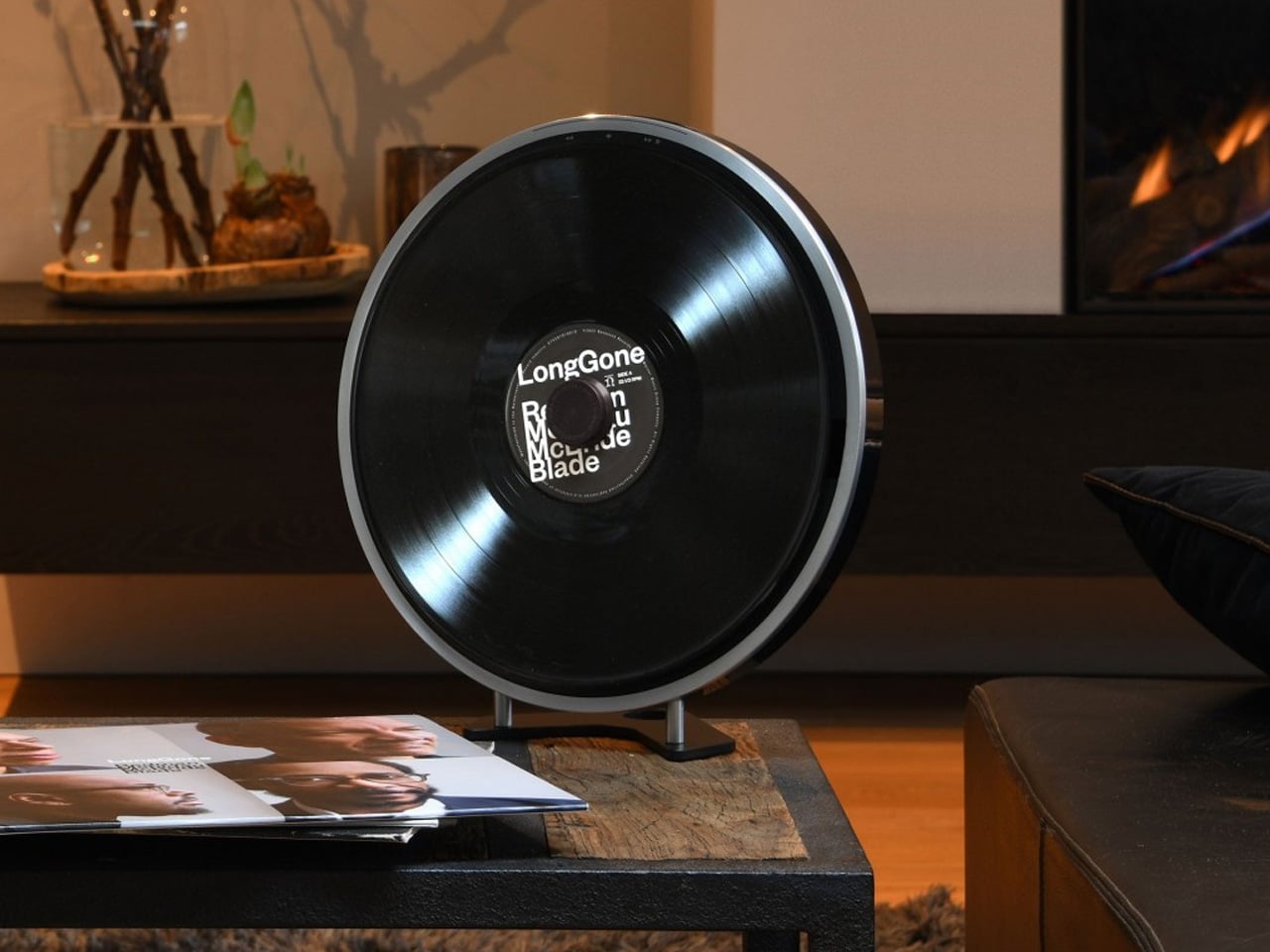
1 month agomodern audio player restores the physical form of music using disc-shaped cartridges
It's similar to a vinyl record, but the tracks are in a USB drive. It has no moving parts inside, so it's totally digital in how it stores sound. But it has a physical shape users can hold, flip over, look at, and collect, so in a way, the designer is asking: what if digital music had a physical body?
Music production
Gadgets
fromEsquire
2 weeks agoOur Favorite Audio Brand Just Dropped the Sound Bar You Need
Marshall's Heston 60 soundbar delivers impressive audio quality and design in a compact form factor, making it an excellent all-in-one solution for small living rooms with strong bass performance and Dolby Atmos support.
fromEngadget
2 weeks agoMarshall adds a junior-sized party speaker to its lineup
The Bromley 450 carries over its larger sibling's 360-degree audio trickery. Like equivalents from other companies, Marshall's "True Stereophonic 360-degree sound" fools your brain into perceiving more directionality than its form factor allows. Lighting effects ("inspired by '70s stage shows") also carry over from the larger model.
Gadgets
Gadgets
fromZDNET
2 weeks agoThis unassuming amplifier is the one audio upgrade that finally made my speakers sing
The Rotel DX-5 is a beginner-friendly integrated amplifier designed for digital streaming and modern audio formats, lacking a built-in phono preamp but offering versatile connectivity options.
fromeLearning Industry
1 month agoHow To Remove Background Noise From Video: Best Practices For Professional Content
When professionals talk about how to remove background noise from video, they are really talking about improving the audio track of a video so the speaker's voice is clearer, more consistent, and easier to understand. Background noise refers to any unwanted sound that competes with the main voice, like air conditioning hum, office chatter, keyboard typing, traffic, or the low hiss created by recording equipment and compression. In video production, background noise removal is about reducing distractions so the listener can focus on the message.
Film
fromEntrepreneur
1 month agoAI Is Changing Music Production - But It Can't Fill Creative Gaps
We tend to think AI music tools are just gimmicks for social media creators, or that they're limited to basic beats. But it's hard to dismiss them when companies like Google, Meta and Stability AI are pouring resources into generative audio models that can produce full compositions in seconds.
Music production


fromWIRED
1 month agoThis Gorgeous Bluetooth Speaker Also Sounds the Part
The original KEF Muo launched back in 2015 and felt like a turning point in portable hi-fi. Serious, designer Bluetooth speakers from a respected hi-fi brand were rare back then-with only a few brands like Bang & Olufsen and Loewe interested in combining pretty and portable. These early designs were still given the side-eye by most traditional audio.
Gadgets
Gadgets
fromYanko Design - Modern Industrial Design News
1 month agoAstell&Kern Just Killed the Touchscreen With Two Knobs and $2,000 - Yanko Design
The Astell&Kern PD20 portable audio player prioritizes physical controls and tactile interaction over touchscreens, featuring wheels, switches, and mechanical feedback for intuitive sound adjustment.
fromEngadget
2 months agoKorg's new experimental synthesizer combines acoustic sounds with electronic control
The Phase8 uses a new form of "acoustic synthesis" that combines acoustic sound generation with electronic control. Takahashi says the synthesizer is "beyond analog vs. digital" and "beyond electronics" altogether. It features chromatically tuned steel resonators, which creates an acoustic sound similar to that of a kalimba. These signals can be manipulated via onboard effects and sequenced like a traditional synthesizer. Here's a video of the synth in action.
Music
Gadgets
fromZDNET
1 month agoThese Fender headphones last all day, but won't replace my Sony anytime soon
Fender Mix headphones offer solid audio quality, noise cancellation, and battery life at an affordable price point, though they don't match flagship competitors and require a USB-C transmitter for optimal performance.
fromFuturism
1 month agoIn Blind Test, Audiophiles Unable to Tell Difference Between Sound Signal Run Through an Expensive Cable and a Banana
High-quality cables have long been marketed as a key way to get the most out of high-end equipment, such as expensive studio-grade monitor speaker cables and gold-plated HDMI cables for cutting-edge TVs. In the high-end audiophile world, which is renowned for eye-bulging prices, cables can cost tens of thousands of dollars for ultra-pure copper with silver plating, specialized insulation, and dozens of individual conductors that manufacturers claim will squeeze the most out of a luxury-grade sound system aimed at the uber-wealthy.
Gadgets
fromWIRED
1 month agoOur Favorite Budget Desktop Speaker Is an Even Better Buy Right Now
They boast clear, vibrant sound that helps bring games, videos, and music to life in a way your monitor and cheaper speakers can only dream of. They stay true to that sound profile even when you crank the volume up, without any distortion or crackling. One of the areas you're compromising on is the bass. A number of our other, more expensive speaker sets include a dedicated subwoofer, which makes a huge difference with those big explosions in your favorite game or movie,
Gadgets
fromZDNET
1 month agoThese slick desktop speakers sound as good as they look (and the price is right)
When I sit at my desk to work, I play music in the background to avoid getting distracted. For an immersive listening experience that encourages productivity, I typically throw on a pair of headphones, with my current rotation consisting of the Bose QuietComfort Ultra, Sony Ult Wear, and Sennheiser HD 660S2. Also: Spotify vs. Apple Music: I've tried both streaming services, and prefer this one
Gadgets
fromZDNET
1 month agoThese $60 earbuds changed my mind about budget headphones
For some time now, I -- like many audiophiles -- have looked down upon such earbuds. And although these aren't anywhere near the best earbuds I've experienced, the sound they produced was quite surprising. There was rich, clear bass, clean highs, and (mostly) mellow mids. For me, that's a winning combination out of the box. And, thanks to the EarFun app (and a firmware upgrade) the noise cancellation and connection stability were both much improved.
Gadgets
fromWIRED
2 months agoOur Favorite Soundbar for Most People Is $50 Off
You don't need to be a surround sound expert to get a big boost from the SR-C30A. Thanks to HDMI eARC, all you need to get up and running is an HDMI connection to the television, and power for both the soundbar and the subwoofer. Everything else, including matching volume and turning off the TV's speakers, is handled instantly and automatically.
Gadgets


fromEngadget
1 month agoJLab's comically oversized headphones are not an April Fool's Prank
JLab just released a gigantic pair of headphones that doubles as a Bluetooth speaker. The Blue XL headphones are ridiculously oversized, making them headphones in name only. I don't even think Andre the Giant could've comfortably worn these suckers. Unless you have a mythically large head, these are basically "headphone speakers." The idea is to drape them around your neck and stream tunes for all to hear.
Gadgets
fromWIRED
1 month agoI Have Fallen in Love With Open Earbuds (and You Should Too)
They're called open earbuds (or open-ear buds, depending on the brand), and just about every audio brand has a pair (or three). They come in a slew of styles, but most either loop around your ears like older Beats buds, or clip on like funky-futuristic earrings. Whatever the style, they're designed to deliver satisfying sound while keeping your ear canals open to the sounds of the world around you.
Gadgets
fromZDNET
1 month agoThese wireless bookshelf speakers deliver gloriously smooth sound for any style of music
Most consumers believe punchy bass and sizzling highs are key to a good speaker. If that sounds like your taste, then you have a lot of options available for you (because a lot of manufacturers cater to booming bass). But the mark of a truly good speaker is the ability to blend the sound in such a way that you hear it as the artist intended.
Gadgets
fromEngadget
2 months agoLG has released pricing for its new Sound Suite speaker lineup
The centerpiece of the group is the H7 soundbar, which will retail for $1,000. The soundbar uses FlexConnect to optimize sound based on the layout of a room and its location therein. This is intended to solve for when a speaker can't be perfectly placed to deliver optimal sound, especially spatial audio. The H7 also has a feature LG is calling Sound Follow that tracks the location of a user's phone throughout a room and adapts the audio to their location.
Gadgets
fromYanko Design - Modern Industrial Design News
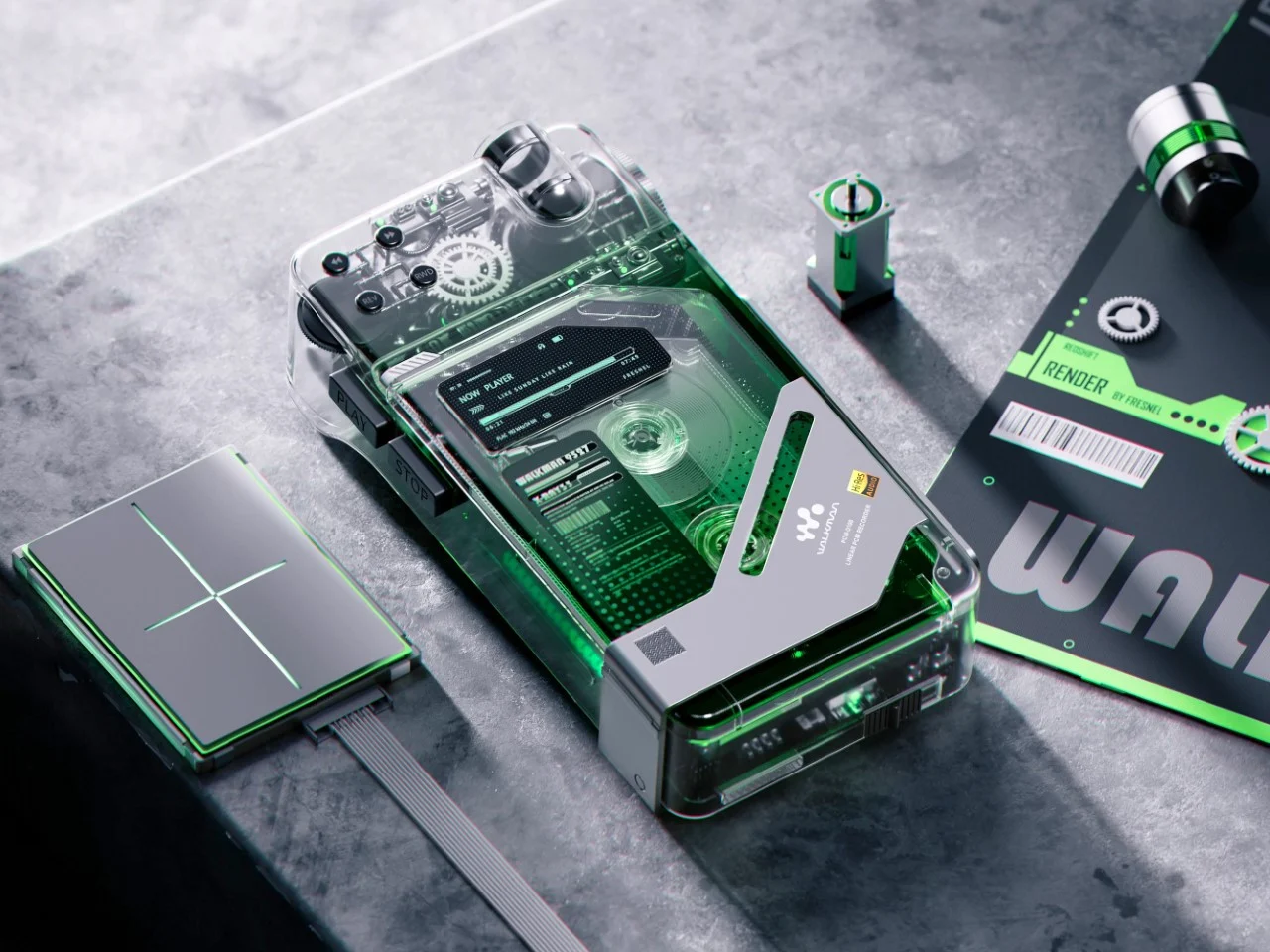
1 month agoA Digital Music Player with FLAC Files and a Built-In Speaker - Yanko Design
There's something oddly comforting about watching the vinyl resurgence happen in real time. We've collectively decided that convenience isn't everything, that sometimes the ritual matters as much as the result. But while turntables have been getting their moment in the spotlight, another piece of audio history has been quietly staging its own comeback: the dedicated digital audio player. Enter the DAP-1, a concept device from Frankfurt-based 3D artist
Gadgets
[ Load more ]