#african-talent
#african-talent
[ follow ]
#africa-cup-of-nations #remote-work #africa #decolonization #contemporary-art #creator-economy #african-diaspora
fromTravel + Leisure
4 days agoThese Are the 10 Best Cities for Digital Nomads-and No. 1 Ranked Highest for Safety, Affordability, and Strong Internet Access
Kraków offers something many digital nomads look for: a walkable historic centre, vibrant café culture and a growing tech and startup scene.
Digital life
fromwww.aljazeera.com
6 days agoMinerals for aid: Are new US health deals exploiting' African countries?
In late 2025, the United States shocked the world by suspending global health aid, leading experts to predict 700,000 additional deaths annually, primarily among children. This prompted the US to propose unusual bilateral health agreements with developing countries, which have drawn criticism for being exploitative.
Public health
fromArchDaily
1 week agoThe First Pan-African Biennale Establishes a Platform for a Decolonized, African-Led Architectural Future
The inaugural edition is organized around the central theme "Shifting the Center: From Fragility to Resilience," reclaiming African architecture's place as a site of spatial intelligence and cultural memory.
Renovation
#creator-economy


Social media marketing
fromSilicon Canals
3 weeks agoNigeria powers Africa's $3.1B creator economy - but platform economics ensure Silicon Valley captures the value - Silicon Canals
Nigeria's creator economy produces world-class content but most creators earn modest incomes due to structural inequalities in how global platforms distribute value and revenue.
Environment
fromState of the Planet
2 weeks agoClimate Finance Has Failed Africa Twice Over. Here's How To Fix It.
Africa faces immediate climate crisis requiring both massive adaptation investment and urgent global emissions cuts, yet receives inadequate financing while adaptation focus overshadows critical decarbonization efforts.


fromwww.bbc.com
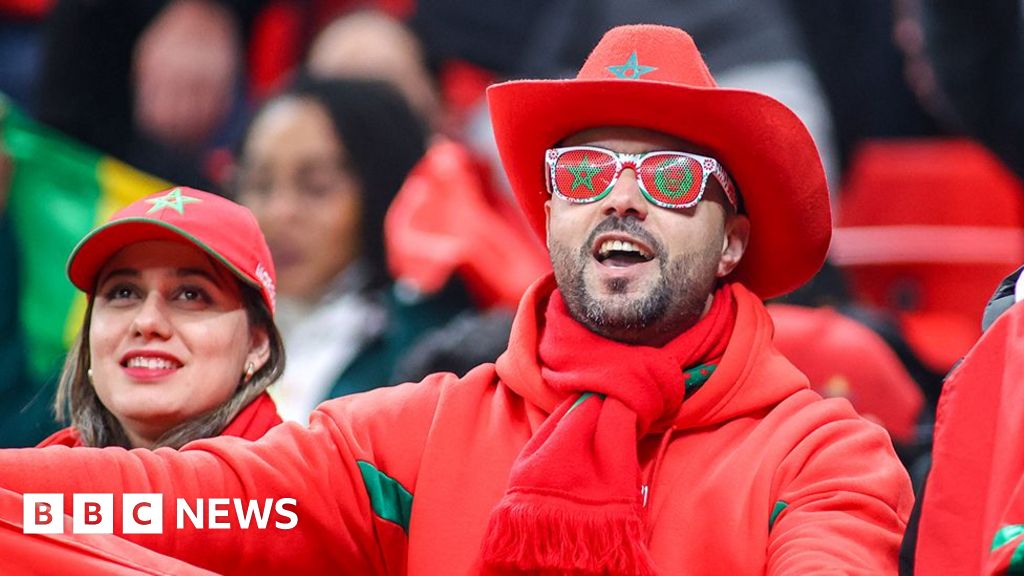
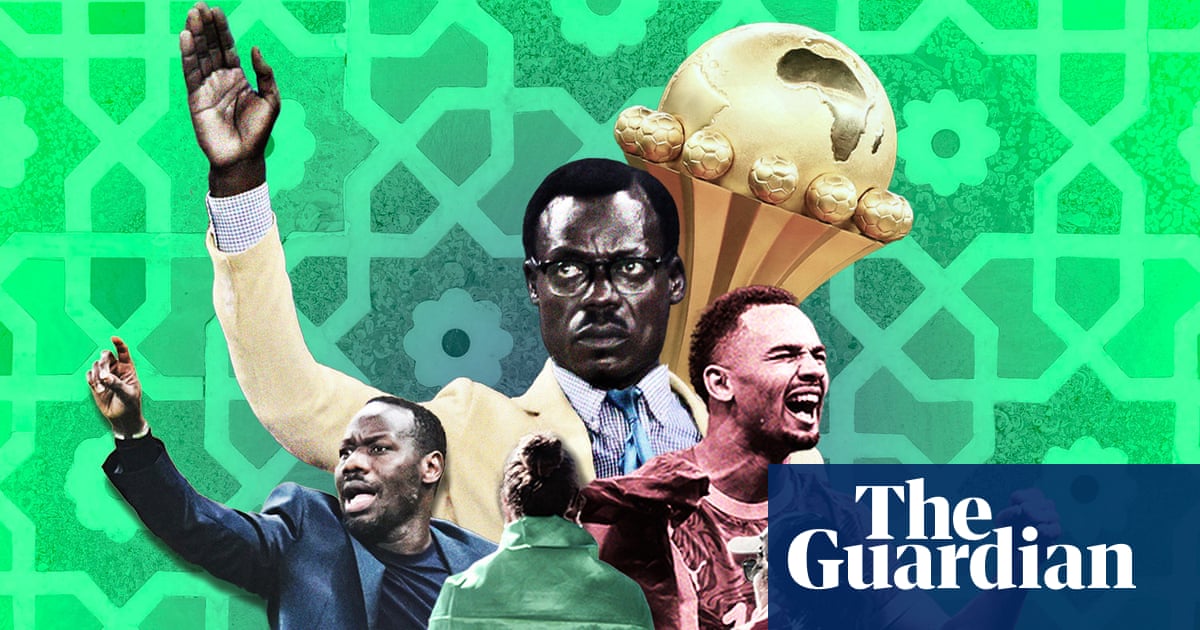
3 weeks agoGlobetrotting Constantine back in charge of Rwanda
The 63-year-old will leave his current managerial role with Cypriot club APEA Akrotiri to take up the position on 16 March. Constantine had a spell in charge of Rwanda from May 2014 to January 2015 before he left to manage India.
Juventus
Paris food
fromFrenchly
3 weeks ago10 Cities Outside France Where You Can Practice Your French - Frenchly
Over 320 million people speak French across five continents, with colonial history establishing French as an official language in many countries, making immersive French learning possible in diverse cities worldwide.
fromenglish.elpais.com
3 weeks agoRhythms that cross the borders of Africa
Oumy is a leading figure in contemporary Senegalese music. Her style, which blends hip-hop, African R&B and global pop, makes her one of the most exciting artists on the country's urban scene. Beyond her music career, she has also been involved in social projects within her community, participating in cultural festivals and campaigns related to the environment and equality.
Music production
Social justice
fromCN Traveller
2 weeks ago"Black excellence is everywhere, Black connection is not": Inside the event designed to connect, unite and inspire Black thinkers
The Diaspora Salon in Marrakech convenes African and diaspora intellectuals, artists, and entrepreneurs to discuss culture, power, and economic futures across multiple disciplines.
European startups
fromComputerWeekly.com
4 weeks agoPublic and private sector key to Digital Realty in West Africa | Computer Weekly
Digital Realty and Equinix are expanding datacentre operations across sub-Saharan Africa, with new facilities in Ghana and Nigeria driven by subsea cable infrastructure and growing regional demand.
fromwww.aljazeera.com
3 weeks agoPoor in an oil-rich country: Republic of Congo's youth hope for change
We are told that the country is rich in oil. But I don't see that wealth in my daily life. Look at Pointe-Noire, formerly nicknamed as Ponton la Belle [Beautiful Pointe-Noire]. Today, the city is unrecognisable. Around the Grand Marche, the main roads are potholed, and when it rains, the streets get flooded, making it almost impossible to drive.
France politics
Manchester United
fromRepublik Of Mancunia: A Manchester United Blog
4 weeks agoThe pathway from Africa to Old Trafford
Manchester United has recruited players from 51 nations globally, with African representation growing from Quinton Fortune's 1999 debut through recent signings like Odion Ighalo and Amad Diallo.
Miscellaneous
fromFortune
1 month ago"Technology is our superpower"-Africa and India take seat at top table as AI revolution spreads | Fortune
Nigeria transformed from a communication desert with 0.4 telephone lines per 100 people in 2000 to 200 million mobile connections by 2025, exemplifying Africa's wireless revolution and leapfrogging development through mobile technology.
fromThe Art Newspaper - International art news and events
2 weeks agoReimagining communities: inside the Hong Kong International Cultural Summit
Communities make museums and museums make communities. Part of the establishment of M+ was a public consultation where people were asked what kind of museums they wanted. The recommendation was not to build lots of little museums, but to create a big museum that was cross-disciplinary, unburdened by labels like "modern" or "contemporary". It was to be a museum plus more, and that was how we became M+.
Arts
Venture
fromSilicon Canals
1 month agoAfrican fintech startups raise $1.3B in 2025 despite global venture slowdown - Silicon Canals
African fintech startups raised $1.3 billion in 2025, demonstrating resilience while global venture capital remains subdued and early-stage startups in established markets struggle.
US politics
fromTruthout
1 month agoAs the Status Quo Shatters, Afrofuturists' Visions Offer a Way Forward
State violence has expanded beyond Black communities to target white protesters, journalists, and politicians, while right-wing authoritarianism threatens multiracial democracy and prompts reimagining of Black freedom beyond the United States.
Fashion & style
fromwww.kaltblut-magazine.com
1 month agoUnity in Design Global Network (UDGN) x Fashion Scout: Anthology of African Stories The People. The Land. The Heritage
Three African designers showcase heritage-inspired collections at London Fashion Week 2026, transforming traditional textiles and cultural narratives into contemporary high fashion through sculptural silhouettes, landscape-informed tailoring, and personal storytelling.
US politics
fromThe Verge
1 month agoThe Peace Corps is recruiting volunteers to sell AI to developing nations
Trump's 'Tech Corps' initiative repurposes the Peace Corps to recruit unpaid volunteers as salespeople promoting American AI companies, diverging from the agency's original mission of community development in underserved regions.
fromwww.dw.com
1 month agoBerlinale: African films bring hopes of peace and tolerance
Gomis told DW the film includes a tribute to his late father. Part of the production was filmed in the village where his father was born, in the Cacheu region of Guinea-Bissau. "The grave you see in the film, the one the two characters speak to and touch that is my father's grave. The photograph of that man in the film that is my father," he said.
Film
fromBrooklyn, NY Patch
1 month agoInside Brooklyn's Black Future Festival, Where Children Imagine The Next 100 Years Of Black History
From February 15 through February 21, the museum will host its annual Black Future Festival, a weeklong slate of performances, workshops, and hands-on programs designed to give children and families space to imagine the next century of Black creativity, resilience, and innovation. The festival runs during New York City public schools' midwinter recess and fills the museum's galleries with movement, sound, and art-making.
Brooklyn
Fundraising
fromwww.theguardian.com
2 months agoActionAid to rethink child sponsorship as part of plan to decolonise' its work
Child sponsorship models can be racialised and paternalistic; ActionAid UK will transform funding toward community-shaped, decolonised partnerships emphasizing solidarity and women's rights funding.
fromArchDaily
2 months agoCivic Architecture Opens to the City as Global Attention Turns to Africa: This Week's Review
Across this week's broader architecture news landscape, a central theme emerges around the advancement of civic architecture conceived as open, publicly engaged infrastructure, with cultural and institutional projects increasingly designed to strengthen their relationship with the city and everyday urban life. At the same time, renewed global attention turns toward Africa, where large-scale transport infrastructure and the conservation of modernist landmarks reflect interests in the region and the reassessment of the continent's architectural heritage.
Design
fromwww.startupcan.ca
2 months ago28 Resources to Support Black Entrepreneurs in Canada
While entrepreneurship can be challenging, Black founders often face additional barriers in accessing funding, mentorship, and networks, barriers that can also create psychological hurdles. In fact, a 2025 BDC study found that 72% of Black entrepreneurs shared that the fear of racial stereotypes almost stopped them from starting a business. To support founders on every stage of their journey, we've updated our guide to highlight programs, funding, mentorship, and community resources specifically for Black entrepreneurs across Canada!
Canada news
fromwww.theguardian.com
2 months agoSeven in 10 Africans are under 30 invest in them and they will change the world | Monica Geingos
For the first time in our history, more than 70% of Africans are under the age of 30. This, along with entrenched inequalities, poverty, unemployment and socioeconomic fault lines, is reshaping how our societies interact with one another and the world. This is Africa's most consequential decade. Leaders who take office over the next 10 years will have to deliver on difficult mandates within a political, economic and social landscape that has been fundamentally altered.
World news
US politics
fromwww.independent.co.uk
2 months agoWeak climate targets mean UK banks risk missing out on Africa's renewables boom
The Independent covers reproductive rights, climate change and Big Tech, provides free journalism funded by donations, and highlights Africa's vast clean-energy investment potential.
fromHyperallergic
2 months agoThe African Diaspora Pictures Itself
Walking through Ideas of Africa: Portraiture and Political Imaginationat the Museum of Modern Art, I noticed that the exhibition didn't have definite sections or texts, and the wall labels abstained from naming the nationalities of the photographers. It was an invigorating experience to be in a show that eschews geographic boundaries set up by Western nations, as well as rejects a cause-and-effect narrative that centers Western colonialism as a framework for understanding African aesthetic production.
Arts
fromwww.theguardian.com
2 months agoYou feel obligated': African workers on the pain and pride of the black tax'
From Senegal to Somalia and Egypt to South Africa, credit alert notifications from fintech apps such as Western Union or WorldRemit often set the mood for the rest of the day, week or even month. Transfers from workers within the continent and the diaspora to their relatives are often referred to as the black tax, whereby one person's salary and relative success can become the safety net for a whole extended family.
World news
fromHyperallergic
2 months agoArt for Dignity
As if demolishing the East Wing, gutting arts agencies, and slapping his name and face on several federal buildings weren't enough, the US president now wants to do away with a DC building known as the "Sistine Chapel of New Deal art." This week, we reported on a burgeoning campaign to save the Wilbur J. Cohen Federal Building, which houses murals by Ben Shahn, Philip Guston, Seymour Fogel, and other major American artists. We will continue to follow this story.
Arts
[ Load more ]