#ai-gpus
#ai-gpus
[ follow ]
#nvidia #ai #ai-infrastructure #ai-technology #microsoft #openai #technology #ai-chips #marvell-technology




fromTechzine Global
2 days agoIGEL OS can now run AI models locally on endpoints
AI Armor provides dynamic runtime security and relies on a central policy engine in the Universal Management Suite (UMS) to meet compliance requirements, ensuring that organizations can manage their security effectively.
DevOps
Silicon Valley
fromMetro Silicon Valley | Silicon Valley's Leading Weekly
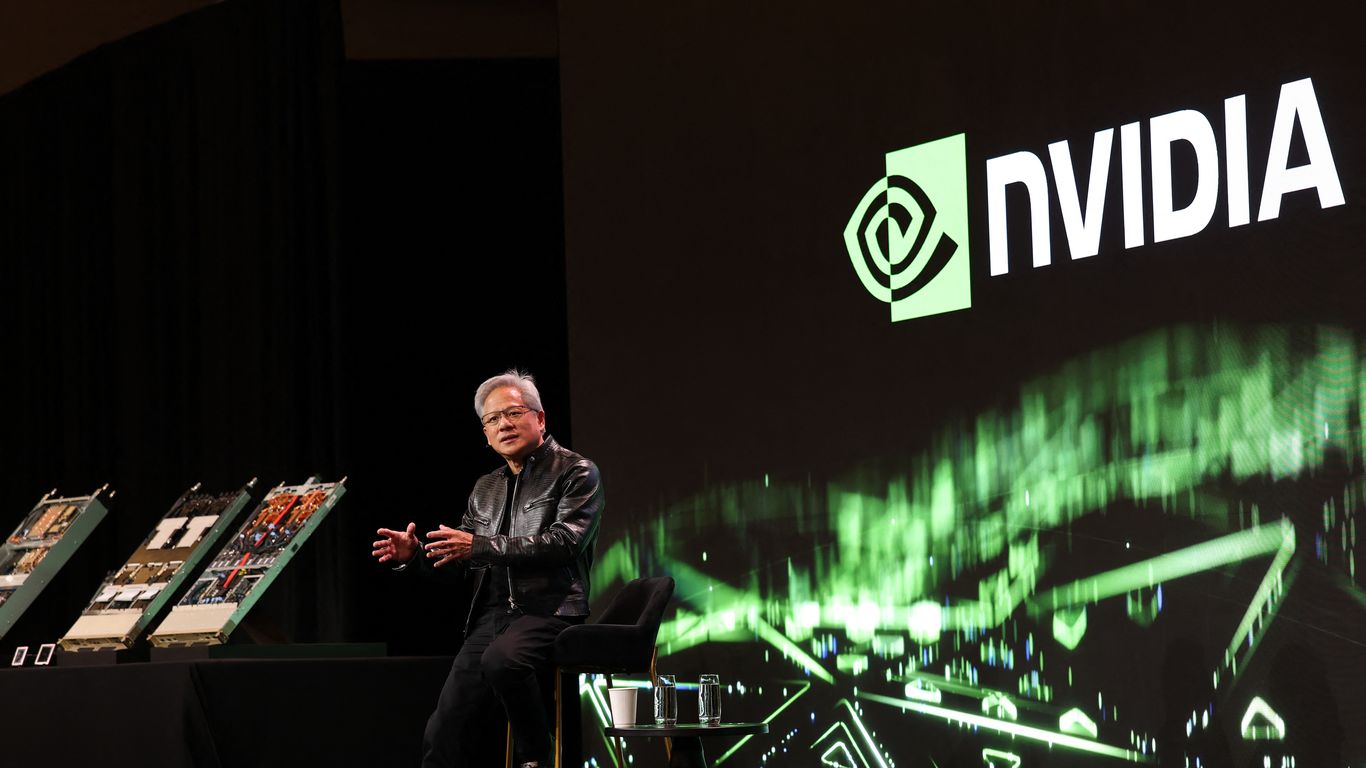
2 weeks agoNvidia GTC in San Jose Highlights AI Boom & Data Center Growth
Nvidia's major tech conference brought significant economic activity to downtown San Jose through robot demonstrations, pop-up installations, and increased restaurant and retail business.

fromTheregister
2 weeks agoNvidia GTC: We predict an agentic AI enterprise hype fest
gamers are probably going to feel left out since Nvidia seems to have decided renting cloud rigs to them is better than selling consumer hardware, small companies looking for AI chip compromises will be excited, and agentic AI is gonna be so hot that our Mann on the ground this week in San Jose isn't gonna need a jacket.
Silicon Valley
#ai-infrastructure
Venture
fromTechCrunch
3 weeks agoThinking Machines Lab inks massive compute deal with Nvidia | TechCrunch
Mira Murati's Thinking Machines Lab signed a multi-year strategic partnership with Nvidia involving at least one gigawatt of Vera Rubin systems deployment starting in 2027, with Nvidia also making a strategic investment in the $12 billion-valued AI research company.
Artificial intelligence
fromComputerWeekly.com
2 weeks agoHPE taps Nvidia to transform distributed AI factories into intelligent AI grid | Computer Weekly
HPE launches AI Grid infrastructure powered by Nvidia GPUs to enable distributed, low-latency AI inference at edge locations for real-time applications across retail, manufacturing, healthcare, and telecommunications.
Data science
fromTechRepublic
1 month agoInside the Gas Engine Strategy Powering AI's Next Wave
Gas reciprocating engines are emerging as a critical power solution for AI data centers, with manufacturers like Caterpillar securing multi-gigawatt orders to meet demand that exceeds grid and turbine capacity.
Artificial intelligence
fromTechCrunch
2 weeks agoNiv-AI exits stealth to wring more power performance out of GPUs | TechCrunch
AI data centers waste significant power due to GPU demand surges, forcing operators to throttle performance by up to 30%, prompting startups like Niv-AI to develop precision power management solutions.
Artificial intelligence
fromInfoWorld
3 weeks agoNvidia launches Nemotron 3 Super to power enterprise AI agents
Nemotron 3 Super's hybrid architecture combining Mamba and Transformer technologies enables enterprises to run complex AI agents more efficiently with lower costs and faster execution on existing infrastructure.
Artificial intelligence
fromArs Technica
3 weeks agoNvidia is reportedly planning its own open source OpenClaw competitor
Nvidia is launching NemoClaw, an open source AI agent platform to compete with OpenClaw, with partnerships from major tech companies like Salesforce, Cisco, Google, Adobe, and CrowdStrike.
from24/7 Wall St.
4 weeks agoNvidia Just Made Another Pair of Brilliant AI Bets
Either way, I think the AI boom is alive and well, but with much of the short-term hype fading away, the big question is whether the long-term trajectory is still there and whether it makes sense for investors to hit the buy button now that the near-term is somewhat less hyped while the long-term is as exciting as ever.
Artificial intelligence
Artificial intelligence
from24/7 Wall St.
1 month agoNVIDIA Cements Its Role as the Backbone of AI Infrastructure
NVIDIA's networking revenue grew 162% year-over-year to $8.2 billion, nearly tripling GPU growth, signaling a shift from chip seller to integrated infrastructure provider selling complete AI data center systems.
from24/7 Wall St.
1 month agoNvidia Is Building an AI Infrastructure Empire
Nvidia's investment portfolio operated as a modest initiative valued around $230 million two years ago, focusing on smaller companies and chip designers. By the end of 2025, however, the public equity portfolio alone had reached more than $13 billion, according to its 13F filing. This expansion stems directly from cash generated by Nvidia's core GPU sales, particularly in the data center segment, which have driven record revenue.
Artificial intelligence
fromTheregister
2 months agoUnpacking AMD's latest datacenter CPU and GPU announcements
AMD clarified those estimates are based on a comparison between an eight-GPU MI300X node and an MI500 rack system with an unspecified number of GPUs. The math works out to eight MI300Xs that are 1000x less powerful than X-number of MI500Xs. And since we know essentially nothing about the chip besides that it'll ship in 2027, pair TSMC's 2nm process tech with AMD's CDNA 6 compute architecture, and use HBM4e memory, we can't even begin to estimate what that 1000x claim actually means.
Artificial intelligence
[ Load more ]