#alien-pandemic
#alien-pandemic
[ follow ]
#space-exploration #nasa #artemis-ii #astrobiology #extraterrestrial-life #moon-mission #astronomy #mars #exoplanets




fromwww.theguardian.com
23 hours agoIt's official: scientists aren't funny. But it doesn't have to be this way | Helen Pilcher
The findings confirm research that I conducted more than 20 years ago. Under the guise of the Comedy Research Project, Timandra Harkness and I performed a randomised clinical trial to assess whether or not science can be funny.
Humor
fromNextgov.com
4 days agoCitizen Science Month 2026 is about more than just stargazing
Citizen Science Month is built around a goal of 2.5 million 'Acts of Science,' tying the annual event to America's 250th birthday through a simple but powerful idea: lots of small contributions can add up to something really meaningful.
OMG science






fromArs Technica
2 weeks agoWe keep finding the raw material of DNA in asteroids-what's it telling us?
The new work was less notable for showing that we had found these bases in Ryugu than for solving a previous mystery: earlier studies had failed to detect them there, despite their presence in many other asteroid samples.
OMG science
US politics
fromwww.scientificamerican.com
1 month agoTrump's order to release evidence for aliens obscures the scientific search for extraterrestrial life
President Trump ordered the Department of Defense and federal agencies to identify and release government files on UAPs, UFOs, and extraterrestrial-related materials.


fromenglish.elpais.com
3 days agoThe journey of Artemis 2 to the far side of the Moon: The challenge of exploring what no one has ever seen
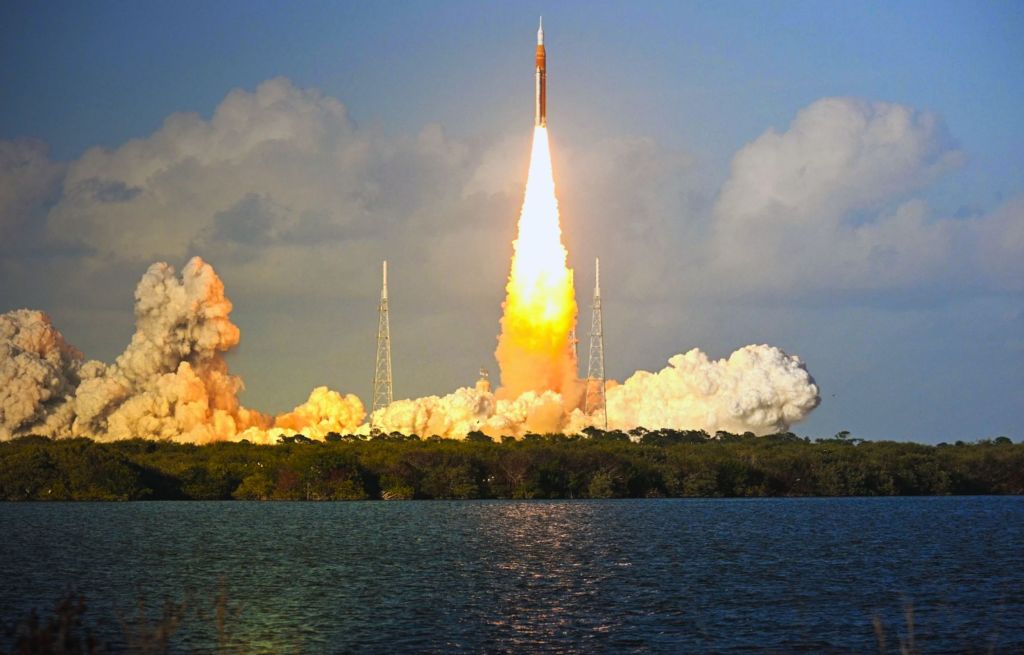
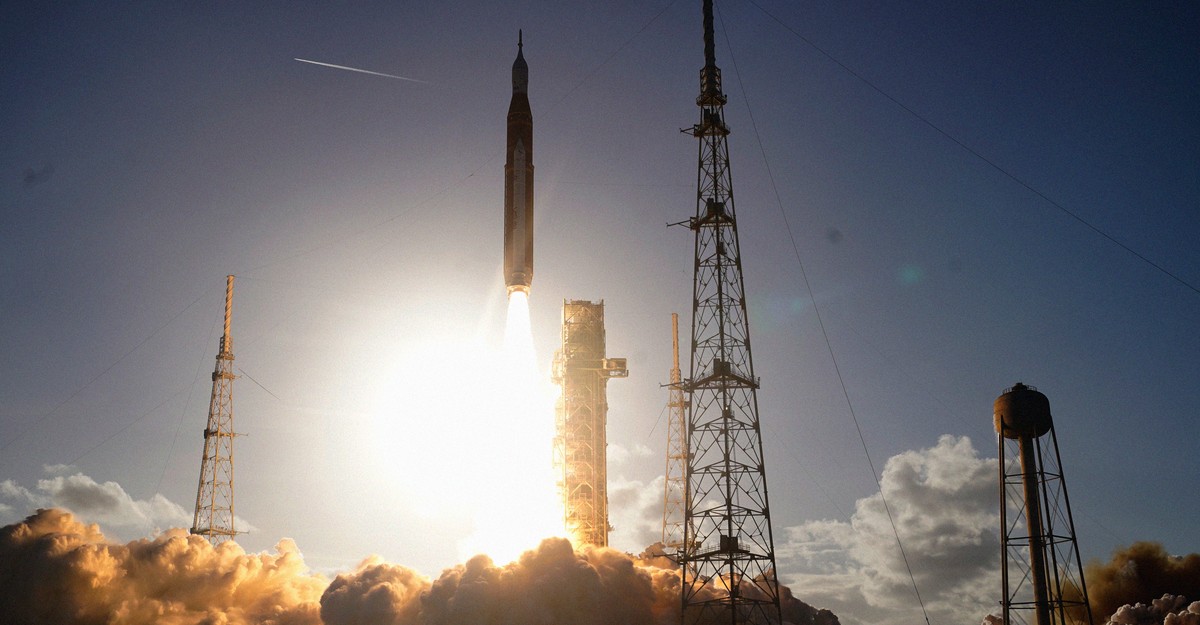
Only 24 people have seen the far side of the Moon with their own eyes in the entire history of humanity. All of them were men, Americans, and white: the crew members of the nine Apollo missions that traveled to the Moon between 1968 and 1972.
Science
fromFortune
1 month agoAI data centers in space are having a moment. Experts say: Not so fast | Fortune
Over the past three weeks, SpaceX has filed plans with the Federal Communications Commission for what amounts to a million-satellite data-center network. Musk has also said he plans to merge his AI startup, xAI, with SpaceX to pursue orbital data centers. And at an all-hands meeting last week, he told xAI employees the company would ultimately need a factory on the moon to build AI satellites-along with a massive catapult to launch them into space.
Artificial intelligence
fromPsychology Today
2 months agoDo Aliens from Other Planets Also Believe in Gods?
My prediction is based on only two assumptions. First, our visitors from space can die; they are not immortal. Second, they care about each other. When one of their own dies, they mourn them, just as humans do. These assumptions, I think, will have led these aliens to invent gods and a belief in the afterlife. Belief in the afterlife, where we defeat death and are reunited with loved ones who have died, is the basis of all past and current religions.
Philosophy
OMG science
fromFuturism
4 weeks agoScientists Find Microbes Can Survive Traveling from Planet to Planet While Clinging to Asteroids
Extremophile bacteria can survive extreme pressures simulating asteroid impacts, supporting the possibility that microorganisms could travel between planets via panspermia.
fromNature
6 days agoNow is the time for scientific societies to guide global research
Modern scientific societies are increasingly vulnerable due to their dependence on membership fees and journal subscriptions, which are being challenged by the rise of virtual networking and open-access publishing.
Science
OMG science
fromwww.scientificamerican.com
1 month agoBlast off! Martian microbes might travel between worlds on asteroid-impact debris
Deinococcus radiodurans, an extremophile bacterium, can survive extreme pressures from asteroid impacts on Mars, suggesting potential for microbial life dispersal across the solar system.
fromFuturism
2 months agoFormer Banking Insider Makes Strange Warning About Discovery of Alien Life
"The United States government appears to be partway through a multi-year process to declassify and disclose information on the existence of a technologically advanced non-human intelligence responsible for Unidentified Anomalous Phenomena (UAPs),"
Miscellaneous
fromMail Online
2 weeks agoHumanity receives mysterious 'mega-laser' signal from unknown source
This system is truly extraordinary. We are seeing the radio equivalent of a laser halfway across the universe. This galaxy acts as a lens, the way a water droplet on a window pane would, because its mass curves the local space-time. So we have a radio laser passing through a cosmic telescope before being detected by the powerful MeerKAT radio telescope.
Science
Science
fromFuturism
3 weeks agoSomething May Be Scrambling Alien Messages, NASA-Funded Research Finds
Space weather phenomena near alien planets could broaden and scatter extraterrestrial signals across multiple frequencies, making them undetectable by current SETI searches focused on narrow frequency bands.
fromTheregister
3 weeks agoSETI admits its search for ET may be too narrowly focussed
If a signal gets broadened by its own star's environment, it can slip below our detection thresholds, even if it's there, potentially helping explain some of the radio silence we've seen in technosignature searches. This statement from Dr. Vishal Gajjar highlights how stellar environmental factors may cause detectable signals to become invisible to current SETI instruments.
Science
fromMail Online
1 month agoAliens could be CATAPULTED onto Earth via an asteroid, study claims
We found that life is more likely to survive an asteroid impact, so it's definitely still a real possibility that life on Earth could have come from Mars. Maybe we're Martians! The idea that life could have spread through the solar system or even the universe on rocks is known as the lithopanspermia hypothesis.
Science
fromwww.scientificamerican.com
1 month agoCould aliens in another galaxy see dinosaurs on Earth?
For example, reader David Erickson had this on his mind: If there were aliens 66 million light-years from Earth, how big a telescope would they need to see dinosaurs? Ha! I love this question. I've thought of it myself but never worked out the mathexcept to think, Probably pretty big, which turns out to dramatically underestimate the actual answer.
Science
fromWIRED
1 month agoCould AI Data Centers Be Moved to Outer Space?
Now say you want to run some modest AI stuff. That's a bigger job, so let's scale up our cubical computer with edges twice as long as before. That would make the volume eight times larger (2 3), so we could have eight times as many processors, and we need eight times as much power input-2,400 watts. However, the surface area is only four times (2 2) larger, so the radiative power would be about 4,000 watts.
Science
Science
fromFuturism
1 month agoIf Scientists Ever Find Strong Evidence of Alien Life, Communicating It Will Pose Serious Issues
Communicating a confirmed detection of extraterrestrial life will be extremely difficult due to ambiguous data, cultural preconceptions, moral and religious implications, and public fear.
fromFuturism
2 months agoScientists Intrigued by Unfamiliar Life Form
It's a plant! It's a fungus! It's... an entirely new type of lifeform hitherto unknown to science? That appears to be the case for a puzzling, spire-shaped organism that lived over 400 million years ago, according to a new study published in the journal Science Advances. After analyzing its internal structures, the authors argue that the mystifying ancient beings known as prototaxites don't belong to any of the existing biological kingdoms.
Science
fromThe Mercury News
2 months agoHere's a look at the significance of sending animals to space
On May 5, 1961, Alan Shepard became the first American in space. However, three months earlier NASA had launched "Number 65" on a mission that helped pave the way for Shephard's momentous flight. Number 65 was a male chimpanzee born in 1957 in the French Cameroons in West Africa. After being captured by trappers, he was sent to a rare bird farm in Florida.
Science
fromFuturism
2 months agoGalactic Monsters Grew in Cocoons Like Giant Bugs, Scientists Say
How the most massive objects in the universe first formed is one of the biggest headscratchers in astrophysics. With more advanced telescopes, astronomers have found fully formed galaxies and colossal black holes earlier and earlier in the cosmos, just a few hundred million years after the Big Bang. This shouldn't be enough time for these structures to reach their incredible size; to astronomers, it's like stumbling on a fully-grown oak tree that's only a year old.
Science
Science
fromMail Online
1 month agoWomen could soon give birth to babies in SPACE, scientists claim
Human fertility in space presents urgent, poorly understood risks from microgravity and cosmic radiation requiring international research, ethical guidelines, and policy action for long-duration missions.
fromTheregister
2 months agoVery tough microbes may help us cement our future on Mars
A global research team has analyzed the prospects for biomineralization on Mars, a process in which bacteria, fungi, and microalgae can create minerals as part of their metabolism, offering a byproduct that could be useful to prospective Martian explorers by providing the raw materials needed to produce aggregates such as concrete. With an extremely thin and mostly carbon dioxide atmosphere, air pressure less than 1 percent of Earth's,
Science
fromTechCrunch
2 months agoWho gets to inherit the stars? A space ethicist on what we're not talking about | TechCrunch
In October, at a tech conference in Italy, Amazon and Blue Origin founder Jeff Bezos predicted that millions of people will be living in space " in the next couple of decades " and "mostly," he'd said, "because they want to," because robots will be more cost-effective than humans for doing the actual work in space.
Science
[ Load more ]