#alien-planet
#alien-planet
[ follow ]
#space-exploration #nasa #artemis-ii #astronomy #exoplanets #astrobiology #planet-formation #moon-mission




#nasa



Science
fromLondon Business News | Londonlovesbusiness.com
10 hours agoNASA astronauts capture first human view of Moon's 'dark side' - London Business News | Londonlovesbusiness.com
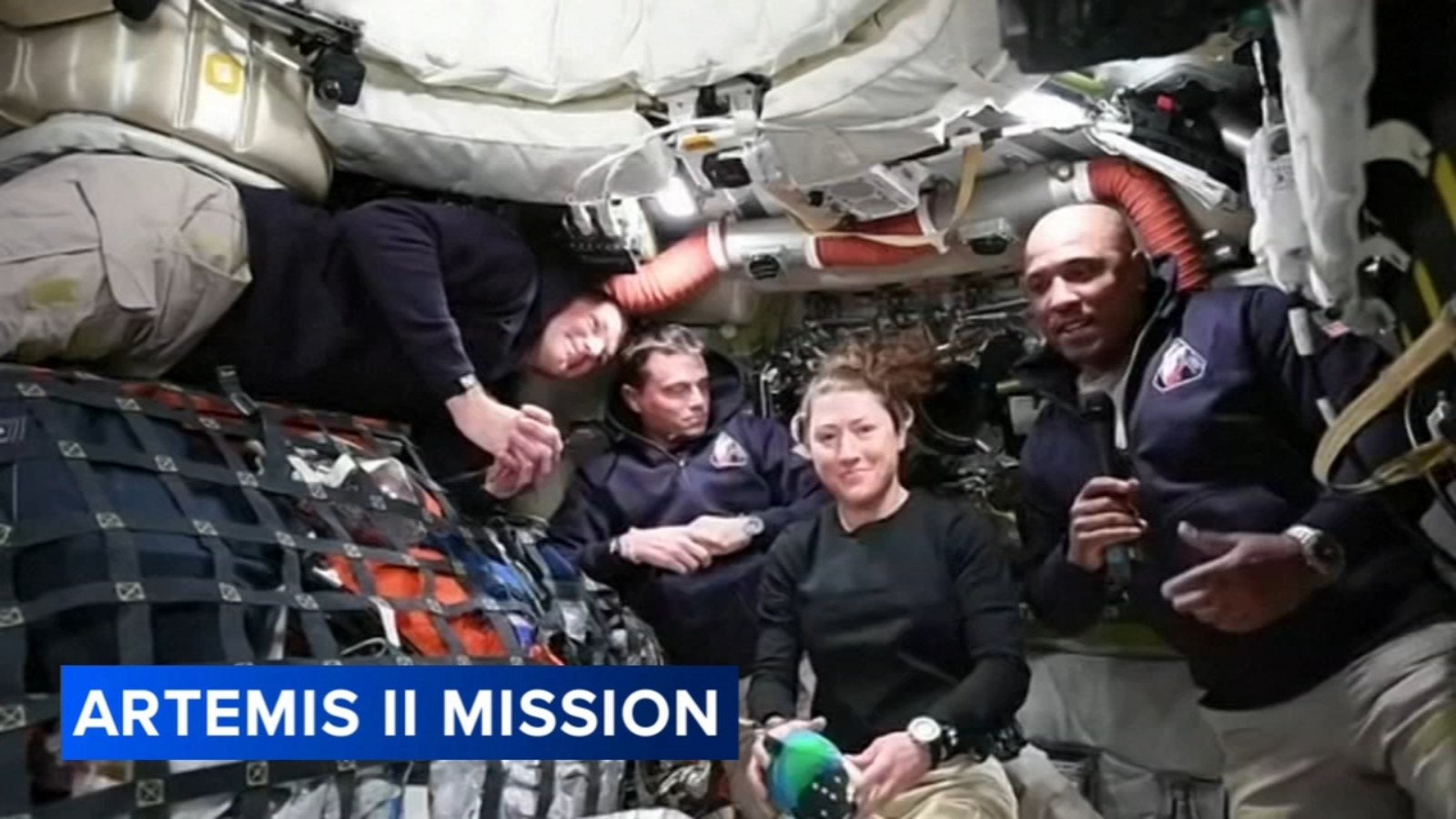
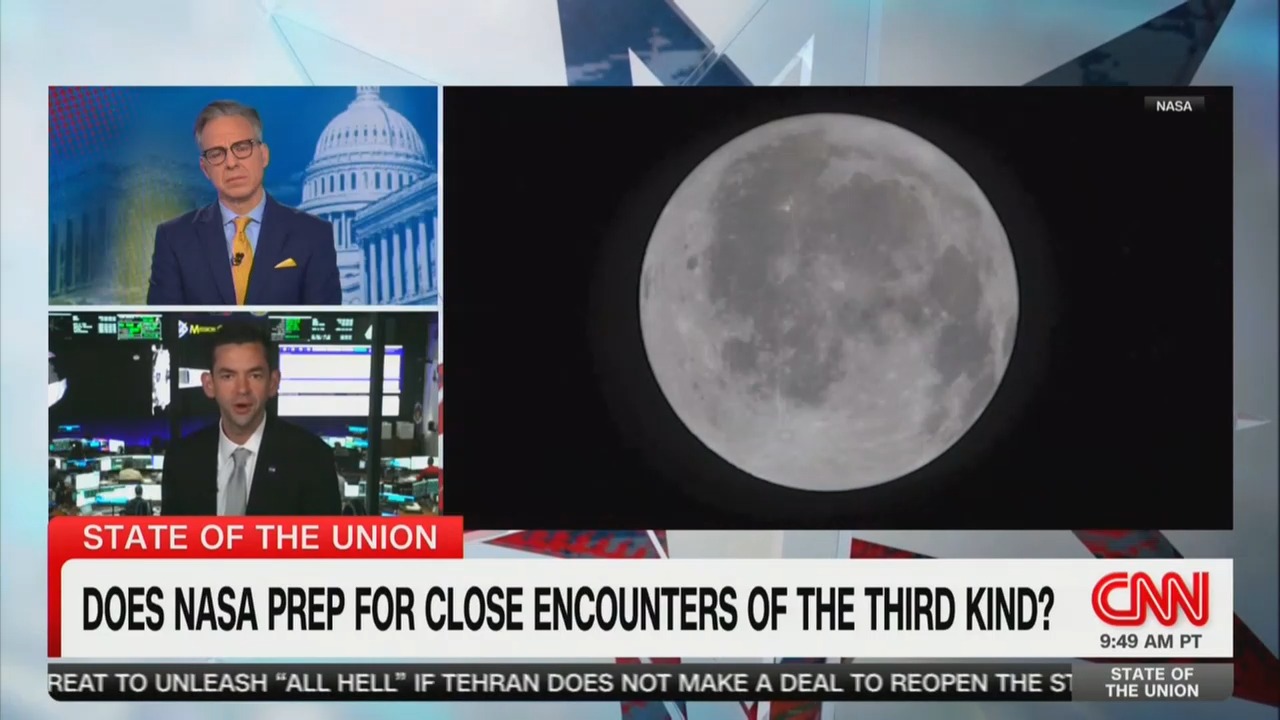
NASA's Artemis II crew captured the first human images of the Moon's far side, specifically the Orientale basin, previously unseen by human eyes.
:max_bytes(150000):strip_icc()/TAL-zodiacal-light-APRILSKYGUIDE0326-da3e7f01cfd249569fbb5c57cf7d5836.jpg)

fromArs Technica
2 weeks agoWe keep finding the raw material of DNA in asteroids-what's it telling us?
The new work was less notable for showing that we had found these bases in Ryugu than for solving a previous mystery: earlier studies had failed to detect them there, despite their presence in many other asteroid samples.
OMG science
OMG science
fromEngadget
2 weeks agoHubble catches rare view of a comet crumbling
Hubble Space Telescope captured accidental images of Comet K1 breaking into at least four pieces as it exited the solar system, revealing unusual chemical composition and offering insights into early solar system formation.
OMG science
fromwww.theguardian.com
2 weeks agoA molten, mushy state': scientists may have found a new type of liquid planet
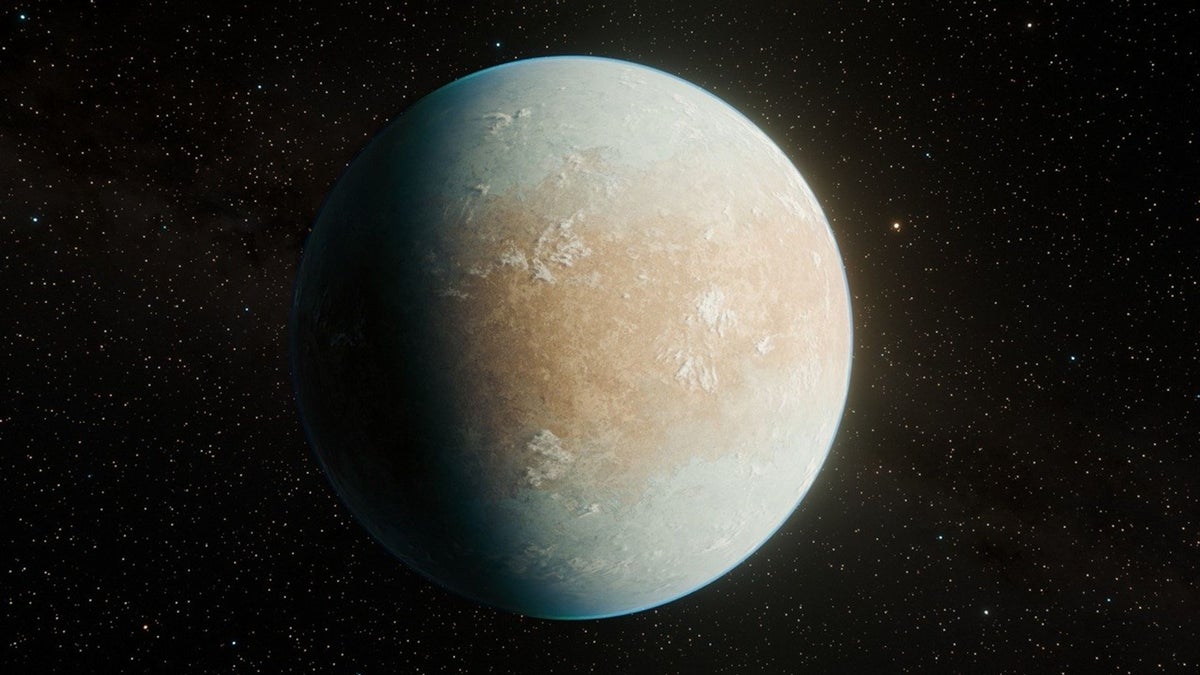
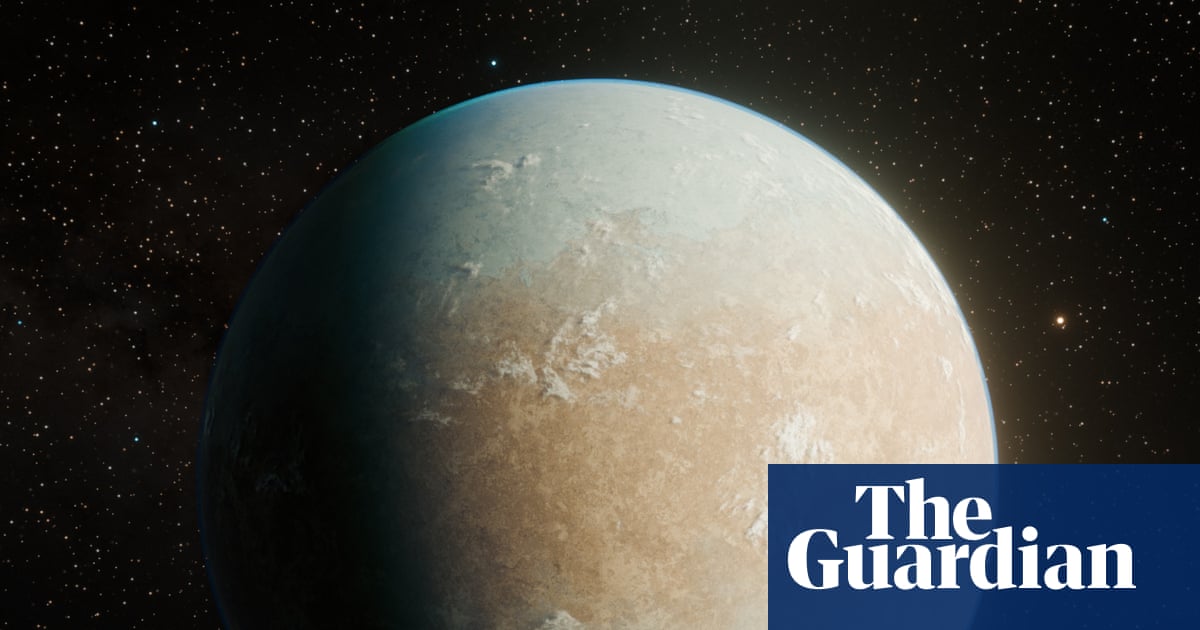
Astronomers discovered L98-59d, a molten lava planet 35 light years away that represents an entirely new category of liquid planet with surface temperatures of 1,900°C and a hydrogen sulfide atmosphere.
OMG science
fromFuturism
3 weeks agoScientists Spot Two Planets That Collided, Resulting in Carnage That Will Send Prickles Through Your Scalp
Astronomers detected a planetary collision around star Gaia20ehk through unusual brightness fluctuations and infrared signatures consistent with massive debris and extreme heat from impact.
Science
fromwww.scientificamerican.com
2 weeks agoSomething extremely weird is happening to our galactic neighbor. Scientists think they know why
The Small Magellanic Cloud's unusually slow stellar rotation results from a hundred-million-year-old collision with the Large Magellanic Cloud that disrupted its normal dynamical state.


OMG science
fromwww.scientificamerican.com
3 weeks agoThe sun and thousands of its twins migrated across the Milky Way just in time
The sun migrated from the Milky Way's crowded center to its current outer position, accompanied by thousands of similar stars that unexpectedly crossed the galactic corotation barrier.
Science
fromwww.scientificamerican.com
3 weeks agoHave astronomers found a runaway monster black hole or just a very weird galaxy?
Astronomers discovered RBH-1, a potentially runaway supermassive black hole traveling at over three million kilometers per hour, though ambiguous data makes its true nature uncertain.
OMG science
fromMail Online
3 weeks agoAstronomers watch the birth of a magnetar for the first time
Astronomers observed the birth of a magnetar, an extremely dense neutron star with the universe's most powerful magnetic fields, through a superluminous supernova's unusual flickering light pattern over 200 days.
Science
fromwww.scientificamerican.com
3 weeks agoThe universe's brightest supernovae are turbocharged by newborn magnetars
Superluminous supernovae are powered by newly formed magnetars—highly magnetized, rapidly spinning neutron stars that emit intense radiation, marking the first direct observation of a magnetar's birth.
fromTheregister
3 weeks agoSETI admits its search for ET may be too narrowly focussed
If a signal gets broadened by its own star's environment, it can slip below our detection thresholds, even if it's there, potentially helping explain some of the radio silence we've seen in technosignature searches. This statement from Dr. Vishal Gajjar highlights how stellar environmental factors may cause detectable signals to become invisible to current SETI instruments.
Science
OMG science
fromFuturism
4 weeks agoScientists Find Microbes Can Survive Traveling from Planet to Planet While Clinging to Asteroids
Extremophile bacteria can survive extreme pressures simulating asteroid impacts, supporting the possibility that microorganisms could travel between planets via panspermia.
OMG science
fromwww.scientificamerican.com
1 month agoBlast off! Martian microbes might travel between worlds on asteroid-impact debris
Deinococcus radiodurans, an extremophile bacterium, can survive extreme pressures from asteroid impacts on Mars, suggesting potential for microbial life dispersal across the solar system.
fromFuturism
1 month agoAstronomers Spot Huge Microwave Laser Blasting Into Space
This system is truly extraordinary. We're seeing the radio equivalent of a laser halfway across the universe. Fundamentally, masers and lasers are focused beams of light in the same frequency. In the realm of astrophysics, these can arise from clouds of dust being excited into a higher energy state from the light emitted by other sources, like stars and black holes.
OMG science
fromMail Online
1 month agoAliens could be CATAPULTED onto Earth via an asteroid, study claims
We found that life is more likely to survive an asteroid impact, so it's definitely still a real possibility that life on Earth could have come from Mars. Maybe we're Martians! The idea that life could have spread through the solar system or even the universe on rocks is known as the lithopanspermia hypothesis.
Science
Science
fromwww.scientificamerican.com
1 month agoAstronomers spot a young sun blowing bubbles inside the Milky Way
NASA's Chandra X-ray Observatory captured the first image of a young sunlike star's astrosphere, a protective bubble of hot gas 120 light-years away, revealing how stellar winds shape these cosmic structures.
fromMail Online
1 month agoSee the Milky Way like NEVER before in largest image of its kind
One of the most exciting aspects is the rich chemistry we detect. We see dozens of different molecules, including some complex organic molecules that contain carbon, the same element that forms the basis of life on Earth. From ACES, we are learning more about how the ingredients for planets, and potentially life itself, can arise in the universe.
Science


Science
fromenglish.elpais.com
1 month agoChristophe Galfard, physicist: I think there is more life in space than we think'
Human imagination and discoveries make the universe's vastness comprehensible, while science indicates the observable universe has a history and a beginning beyond current instruments.
fromBig Think
2 months agoWhat the Universe looks like: from nearby to far away
Looking skyward fills us with wonder. Off-world, the Sun, planets, stars, and galaxies all await. Our Solar System encompasses our own cosmic backyard. Farther away, stars and star clusters abound within the Milky Way. Hundreds of billions of stars exist just within our home galaxy. Inside our Local Group, only Andromeda surpasses us in mass, size, and stars. More than 5 million light-years away, galaxies abound in groups and clusters.
Science
fromBig Think
2 months agoAerial aliens: Why cloudy worlds might make detecting life easier
I think the first thing to remember is: We are right at the beginning of this adventure. There's so much excitement that every little signal - every "wiggle" in a spectrum - gets people saying, "Oh! That might be life!" And then, on the other side, other people respond with, "I don't see enough wiggles, so there's probably not even an atmosphere. Dead planet. Move on." Both reactions are too fast.
Science
fromwww.scientificamerican.com
1 month agoAstronomers spot one of the largest spinning structures in the universe
The first time that University of Oxford astronomer Lyla Jung saw the cosmic configuration on her monitor, she almost didn't believe it was real. But it wasand Jung and her colleagues went on to identify one of the largest rotating structures ever found in space: a chain of galaxies embedded in a spinning cosmic filament 400 million light-years from Earth. The finding, published in Monthly Notices of the Royal Astronomical Society, may give astronomers new insights into galaxies' formation, evolution and diversity, Jung says.
Science
fromNature
2 months agoA young progenitor for the most common planetary systems in the Galaxy - Nature
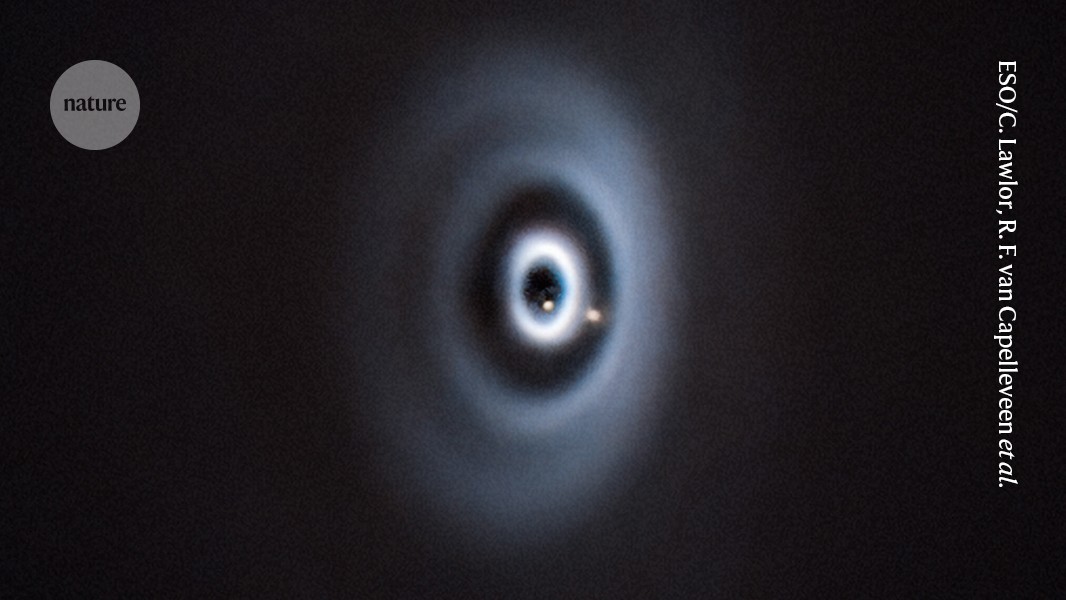
V1298 Tau is a young (10-30 Myr), approximately solar-mass star (1.10 ± 0.05 M⊙ ) in the Taurus star-forming region2,4,5,6,7,8. Observations by NASA's Kepler space telescope in its extended K2 mission9 revealed transits of the star by four different planets, each larger than Neptune2,3. The V1298 Tau planets occupy a sparsely populated region of the observed exoplanet period versus radius plane. As a young system of large planets, it provides a crucial snapshot of planetary architecture
Science
fromNature
1 month agoJupiter gets downsized - and squashed
The gas giant's shape and size, previously known only from data collected more than 45 years ago, have been updated at last. The biggest planet in the Solar System just got smaller and flatter. Access Nature and 54 other Nature Portfolio journals Get Nature+, our best-value online-access subscription Subscribe to this journal Receive 51 print issues and online access $199.00 per year only $3.90 per issue. Prices may be subject to local taxes which are calculated during checkout.
Science

fromFuturism
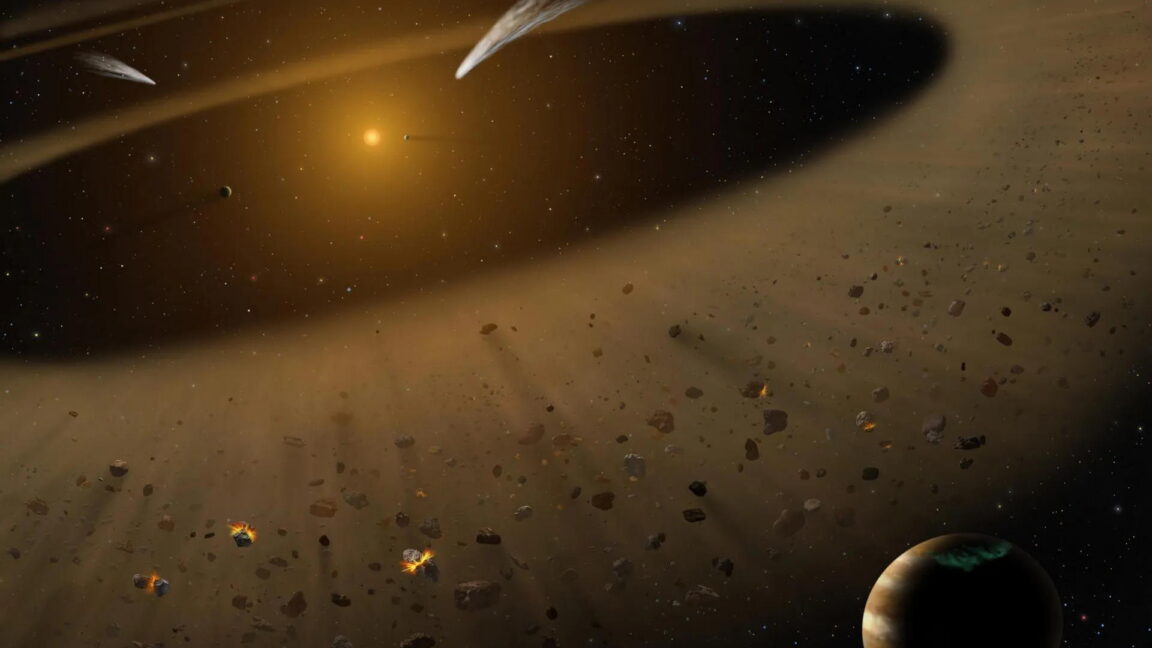
2 months agoAstronomers Intrigued By Impossible Structure Around Dead Star
A dead star 730 light years away appears to be forming a powerful structure around itself - and despite their best efforts, astronomers aren't sure how. The cosmic corpse, designated RXJ0528+2838, is an incredibly dense stellar remnant known as a white dwarf, with a Sun-like star orbiting around it. This binary arrangement isn't uncommon throughout the universe, but what is strange is the structure surrounding the former body: a highly energetic and luminescent cloud known as a nebula,
Science
fromFuturism
2 months agoScientists Intrigued by Unfamiliar Life Form
It's a plant! It's a fungus! It's... an entirely new type of lifeform hitherto unknown to science? That appears to be the case for a puzzling, spire-shaped organism that lived over 400 million years ago, according to a new study published in the journal Science Advances. After analyzing its internal structures, the authors argue that the mystifying ancient beings known as prototaxites don't belong to any of the existing biological kingdoms.
Science
[ Load more ]