Running
fromiRunFar
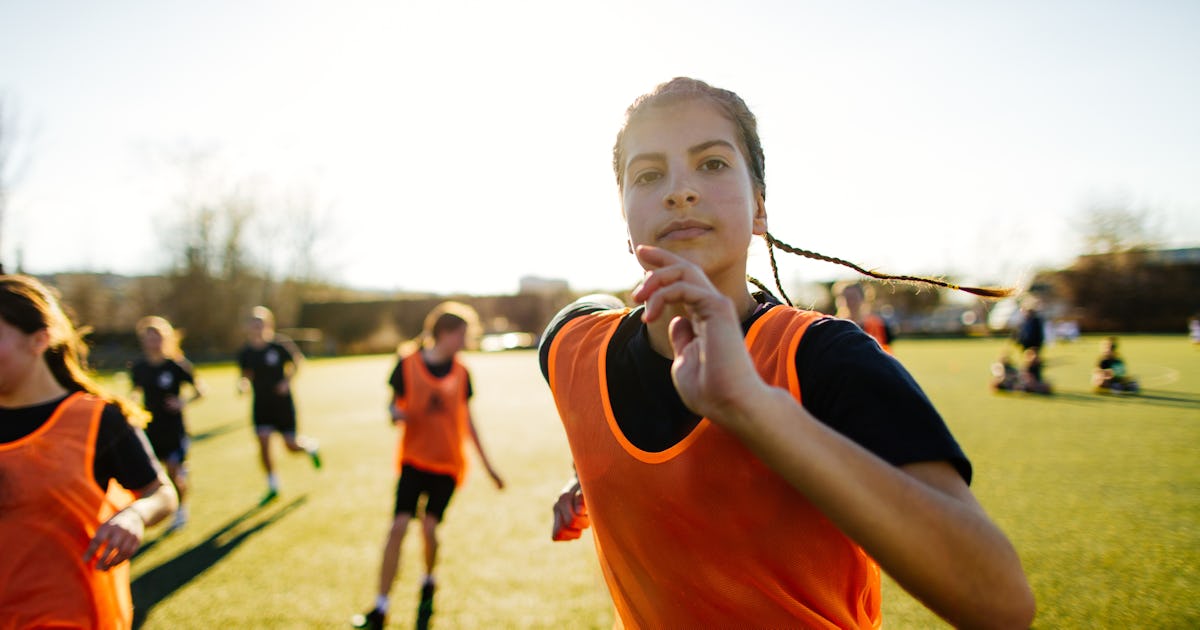
1 day agoRunning and Aging: Finding Surprise Improvements
Crown King Scramble 50k offers a consistent and challenging course for runners, fostering a strong community and personal growth through endurance.
The boom in reformer pilates has created a wild west of studios where poor regulation has resulted in inexperienced teachers and a rise in injuries, professional standards bodies have warned.
"What a good day, and what a stupid accident...again. Five years after [my previous nose break], my nose is f---ed up even worse [laughs]. As you see, it's even more cracked the same direction, and when I touch [my nose], my bones are broken inside."
After a tough workout, your body enters a state of stress: muscle fibers are damaged, energy stores are depleted, and hydration levels drop. This is a critical moment. If your body gets the right nutrients, it starts rebuilding immediately. If not, recovery slows down, and so does progress.
Robbie Cannon was in a fourball with Shane Lowry at The Grove XXIII, a small corner of paradise tucked away on the outskirts of Hobe Sound in Florida.
The ongoing discussions regarding future structural changes to the game, such as the introduction of new tournaments (eg. Fifa Club World Cup), further intensify this challenge. These changes have the potential to significantly reduce the downtime available to elite players, affecting their recovery and overall well-being.
Tyburski was a professional adventurer, financing his pursuits via magazine articles and speaking gigs, and even making a documentary about his quest. His whole raison d'etre was to push past his limitations, showing what a person is capable of when their mindset is strong enough.
Because everything there reminds me of Johnny," she said. My reaction was silence and determination to make sure common sense prevailed to make sure her senior son, Jake, a top pitcher who transferred from Palm Desert to Rancho Christian, had this continuing stress resolved after an already awful ordeal engulfed him and his parents for months.
People tell me it will stunt their growth or that it's dangerous, she says. She is also often accused of forcing her children to train, when actually it all started the other way round. What child doesn't look at their parents and want to do what they're doing?
Those of us who watch the Olympics as bystanders tend to smugly judge athletes for succumbing to pressure without understanding what we even mean by the term. The first thing to know about pressure is that it has actual physical properties. Feeling it is not a sign of a too-thin veneer of character. Pressure might as well be a snakebite, given its very real qualities in the bloodstream and how it can paralyze even the strongest legs. The way to deal with pressure, and become
Cross training and running go together like peanut butter and jelly. If you build it into your schedule intentionally, strategically, and with a clear understanding of what you're trying to accomplish, you'll thrive. Megan makes the case that cross-training serves runners for several distinct reasons, and the right reason for you will shape how you approach it.
No athlete at this level is 100% fully healthy, Gretchen Mohney, the director of medical and performance services for U.S. Figure Skating, told The Associated Press from Milan. It's about managing whatever it is that may be breaking down. The key for Olympic skaters is getting quick treatment. If a knee swells, the back aches or a sharp blade leaves a gash, figure skaters at the Olympics have physicians, athletic trainers and physical therapists to help.
Riding a mountain bike comes with risks, and injuries are common among most riders, from minor cuts and scrapes to broken bones and more severe head trauma. But what are the common injuries from mountain biking, and what is the recovery like for the most common MTB injuries? Well, I've had most of them over the years. From the minor scrapes and bumps to the more severe head trauma, fractured bones, and ligament damage.
"It's not great, if I'm being honest. From amending my answer to the question "how ya doing Roth" at the very beginning of this week's episode of The Distraction, it is clear that things are not going great. But for the second straight week, we found a way to split our episode between the Not Great stuff and being stupid about sports, with the result being one of the most enjoyable hours of my week."
You feel an unpleasant sensation - like a sinking feeling of anxiety in your stomach as the game begins, and you think, "I'm anxious. Here we go again. I'm about to blow it." You feel your pain increasing, and the thoughts churn: "Great. I'll probably miss a whole week of work." Imagined catastrophes fill your mind. Manage these thoughts with the 3 C's: Catch it, Check it, and Change it.
In 2018, Sharples and his research lab, now at the Norwegian School of Sport Sciences in Oslo, were the first to show that exercise could change how our muscle-building genes work over the long term. The genes themselves don't change, but repeated periods of exertion turns certain genes on, spurring cells to build muscle mass more quickly than before. These epigenetic changes have a lasting effect: Your muscles remember these periods of strength and respond favorably in the future.
Kayla's not been 100% for the last three years, Abdelaziz told Submission Radio. Since her PFL days, she always had tingling. She couldn't lift her arm... The UFC flew her to New York, and the doctors said she immediately needs surgery because if she doesn't get surgery, it could paralyze her. But immediately after the surgery, all the pain is gone.
If I told you I have played football for 15 years, you'd probably assume that I'm decent. Unfortunately, I am not. I have three left feet and a not-very-convincing shot on goal. Despite how many years I have put into the sport, these things show little to no improvement. I play football for the joy of it: the rush of the first whistle; the exhilaration of making a successful tackle or a clever pass;
On a cool Wednesday afternoon before the US Open last year, Daniil Medvedev and Alexander Zverev were busy fine-tuning their games in an intense practice set at Louis Armstrong Stadium. Danielle Collins and Christian Harrison, semi-finalists in the mixed doubles tournament, were scheduled to take their place at the hour and the American pair duly arrived a couple of minutes before their allotted slot.
In 2017, Bjorn Mannsverk's phone rang. A year before, what was meant to be a special 100th anniversary for Bodo/Glimt ended in heartbreak as the Norwegian club were relegated from the top flight. A fresh approach was needed to get the club back on track. Having been stationed in Bodo before in his role as a fighter pilot with the Royal Norwegian Air Force, Mannsverk was familiar with the town, but not the football club.
In this episode of the On Coaching Podcast, Steve Magness and Jon Marcus discuss the concept of 'fit but flat,' exploring the phenomenon where athletes excel in metabolic fitness but fail to perform competitively due to a lack of neuromuscular coordination. Using examples like middle-distance runner Ingram Brion, the hosts delve into how metabolic training alone can lead to race failures.
It got me thinking. While everyone's obsessing over the latest fitness trends and biohacking protocols, these folks have been consistently moving their bodies for decades. No fancy equipment, no Instagram-worthy routines, just simple habits they picked up long before movement became a multibillion-dollar industry. So I started asking around, digging into research, and talking to people who've stayed active well into their golden years. What I found wasn't revolutionary or complicated. It was refreshingly simple.