#american-muscle-cars
#american-muscle-cars
[ follow ]
fromwww.npr.org
4 weeks agoMove over, Europe? Cadillac arrives in F1 as 'America's team'
We had this storied journey where we had to build the team, in a sense, before we had an entry. This project is so complex, even now, walking through the factory, seeing all the things that had to be built. There are some 43,000 parts you're designing your own chassis. It's a big, big task.
Arts
Cars
frominsideevs.com
2 weeks agoGot One Of These Jeep, Ram, Fiat, Or Dodge EVs? You Can Now Use Tesla Superchargers
Stellantis vehicles now access Tesla's 27,500 North American Superchargers using NACS-to-CCS adapters, expanding EV charging infrastructure for Jeep, Dodge, Ram, Fiat, and Maserati owners.
Cars
fromArs Technica
2 weeks agoAn engineering thesis disguised as a coupe: A history of the Honda Prelude
The Honda Prelude emerged as an engineering-focused coupe during 1970s economic turbulence, prioritizing precision and innovation over excess, establishing a legacy of mechanical elegance that defines its 2026 return.
frominsideevs.com
3 weeks agoThe New Chevy Bolt Charges Quicker Than GM's Pricier EVs. It's More Proof That Voltage Matters
There's a key reason why many EVs are expensive. Economies of scale just haven't kicked in as they have for gas cars. Over 100-plus years of building dino-burners, we've gotten pretty good at every individual part. There are plenty of firms that can build fuel pumps, turbochargers, alternators, and radiators at scale, leveraging hundreds of thousand-unit volumes to drive per-unit costs down.
Cars
Cars
fromArs Technica
3 weeks agoA glimpse into tuner culture: Fast and Furious exhibit at the Petersen
The Petersen Automotive Museum exhibits 23 cars from the Fast and Furious franchise, celebrating 25 years since the original film's release, showcasing vehicles that became as iconic as the human stars.
fromArchitectural Digest
1 month agoThe 'Porsche Barn,' Explained for the Rest of Us
The project was originally intended to be much less, simply a garage for the owners' current beloved collection of five Porsches-two convertibles, a coupe, an SUV, and an electric sedan. But as they started talking, says lead architect Carl Baker, the mission crept to include "the ability to indulge all of their hobbies."
Renovation
fromESPN.com
1 month agoAmerica's team: How Cadillac's arrival is already shaking up F1
In the short term, expectations are brutally realistic, but this is still a team intent on making noise from day one. That intent will be made clear when Cadillac unveils the livery of its first F1 car during a Super Bowl commercial Sunday. Such a move is a statement and arrival aimed as much at mainstream America as at a paddock that, for years, questioned whether the brand belonged on the grid at all.
Business
fromElite Traveler
4 weeks agoI Test-Drove the Corvette ZR1X Trying to Outrun Ferrari and McLaren
In a more-natural habitat - the serpentine road course of Sonoma Raceway - this 1,250-horsepower hybrid advances its case as the fastest production car in American history, and among the speediest to ever roam this planet's surface.
Cars
Cars
fromInsideHook
4 weeks agoJeep Reveals More 85th Anniversary Special Editions
Jeep celebrates its 85th anniversary by releasing special edition models across multiple vehicle lines, including the Wrangler, Cherokee, Compass, Grand Cherokee, and Grand Wagoneer with distinctive Agave Blue badges and custom design elements.
frominsideevs.com
4 weeks agoThis Ready-Made EV Chassis Could Be The Perfect Fit For A Classic Truck
Vintage cars, especially pickups and SUVs, are usually made from two parts: a standalone chassis and a body that bolts on top of the chassis. So why not swap the original underpinnings with something more modern, while retaining the classic look of the original bodywork? That's exactly what the United Kingdom's Electric Classic Cars thought of doing, and it might just supercharge the EV conversion world.
Cars
Arts
fromLondon Business News | Londonlovesbusiness.com
1 month agoWhere horsepower meets high art: A luxe automotive exhibition in the UK - London Business News | Londonlovesbusiness.com
Fancy car artsy exhibitions present luxury cars as artworks, emphasizing form, narrative, and immersive design over status and price.
Cars
fromElite Traveler
4 weeks agoYoung Collectors Are Driving Up Prices of Modern Supercars - Here's Why
Collector car market preferences shifted dramatically toward newer vehicles, with top auction cars averaging 34 years younger in three years, driven by demographic shifts and changing collector priorities toward modern and contemporary models.
fromBusiness Insider
2 months agoThe roaring revival of the V8 engine
The American automotive landscape is changing after a period that saw tighter emissions rules push automakers toward more efficient, quieter powertrains and prompted shifts away from big V8 engines. But many of those regulations, including the federal EV incentives, have fallen away, leading automakers that once promised to discontinue the gas-hungry engines to reinvest in V8 offerings - especially in full-size trucks and performance cars.
Cars


from24/7 Wall St.
1 month agoThe F-150 Saved Ford
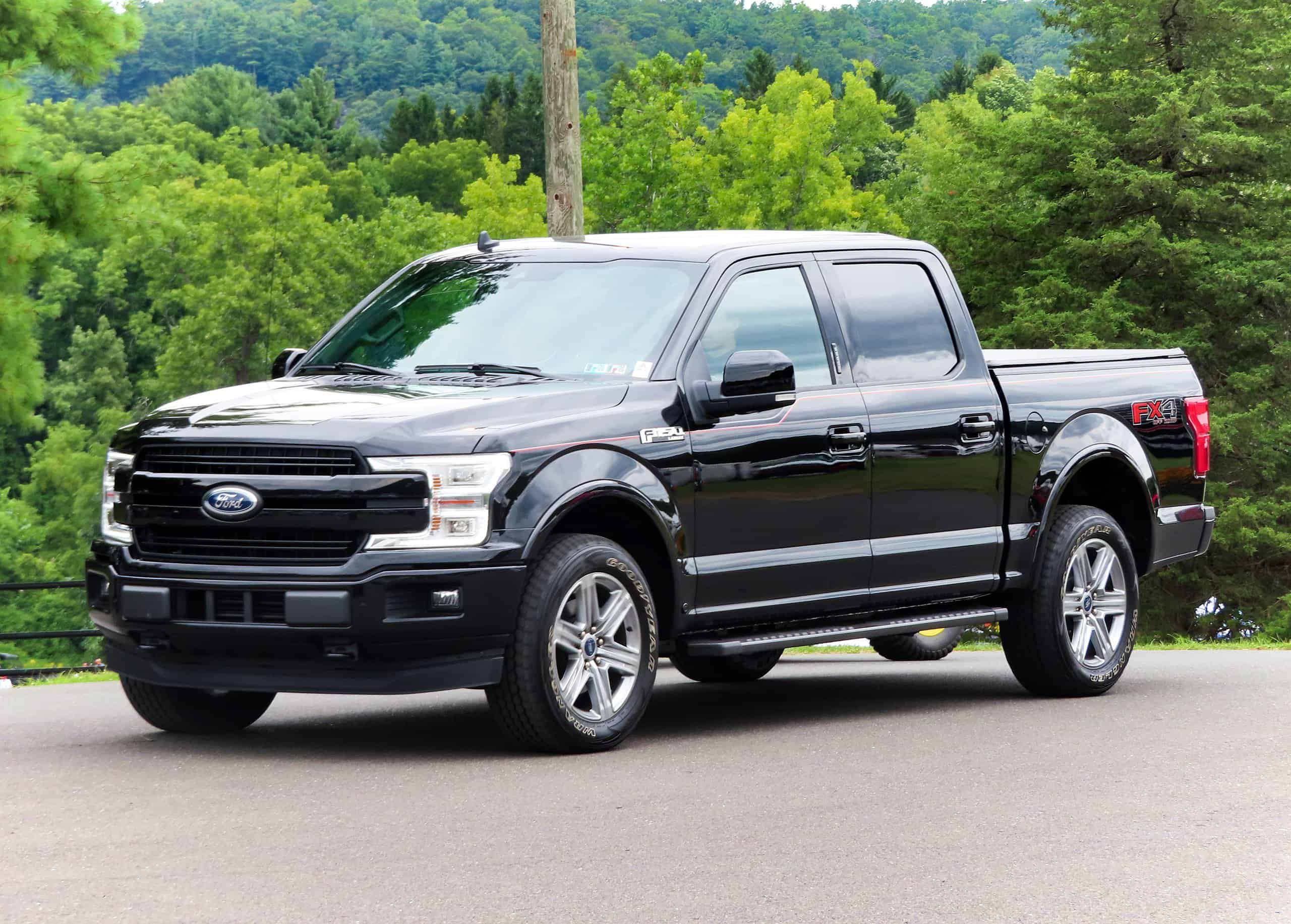
While Ford ( NYSE: F) was eating through billions of dollars in an attempt to gain a large market share in the US EV market and its EU and China units stagnated, its best-selling, and likely most profitable vehicle, the F-150, continued its gargantuan unit sales. The F-150 is part of the F-Series of full-size pickup trucks. Last year, unit sales of these in the US reached 828,832, up 8.3%.
Cars
fromYanko Design - Modern Industrial Design News
2 months agoWhy Cadillac Designed Its F1 Camouflage to Actually Stand Out - Yanko Design
Cadillac's response was to design specifically for that liminal space. The testing livery features what they call "the Cadillac precision geometric pattern" in gloss and matte sequences, turning functional camouflage into brand vocabulary. They're using the constraint of secrecy to communicate design philosophy, establishing that their approach blends automotive prototype discipline with motorsport theater. The giant Cadillac crest draped across the engine cover isn't trying to hide anything. It's declaring that the space between stealth and spectacle is itself worth designing for.
Cars
fromArs Technica
2 months agoThe Chevrolet Bolt is back... but for how long?
Reengineering the Bolt for a new battery pack wasn't the work of a minute. The cells, modules, and electronics are all different but had to fit in the same size space with the same mounting points as the original. And GM's own LFP factory won't be producing cells until sometime next year. Which means for now, GM is importing LPF cells from CATL in China, paying costly tariffs in the process.
Cars
fromYanko Design - Modern Industrial Design News
2 months agoMeet The SP40 Restomod Speedster: The Minimalist Carbon Hot Rod Redefining Retro Car Design - Yanko Design
The best custom builds do not just remix old ideas. They ask what those ideas would look like if they were born today, with access to current tools, materials, and manufacturing processes. The SP40 Restomod Speedster is that question answered in carbon and billet. It takes the stance and spirit of a 1930s streamliner, that long, low, purposeful shape built for speed rather than comfort, and reimagines it through the lens of modern coachbuilding.
Cars
[ Load more ]