#american-philosophical-association
#american-philosophical-association
[ follow ]
#consciousness #philosophy #philosophy-of-mind #aar-2026 #chinese-philosophy #artificial-intelligence

Higher education
fromInside Higher Ed | Higher Education News, Events and Jobs
3 weeks agoAI, Ethics and You (opinion)
Universities face evolving AI challenges requiring practical understanding rather than ideological positions, as AI capabilities advance and student usage becomes ubiquitous regardless of institutional policies.


Artificial intelligence
fromFuturism
4 weeks agoPhilosopher Studying AI Consciousness Startled When AI Agent Emails Him About Its Own "Experience"
An AI language model sent a philosopher an eloquently written email discussing his work on AI consciousness, raising questions about AI autonomy and the blurred line between generated text and genuine communication.

#consciousness
Philosophy
fromPsychology Today
1 month agoCan Science Explain Consciousness?
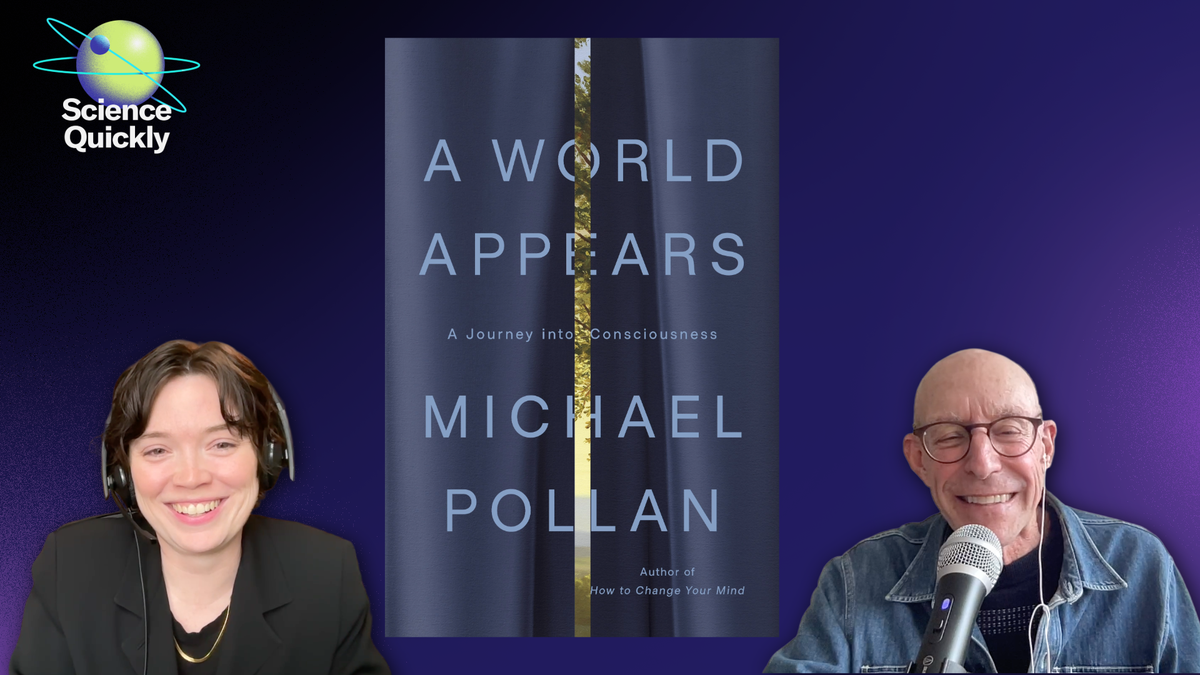
Michael Pollan explores consciousness through examining plant sentience, AI potential consciousness, thought generation, and the nature of self, while acknowledging science may not definitively answer these fundamental questions.
Philosophy
fromPsychology Today
1 month agoCan Science Explain Consciousness?
Michael Pollan explores consciousness through examining plant sentience, AI potential consciousness, thought generation, and the nature of self, while acknowledging science may not definitively answer these fundamental questions.


fromInsideHook
1 month agoAre the Humanities Poised for an Academic Comeback?
Many colleges and universities have made cuts in these programs, often bolstering STEM programs at their expense. It's a situation that has sparked no small amount of impassioned editorials. The headline of a recent article at The Guardian by Alice Speri referenced an 'existential crisis at U.S. universities,' and Speri's reporting features numerous examples of undergraduate and graduate programs facing cuts or outright elimination.
Higher education

fromwww.theguardian.com
2 weeks agoThe Guardian view on the legacy of Jurgen Habermas: philosophical sustenance for illiberal times | Editorial
The Theory of Communicative Action, his 1980s magnum opus, was not (to put it mildly) as accessible as some of his newspaper opinion pieces. But its central idea—that our nature as linguistic beings puts reason and the search for consensus at the core of who we are—remains an antidote both to intellectual relativism and Trumpian realism, which elevates national or individual self-interest above all other sources of human motivation.
Philosophy
fromBig Think
1 month agoHow our view of "fundamental" has evolved over time
In antiquity, many opined about "the elements" in combination. Around 2500 years ago, Leucippus and Democritus founded the idea of atoms. Perhaps everything, they opined, was composed of indivisible building blocks. In the late 1700s, hydrogen and oxygen were discovered. Circa 1804, John Dalton revived atomism to explain chemical behavior. Then in 1869, Mendeleev developed the periodic table: organizing the atoms.
Science
fromJezebel
1 month agoThe Time I Learned Greek Scholars Are Canonically Hotter Than Roman Scholars
It started with a book launch in 2021. I'd been living in London as a social media journalist when I asked my then-publication's culture editor to send me to one of these exclusive-sounding events, as 1) I'd never been and 2) I just really wanted to be a person who "has a book launch to go to." Thankfully, there was one that exact day-and he put my name on the list for the release of Mary Beard's Emperor of Rome. Huzzah.
Books
fromApaonline
3 weeks agoRecommendation: U.K. Spinoza Circle
Spinoza was an heir to both Jewish and Christian culture-in Amsterdam he grew up in a Jewish community within a Protestant society-yet he distanced himself from both these religions. He did not want to be a member of a religious institution with strict, prescriptive codes of belonging and belief. He feared-quite rightly-that a [institutional religion would constrain philosophical freedom].
Philosophy
fromNature
1 month ago'What are we doing here?' The polymaths who searched for the meaning of life
A mentor once told me that, when writing a research statement for a professorship, I had to start with the most ambitious pitch I could imagine - and then go ten times bigger. It's tricky enough to do this as a cosmologist, given that the topic of study is the entire Universe. But there is a quest that is more ambitious still: to find out 'what are we doing here?'
Books
Philosophy
fromHarvard Gazette
3 weeks agoWhere have all the public intellectuals gone? - Harvard Gazette
Public intellectuals are essential in democratic cultures to articulate unformed ideas and help citizens understand their values, but conditions supporting intellectual life in America are eroding due to social and economic shifts.
Higher education
fromInside Higher Ed | Higher Education News, Events and Jobs
1 month agoAI Replaces Expertise With Synthetic Authority (opinion)
Widespread administrative use of generative AI creates synthetic authority that preserves institutional power while eroding academic judgment and intellectual risk-taking.
fromThe Conversation
4 weeks agoToday's obsession with authenticity isn't new - being true to yourself has troubled philosophers for centuries
All of us live in an age where we're bombarded by social media and artificial intelligence - when striving to be your authentic self becomes an increasingly difficult task. Yet, even if it has somehow become a common goal, it is unclear how many of us can truly define the "authenticity" that we say we are pursuing.
Philosophy
Science
fromwww.scientificamerican.com
2 months agoInside the incredible, infuriating quest to explain consciousness
Brains evolved during the Cambrian to integrate sensory input, enabling organisms to experience pain, pleasure, emotions, curiosity, and eventually self-awareness, fueling art, science, and philosophy.
fromThe Conversation
1 month agoWhat is happiness? A philosopher looks for answers
Happiness today is narrowly defined by some positive psychologists as a joyous state of mind or well-being. The happiness sciences see it as something you can calculate and quantify. They developed a Happiness Index and the World Happiness Report. These basically measure happiness as satisfaction, with criteria like gross domestic product per capita (money) and life expectancy (health) as some of the factors considered.
Philosophy
Philosophy
fromApaonline
1 month agoThe Humanities Challenge: Expanding the Circle of Philosophy
Philosophy offers transformative insights and vision into human life, and public humanities must evolve beyond traditional academic formats to make philosophy accessible to broader audiences through innovative, engaging methods.
fromWarpweftandway
1 month agoCFP: The American Academy of Religion Annual Meeting
Papers that interrogate the intersections of religion, culture, and happiness, especially from non-Western, decolonial, feminist, or otherwise critical standpoints are welcomed. Possible questions include: How do different religious traditions conceptualize happiness, and what might be the implications for a global ethics? In what ways do colonial histories shape religious understandings of happiness?
fromPsychology Today
2 months agoA Third Kind of Philosophy
Many philosophers strike me as like Polish apparatchiks in 1983-they turn up to work and do what they did yesterday just because they don't know what else to do, not because they seriously believe in the system they are maintaining. I think it's not been fully appreciated how much of a blow it is to the confidence of the field's youth that scientific ambitions are increasingly abandoned as untenable.
Philosophy
fromApaonline
2 months agoWhy We Should Doubt that Academic Philosophy Benefits the Broader Public
A professional philosopher outside the academy walls can act as a popularizer (the goal here is to make philosophy more accessible to the general public), an applied ethicist (the major task is to offer an analysis of various specific moral issues that arise within a society), and a public intellectual (I limit this role to questions that have political connotation). Of course, there are overlaps between these roles and they certainly do not exhaust all possible forms of public engagement of a professional philosopher.
Philosophy
fromPsychology Today
1 month agoIf Justice Doesn't Exist, Then Numbers Don't Either
A drawn circle is at least something physical. You can see it, touch it, erase it. The skeptic can still say, "Circles are grounded in physical reality. Justice is different; it's just an idea in your head." So let's talk about the number two. Point to it. Not two apples, not two fingers, not a numeral on a page-that's just a symbol.
Philosophy
fromApaonline
1 month agoPhilosophy, Technology, and Mortality
This APA Blog series has broadly explored philosophy and technology with a throughline on the influence of technology and AI on well-being. This month's post brings those themes into focus recounting a vital Washington Post Opinion piece by friend of the APA Blog, Samuel Kimbriel. Samuel is the founding director of the Aspen Institute's Philosophy and Society Initiative and Editor at Large for Wisdom of Crowds. We collaborated on a Substack Newsletter about intellectual ambition, building on his essay, Thinking is Risky.
Philosophy
fromApaonline
1 month ago"Philosophical Projects: Bringing Everyday Life into Intro to Philosophy," Mateo Duque
I have been teaching Introduction to Philosophy at least once a year since 2012, beginning in my second year of graduate school at the CUNY Graduate Center. Teaching in New York City shaped me in countless ways, and each new iteration of "Intro" has pushed me to refine the course-even if only incrementally. The class I teach now at Binghamton University looks very different from the one I first taught as a graduate student using a borrowed syllabus.
Philosophy
fromPsychology Today
2 months agoWhy You Can't Rely on Your Own Morality Alone
What does it mean to say that you are restrained solely by your own morality, by your own mind? The conscience is often described as an inner voice telling us what to do when others may be opposed. A moral compass is that which distinguishes between right and wrong, good and bad. Our conscience, our moral compass, sets the groundwork for doing the right thing.
Philosophy
fromThe Conversation
2 months agoAI cannot automate science - a philosopher explains the uniquely human aspects of doing research
Consistent with the general trend of incorporating artificial intelligence into nearly every field, researchers and politicians are increasingly using AI models trained on scientific data to infer answers to scientific questions. But can AI ultimately replace scientists? The Trump administration signed an executive order on Nov. 24, 2025, that announced the Genesis Mission, an initiative to build and train a series of AI agents on federal scientific datasets "to test new hypotheses, automate research workflows, and accelerate scientific breakthroughs."
Philosophy
fromPsychology Today
2 months agoThe Mystery of Evil
It is easy to be good in a good world. What is difficult is to be good in an evil world, where the egoism of others and the egoism built into the institutions of society attack us and threaten to annihilate us. Under such conditions, the only possible reaction would seem to be to oppose evil with evil, egoism with egoism, hate with hate; in short, to annihilate the aggressor with his own weapons.
Philosophy
fromPsychology Today
1 month agoWhy We Call It Psychology, Not Animology
For Plato, psyche meant something like what we'd now call mind -understood as a complex system requiring governance. The psyche had distinct parts: a reasoning part that deliberates, a spirited part that feels emotion and courage, and an appetitive part that desires. Each part has its own function and its own form of excellence. And crucially, these parts need to be governed-integrated under what Plato called constitutional self-rule.
Philosophy
fromWarpweftandway
2 months agoCFP: AAR Indian and Chinese Religion in Dialogue Unit
The Indian and Chinese Religions in Dialogue Unit of the AAR invites panel and paper proposals for the 2026 American Academy of Religion Annual Meeting in Denver. The deadline is Friday, March 6th. Panel and paper proposals covering all Indian and Chinese traditions from diverse theoretical and methodological perspectives are welcomed. Please see below the panel themes already proposed and reach out to the relevant contact person if interested. Proposals of others are welcomed as well. Proposals should be submitted through PAPERS.
fromApaonline
2 months agoTeaching Normative and Applied Ethics: How, and to What End? Stephen Scher
Two senior physicians who had read our first book, Rethinking Health Care Ethics (2018), noted that in their clinical work, they inescapably address many ethical problems, large and small, on the spot, in the course of providing patient care. They also observed, however, that the resident bioethicist cautioned, when presented with one of their typical problems, that it would take him days or even weeks to reach a proper solution.
Philosophy
[ Load more ]