#animal-rights-activism
#animal-rights-activism
[ follow ]



#animal-welfare



Pets
fromwww.theguardian.com
2 weeks agoI just wish they'd let me feed my cats': how council ban made one woman an animal welfare icon
A woman banned from feeding feral cats she cared for 20 years receives overwhelming community support after a neighboring business complained to the council about cat feces.
fromOpen Culture
2 weeks agoIn Her Final Reflections, Jane Goodall Issues a Warning: "Without Hope, We Fall Into Apathy"
Somebody sent to this world to try to give people hope in dark times, because without hope, we fall into apathy and do nothing, and in the dark times that we are living in now, if people don't have hope, we're doomed. How can we bring little children into this dark world we've created and let them be surrounded by people who've given up?
Writing
Environment
fromTruthout
3 weeks agoEnvironmental Activists Say the FBI May Be Investigating Them
FBI counterterror investigators are scrutinizing nonviolent climate activist groups like Extinction Rebellion NYC, raising concerns about federal law enforcement targeting constitutionally protected protest and free speech activities.
fromNature
1 month agoDaily briefing: The new alternatives to animal testing
Mini 3D 'organoids' are slowly phasing out animal testing in some areas of research. These laboratory-grown tissue structures can model human biology more accurately than traditional animal models, reducing the need for animal experimentation while providing more relevant data for drug development and disease research.
Science
fromwww.theguardian.com
1 week agoThe Guardian view on vets: there is nothing cuddly about this under-regulated market | Editorial
The Competition and Markets Authority found that consumers have overpaid roughly £1 billion in veterinary fees over five years, highlighting a significant issue in the market.
Pets
fromNature
1 month agoThe age of animal experiments is waning. Where will science go next?
Last November, the UK government announced a bold plan to phase out animal testing in some areas of research. Animal tests for skin irritation are scheduled for elimination this year, and some studies on dogs should be slashed by 2030. The long-term vision is 'a world where the use of animals in science is eliminated in all but exceptional circumstances'.
Science
Environment
fromwww.mercurynews.com
1 month agoOpinion: AI is destroying our planet. We must act to check its growth and save ourselves.
AI's environmental impact is severe, with 2025 freshwater consumption exceeding global bottled water use and projected energy demands by 2034 matching India's entire consumption, requiring immediate action.
Food & drink
fromenglish.elpais.com
2 months agoThe world against vegans: can the movement withstand the reactionary wave and its own crisis of faith?
Veganism faces a modest decline with qualitative shifts: some businesses and high-profile individuals reintroducing animal products while overall veggie numbers remain largely unchanged.
UK politics
fromwww.theguardian.com
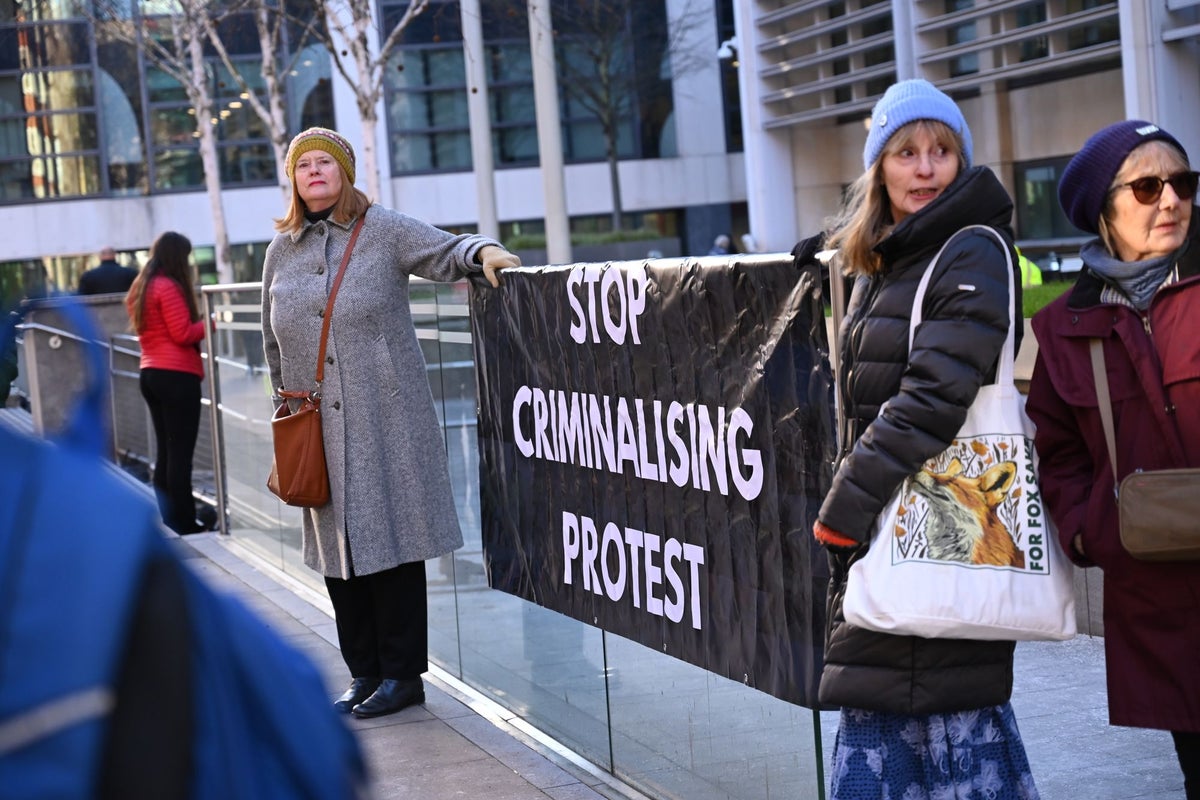
2 months agoLabour MPs plan to oppose move to restrict protest at animal testing sites
Ministers propose reclassifying life-science facilities as key infrastructure to criminalize disruptive protests, prompting cross-party opposition over civil liberties and limited parliamentary scrutiny.
fromPsychology Today
1 month agoThe Hidden Lives of Lab Animals and the Need for Reform
Countless millions of nonhuman animals (animals) of all sorts are used in a diverse array of laboratory research. Their treatment varies from being unspeakably inhumanely abused to being treated with kindness, depending on the questions at hand and the values and attitudes of the researchers themselves. The lives of these animals truly are hidden, and most people are incredulous when they learn that laboratory rats and mice still are not considered "animals" under the current federal Animal Welfare Act.
Science
Arts
fromThe Art Newspaper - International art news and events
2 months agoThe final cow-tdown: buyers of MSCHF's controversial bovine project will decide animal's fate
MSCHF presells a calf as 1,200 burgers and four leather bags, letting buyers cancel to spare the animal and spotlight meat industry impacts.
Social justice
fromNature
1 month agoMy professor said 'Black people are not interested in the environment'. I set out to prove him wrong
Dorceta Taylor pioneered research, programs, and leadership to document and advance racial diversity, inclusion, and environmental justice within environmental science and conservation.
fromMindful
1 month agoCan Compassion Save the Planet?
When British author Karen Armstrong won the TED prize in 2008, she used the money to convene a group of religious thinkers from a wide range of faiths to craft an updated version of the Golden Rule for the 21st century. What emerged was the Charter for Compassion, which calls on people around the world "to work tirelessly to alleviate the suffering of our fellow creatures, to dethrone ourselves from the center of our world and put another there, and to honor the inviolable sanctity of every single human being, treating everybody, without exception, with absolute justice, equity and respect."
Philosophy
fromPsychology Today
1 month agoWhat Is Meat? It's Probably Not What You Thought
I'm thrilled I did, and my learning curve was vertical in this page-turning work that "offers a hopeful and rigorously researched exploration of how science, policy, and industry can work together to satisfy the world's soaring demand for meat, while building a healthier and more sustainable world." There is nothing "radical" about what likely will become a classic, one that is already endorsed by experts in global hunger, global health, climate change, and food security.
Food & drink
fromwww.theguardian.com
1 month agoThey pushed so many lies about recycling': the fight to stop big oil pumping billions more into plastics
Then she read an article in this newspaper, just over eight years ago, and discovered that fossil fuel companies had ploughed more than $180bn (130bn) into plastic plants in the US since 2010. It was a kick in the teeth, says Gardiner. You're telling me that while I am beating myself up because I forgot to bring my water bottle, all these huge oil companies are pouring billions She looks appalled. It was just such a shock.
Environment
fromwww.dw.com
2 months agoHoly cow! Cattle may be a lot smarter than we thought
The 13-year-old Swiss Brown cow lives in the village of Notsch at the foot of the Carinthia mountains in southern Austria. She's kept as a pet by a local farmer, and can roam her meadow to her heart's delight. Like many other pets, she likes to have her back scratched. If no friendly humans are around to do the job, that's not a problem Veronika uses a brush or stick to do it herself.
Science
fromwww.dw.com
2 months agoThe business of saving nature
The world spends 30 times more money destroying nature than protecting it. That's according to a new report from the United Nations Environment Programme (UNEP) that exposes a massive gulf between so-called "harmful investments" and financing that promotes nature preservation. The global environment agency's latest "State of Finance for Nature" (SNF) report is calling to phase out the US$7.3 trillion (6.2 trillion) in global investments that damage nature including into high-emissions energy infrastructure and manufacturing, for example.
Environment
fromwww.theguardian.com
2 months agoHumanity's favourite food': how to end the livestock industry but keep eating meat
For someone aiming to end the global livestock industry, Bruce Friedrich begins his new book called Meat in disarming fashion: I'm not here to tell anyone what to eat. You won't find vegetarian or vegan recipes in this book, and you won't find a single sentence attempting to convince you to eat differently. This book isn't about policing your plate.
Environment

[ Load more ]