#anti-extremism
#anti-extremism
[ follow ]
fromTruthout
3 days agoRupture and Repair Under Fascist Conditions
"We have a great opportunity in our movements to learn how to be opponents without being enemies," says Tanuja Jagernauth. This perspective emphasizes the importance of maintaining respect and understanding even amidst conflict.
Social justice
Information security
fromSecuritymagazine
4 days agoThe Rising Tide of Executive Protection: Corporations Ramp Up Security in an Era of Heightened Threats
Companies are increasingly investing in executive protection due to rising threats, making it a strategic necessity for business continuity and resilience.
fromElectronic Frontier Foundation
1 week agoDigital Hopes, Real Power: From Revolution to Regulation
66% of internet users live where political or social sites are blocked, and 78% are in countries where people have been arrested for online posts. New social media regulations have emerged in dozens of countries in the past year alone.
World politics
LGBT
fromLondon Business News | Londonlovesbusiness.com
5 days agoMet Police to scrap non-crime hate incident investigations in five months - London Business News | Londonlovesbusiness.com
The Metropolitan Police will stop investigating non-crime hate incidents to focus on criminal activities and improve resource allocation.
Paris food
fromwww.theguardian.com
1 week agoProgressive Paris has many weapons to fight the far right, but the best? Spaces where you can simply hang out | Alexander Hurst
Paris is successfully creating third places that foster community engagement and accessibility, contrasting with the decline of such spaces elsewhere.
Social justice
fromwww.theguardian.com
4 days agoMy year in solitary confinement has not broken me. My peaceful fight for Baloch rights in Pakistan goes on | Mahrang Baloch
Solitary confinement leads to severe isolation and mental strain, compounded by the targeting of family members due to political activism.
Mindfulness
fromTNW | Opinion
2 weeks agoThe most radical act in an age of outrage is to play
Deliberate manipulation through social media and engineered news cycles creates division and emotional volatility, but reconnecting with simple human activities like play offers resistance to this conditioning.
London politics
fromLondon Business News | Londonlovesbusiness.com
4 days agoMet Police claim to have a 'clear plan in place' after teenagers rampaged through London - London Business News | Londonlovesbusiness.com
The Metropolitan Police warned of robust action against violence following a riot in Clapham, resulting in two teenage arrests.
US politics
fromABC7 San Francisco
3 weeks agoCivil rights group reports surge in anti-Muslim discrimination and rhetoric in 2025
Anti-Muslim discrimination in the United States has significantly increased during 2025, driven by anti-Muslim rhetoric from public officials and Trump administration policies targeting immigrants based on national origin.
New York City
fromwww.amny.com
3 weeks agoEditorial | NYC makes its own luck with a strong NYPD counterterrorism unit | amNewYork
Two bombs at Gracie Mansion failed to detonate, narrowly preventing mass casualties; robust NYPD counterterrorism funding and staffing remain essential amid escalating Iran tensions.
fromPsychology Today
1 week agoEmbracing the Warrior-Guardian Paradox in Modern Policing
The warrior and guardian are not competing philosophies between which a department must choose. They are complementary capacities every officer needs - and every agency must develop, sustain, and honor equally.
Social justice
fromThe Atlantic
3 weeks agoThe Peculiar State of Islamic Terror in America
This was not random violence. This was a planned attack motivated by extremist ideology and inspired by a violent foreign terrorist organization. With this, she promptly raised the profile of both the suspects, Emir Balat and Ibrahim Kayumi, and of ISIS itself. It hardly seemed to matter that no evidence has surfaced that directly ties these men to the larger movement.
Right-wing politics
fromThe Atlantic
4 weeks agoA Word for Our Troubled Times
A record high of adults—80 percent—believes that Americans are divided on the most important values. National pride, trust in government, and confidence in institutions are near record lows. The Princeton University historian Sean Wilentz says the United States hasn't been this divided since the Civil War. Nearly half of Americans think another civil war is likely in their lifetime.
US politics
Mental health
fromNonprofit Quarterly | Civic News. Empowering Nonprofits. Advancing Justice.
3 weeks agoHow to Counsel for Climate Anxiety | Nonprofit Quarterly | Civic News. Empowering Nonprofits. Advancing Justice.
Climate anxiety cases among therapists have surged dramatically, with demand for mental health support addressing climate-related grief, anxiety, and despair increasing significantly across multiple countries.
Right-wing politics
fromwww.aljazeera.com
3 weeks agoUS civil rights group documents broad attack on Muslim life' in 2025
CAIR's annual report documents rising Islamophobia in the US government and society, warning that discriminatory policies and hate speech threaten constitutional rights for all Americans.
Psychology
fromPsychology Today
1 month agoHow to Help Communities Rebound from Crisis and Disaster
Disaster psychology provides an empirically-based framework for building community resilience and growth during crises through understanding predictable psychological phases and natural recovery mechanisms.
Online Community Development
fromPsychology Today
1 month agoNo One Is Coming to Help-Except Your Neighbors
Building community-led resilience networks and mutual aid groups nationwide enables neighbors to support each other through overlapping crises including climate change, inequality, and government violence.
Social justice
fromwww.theguardian.com
3 weeks agoA lot of the hate happened in Australia': why the Christchurch mosque attack still awaits a full reckoning
Australian youth are increasingly accessing and sharing Christchurch terrorist attack material, yet Australia has conducted minimal public accountability regarding the attacker's local far-right connections and what could have prevented the attack.
Information security
fromSecuritymagazine
1 month agoThe Great Security Culture Shift: Building a Proactive Defense in an Era of Advanced Threats and Social Engineering
Hackers exploit DLL side-loading on trusted platforms like LinkedIn to deliver malware through seemingly legitimate file attachments, bypassing traditional security defenses and compromising entire corporate networks.
Mental health
fromPsychology Today
1 month agoNavigating the Messy Middle of Disaster Recovery
Disaster recovery extends beyond the initial crisis phase; year two brings psychological challenges including chronic stress, financial strain, and bureaucratic delays that impair functioning and compound trauma.
fromHarvard Business Review
2 months ago"People Need Unifying Messages"
In this issue of the HBR Executive Agenda, editor at large Adi Ignatius talks to Harvard Business School professor Ranjay Gulati about how leaders can act with clarity amid rising social tension and rapid technological change.
Business
fromPsychology Today
2 months agoAmerica Is Fraying, What Comes Next?
The air feels heavier. And the struggles are changing shape. Beyond my office walls, the world is shifting, and my clients sense the tremors. The things they once trusted, global order, democratic norms, and even their own personal safety, no longer feel solid. They feel brittle, as if one strong wind could bring it all down. And what they're sensing isn't imagined.
Relationships
fromFast Company
2 months agoOur embrace of individuals over institutions isn't serving us well
In the early 20th century, sociologist Max Weber noted that sweeping industrialization would transform how societies worked. As small, informal operations gave way to large, complex organizations with clearly defined roles and responsibilities, leaders would need to rely less on tradition and charisma, and more on organization and rationality. He also foresaw that jobs would need to be broken down into specialized tasks and governed by a system of hierarchy,
History
fromThe Atlantic
2 months agoHow to Be a Citizen in the Information War (And Stay Sane)
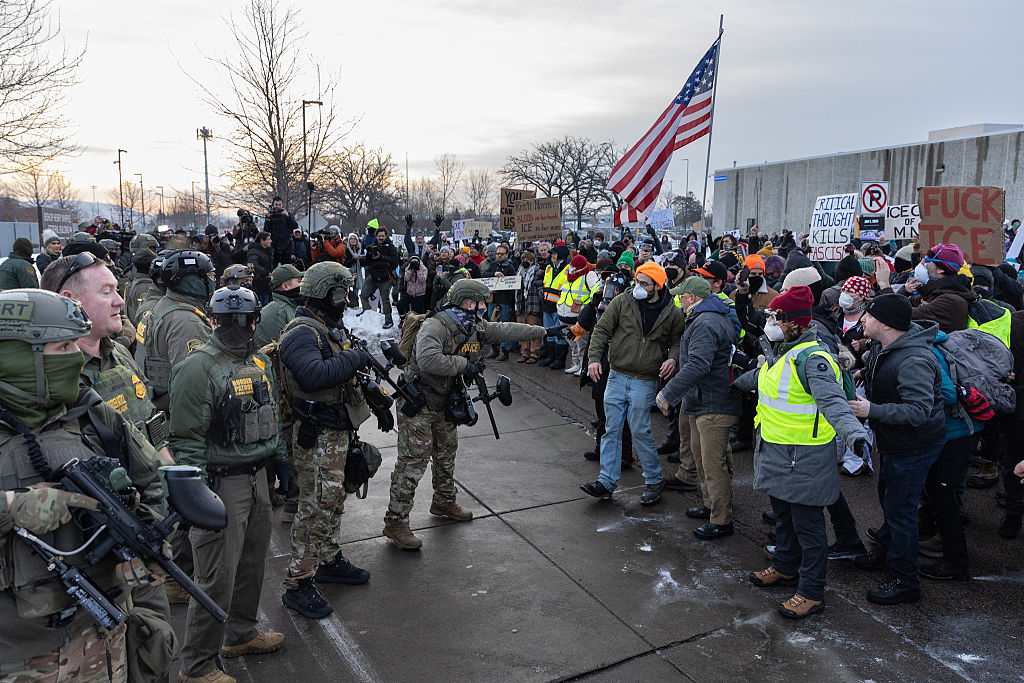
Charlie Warzel opens with what it means to live in 2026, when our phones can drop us into graphic, real-time violence without warning-and when documenting that violence can be both traumatizing and politically consequential. Using recent footage out of Minneapolis as a lens, he explores the uneasy collision of algorithmic feeds, misinformation, and the moral weight of witnessing. Charlie also traces how viral documentation can puncture official narratives, pushing stories beyond political circles and even into "apolitical" corners of the internet.
Digital life
fromThe Cipher Brief
2 months agoLoosening the Gordian Knot of Global Terrorism: Why Legitimacy Must Anchor a Counterterrorism Strategy
OPINION - The global terrorism landscape in 2026 - the 25 th anniversary year of the 9/11 terrorism attacks - is more uncertain, hybridized, and combustible than at any point since 9/11. Framing a sound U.S. counterterrorism strategy - especially in the second year of a Trump administration - will require more than isolated strikes against ISIS in Nigeria, punitive counterterrorism operations in Syria, or a tougher rhetorical posture.
US politics
fromNature
1 month agoHow to rescue the aid industry: focus on conflict prevention, not just relief
In 2025, the administration of US President Donald Trump ordered the US Agency for International Development to be closed; this year, it withdrew the country from 66 international organizations. Other Western nations that are plagued with high levels of debt and pressure to prioritize domestic challenges have slashed their foreign aid, too. According to projections, official development assistance dropped by 9-17% in 2025, amounting to some US$55 billion.
World news
fromFast Company
1 month ago3 ways to build psychological safety now so it's there when you need it most
While uncertainty hung heavy in the air, our small team was unusually open with each other. We talked candidly about the challenges, the personal toll, and what it might all mean for the business. Without setting out to do so, we had built a foundation of psychological safety-one that made navigating a global crisis far less stressful than it might have been otherwise.
Psychology
fromSecuritymagazine
1 month agoFive Top Tips for Building a Strong Security Culture
Building security into the framework of an organization prevents security from being seen as a barrier to daily activities. If an employee feels as if a security measure is inhibiting them from completing their daily tasks, they're far more likely to find a way around that measure. This can range from propping open a door to using the same easy-to-remember password for every account.
Information security
fromEast Bay Express | Oakland, Berkeley & Alameda
2 months agoFreedom From Fear Pt. 2: the tactical side of terror
Let me be emphatic; all undocumented immigrants have committed a crime. They have all broken immigration law. All of the undocumented immigrants I spoke to frankly admitted this. And almost all of them also expressed a real desire for immigration reform. That surprised me-at first. Although, on second thought, they would almost certainly benefit from any rationalized system-which would necessarily recognize their indispensable importance to the U.S. economy.
US politics
fromLGBTQ Nation
1 month agoPolitical pragmatism is not a moral failing. It may be the only thing that can save us. - LGBTQ Nation
He is not worthy of the presidency. He takes bribes blatantly. And now he's being a racist, blatantly. They were supposed to deport the dangerous criminals. They were not supposed to go after small children, storm schools, bring terror upon, you know, the little kids and the women and children, not just the immigrants in the school. All the children are scared.
US politics
fromPsychology Today
1 month agoDistrust and Disempowerment, Not Apathy, Hinder Allies
Our research, published in the European Journal of Work and Organizational Psychology, suggests that people often hesitate to intervene when co-workers are mistreated because they themselves feel disempowered in their organizations and experience distrust and polarization. Our findings run counter to the common assumption that people don't step up to support marginalized colleagues because they don't care or are unmotivated. Not seeing much action against inequity and injustice can drive this cynical idea.
Social justice
US politics
fromwww.mediaite.com
2 months agoDHS Spox Dodges Twice When Asked if Alex Pretti is Still Being Labeled a Domestic Terrorist' in Testy Exchange On Fox News
DHS spokesperson declined to retract Kristi Noem’s label of Alex Pretti as a domestic terrorist, deferring judgment to ongoing investigations.
US politics
fromwww.mediaite.com
2 months agoI Don't Know How We Recover From This': Trump Officials Reportedly Worried About Quick Claims of Domestic Terrorism'
Top administration officials quickly labeled the ICE shooting of Renee Good domestic terrorism, prompting internal concern that politicized rhetoric could undermine the investigation.
[ Load more ]