#arsenale
#arsenale
[ follow ]
#venice-biennale #venice #contemporary-art #design #art-exhibition #italy #venice-biennale-2026 #adaptive-reuse
Barcelona
fromArchDaily
6 days agoSANAA, David Chipperfield Architects, and Snhetta Among Five Finalists for Barcelona's New Waterfront Cultural Venue, Liceu Mar
Barcelona selects five finalist teams for the Liceu Mar cultural venue competition at Port Vell, aiming to enhance accessibility and civic engagement.
fromHyperallergic
2 days agoThe Art World Is a Joke
Kamrooz Aram is everywhere this year, from Mumbai Art Week to the Whitney Biennial, and critic Aruna D'Souza is grateful. She pens a beautiful meditation on his work, reading his abstract paintings as not simply a denunciation of Western modernism nor a reassertion of Islamic visual motifs, but something else entirely - something gestural, exuberant, riotous, and incomparably his own.
Arts
Travel
fromConde Nast Traveler
2 weeks agoIn Venice With My Mom and Sister, Discovering the Joy of a Cross-Generational Trip
Family vacations with aging parents and siblings become increasingly precious as life circumstances change, making intentional travel together a meaningful priority before it becomes impossible.
fromArchDaily
1 week agoLa Biennale di Venezia Unveils Renovated Central Pavilion at the Giardini
The project reconsiders the building as a layered architectural structure shaped by successive transformations, reorganizing these historical strata through a spatial strategy that prioritizes clarity, continuity, and flexibility.
Renovation
Washington Nationals
fromDefector
2 weeks agoNobody's Having More Fun Than The Italians | Defector
The World Baseball Classic uses flexible nationality rules allowing players to represent countries through lineage and citizenship, creating amusing rosters like Team Italy's Italian-Americans defeating Team USA.
Europe news
fromwww.theguardian.com
3 weeks agoVenice Biennale risks losing EU funding over planned Russia involvement
The European Commission threatens to cut €2 million in funding to the Venice Biennale if Russia participates in the 2026 exhibition, citing violations of ethical standards and European democratic values.
Renovation
fromdesignboom | architecture & design magazine
2 weeks agovenice biennale reveals renovated central pavilion ahead of 61st international art exhibition
The Central Pavilion at La Biennale di Venezia has been fully refurbished, enhancing its spatial coherence and preparing for the 2026 Art Biennale.
#venice-biennale

Arts
fromThe Art Newspaper - International art news and events
2 weeks agoNearly 200 Venice Biennale participants sign letter demanding cancellation of Israeli pavilion
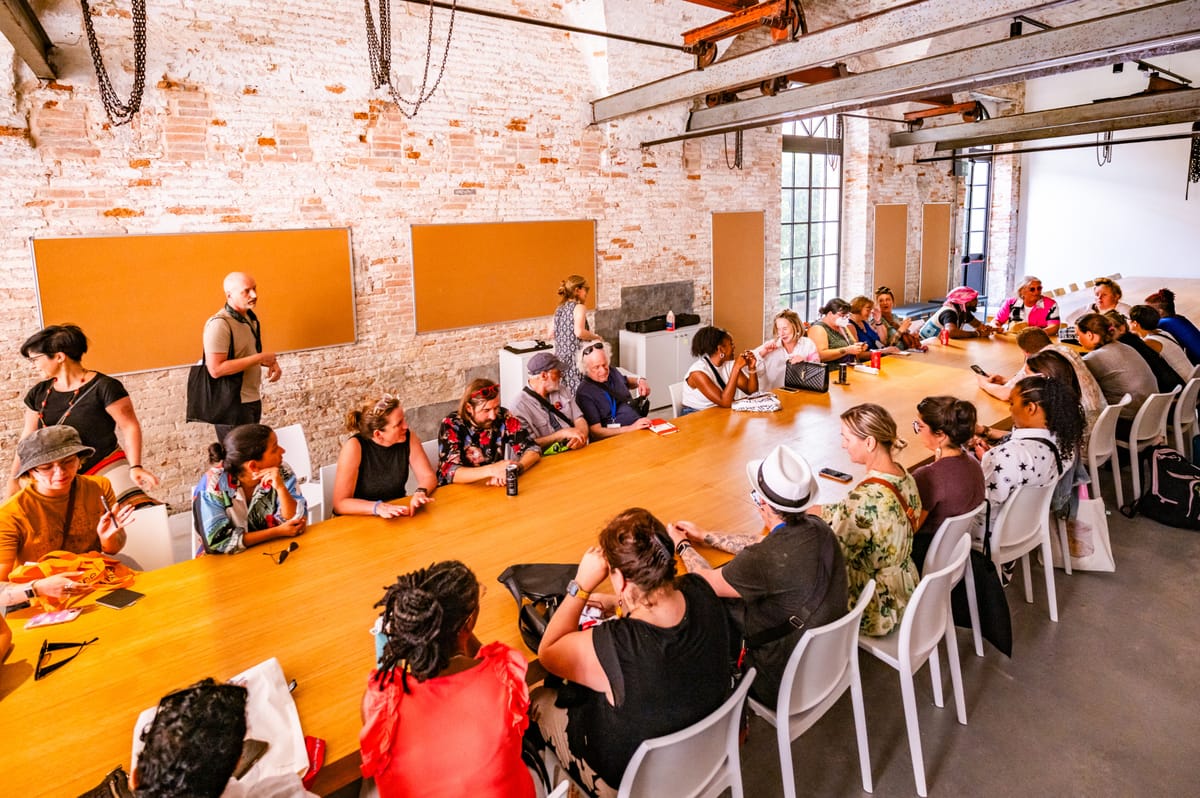
Artists and cultural workers are collectively refusing to allow the Israeli state to be platformmed at the Venice Biennale, demanding exclusion based on allegations of genocide and destruction of Palestinian cultural life.

Arts
fromThe Art Newspaper - International art news and events
2 weeks agoNearly 200 Venice Biennale participants sign letter demanding cancellation of Israeli pavilion
Artists and cultural workers are collectively refusing to allow the Israeli state to be platformmed at the Venice Biennale, demanding exclusion based on allegations of genocide and destruction of Palestinian cultural life.
Europe politics
fromThe Art Newspaper - International art news and events
3 weeks agoEU threatens to pull funding from Venice Biennale after return of Russian pavilion
The EU threatened to withdraw €2 million in funding from the Venice Biennale if Russia's pavilion reopens, citing incompatibility with EU sanctions and opposition to using culture as propaganda.
fromArchDaily
2 weeks agoStefano Boeri Interiors Restores Southern Ambulatory Areas of the Colosseum in Rome
The intervention 'restored the perception of the monument's original scale and pavement level,' while enabling visitors to approach the structure more directly and understand the sequence of the ambulatory and its arches. This recalibration of levels, based on archaeological findings and geometric studies, also enabled the reorganization of the stormwater drainage system, integrating surface slopes and transitions into the paving design while maintaining coherence with the monument's historical configuration.
Renovation
fromLos Angeles Times
9 years agoFamed Venice Canals home: proudly - and loudly - welcoming
People say, 'It's the most Instagrammed house in the world.' About 150,000 photos the last time we checked. That story, Galan says, helped launched an invasion; the home has been besieged by TV and film crews, tourists, art students, architects, wedding parties and a parade of selfie sticks.
LA real estate
Travel
fromBusiness Insider
3 weeks agoMy favorite gem in Italy is just an hour from Venice. It's packed with stunning scenery and feels like stepping into a fairy tale.
Bassano del Grappa offers authentic Italian culture, local cuisine, and scenic beauty with fewer tourists than major Italian cities like Venice.
fromArchDaily
2 weeks agoCarlo Ratti Associati Designs Buzzi Heritage Cultural Center in Italy With the New Digital Construction System
The project examines the integration of digital fabrication processes into reinforced concrete construction, highlighting that while materials such as steel and timber have undergone significant transformation through digital production methods, reinforced concrete has largely retained conventional casting techniques. The proposal aims to address this condition by incorporating digitally fabricated components into the construction system.
Renovation
Science
fromwww.theguardian.com
1 month agoHumans not Mimmo the dolphin need managing in Venice lagoon, say scientists
Italian scientists monitoring a solitary dolphin in Venice conclude that human behavior management, not wildlife control, is necessary to protect the animal from boat propeller dangers.
fromApartment Therapy
1 month agoThis Soothing Italian Philosophy Transforms the Way I Do Everything
"Piano piano" is an old Italian saying that sounds nonsensical, but is actually full of wisdom, especially if you, like me, are finding yourself wishing away these frigid winter days and hoping spring and summer gets here fast. These days, I've found myself rushing from one thing to the next, frustrated at the smallest things, from post office lines to just missing my train. And I'm ready to make a change.
Mindfulness
fromYahoo Life
1 month agoThe Most Beautiful Bridges In The World
Whether it is Scandinavian innovation, a handmade rope crossing in the Peruvian Andes, or a skyline-defining landmark in a global city, the world would look very different without bridges. For centuries, people have found ways to span rivers, valleys, and rainforests, sometimes working with nature itself to create structures that feel as much like art as engineering. There are millions of bridges across the planet and countless candidates for any best-of list.
Design
Arts
fromThe Art Newspaper - International art news and events
3 weeks agoArt communities and heritage in Iran, moderate recovery in the art market, Sydney Biennale-podcast
Cultural communities in Iran and Lebanon respond to Middle East conflict while heritage sites face damage, alongside global art market recovery and contemporary art installations addressing regional tragedies.
fromwww.theguardian.com
3 weeks agoNaples museum to allow visually impaired visitors to experience art through touch
The veil covering Christ is extraordinary. It's impossible to understand how Sanmartino managed to create it. The veil defies explanation—for those who can see and for those who cannot. When you touch it, you can feel the veins pulsing beneath.
Arts

:max_bytes(150000):strip_icc()/TAL-header-venice-canal-snow-WINTERVENICE0226-73cd5024a6e6451492dc0e93c1708fa8.jpg)
Arts
fromArtnet News
3 weeks agoE.U. Threatens to Pull Venice Biennale Funding Over Russia Pavilion
The EU threatened to withdraw €2 million in funding from the Venice Biennale over Russia's planned pavilion, citing concerns about providing a cultural platform to Kremlin-connected figures during the Ukraine war.
Miscellaneous
fromConde Nast Traveler
2 months agoWhy 2026 Is the Year You Should Finally Go to Venice
Venice is shifting toward sustainable, decentralized tourism with visitor limits, flood protections, island food production, revived artisan traditions, restored historic hotels, and the Biennale's return.
fromArchDaily
1 month agoNaples Architecture City Guide: 15 Projects of History, Density, and Continuity
Set on the edge of the Mediterranean and shaped by centuries of continuous occupation, Naples is a city where architecture is inseparable from time. Layers of Greek foundations, Roman infrastructures, medieval churches, Baroque palaces, and Modern interventions coexist within a dense and compact urban fabric. Naples reveals itself as an accumulation of structures, adaptations, and reuse, where buildings are rarely isolated objects and more often part of a larger spatial, social, and historical system.
Miscellaneous
Real estate
fromTravel + Leisure
2 months agoThis Florida City Is Home to a Beautiful Opera House, a Fish Market Over a Century Old, and Soft White-sand Beaches
Sarasota offers more than 35 miles of white-sand coastline, abundant outdoor activities, and rich cultural institutions including world-class attractions and boutique hotels.
fromwww.thehistoryblog.com
1 month agoBronze Neptune from Lyon arrives in Rome
The Neptune of Lyon, one of the largest and most important bronze statues from Roman Gaul, has arrived in Rome for a one-time guest starring appearance at the Giovanni Barracco Museum of Ancient Sculpture. The statue is in the permanent collection of the Lugdunum Musee et Theatres Romains in Lyon, and is being loaned to the sculpture museum as part of an extraordinary exchange of ancient works between the two cities.
History
Miscellaneous
fromdesign-milk.com
1 month agoTake 5: A Heart-Shaped Park, Carlo Scarpa's Masterpiece + More
Love Park in Toronto uses playful, queer-inflected landscape design; Jeff Wall retrospective at MOCA presents large-scale, staged photographic narratives revealing choreographed cinematic scenes.
Miscellaneous
fromwww.theguardian.com
1 month agoItaly's famous Lovers' Arch collapses into the sea on Valentine's Day
The iconic Lovers' Arch in Sant'Andrea, Melendugno collapsed on Valentine's Day after storm surges and intense rainfall, reflecting severe coastal erosion linked to stronger medicanes.
Renovation
fromdesignboom | architecture & design magazine
2 months agostep inside caffe nazionale, AMAA's renovation of a northern italian palazzo
Caffè Nazionale transforms a city-hall colonnade into a layered, restored café combining historic fabric, contemporary insertions, and tactile material details.
fromwww.mercurynews.com
2 months agoLeonardo da Vinci's legacy lights up the Milan Cortina Olympics with two cauldrons
The design has been revealed and it is a sun-like structure that is inspired by Leonardo's intricate knot patterns. Leonardo spent almost 25 years of his life in Milan and many of his most famous works are from his time in the city. The cauldrons have been designed to open and close with a diameter that expands from 3.1 meters to 4.5 meters and will contain the Olympic flame at their core, encased in a glass and metal container.
Miscellaneous
Arts
fromThe Art Newspaper - International art news and events
2 months agoHawai'i at the British Museum, a Venice palazzo for sale, Joseph Beuys's 'Bathtub'-podcast
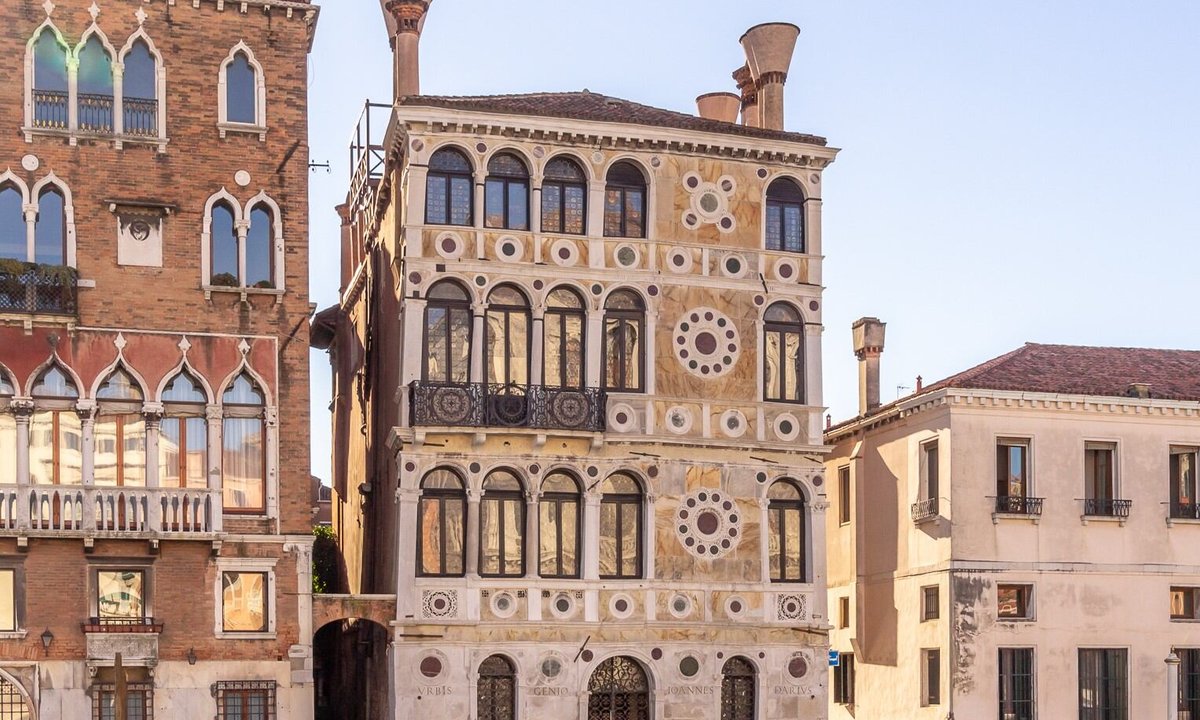
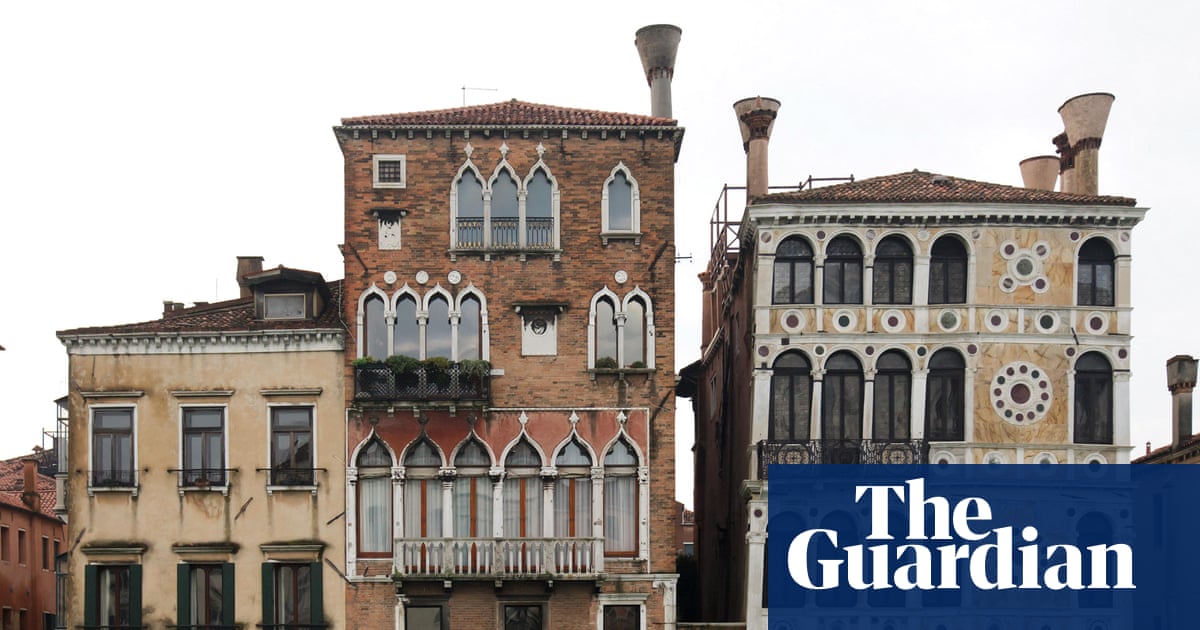
British Museum presents Hawaiʻi: a kingdom crossing oceans with renewed stewardship of Hawaiian objects; Venice's Ca' Dario is for sale; Beuys' Bathtub in London show.
fromArtnet News
1 month agoThis Serene Canaletto Is Now One of the Italian Masters Most Expensive Works | Artnet News
A signature view of Venice by Canaletto brought a strong price for the 18th century Italian master at Christie's on February 4, leading the Old Master week in New York. Hammering at $26 million, it sold for a total of $30.5 million including fees, just over its $30 million pre-sale estimate. Backed by a guarantee and irrevocable bid, it was sure to sell.
Arts
Arts
fromdesignboom | architecture & design magazine
2 months agosustainable ice skating rink occupies palazzo diedo's frescoed banquet hall in venice
A 100-square-meter synthetic skating rink occupies Palazzo Diedo's frescoed hall, combining sustainable ice simulation, sound, and lightboxes to juxtapose Baroque permanence with bodily experience.
Arts
fromThe Art Newspaper - International art news and events
2 months agoAnish Kapoor to show some of his most ambitious projects-realised or not-in Venice
Anish Kapoor's Venice exhibition presents around 100 architectural-scale sculptural models, mixing realised and unrealised projects to emphasize his non-commercial practice.
Arts
fromdesignboom | architecture & design magazine
1 month agoENESS installs luminous inflatable boulders in bologna's historic piazza maggiore
Inflatable luminous 'boulders' transform Piazza Maggiore into a temporary, interactive field evoking monumental geology, blending iwagumi balance with responsive light and sound.
[ Load more ]