#audiophile-vinyl
#audiophile-vinyl
[ follow ]
#vinyl-records #vinyl #portable-audio #nostalgia #headphones #consumer-electronics #turntable #audio-equipment

Roam Research
fromdesignboom | architecture & design magazine
3 days agoradio time machine AI audio system recreates past sounds for cognitive health in elderly care
AI-powered Radio Time Machine enhances well-being in elderly care by generating nostalgic audio content to stimulate memories and communication.


Berlin music
fromYanko Design - Modern Industrial Design News
4 days agoBang & Olufsen Clads Its Flagship Speaker in 1,800 Aluminum Pearls and Rosewood Slats For 100th Anniversary - Yanko Design
The Beolab 90's Atelier series features innovative designs, including the Monarch and Zenith Editions, showcasing advanced materials and craftsmanship in speaker design.

fromDesign Milk
3 weeks agoThis Pared Down Stereo System Takes-on Cubist Dimensions
In Braque's paintings, collages, and prints, the polymath set out to distill bucolic landscapes and rural village scenes as broken up and then re-assembled geometric compositions; decidedly abstract yet still slightly recognizable representations. Through this revolutionary approach, he examined how objects could be depicted from multiple perspectives-multiple sources of light-as if superimposed portrayals of the same setting rendered at different times of day.
Design
Wearables
fromgizmodo.com
1 month agoNothing Headphone A Review: A Little More Colorful and a Little Less Good
Nothing's Headphone A offers budget-friendly over-ear wireless headphones with extended battery life and vibrant color options, but delivers compromised audio quality compared to the premium Headphone 1 model.
Los Angeles
fromLos Angeles Times
1 month agoA secret-ish Japanese-style listening lounge just opened inside the Hollywood Palladium
The Hollywood Palladium opened Vinyl Room, a 1970s Japanese hi-fi inspired lounge offering dinner, drinks, and vinyl DJ sets for concertgoers before or after ticketed events.
Music
fromYanko Design - Modern Industrial Design News
1 month agoThese $40-$299 Cassette Players Just Crushed Spotify's Algorithm - Yanko Design
Cassette player searches have surged over 1,281%, driven by millennials and Gen Z seeking deliberate listening experiences away from algorithmic playlists and infinite streaming options.
fromdesignboom | architecture & design magazine
1 month agomodern audio player restores the physical form of music using disc-shaped cartridges
It's similar to a vinyl record, but the tracks are in a USB drive. It has no moving parts inside, so it's totally digital in how it stores sound. But it has a physical shape users can hold, flip over, look at, and collect, so in a way, the designer is asking: what if digital music had a physical body?
Music production
Gadgets
fromYanko Design - Modern Industrial Design News
2 weeks agoGen Z Is Obsessed With These 5 Cassette-Era Gadgets & They Just Got a Full Design Upgrade for 2026 - Yanko Design
Streaming's abundance created a thinner listening experience; cassette-era design principles combined with modern technology offer a solution through intentional, tactile music consumption products.
fromThe Verge
2 weeks agoPhilips new audio gear brings back the bright bold colors of the '80s
The collection includes two wireless speakers that both feature Bluetooth 5.5 with Auracast support, an IP67 rating so they can survive the occasional short dunking, 24 hours of battery life, neon colored buttons, and multicolored LED lighting. Cassette tape functionality hasn't been carried forward from Philips' original '80s Moving Sound devices, but both speakers have color LCD screens displaying a stylized animation of spinning cassette reels, and other playback details.
Gadgets
Design
fromdesignboom | architecture & design magazine
1 month agowooden music cabinet by love hulten plays vertical vinyl and casette tapes in one device
A handcrafted wooden cabinet plays vinyl vertically and stores vertically stacked cassette tapes with color-coded modern controls and retro-modern styling.
Music production
fromdesignboom | architecture & design magazine
1 month agoelectric guitar-shaped turntable spins vinyl records on frosted platter and wooden base
Clearaudio creates an electric guitar-shaped turntable honoring jazz artist Al Di Meola, featuring high-density wood fiber construction, frosted platter, and advanced vibration isolation through IMS light motor suspension with O-rings.
Gadgets
fromZDNET
2 weeks agoThis unassuming amplifier is the one audio upgrade that finally made my speakers sing
The Rotel DX-5 is a beginner-friendly integrated amplifier designed for digital streaming and modern audio formats, lacking a built-in phono preamp but offering versatile connectivity options.


Arts
fromYanko Design - Modern Industrial Design News
2 months agoAn Artist Carved His Dead Oak Into Records That Play Bird Songs - Yanko Design
A diseased 65-year-old oak was transformed into playable wooden records and a sound sculpture that preserves migratory bird songs and honors the tree's character.
fromwww.theguardian.com
1 month agoAnalog is back, and my millennial heart couldn't be happier | Tayo Bero
Usually, my handbag is a medley of digital devices and life essentials my phone, iPad, chargers, keys, tampons. But lately, you're likely to also find a half-done newspaper crossword, a ton of stationery, the book I've restarted three times, and whatever scraps and trinkets I've picked up throughout the day to put in my scrapbook. Analog is back, and it feels like we need it more than ever.
Mindfulness
fromYanko Design - Modern Industrial Design News
1 month agoYamaha's Sail and Butterfly speakers reimagine how sound takes shape - Yanko Design
Few brands move as fluidly between precision engineering and artistic expression as Yamaha. From concert grand pianos to motorcycles and professional audio systems, the company has long treated sound as both science and sculpture. Its latest speculative speaker concepts continue that philosophy, challenging the conventional box-shaped loudspeaker with forms that are lighter, more interactive, and visually dynamic. Rather than refining the familiar rectangular enclosure, Yamaha's design team rethinks how sound radiates into space and how users physically engage with it.
Design

Gadgets
fromYanko Design - Modern Industrial Design News
1 month agoAstell&Kern Just Killed the Touchscreen With Two Knobs and $2,000 - Yanko Design
The Astell&Kern PD20 portable audio player prioritizes physical controls and tactile interaction over touchscreens, featuring wheels, switches, and mechanical feedback for intuitive sound adjustment.
fromWIRED
1 month agoThe Marshall Kilburn III Is a Rocking Brick of Sound
What's wild about this jump in stamina is that it's disproportionate to the battery's capacity. The Kilburn II ships with a 5,200 mAh cell, while the new model is only about 5% bigger: 5,500 mAh. Clearly, some big efficiencies have been gained.
Gadgets
fromYanko Design - Modern Industrial Design News
2 months agoThis retro-modern music player revives the hypnotic spin of cassette tapes - Yanko Design
For this time around, however, the concept player here stays within the audio listening gear domain; nonetheless, has clear signs of a TE-inspired design. The retro Bluetooth player is a music accessory that's reminiscent of the classic cassette tape player design, but on the inside, it's a modern music player that plays music wired or wireless. The aesthetics are purely for arousing the nostalgic feel of listening to music on a cassette player, while the audio is digitally played via a DAC for high-resolution output.
Music
fromYanko Design - Modern Industrial Design News
2 months ago5 Best Transparent Audio Devices That Show What's Inside - Yanko Design
Transparent design has moved beyond gimmick territory into something genuinely compelling. When Nothing started showing off circuit boards through clear plastic, the tech world noticed. Now that aesthetic has matured into a legitimate design movement where form and function create something worth displaying. Audio equipment benefits particularly well from this treatment because the internals actually matter to the listening experience, turning technical components into visual storytelling.
Design
Music
fromdesignboom | architecture & design magazine
2 months agovintage reel-to-reel tape player returns as modern wooden synthesizer by love hulten
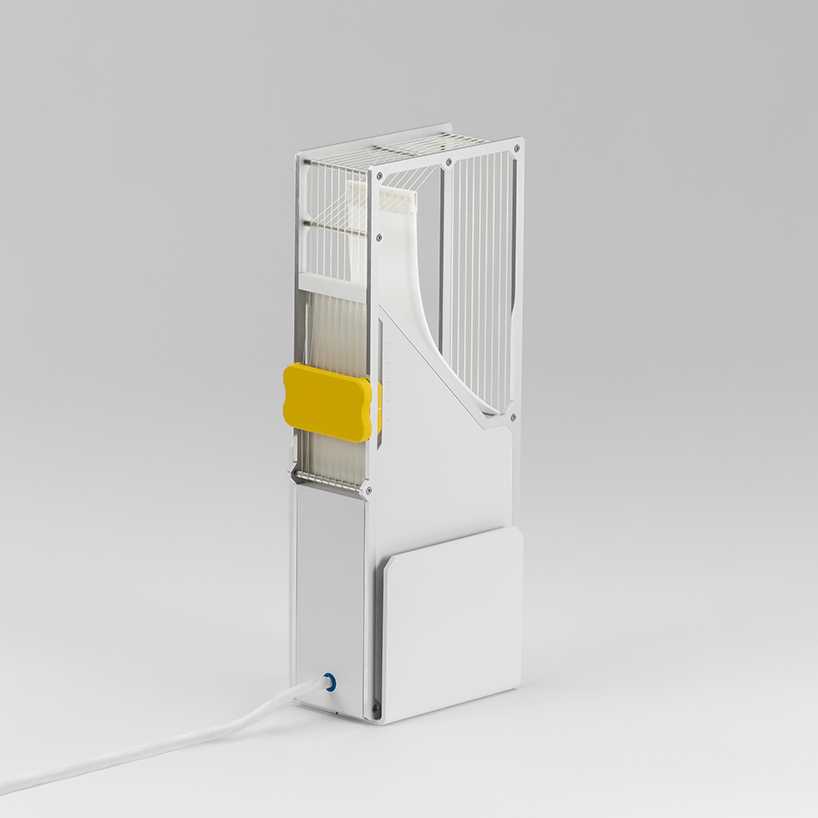
A wooden RGB synthesizer combines vintage reel-to-reel visual cues with stepper-motor-driven red, green, and blue rotating discs and three stacked keyboard rows.

fromFuturism
1 month agoIn Blind Test, Audiophiles Unable to Tell Difference Between Sound Signal Run Through an Expensive Cable and a Banana
High-quality cables have long been marketed as a key way to get the most out of high-end equipment, such as expensive studio-grade monitor speaker cables and gold-plated HDMI cables for cutting-edge TVs. In the high-end audiophile world, which is renowned for eye-bulging prices, cables can cost tens of thousands of dollars for ultra-pure copper with silver plating, specialized insulation, and dozens of individual conductors that manufacturers claim will squeeze the most out of a luxury-grade sound system aimed at the uber-wealthy.
Gadgets
fromYanko Design - Modern Industrial Design News
2 months agoEdifier D32 Retro Hi-Fi Speaker Hides AirPlay and 11-Hour Battery - Yanko Design
Music has become the backdrop to almost everything, cooking, working, reading, but the hardware that plays it often looks like a leftover from a tech store, plastic boxes that clash with furniture. There is a tension between wanting good sound in every room and not wanting your living space to feel like a gadget shelf. A speaker that behaves like hi-fi but looks like it belongs on a sideboard can quietly solve that.
Music
fromYanko Design - Modern Industrial Design News
2 months agoMP-1 Reimagines a Modern Walkman Through a Teenage Engineering Lens - Yanko Design
Listening to music has mostly collapsed into phones and streaming apps, buried between notifications and multitasking. Some people still crave a single-purpose device that treats listening as the main event, not background noise. The MP-1 is an independent concept study that asks what a modern Walkman could look like if it borrowed Teenage Engineering's design language, without being affiliated with the company or trying to become an official product at all.
Music
fromFuturism
2 months agoMetal Band Releases New Album on N64 Cartridge
Last year saw the highest vinyl record sales since 1984, signaling a strong desire among music enthusiasts to return to a simpler time of physical media. Even cassette tapes are making a comeback, with major artists including Billie Eilish and Taylor Swift releasing their material on the iconic plastic, four-inch audio reels. Now, self-described "party slam" metal band Party Cannon is taking the nostalgia play - often framed as an act of defiance against greedy and AI-slop-infested streaming platforms - to a new level.
Music


fromZDNET
1 month agoThese slick desktop speakers sound as good as they look (and the price is right)
When I sit at my desk to work, I play music in the background to avoid getting distracted. For an immersive listening experience that encourages productivity, I typically throw on a pair of headphones, with my current rotation consisting of the Bose QuietComfort Ultra, Sony Ult Wear, and Sennheiser HD 660S2. Also: Spotify vs. Apple Music: I've tried both streaming services, and prefer this one
Gadgets
Gadgets
fromYanko Design - Modern Industrial Design News
2 months agoSpotify Record Player brings tactile experience of enjoying vinyls to the streaming world - Yanko Design
A Raspberry Pi-powered desk player uses RFID/NFC, a stepper motor, hall-effect sensing, and 3D-printed parts to play Spotify via miniature vinyl coasters.
Gadgets
fromYanko Design - Modern Industrial Design News
2 months agoSony releases two new Bluetooth turntables to spark Gen Z's love for vinyl - Yanko Design
Sony introduced two easy-to-use Bluetooth turntables, PS-LX3BT and PS-LX5BT, targeting new vinyl listeners with wireless aptX codecs and built-in phono equalizers.
fromEsquire
2 months agoThese Portable CD Players Combine Modern Tech and Retro Tactility
Chances are this does exactly what you need. It will play your old CDs, your new CDs, your homemade mixtapes, the whole nine yards. You can even listen wirelessly thanks to onboard Bluetooth. It's got a decent battery life that can last you up to six hours, and it uses a USB-C to recharge. We usually have one of those on hand.
Gadgets


fromZDNET
1 month agoThese wireless bookshelf speakers deliver gloriously smooth sound for any style of music
Most consumers believe punchy bass and sizzling highs are key to a good speaker. If that sounds like your taste, then you have a lot of options available for you (because a lot of manufacturers cater to booming bass). But the mark of a truly good speaker is the ability to blend the sound in such a way that you hear it as the artist intended.
Gadgets
fromWIRED
1 month agoI Have Fallen in Love With Open Earbuds (and You Should Too)
They're called open earbuds (or open-ear buds, depending on the brand), and just about every audio brand has a pair (or three). They come in a slew of styles, but most either loop around your ears like older Beats buds, or clip on like funky-futuristic earrings. Whatever the style, they're designed to deliver satisfying sound while keeping your ear canals open to the sounds of the world around you.
Gadgets
fromYanko Design - Modern Industrial Design News
1 month agoA Digital Music Player with FLAC Files and a Built-In Speaker - Yanko Design
There's something oddly comforting about watching the vinyl resurgence happen in real time. We've collectively decided that convenience isn't everything, that sometimes the ritual matters as much as the result. But while turntables have been getting their moment in the spotlight, another piece of audio history has been quietly staging its own comeback: the dedicated digital audio player. Enter the DAP-1, a concept device from Frankfurt-based 3D artist
Gadgets
fromEngadget
2 months agoSennheiser debuts new models of wired headphones and earbuds
Wireless audio has become the industry standard, but there are still options out there for people who prefer a wired connection. Two new choices joining the market come from Sennheiser, which has released the CX 80U wired earbuds and HD 400U wired over-ear headphones. These new takes on the company's previous models for wired listening have replaced the 3.5mm audio jack connector with a USB-C cable.
Gadgets
fromYanko Design - Modern Industrial Design News
2 months agoSamsung's Retro OLED Cassette and Turntable Concepts Are Pure Nostalgia - Yanko Design
It takes the classic tape deck design and turns it into a smart speaker with two tiny 1.5-inch circular OLED displays. They're in that place where the spinning reels used to be, since this isn't exactly a cassette player. On the left, you get the playback controls and on the right side, you get a digital waveform or equalizer. Both screens are touch-sensitive, letting you interact directly with the device without constantly reaching for your phone.
Gadgets
fromYanko Design - Modern Industrial Design News
1 month agoWhen Furniture Meets High Fidelity: The Ruark R810 MiE - Yanko Design
There's something beautifully nostalgic about the radiogram. You know, those elegant wooden cabinets from the mid-century that housed radio, turntable, and speakers all in one piece of furniture that looked good enough to anchor your living room. Ruark Audio clearly remembers, and they're marking their 40th anniversary by bringing that concept into 2026 with the R810 MiE (Made in England edition), a stunning collaboration with Storm Furniture that proves technology can be just as much art as function.
Gadgets
[ Load more ]