#aurora-northern-lights
#aurora-northern-lights
[ follow ]
#greenland #aurora-borealis #climate-change #space-weather #northern-lights #arctic-security #geomagnetic-storm
:max_bytes(150000):strip_icc()/TAL-lead-image-GRNLNDNLIGHTS0426-6fa5170ac76547fe8eb8170dec10736f.jpg)


:max_bytes(150000):strip_icc()/TAL-taking-photo-northern-lights-AURORAPHONESETTING0226-2bc76a7b24504bb28b09b121eec62413.jpg)

Travel
fromConde Nast Traveler
4 weeks agoIn Greenland's Remote Fjords and Tiny Settlements, a New Sense of Connection
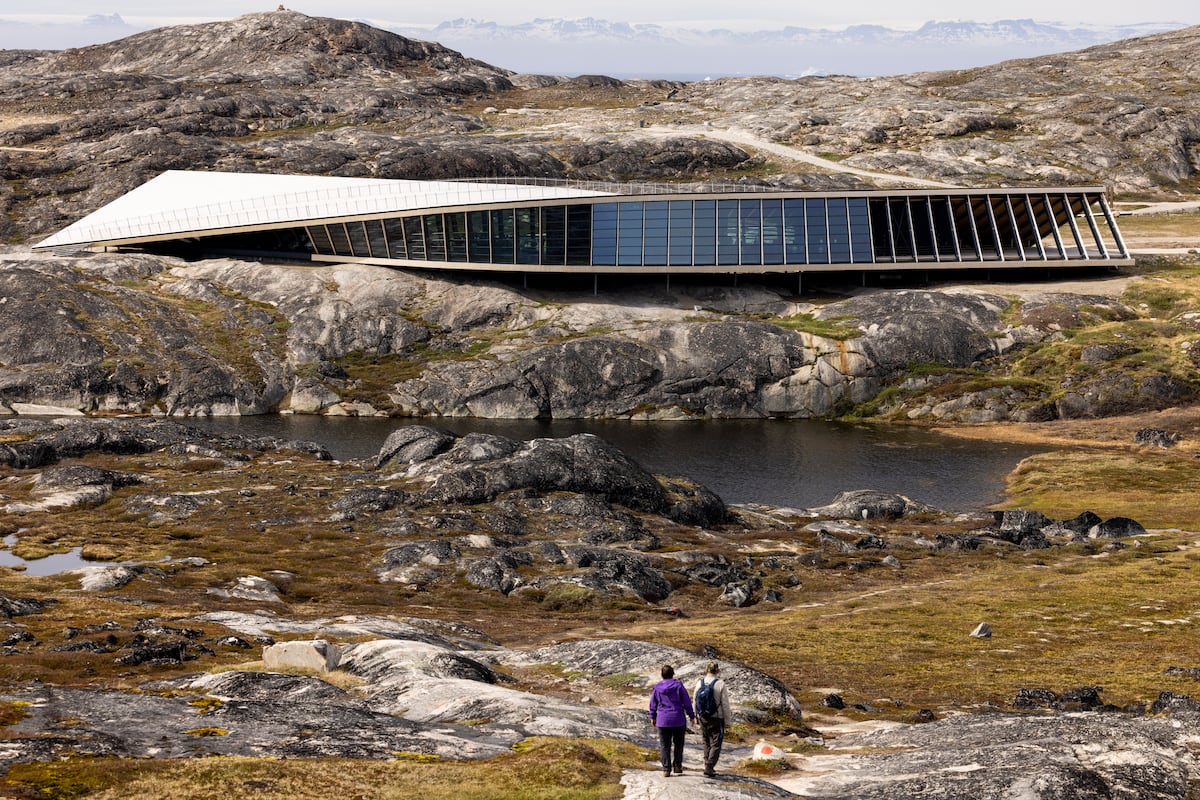
Greenland's new airport and developing tourism infrastructure make Arctic exploration increasingly accessible, offering unique cultural experiences with Indigenous and settler communities unavailable in Antarctica.




US news
fromBusiness Insider
2 months agoI was born and raised in Alaska. People are often surprised to learn about what my life there was really like.
Alaska features both extensive urban life and wilderness, with frequent flying and common small-plane ownership, and persistent misconceptions about daily life.
Canada news
fromArchitectural Digest
1 month agoIn Greenland, Design Meets Glaciers, Gravesites, and a Galactic Ocean
Modern expedition cruising makes remote Arctic sites like Beechey Island and Franklin’s wrecks accessible, blending comfortable travel with encounters of historical tragedy and extreme conditions.
fromwww.theguardian.com
2 months ago'Long johns for my fingers': what people are wearing in the world's coldest places
If anyone knows exactly what to wear to stay warm in cold weather, it's the people who live in these places. So I asked seven writers who reside in some of the coldest cities on Earth to recommend the gear they swear by. One writer in Mongolia wore a pair of foot warmers on a nine-day dog sledding adventure. Another in Winnipeg, Canada, shared a pair of gloves she's dubbed long johns for your fingers.
Fashion & style
fromSnowBrains
1 month agoAlaska, A Place Known for Massive Snow Totals, Records Snowiest January in Recorded History - SnowBrains
Recently, Anchorage, Alaska's largest city with nearly 400,000 residents, has just recorded its snowiest January on record. Tucked in between the mighty Cook Inlet and pushed right up against the Chugach Mountains, Anchorage sits in prime location for some serious snow totals. Moisture from pacific storms builds up over the inlet, and thanks to orographic lift caused by the mountains, forces that moisture to drop over Anchorage. Thanks to Alaska's northernly location, that moisture often falls in the form of snow.
Snowboarding
fromBrooklyn Eagle
2 months agoPREMIUM How the polar vortex and warm ocean intensified a major U.S. winter storm
A severe winter storm that brought crippling freezing rain, sleet and snow to a large part of the U.S. in late January 2026 left a mess in states from New Mexico to New England. Hundreds of thousands of people lost power across the South as ice pulled down tree branches and power lines, more than a foot of snow fell in parts of the Midwest and Northeast, and many states faced bitter cold that was expected to linger for days.
Brooklyn
Environment
fromwww.mercurynews.com
2 months agoMeteorologists blame a stretched polar vortex, moisture, lack of sea ice for dangerous winter blast
Warm Arctic waters and cold land are elongating the polar vortex, bringing subzero temperatures, heavy snow, and crippling ice across much of the United States.
fromwww.theguardian.com
1 month agoBeats and throat singing: Sami DJs tap into growing pride in Indigenous identity
We both live in maybe the most impractical place if you want to be a successful DJ, laughs Alice Marie Jektevik, one half of Article 3, a Sami female DJ collective. Jektevik, 36, and her collaborator, Petra Laiti, 30, reside in a rural village in the far north-east of Norway. But living in Sapmi the region across northern parts of Sweden, Norway, Finland and Russia traditionally lived in by Sami people has proven to be central to their success, providing the inspiration for much of their work.
Music
fromMedievalists.net
2 months agoFimbulvetr: When the Medieval World Saw the Sun Go Dark - Medievalists.net
In the medieval world, strange signs in the sky were rarely ignored. In AD 536, when the sun seemed to lose its light and the climate turned harsh, that catastrophe may have been remembered in the terrifying Norse legend of Fimbulvetr. In our medieval past, the sky was thought to be tightly connected with the landscape. Historical sources show a deep sense of fear caused by celestial phenomena such as comets, meteors, bolides, and even the aurora borealis.
History

fromwww.aljazeera.com
2 months agoWho owns the Arctic?
Global warming is thawing the Arctic and igniting a high-stakes race for the riches beneath its ice. Global warming is heating up the Arctic, and global powers like the United States, Russia and China are manoeuvring to stake a claim to the resources under its melting ice. Some experts say the region, once known as an exception an island of international cooperation in the midst of geopolitical struggles is becoming the site of a second cold war.
World news
fromThe Atlantic
1 month agoThe Blind Spot at the Top of the World
He had flown in from Mar-a-Lago and, he told me, was there to observe. The next day, he watched as Åsa Rennermalm, a Rutgers University professor who studies polar regions, sat onstage with European foreign ministers and spoke out against cuts to U.S. science funding. "A leading US Arctic scientist is on stage absolutely ripping her country to the delight of the audience," Dans wrote on X. "Embarassing." He punctuated his post with an American-flag emoji.
US politics
fromwww.dw.com
2 months agoFrom Inuit to Vikings to Trump: The history of Greenland
Early migration and Erik the Red The first humans settled in Greenland around 4,500 years ago. They came from the North American continent. In the 12th century, they were gradually displaced by Asian immigrants, the Thule people, who arrived on the island from Siberia via the Bering Strait. Their descendants are the Inuit, from whom most of the 56,000 Greenlanders today are descended.
History
fromwww.scientificamerican.com
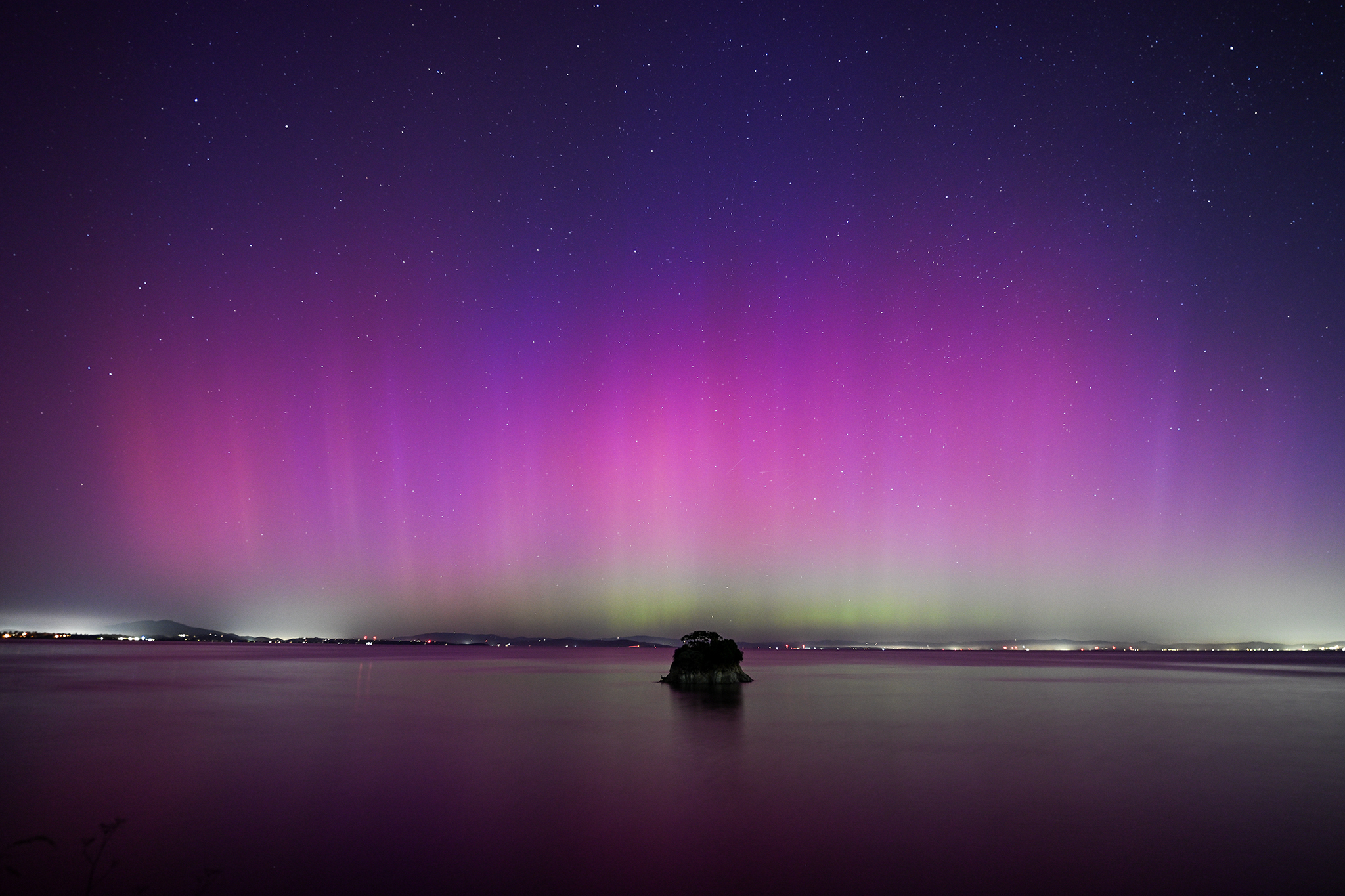
1 month agoThe science behind why some auroras have such stunning wave patterns
Auroras are nature's most special light show: when charged particles from the sun hit our atmosphere, they can generate bright colors that dance across the night sky near the Earth's poles. Auroras can come in various forms, including bands, rays, patches and more. But why auroras form these patterns is less clear. Now, researchers say they've identified the battery that powers at least one kind of auroraaurora arcs.
Science
fromwww.theguardian.com
2 months agoWe had Norway's glacial lakes to ourselves': readers' favourite breaks in Scandinavia and Finland
A week's hiking in Jotunheimen national park (230 miles north of Oslo) last summer brought me tranquillity and peace. During four days of challenging hiking and wild camping through the area we saw hardly anyone else, having entire lush green valleys and still glacial lakes to ourselves. We were fortunate to have stunning weather throughout and, despite it being July, still had a reasonable amount of snow to traverse.
Travel
fromFuturism
2 months agoStunning Footage Shows Space Station Drifting Through Aurora's Dazzling Lights
Earlier this week, the Sun unleashed a powerful X-class solar flare, a major burst of electromagnetically charged particles that lit up the Earth's night sky as they entered our planet's atmosphere. The effect was stunning: a dazzling display of auroras reaching as far as southern California. Forecasters that it was one of the largest solar storms in decades, making for a particularly unique opportunity to watch the show unfold.
Science
fromInsideHook
2 months agoA Growing Number of Travelers Are Visiting Greenland
When a city or country is in the spotlight, it's logical to expect an uptick of interest in visiting there. Each of the locations where a season of The White Lotus was filmed has seen a corresponding increase in tourism, for instance. Being the subject of news headlines and heated negotiations isn't quite the same thing as being the setting for a prestige TV series, but recent data suggests that Greenland is also seeing more international visitors than usual.
Miscellaneous
fromwww.scientificamerican.com
2 months agoThe sun just unleashed its most powerful solar flare in years
The sun is putting on a show. On Sunday the star unleashed several strong and bright solar flares, including one of the most powerful eruptions seen in decades. Far from the steadily glowing orb we sometimes picture, the sun's surface is made up of roiling plasma thrown about by twisting magnetic fields. When these fields snap, they can throw out huge bursts of energy and charged particles into spacea solar flare.
Science
fromwww.scientificamerican.com
1 month agoAncient seafarers helped shape Arctic ecosystems
In the pristine High Arctic sits the Kitsissut island cluster, also known as the Carey Islands, nestled between northwest Greenland and northeast Canada. The surrounding seas are perilous, and traveling there is difficult even with modern boats. But new archaeological evidence suggests ancient humans managed to sail to the islands, too. Early settlers lived on the islands between 4,500 and 2,700 years ago.
Science
fromEarth911
2 months agoGuest Idea: Finding a Northwest Passage to the Sea
The Northeast Passage was expected to open first due to the Coriolis effect. As the world turns to the east, in the Northern hemisphere, flowing water will veer to the right. Warm, salty Atlantic water flows into the Arctic Ocean through the Barents Sea Opening between Norway and Svalbard, and the Fram Strait between Svalbard and Greenland, then bends right along the Arctic coasts of Norway and Russia.
Science
[ Load more ]