#average-income
#average-income
[ follow ]
#income-inequality #k-shaped-economy #consumer-spending #lower-middle-class #wealth-inequality #retirement

Psychology
fromSilicon Canals
17 hours agoThe hardest part of growing up lower middle class wasn't the lack of money. It was learning to want things quietly, because visible desire in a household running on tight margins felt like an accusation against the people who were already giving everything they had. - Silicon Canals
Emotional training around scarcity shapes behavior in lower middle class childhoods, teaching children to suppress desires to avoid adding stress to their families.
#lower-middle-class
fromSilicon Canals
2 days agoRelationships
You know you grew up lower-middle-class if the most stressful sound of your childhood was the phone ringing at dinner - and you understood, before anyone explained it, that some calls meant someone needed something the family didn't quite have, and that understanding became the background noise of every evening for years - Silicon Canals

Relationships
fromSilicon Canals
2 days agoYou know you grew up lower-middle-class if the most stressful sound of your childhood was the phone ringing at dinner - and you understood, before anyone explained it, that some calls meant someone needed something the family didn't quite have, and that understanding became the background noise of every evening for years - Silicon Canals
Growing up lower-middle-class means living with constant worry, always one crisis away from trouble despite appearing fine on the outside.
Psychology
fromSilicon Canals
6 days ago6 things people who grew up lower middle class instinctively calculate before entering any restaurant, and none of them involve whether they're actually hungry - Silicon Canals
Growing up lower middle class instills lasting mental habits that influence decision-making and risk assessment, even after financial circumstances improve.

fromTruthout
5 days agoLow-Income Moms Struggle to Keep Their Families Afloat Amid Gas Price Increases
Luna Rosado, a single mother, has seen her gas expenses rise by $40 weekly due to a 30 percent increase in prices after the war in Iran. This has resulted in $160 less for groceries and other necessities each month, forcing her to constantly adjust her budget.
Washington DC
Careers
fromSilicon Canals
5 days agoThe most profound disconnect between boomers and younger generations isn't about avocado toast or laziness - it's that boomers inherited an economy designed to reward time invested, while millennials and Gen Z are navigating one that rewards attention captured, and the skill sets don't translate - Silicon Canals
Generational tension arises from differing economic realities between baby boomers and younger generations, affecting perceptions of work and success.
Parenting
fromFortune
5 days agoTwo-thirds of parents say their adult Gen Z kids still rely on them financially for support-even though it's putting them under strain | Fortune
Many Gen Zers rely on parental financial support, causing strain on both generations' finances amid a challenging job market and high living costs.
fromTruthout
5 days agoA Shady Nonprofit Pushes Back On Pennsylvania's Proposed Minimum Wage Hike
"Today's vote ignores the well-documented harmful consequences of wage hikes by economists. Not only would this proposal slash up to 86,000 jobs, it would also worsen inflation for Pennsylvania workers and residents."
Non-profit organizations
Psychology
fromSilicon Canals
1 day agoPsychology says people who grew up poor and became successful often can't fully enjoy it - not because they're ungrateful, but because some part of them never stopped waiting for it to disappear - Silicon Canals
Successful individuals often struggle with feelings of scarcity and anxiety about their financial stability, despite their achievements.
#k-shaped-economy
Business
fromFortune
2 weeks agoThe K-shaped economy has left many six-figure earners 'on thin ice' as housing costs, lifestyle creep, and the job market put them at risk | Fortune
High earners are financially vulnerable despite their income, with many at risk due to overspending and economic fluctuations.
Retirement
fromBusiness Insider
3 weeks agoThe rich are making and spending more money. Everyone else is cutting back.
The American economy is bifurcating into a K-shaped pattern where high earners maintain spending on luxury goods and experiences while lower- and middle-income earners cut back on discretionary purchases and face financial stress.

Business
fromFortune
2 weeks agoThe K-shaped economy has left many six-figure earners 'on thin ice' as housing costs, lifestyle creep, and the job market put them at risk | Fortune
High earners are financially vulnerable despite their income, with many at risk due to overspending and economic fluctuations.
Retirement
fromBusiness Insider
3 weeks agoThe rich are making and spending more money. Everyone else is cutting back.
The American economy is bifurcating into a K-shaped pattern where high earners maintain spending on luxury goods and experiences while lower- and middle-income earners cut back on discretionary purchases and face financial stress.
Psychology
fromSilicon Canals
2 days ago9 subtle behaviors that reveal someone grew up in a household where money was discussed in whispers, and why those behaviors persist long after financial security has arrived - Silicon Canals
Financial behaviors are shaped by early experiences and trauma, not just knowledge or information gaps about money.
Education
fromSilicon Canals
2 weeks agoNobody teaches you that class isn't about income. It's about which mistakes are survivable. A rich kid's DUI becomes a learning experience. A poor kid's missed rent payment becomes a credit score that follows them for seven years. Same species, different physics. - Silicon Canals
Credit scores reflect structural inequalities, where similar mistakes lead to vastly different consequences based on financial safety nets.
Right-wing politics
fromFortune
2 weeks agoEconomists agree: You're not crazy for feeling like the rich get richer, and the poor are doing worse. Welcome to the 'K-shaped economy' | Fortune
The K recovery illustrates a growing economic divide where the wealthy prosper while the poor struggle, echoing historical patterns of inequality.
NYC real estate
fromFortune
1 week agoNew York is home to 154 billionaires. Together they're worth $975.7 billion-and some of them are even making $2 million an hour | Fortune
New York's billionaires have a collective wealth of $975.7 billion, with significant growth contrasting stagnant wages for workers.
Mental health
fromSilicon Canals
2 weeks agoI grew up lower middle class and the thing nobody understands is that we didn't budget because we were disciplined. We budgeted because we'd already done the math on what happens when the car breaks down in the same month the insurance is due, and that math never leaves your body even after the numbers change. - Silicon Canals
Financial scarcity rewires the body and mind, creating lasting effects on budgeting and spending behaviors rooted in stress and dread.
World politics
fromwww.theguardian.com
2 weeks agoWe can tell you who will really get rich from this oil crisis and how we can stop them | Isabella Weber and Gregor Semieniuk
Strait of Hormuz disruptions from Middle East conflict drive oil prices above $100 per barrel, generating record profits for oil and gas companies while governments struggle with economic fallout.
Psychology
fromSilicon Canals
4 days agoPeople who grew up calculating whether they could afford both the drink and the entree before anyone else sat down don't stop doing that math when they earn six figures. The arithmetic isn't financial anymore. It's a loyalty ritual to a younger version of themselves who promised never to be caught without an exit. - Silicon Canals
Child poverty in the U.S. leads to adult poverty more than in Denmark, Germany, the UK, or Australia, with lasting effects beyond financial circumstances.
Mental health
fromSilicon Canals
2 weeks agoPeople who genuinely understand money but still feel broke aren't bad with finances. They grew up in a system where having enough was redefined every time they relaxed, so their brain permanently registers stability as the moment before loss. - Silicon Canals
Money anxiety stems from childhood experiences of financial instability where relief was followed by new crises, not from financial illiteracy or lack of knowledge.
US politics
fromFortune
3 weeks agoSocial Security has kept wealth inequality in check for decades. Trump's policies could deplete it in 6 years | Fortune
Social Security's $40 trillion buffer has moderated wealth inequality for decades, but accelerating fiscal policies threaten its insolvency by 2032, potentially widening the wealth gap to Gilded Age levels.
#income-inequality
Madrid food
fromwww.theguardian.com
3 weeks agoUnbelievably unequal': report shows how 1% of Mexicans own 40% of country's wealth
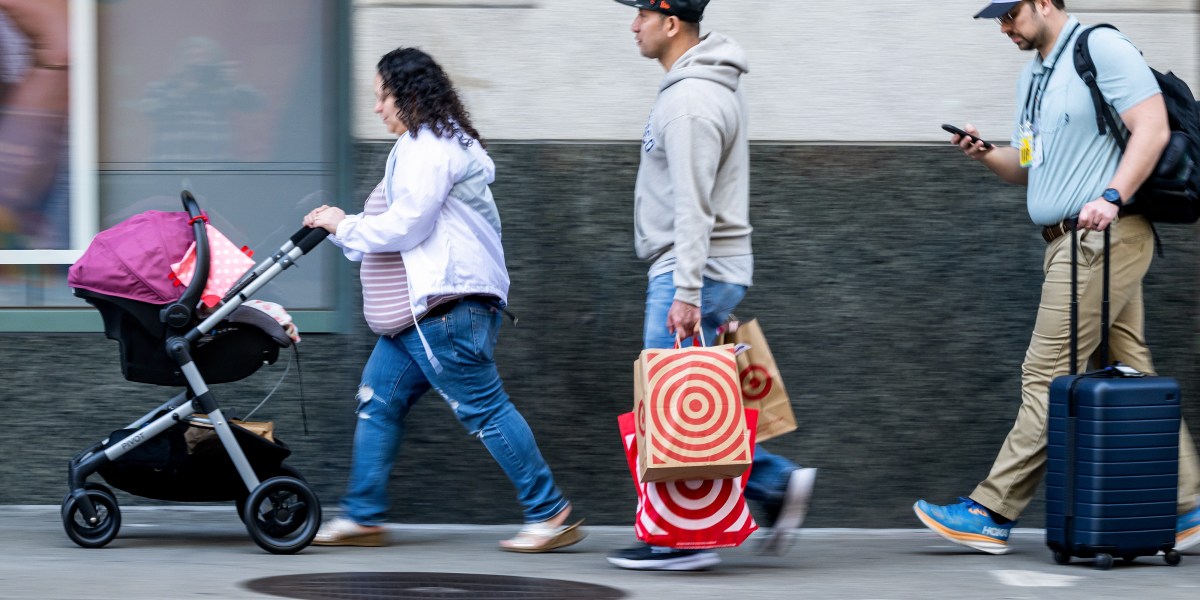
Mexico's extreme income inequality concentrates 40% of wealth among the richest 1% while nearly 19 million people live in poverty, exemplified by stark contrasts between luxury developments and working-class neighborhoods.

Madrid food
fromwww.theguardian.com
3 weeks agoUnbelievably unequal': report shows how 1% of Mexicans own 40% of country's wealth
Mexico's extreme income inequality concentrates 40% of wealth among the richest 1% while nearly 19 million people live in poverty, exemplified by stark contrasts between luxury developments and working-class neighborhoods.

fromApaonline
3 weeks agoGood Work and Class Conflict
Work, in the words of Karl Marx, is a "means of life" in two senses. It is, first of all, an instrument for human life. It is the activity by which we reproduce ourselves from day to day, from year to year, from generation to generation. But work also forms, so to speak, much of the matter of human life, at least for most people in any society with which we are familiar.
Philosophy
Careers
fromBackyard Garden Lover
2 weeks ago12 High-Paying Jobs You Can Land Without A College Degree
High-paying careers increasingly require vocational certificates, associate degrees, or technical training instead of four-year degrees, offering competitive salaries with lower debt and faster entry.
US Elections
fromwww.theguardian.com
3 weeks agoEverything is going up': Americans struggle with affordability despite Trump's claims
US workers continue facing affordability struggles despite Trump's campaign promises, with rising costs outpacing wages and tariffs increasing prices for most Americans.
Psychology
fromSilicon Canals
1 week ago7 things people raised in lower middle class households still do with money long after they can afford not to, and every single one traces back to a nervous system that learned to count before it learned to rest. - Silicon Canals
Financial habits formed in childhood persist, driven by physiological responses rather than just psychological factors.
Miscellaneous
fromenglish.elpais.com
4 weeks agoThe Luxembourg paradox: A record number of working poor in the EU's wealthiest country
Luxembourg's extreme wealth masks hidden poverty, with vulnerable populations including migrants and elderly relying on soup kitchens and social services despite the country's record-high wages.
Psychology
fromSilicon Canals
1 week agoThe real class divide isn't between rich and poor. It's between people who were taught the world will accommodate them and people who were taught to accommodate the world. Both are right about the world they grew up in. - Silicon Canals
Social fluency stems from early life experiences, not wealth, shaping expectations of how the world responds to individuals.
fromFortune
1 month agoNow, even six-figure earners say buying a house is unattainable-half of Americans can't even afford to eat out or go on vacation right now | Fortune
Over half of Americans, 60%, say a weeklong vacation is unaffordable-and even 49% report the small joy of going out to dinner is out of their budgets. Around 74% also say buying a new car is too expensive, but beyond these commonplace "luxuries," U.S. adults are battling the exorbitant costs of everyday essentials.
US news
Parenting
fromScary Mommy
1 month agoI Did Everything I Was "Supposed" To. I Still Can't Afford The Childhood I Had.
Millennial parents struggle to provide their children with the comfortable, enriched childhoods they experienced due to economic decline and rising costs of activities, education, and experiences.
fromFortune
1 month agoAre you a 'hidden millionaire?' | Fortune
Like snow falling quietly overnight, wealth has a way of sneaking up: steadily increasing salaries, 401(k) contributions, stock options, rising home equity, inheritances. It accumulates while you're busy living. If your financial identity hasn't kept pace-understandably shaped more these days by inflating prices, competing tugs on your discretionary dollars, and that familiar feeling of " I'd be comfortable if I made more"-you're not alone.
Real estate
fromSilicon Canals
1 month ago8 lower-middle-class families never throw away that wealthy people replace without thinking - Silicon Canals
Growing up outside Manchester, I learned early that there's a stark difference between having money and knowing how to make things last. My dad worked factory shifts while my mum juggled retail hours, and our house ran on an unspoken rule: if something still worked, you didn't replace it. Last month, I visited a friend in Belgravia who was renovating his kitchen. As we chatted over coffee, workers hauled out perfectly functional appliances that looked barely used.
UK news
Food & drink
fromSilicon Canals
1 month ago8 things lower-middle-class people do when dining out that wealthy people find odd but waiters actually appreciate - Silicon Canals
Working-class dining habits like stacking plates and leaving cash tips often ease restaurant staff workloads and show practical respect for service workers.
Mindfulness
fromSilicon Canals
2 months ago7 things working-class people do with money that wealthy people secretly wish they'd learned - Silicon Canals
Working-class people track every penny, find joy without spending, prioritize essentials, avoid lifestyle inflation, and build financial resilience through discipline and resourcefulness.
Silicon Valley
fromSilicon Canals
1 month ago8 habits that seem financially responsible but are actually the exact things keeping lower middle class families stuck forever - Silicon Canals
Many commonly taught 'responsible' money habits—obsessing over small savings, buying cheap items, and prioritizing frugality—sabotage wealth building and income growth.
Cooking
fromSilicon Canals
2 months ago10 lower-middle-class behaviors that look ordinary but actually build more security than high incomes - Silicon Canals
Frugal, practical habits—home cooking, repairing items, conserving resources—create durable financial resilience that withstands job loss, recessions, and emergencies.
Psychology
fromSilicon Canals
1 month agoThe difference between people who grew up with money and people who grew up without it shows most clearly in what they check first when they open a menu - Silicon Canals
Childhood financial circumstances create lasting behavioral patterns in decision-making, visible in how people scan restaurant menus—price-first versus description-first—revealing a scarcity mindset that persists regardless of current wealth.
fromSilicon Canals
1 month agoI grew up lower-middle-class and didn't realize these 9 habits were unusual until I made wealthy friends - Silicon Canals
Growing up outside Manchester, I thought everyone kept their tea bags to use twice. It wasn't until I was at university, sitting in a friend's kitchen in London, that I realized this wasn't normal. My friend watched in horror as I carefully squeezed out my used tea bag and placed it on a saucer for later. "What are you doing?" he asked, genuinely confused.
Social justice
UK politics
fromwww.theguardian.com
2 months agoOn 100k and feeling hard-done-by? It seems absurd but a cold truth lies beneath | Jason Okundaye
High-earning urban professionals face tax, childcare, and student-loan thresholds that reduce net gains from higher pay, discouraging promotions and extra work, particularly in London.
Real estate
fromFortune
1 month agoWe may be looking at the housing affordability crisis all wrong. Higher earners are driving home prices, not lack of supply, researchers say | Fortune
Housing affordability is driven more by income and demand dynamics—especially population-driven demand—than by housing supply constraints.
fromFortune
2 months agoChildren of parents with expensive mega mansions get offered the best jobs-and new research has revealed why | Fortune
Around the turn of the 21st century, the U.K. witnessed a dramatic surge in housing prices: the costs rose from four times peoples' annual earnings in 1995, to eight times by 2010. Homeowners subsequently enjoyed a wealth windfall, and it resulted in their kids receiving more housing wealth and higher-paying jobs, according to recent research from the Institute for Fiscal Studies. Lower-income renters, on the other hand, were faced with new affordability challenges.
UK news
Relationships
fromBusiness Insider
2 months agoI'm wealthy thanks to an inheritance and good investments. My friends aren't, and it's straining our friendship - what do I do?
Remain empathetic, set firm boundaries, decline loan requests, and offer nonfinancial support while protecting personal finances and preserving relationships.
Psychology
fromSilicon Canals
1 month agoWhy people from lower middle class families notice small financial details that wealthier people are completely blind to - Silicon Canals
Financial hypervigilance—heightened attention to money and spending—develops in people raised in lower middle-class households and persists into adulthood, affecting how they monitor expenses and experience anxiety around finances.
Psychology
fromSilicon Canals
1 month agoPsychology says people who grew up poor develop a relationship with money that wealthy people mistake for anxiety - but it's actually a form of hypervigilance that kept their family from catastrophe - Silicon Canals
Growing up with financial instability develops hypervigilance around money as an adaptive survival skill rather than anxiety or dysfunction.
UK news
fromSilicon Canals
1 month ago9 things lower middle class boomers sacrificed without a word so their kids could have a middle class childhood, and their kids have no idea it cost them everything - Silicon Canals
Lower-middle-class parents sacrificed personal comforts and savings for decades, prioritizing children's opportunities over vacations, new cars, or financial security.


fromSilicon Canals
2 months ago8 things lower-middle-class people do to feel safe that wealthy people don't even think about - Silicon Canals
Growing up outside Manchester, I remember watching my mum count out exact change at the supermarket checkout, keeping a running total in her head as she shopped. Meanwhile, my university roommate would just toss things in his trolley without a second thought. That's when it hit me: Financial security isn't just about having money. It's about the mental space that money creates.
Mental health
Business
fromFortune
1 month agoThe economy isn't K-shaped. For 87 million, people, it's desperate and for another 46 million it's elite | Fortune
A split in consumer confidence across income groups threatens stability as millions facing affordability-driven strain begin abandoning long-term planning and exiting upward mobility.


Business
fromSilicon Canals
1 month ago8 everyday spending choices that quietly keep middle-class households under pressure - Silicon Canals
Small, normalized recurring expenses—especially subscription creep—accumulate into substantial monthly costs that significantly strain middle-class household finances.
Psychology
fromSilicon Canals
2 months ago8 things people think make them look rich that actually scream financial insecurity - Silicon Canals
Loud displays of wealth and constant brand signaling often indicate financial insecurity, while genuinely wealthy people typically live modestly and avoid ostentatious signaling.
[ Load more ]