#bathroom-provision
#bathroom-provision
[ follow ]
#urban-planning #public-restrooms #sustainability #bathroom-renovation #san-francisco #public-infrastructure
fromMail Online
5 days agoGrim reason you should NEVER use shampoo and conditioner from hotels
'Never ever use these three things in a hotel room,' she warned in a video. Her first tip was to avoid using the 'wall-mounted refillable containers with soap and shampoo' now commonly found in hotel bathrooms.
Berlin
fromwww.theguardian.com
6 days agoEvery child wants to find joy': the scheme designing playground equipment for disaster zones
Meininger, who grew up in Germany but now lives in London, likes making things. So when he saw how much his young sons enjoyed the jungle gym and play forts at the local park, he made an indoor treehouse for them.
Parenting
fromwww.theguardian.com
2 weeks agoWomen and girls bearing brunt of water shortages globally, UN warns
Women are responsible for collecting water in more than 70% of rural households that do not have access to mains water across the developing world. Women and girls collectively spend 250m hours a day collecting water globally. The climate crisis is exacerbating the problem, according to a new report from the UN.
Women
Alternative transportation
fromStreetsblog
2 weeks agoWhy Some Congresspeople Want to Go Big on Greenways - Streetsblog USA
The Parks to People Act proposes $300 million in federal funding for walking and biking infrastructure as essential transportation tools, despite political opposition dismissing them as distractions.
#public-infrastructure
New York City
fromwww.amny.com
2 weeks agoEditorial | Is there no relief for NYC in its ongoing public bathroom woes? | amNewYork
New York City has struggled for 20 years to expand public bathroom access despite multiple mayoral initiatives, pilot programs, and significant financial investments with minimal concrete results.
New York City
fromwww.amny.com
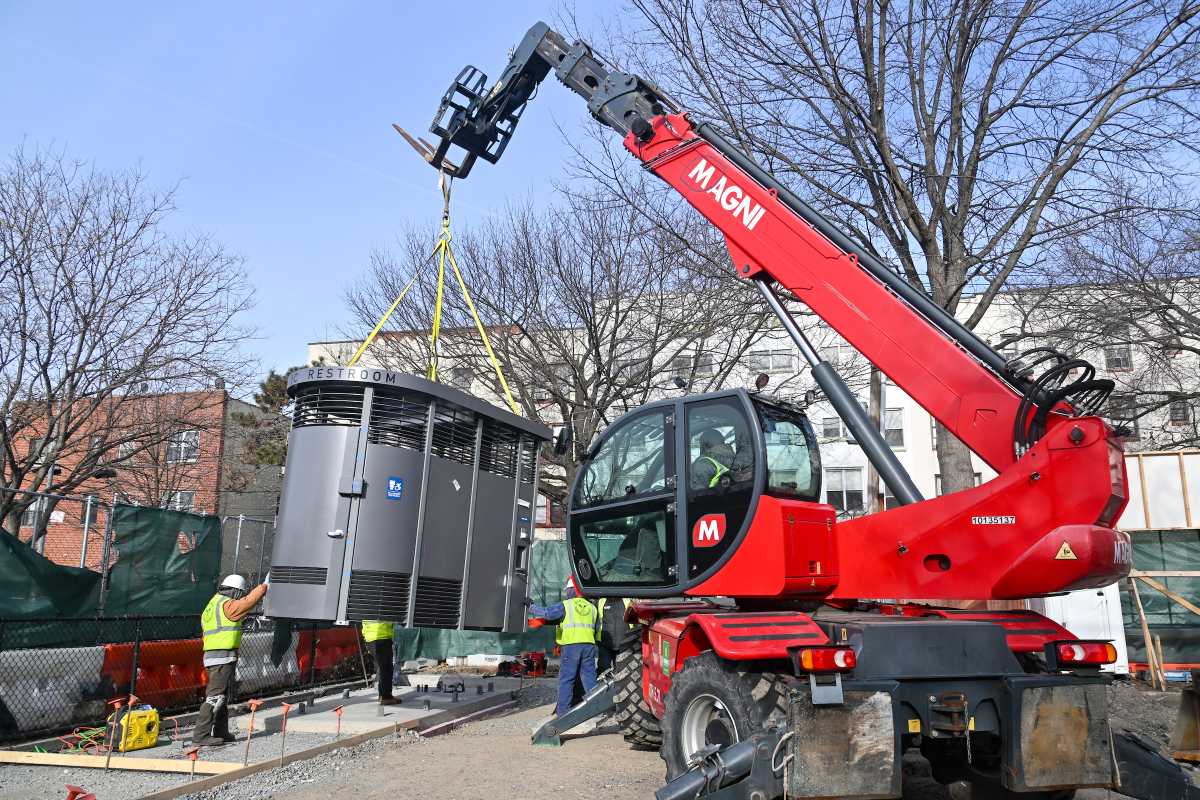
2 weeks agoNYC potty problem: Park's toilet plan stalled as Mamdani heads on with $4 million modular public restrooms
New York City's $4 million public toilet pilot program faces delays, with a Fort Washington Park restroom project stalled for nearly three years despite the city having only one public bathroom per 8,500 residents.
fromArchDaily
3 weeks agoWomen in Architecture: Progress, Gaps, and the Work Still Ahead
Historically, architectural culture has been organized around narratives of singular authorship and individual recognition. These frameworks often obscure the collaborative nature of design and marginalize contributors who do not occupy positions of institutional authority. Women architects have long participated in shaping buildings, cities, and architectural discourse, yet their work has frequently been overlooked or attributed to partners, firms, or broader teams.
Women in technology
fromwww.theguardian.com
3 weeks agoThe smell wasn't healthy': the artist who wore 24 nappies to highlight sewage pollution and fell ill
mennell's work smears the personal and political across their body. The Thames performance is the finale of a project called (para)site, made in response to revelations of sewage discharge in our waterways and a reaction to the way benefit claimants are labelled a drain on society. OK, mennell thought, I'm going to be the parasite.
Arts
Fashion & style
fromInsideHook
1 month agoTake It From a Woman: Your Bathroom Is a Dealbreaker. Here's How to Fix It.
Men's bathrooms often lack intentional grooming care and basic amenities that signal poor self-care to women, requiring deliberate upgrades to toiletries, cleanliness, and hospitality essentials.
Environment
fromwww.npr.org
3 weeks agoMaking wastewater drinkable is a growing trend as water resources become more strained
Treated wastewater recycling for drinking water is becoming a viable solution in water-scarce regions, with Florida, Arizona, California, and Colorado now allowing direct potable reuse through regulated pilot programs.
fromArchDaily
1 month agoArchiving the Technosphere: How Museum Architecture Mediates Human-Made Systems
The contemporary technology museum has emerged as a performative participant in the systems it seeks to document. The architecture of these institutions has become increasingly fluid and bold, often mirroring the velocity and complexity of the systems it houses. They operate as mediators between the human, the ecological, and the technological realms, transforming from encyclopedic warehouses into active educational engines.
Science
Health
fromTODAY.com
1 month agoWhat Are Period Underwear and Are They Safe for Teens? An OB-GYN Explains
Period underwear are absorbent undergarments designed to replace or supplement traditional menstrual products, featuring moisture-wicking layers and available in various styles that resemble regular underwear.
fromArchDaily
3 weeks agoMobility Justice: Urban Equity in an Era of Innovation
Every city contains two transportation systems. One is the visible network of roads, rail lines, sidewalks, and bus routes mapped in planning documents. The other is the invisible geography of privilege and exclusion embedded within it: the neighborhoods that received highways instead of parks, the communities whose bus routes were cut, the sidewalks that abruptly end at the edge of a district.
Alternative transportation
Cooking
fromArchitectural Digest
1 month agoThe Case for Recycled Water Showers-and 3 Other Kitchen and Bath Innovations from KBIS
Water-efficient bathroom fixtures including low-flow toilets and showers deliver significant water savings while maintaining performance, with engineered stone manufacturers shifting to low-silica compositions for health and safety.
New York City
fromCity Limits
3 weeks agoOpinion: Mayor Mamdani Can Mark a 'New Era' for Public Space. These Projects Show the Potential.
New York City can enhance livability by converting streets into parks, reclaiming infrastructure for public use, and expanding green, safe, democratic shared spaces across all five boroughs.
fromwww.theguardian.com
1 month agoThe tech worker cleaning condoms and old socks off the Brooklyn Bridge: People have no shame'
I can't do anything about some of these big problems that the world and the city are facing. But I can do one modicum of something nice. So she started cleaning up. Ellen Baum's trash-collecting crusade gained the attention of local media and concerned New Yorkers who have joined the effort to clean up a bridge she considers her back yard.
Brooklyn
Miscellaneous
fromArchDaily
1 month ago7 Unbuilt Masterplans Reimagining Urban Futures Through Ecology and Collective Space
Unbuilt urban masterplans explore adaptive spatial frameworks that recalibrate mobility, ecology, and collective life through climate-responsive design and public space integration across diverse global contexts.
fromwww.bbc.com
1 month agoFlats for the blind could be sold to developer
When I moved in here it truly was my last resort. Since living here I feel like I have the same independent life that my friends have and I just don't want to lose that. The guide dog run is probably the most important thing for me. It's a safe and confined area where I feel comfortable taking my dog out, especially at night.
London politics
Renovation
fromArchitectural Digest
1 month agoHow to Renovate a Midcentury Bathroom (Without Sacrificing Its Soul)
Midcentury bathroom renovations can preserve period character while meeting modern needs by respecting original design palettes, repurposing adjacent spaces, and maintaining authentic architectural details.
fromwww.theguardian.com
1 month agoAnalysis finds urban areas in England where no one lives within 15-minute walk of nature
While the data shows 80% of people live within walking distance of green or blue spaces such as a river, park or woodland, it also reveals a disparity between rural and poorer urban areas. In some areas of local authorities, fewer than 20% of residents live close to these spaces, according to data released by the Department for Environment, Food and Rural Affairs on Wednesday.
Environment
fromFast Company
1 month agoWhy urban planners should strive for 'the photo album standard'
My family had Slide Show Night when I was growing up. Not every Saturday, but a whole bunch of Saturdays. Either my sister or I would be in charge of setting up the projector, the screen, and loading the carousel. During the show, there'd be a few landscapes or skylines taken during vacations, but almost all the shots were up close. Like most dads, mine wasn't a professional photographer, but he did a good job of capturing memory triggers: faces, gestures, and decorations.
Photography
UK news
fromTime Out London
1 month agoWhich London tube stations are getting new public toilets? Full list of Underground stations getting upgrades
TfL is installing accessible, gender-neutral toilets across Underground and Overground stations, beginning with a new facility at Morden under a £15m Equity in Motion plan.
fromwww.theguardian.com
2 months agoEver been caught short? Here's the good news: a great British toilet revolution could be on the way | Eddie Blake
It's hard to think of two more fundamental social needs than a) not being forced to relieve yourself on the street and b) not having other people relieve themselves on the street yet the public toilet is an ignored and vanishing public amenity. The British Toilet Association reports that 40% of public toilets have closed since 2000 Victorian facilities in particular attract developers, not least because their dignified buildings endure: solidly built, centrally located and still embedded in the daily flow of the city.
Public health
Real estate
fromwww.theguardian.com
2 months agoGreen spaces should be the norm for all new housing developments in England, guidelines say
New government guidelines recommend mixed-use, heritage-preserving, nature-inclusive neighbourhood developments with shops, schools, green spaces and flood protection as standard for new housing developments.
Environment
fromLondon Business News | Londonlovesbusiness.com
1 month agoBuilding a liveable capital by 2040 - the infrastructure, talent and sustainability trade-offs - London Business News | Londonlovesbusiness.com
Liveability depends on functioning infrastructure, a thriving talent ecosystem, and sustainable resilience, achieved through deliberate, transparent trade-offs focused on long-term outcomes.
Public health
fromSocial Media Explorer
2 months agoWhy Standard Portable Toilets Fall Short at Messy, Hands-On Food Events - Social Media Explorer
Handwashing is the primary sanitation need at crawfish boils; insufficient sinks and reliance on hand sanitizer cause lines, frustration, and poor hygiene.
fromInsideHook
2 months agoWhere Have All the Hotel Bathroom Doors Gone?
On a recent two-week trip to Japan with my fiancé - six cities, six hotels - every stay was gorgeous and perfectly appointed. We wanted for nothing. Except, in most cases, a proper bathroom door. Instead, we spent the better part of two weeks making accidental eye contact through frosted glass and translucent panels while one of us was otherwise occupied. A design choice, apparently. A test of intimacy, definitely.
Travel
fromwww.dw.com
2 months agoThe city that swapped parking for green space
Though they're individually tiny, parking spots quietly play a dominant role in shaping urban landscapes. Most US cities dedicate at least 25% of their developable land to them. Some, even more. That land usage doesn't only determine the way a city looks. It also means covering large swathes of urban areas in heat-absorbing asphalt, which contributes to making summers hotter and heightens the risk of flooding since it prevents drainage during storms and heavy rainfall.
Miscellaneous
fromTravel + Leisure
1 month agoYes, You Can Do Laundry in a Hotel Bathroom Without Using the Sink-Plus What You Should Never Use
The best way to overcome travel accidents is to always be prepared. That includes packing just a little soap before you go. "Bring concentrated liquid detergent in a small travel bottle-it's easier to rinse out than powder," O'Connor said. " Dr. Bronner's or Woolite works well for hand washing. You can skip fabric softener. This just adds rinse cycles you don't need."
Travel
fromArchDaily
2 months agoDesigning Streets Through the Lens of Care
Jane Jacobs was also one of the voices that challenged this predominantly rationalist logic, arguing that truly vibrant streets are those capable of sustaining the diversity of everyday life, its informal exchanges, and the forms of care and natural surveillance that emerge from them. What these authors share is a fundamental insight: streets are not merely infrastructures for circulation, but social ecosystems, shaped by the relationships, uses, and encounters that take place within them.
Design
fromApartment Therapy
1 month ago5 Basically Free, Tiny Tweaks That Will Transform Your Bathroom
Because it's so important to the function of my home, it's become an afterthought when it comes to making it beautiful. All I need is a functional, clean space - it doesn't need to feel as relaxing as my bedroom or living room. Plus, it's not like I have the time (or money!) to invest in transforming the bathroom space by hiring a stager or designer. But I'm interested in making each space feel a little more beautiful these days.
Renovation
fromArchDaily
1 month agoHealth, Habitat, and Civic Infrastructure: Designing the City as a National Park
Cities around the world share a common goal: to become healthier and greener, supported by civic infrastructure that restores ecosystems and strengthens public life. The question is how to reach this. Global climate targets, local building codes, and municipal standards increasingly guide designers and planners toward better choices. Still, many cities struggle to translate these frameworks into everyday, street-level comfort and long-term ecological protection.
Environment
fromwww.standard.co.uk
2 months agoRevealed: Shocking extent of London's hygiene poverty crisis
According to data, around three out of ten women in the Greater London area have had to choose between buying enough food or hygiene products amid the cost-of-living crisis, while a third have had to choose between purchasing products for themselves or their children; 29 per cent also say they have either missed a job interview or had to take a day off work because they are not able to afford basic products.
London politics
fromApartment Therapy
2 months agoI'll Never Do Laundry When It's Raining - and Here's Why
When it's dreary outside, I usually hunker down and do household chores - running the dishwasher, catching up on laundry, maybe even taking a long shower and shaving my legs. These days, though, I take the opposite approach: I never do chores that require water use when it's raining outside. That's because I recently learned that my city, Milwaukee, has a shared sewer system - which means rainwater runoff, domestic sewage, and industrial wastewater collect in the same pipes.
Environment
fromArchitectural Digest
2 months agoDesigning When Your City Is Under Siege
Life doesn't pause for grief or fear. You might be going through something devastating but you're still packing lunches, still driving your kids to baseball practice, still showing up to work. One minute I find myself prepping for a whole home presentation and the next minute I'm checking the news, hoping and praying that no one has been killed on the streets today.
Design
Remodel
fromRedfin | Real Estate Tips for Home Buying, Selling & More
2 months ago7 Bathroom Shower Remodel Ideas: Architects Share the Features That Are Worth It
A well-designed shower remodel balances style, functionality, accessibility, and longevity to enhance daily comfort and boost long-term home value.
fromwww.archdaily.com
1 month agoWaterfrom Design's Office / Waterfront Design
Studio Millspace Text description provided by the architects. Throughout eight months of design and on-site work, we realized that what truly matters is not the completeness of drawings, but the intuition shaped by being present. Around 70% of the layout was defined early on, while the remaining 30% was deliberately left without a set functionallowing light, behaviors, and moods to participate in forming the space.
Design
fromwww.theguardian.com
2 months agoSchools, airports, high-rise towers: architects urged to get bamboo-ready'
For many years, bamboo has been mostly known as the favourite food of giant pandas, but a group of engineers say it's time we took it seriously as a building material, too. This week the Institution of Structural Engineers called for architects to be bamboo-ready as they published a manual for designing permanent buildings made of the material, in an effort to encourage low-carbon construction and position bamboo as a proper alternative to steel and concrete.
Environment
fromwww.theguardian.com
2 months agoIf you're flushing the toilet with grey water, people should know': how China turned rain into an asset
A worker sweeps the track at the National Stadium during the 2008 Beijing Olympics, which was disrupted by heavy rain. Photograph: AFP/Getty Images The secret weapon is a network of capillary-like tubes that weave through the Bird's Nest's outer lattice, which are specifically designed to siphon away rainfall. The pipes channel rainwater into one of three underwater storage tanks, where it is filtered and prepared for recycling within the building.
Environment
[ Load more ]