#baz-ashmawy
#baz-ashmawy
[ follow ]
#contemporary-art #cultural-heritage #art-basel-qatar #brooklyn-museum #ancient-egypt #architecture #community
Portland
fromOregon ArtsWatch * Arts & Culture News
2 weeks agoNews & notes: Maryhill Museum opens, remembering Mulugeta Seraw and more * Oregon ArtsWatch
Maryhill Museum of Art reopened for its 2026 season, marking 100 years since Queen Marie of Romania dedicated the clifftop mansion-turned-museum in 1926.


#ancient-egypt


London
fromThe Art Newspaper - International art news and events
1 month agoBlockbuster show on ancient Egyptian pharaoh Ramses II opens in London
A major exhibition featuring over 180 ancient Egyptian treasures from Ramses II's reign opened in London near Battersea Power Station, running through May 31, with proceeds funding Egyptian archaeological research and conservation.
Writing
fromKqed
1 month agoA Glimpse of Iran Through the Eyes of its Artists and Journalists
Iranian-American artists and writers explore diaspora, identity, and historical trauma through poetry, fiction, and documentary, examining the lasting impact of political upheaval and U.S. intervention on Iranian communities.
fromHyperallergic
1 week agoLebanese Artist Ali Sbeity Reportedly Killed in Israeli Strike
Ali Sbeity painted vibrant portraits and landscapes of his rural hometown in Southern Lebanon, often sharing his works on his Facebook. He participated in numerous local arts exhibitions and created murals for schools in Beirut.
Arts
Fashion & style
fromItsnicethat
1 month agoVintage Arab cassette tapes inspire Sometimes Always' warm identity for Fatouh Harissa
Foutah Harrissa rebranded with a bolder, fiery red wordmark and warm earthy tones while maintaining Tunisian heritage through handcrafted textiles and vintage Arab-inspired geometric framing devices.
Arts
fromThe Art Newspaper - International art news and events
1 week agoWho owns the seas? Shahzia Sikander's new animation on world trade beamed onto M+ museum facade
Shahzia Sikander's work explores territorial sovereignty and authority through animation, linking historical events like the Opium Wars to contemporary issues.
Miscellaneous
fromThe Art Newspaper - International art news and events
1 month agoComment | Art is more than its original context
Understanding art's original context enriches appreciation, yet modern viewing conditions and lost contexts require adapting how we engage with artworks across different settings and time periods.
Arts
fromHyperallergic
2 weeks agoZarina Brought the World to New York
Zarina's artistic practice, rooted in South Asian history and shaped by migration and displacement, established her as a foundational figure for South Asian American artists while maintaining independence from nationalist frameworks.
Arts
from48 hills
2 weeks agoFor Iranian artist Shiva Ahmadi, 'ornamentation becomes a form of resistance' - 48 hills
Shiva Ahmadi's interdisciplinary art practice channels personal experiences of displacement, political upheaval, and immigrant anxiety into visually seductive works that address brutal global issues affecting marginalized communities.
fromHyperallergic
2 weeks agoWhen a Palestinian Artist Asserts Her Own Humanity
There is a scene in "Morgenkreis | Morning Circle" (2025), a 16-mm film by Berlin-based Palestinian artist Basma al-Sharif, that unfolds at the threshold of a daycare center. A young boy clings to his father, his fists locked into the fabric of his coat, his arms wrapped tightly around him. The father gently tries to pry himself free while a daycare worker crouches nearby, attempting to distract the child and coax him inside. It is an ordinary moment, one that anyone who has ever been a child - or cared for one - recognizes instantly, as well as the gut-wrenching feeling it provokes.
Arts
#contemporary-art

fromArtnet News
1 month agoArts
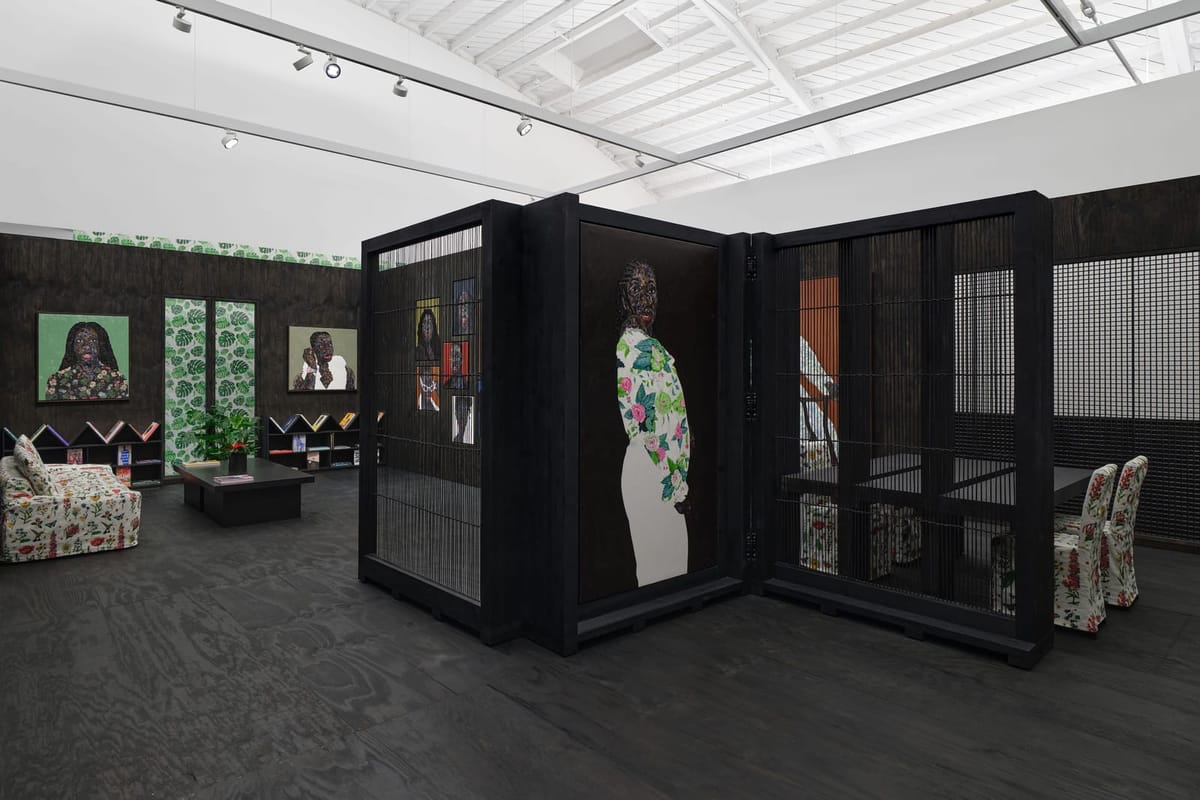
Unveiling Hiba Schahbaz's Painted Paradise, Where Women Meet Mythical Beasts | Artnet News
Hiba Schahbaz creates a phantasmic world of female self-portraits across varying scales, blending Indo-Persian miniature traditions with contemporary artistic practice throughout her 15-year career.
fromHi-Fructose Magazine - The New Contemporary Art Magazine
1 month agoArts
Faig Ahmed Redfines the Traditional - Hi-Fructose Magazine
Faig Ahmed transforms traditional Azerbaijani and Middle Eastern carpets into contemporary, sculptural artworks that merge historical motifs with modern cultural imagery.


fromArs Technica
1 month agoMuseums incorporate "scent of the afterlife" into Egyptian exhibits
Her team's analysis of the residue samples contained beeswax, plant oils, animal fats, bitumen, and resins from coniferous trees such as pines and larches, as well as vanilla-scented coumarin (found in cinnamon and pea plants) and benzoic acid (common in fragrant resins and gums derived from trees and shrubs). The resulting fragrance combined a "strong pine-like woody scent of the confers," per Huber, mixed in with "a sweeter undertone of the beeswax" and "the strong smoky scent of the bitumen."
Science
fromRemodelista
1 month ago'Romanticism of the Ruin': Leila El-Kayem and Sophie Mayer's Art-Filled Devon Home and Studio - Remodelista
Inspired by Margot's post last week on the stellar, nontraditional kitchens she spotted on the websites of European real estate firms, I found myself perusing the listings of my favorite U.K. agency, The Modern House, and there, I came across an especially dreamy offering: a rambling two-acre, multi-building property purchased by a pair of artists, Leila El-Kayem and Sophie Mayer, who lovingly transformed the dilapidated Victorian walled garden into a stylish retreat that's appealingly rough around the edges.
Renovation
fromTravel + Leisure
1 month agoThis Middle Eastern Destination Is the Most Exciting Art City Right Now-With World-Class Museums and a New Art Fair
Five bronze towers soar 400 feet above Saadiyat Island, the ever-expanding cultural district just off the coast of Abu Dhabi. The structures-which recall the wings of a falcon, a highly prized symbol in the United Arab Emirates-are the architectural signature of the Zayed National Museum, which opened in December. Two weeks before, another vastinstitution, the Natural History Museum, debuted. They will be followed later this year by the most ambitious of all-the late Frank Gehry's Guggenheim Abu Dhabi.
World news
fromHyperallergic
3 weeks agoEmbracing Friction in the Art World
On Franklin Street in Brooklyn's Greenpoint neighborhood, one non-commercial gallery fosters 'a small, stubbornly human space for friction.' Friction—the ubiquitous buzzword that captures the simultaneous delight and discomfort of doing things the slow way—is at the heart of artists Pap Souleye Fall and Char Jeré's current show at Subtitled NYC. It also reflects the overall spirit of this little exhibition space and of a burgeoning movement to reject our culture of optimization in favor of a bumpier, more intimate, less alienating experience.
Arts
History
fromWorld History Encyclopedia
2 months agoEmpress of the Nile: The Daredevil Archaeologist Who Saved Egypt's Ancient Temples from Destruction
Christiane Desroches-Noblecourt, a pioneering Egyptologist, rescued and preserved Egypt's ancient temples through scholarship, advocacy, and decisive cultural stewardship.

fromThe Art Newspaper - International art news and events
2 months agoNew London exhibition uses architecture to explore the experiences of Iran's American diaspora
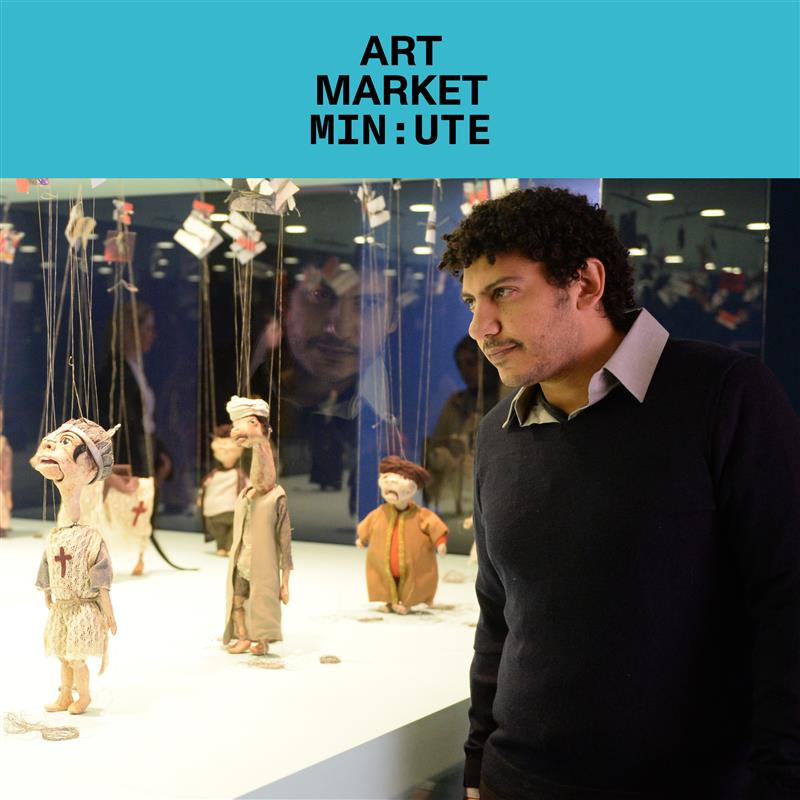
In Arash Nassiri's new moving-image commission, an insect puppet drags itself across an empty marble floor, cast in eerie blue evening light. The scene is diffused through an enormous frosted-glass cubicle, refracting and distorting the images. That sense of distortion pervades the Tehran-born, Berlin-based Nassiri's first institutional solo exhibition, A Bug's Life, which opened last weekend at London's Chisenhale Gallery-and comprises a film set within a sculptural installation.
Film
History
fromTime Out London
1 month agoA new 'Cleopatra' immersive experience in London will be all about Ancient Egypt
Cleopatra: The Experience opens at Immerse LDN as a 3,000 square metre, nine-gallery immersive exhibition tracing the late Ptolemaic dynasty with artefacts, AR, VR and staged environments.
fromMedievalists.net
2 months agoByzantine Monastic Site Found in Upper Egypt - Medievalists.net
The team identified multiple buildings aligned roughly west-east, in several sizes, ranging from about 8 × 7 metres to 14 × 8 metres. Within these structures are rectangular halls-some interpreted as spaces for worship-alongside smaller rooms that may have served devotional or practical functions for the monks. Excavators also noted evidence of plastered wall surfaces and tiled floors, as well as architectural features such as entrances and surviving supports, including beams.
History
Design
fromwww.amny.com
2 months agoBetween Worlds': Musah Swallah art exhibit in Chelsea shows the transformation of surface into message amNewYork
Musah Swallah uses canvas, wood, and cork to foreground material history while making saturated color the structural, inheriting and advancing modern and African painting lineages.
Design
fromThe Art Newspaper - International art news and events
2 months agoHow an artist's sketch was turned into a museum
A museum design translates a blue-house and white-tower sketch into a tiled architectural language reflecting regional materials, cultural markers, and historic South–West Asian trade links.


Arts
fromArtnet News
1 month agoIn Riyadh, Sweeping Survey Traces the Origins of the Saudi Art Movement
A comprehensive exhibition at the National Museum of Saudi Arabia documents the evolution of Saudi art from the 1960s-1980s, showcasing pioneering works and establishing the foundations of the modern Saudi art movement.
Arts
fromArtnet News
1 month agoRiyadh Is Becoming a Public Art Destination. The Leader Behind It Offers Her Insights | Artnet News
Tuwaiq Sculpture Symposium has evolved into an inclusive international platform that permanently integrates over 120 sculptors' works throughout Riyadh's urban landscape as part of Vision 2030's cultural transformation.
fromHyperallergic
1 month agoQueer Arab Artists on Their Own Terms
"The show is about giving the pen back to the writer, giving the paintbrush back to the artist, during this time of genocide," the Ridikkuluz told Hyperallergic in an interview at the gallery. "And when there's been so much censorship, these are artists that might not have been able to do this anywhere else."
Arts
Arts
fromThe Art Newspaper - International art news and events
2 months agoEducation, arts and heritage meet in Doha's new museum
Lawh Wa Qalam: M.F. Husain Museum functions as a dynamic interdisciplinary cultural learning space in Doha's Education City integrating art, history, spirituality, and education.
fromThe Art Newspaper - International art news and events
1 month agoLawrence Abu Hamdan and Lydia Ourahmane among artists confirmed for new Qatar quadrennial
The quadrennial exhibition introduces a new type of transnational, transdisciplinary program to Doha, rooted in issues that affect both Qatar and the wider region. The artists exhibiting broadly represent the diverse nationalities that live in Qatar, while their work reflects the shared geographical, environmenta
Arts
Arts
fromThe Art Newspaper - International art news and events
2 months agoFrom a bakery pop-up to an I.M. Pei survey: the exhibitions to see in Doha during Art Basel Qatar
Rirkrit Tiravanija's Untitled 2025 is an interactive bakery installation enabling communal baking sessions that foster cultural connectivity and participatory social exchange.
fromThe Art Newspaper - International art news and events
1 month agoLondon's Mosaic Rooms, dedicated to art from the Arab region, reopens after expansion
London's Mosaic Rooms is reopening on 18 February after a year-long refurbishment, with new facilities, a new charitable status and a new director. But the organisation's focus, says its director Pip Day, remains the same: art and culture from the Arab world and beyond. Since the Mosaic Rooms launched in 2008 it has been a consistent platform in the UK for major artists from the Arab region, such as Heba Y. Amin, Sandi Hilal and Alessandro Petti, and Mohammed Omar Khalil.
Arts
Arts
fromThe Art Newspaper - International art news and events
2 months agoIranian galleries close amid protests and fears of war
Protests, internet shutdown and economic collapse prompted Iranian galleries to close or alter operations, joining a broader cross‑sector collective action amid severe shortages.
Arts
fromThe Art Newspaper - International art news and events
2 months ago'An institution where you delve into works': details of AlUla Contemporary Art Museum announced
AlUla Contemporary Art Museum, designed by Lina Ghotmeh, will open in AlUla, Saudi Arabia, focusing on heritage, environment, community and artist-centred collections.
Arts
fromThe Art Newspaper - International art news and events
2 months ago'I don't take advice on collecting. If I don't like, I don't buy': Tariq Al Jaidah on his approach to acquiring art
Tariq Al Jaidah is building a self-sustaining Qatari art market through galleries, collecting, and efforts to cultivate local collectors and institutions.
fromHyperallergic
1 month agoAmy Sherald's Show Sets Visitor Record at Baltimore Museum of Art
According to a BMA spokesperson reached by Hyperallergic, attendance stood at 63,000 as of Monday, February 9, and is expected to peak at 75,000 by the time the show closes on April 5. That makes Sherald's mid-career survey the museum's most-attended show since 2000 - a remarkable feat considering that the BMA was not an original destination on American Sublime's itinerary.
Arts
fromThe Art Newspaper - International art news and events
2 months agoLouvre Abu Dhabi director Manuel Rabate leaves to head India's largest private art museum
I have always had a keen interest in South Asia and in India in particular for both its cultural richness and its institutional life. I am excited to be part of a project that will change the museum landscape of the subcontinent. My role will be transversal to the full life of the museum, engaging with all its activities, with the primary focus on ensuring readiness to operate at the highest international and regional standards, to serve India and its communities and its visitors.
Arts
[ Load more ]