#beginner-friendly-music-creation
#beginner-friendly-music-creation
[ follow ]
#music-production #ai-music #music-generation #mpc-sample #ai-music-generation #audio-interface #lyria-3

fromGSMArena.com
1 week agoSpotify's SongDNA lets you explore the writers, producers, and collaborators behind a song
When you get it, you'll see a SongDNA card 'on supported tracks'. If you tap this, you can explore the writers, producers, and collaborators behind a song, see samples and interpolations that shaped its sound, and browse the covers it inspired.
Mobile UX



fromEngadget
3 weeks agoTembo might just be the world's cutest drum machine
The company says it designed Tembo to "enable everyone to create music from the very first touch." Co-founder David Davidov that most instruments take "so long to get to the fun part" and that Musical Beings wanted to "help people experience music as something they do, not just something they listen to."
Music production
Music
fromYanko Design - Modern Industrial Design News
1 month agoSynth Modular Controller Treats Music Making Like Building with Blocks - Yanko Design
A modular synth system uses snap-together physical blocks for each function, making synthesis tangible, teachable, and scalable from beginner toy to serious performance instrument.
fromThe Verge
1 month agoArturia's FX Collection 6 adds two new effects and a $99 intro version
Pitch Shifter-910 is based on the iconic Eventide H910 Harmonizer from 1974, an early digital pitchshifter and delay with a very unique character. Arturia does an admirable job preserving its glitchy quirks. Pitch Shifter-910 is not a transparent effect that lets you create natural-sounding harmonies with yourself. Instead, it relishes in its weirdness, delivering chipmunk vocals at the higher ranges. There is also a more modern mode that cleans up some artifacts while preserving what makes the 910 so special.
Music
Music production
fromMetro Silicon Valley | Silicon Valley's Leading Weekly
1 month agoSJSU, MAX/MSP & the Roots of Computer Music
MAX, an object-oriented programming environment created in the late 1980s, revolutionized music production and became foundational to SJSU's pioneering electro-acoustic music concentration.
Mobile UX
fromGSMArena.com
2 months agoApple introduces Creator Studio, a subscription bundle of its best creative apps
Apple launched Creator Studio, a subscription bundle providing Final Cut Pro, Logic Pro, Pixelmator Pro, Motion, Compressor, MainStage, plus intelligent features for $12.99/month or $129/year.
fromFast Company
2 months agoThe answer to AI in music isn't suppression. It's data
But to anyone tracking the data over the past few years, it was inevitable. In 2022, Bad Bunny's Un Verano Sin Ti redefined the market, driving Latin music's streaming growth to new heights. It later became the first Spanish-language album nominated for Grammy Album of the Year. The takeaway is simple: When you have accurate, real-time data, you don't guess where culture is going, you know.
Music
Gadgets
fromYanko Design - Modern Industrial Design News
1 month agoRoland's $299 Pocket-Sized Audio Interface Was Designed Specifically For TikTok and Instagram Music Creators - Yanko Design
Portable mixer delivers studio-grade 24-bit/192kHz recording, onboard EQ, compression, reverb, battery power, and compact design tailored for livestreaming creators.
fromYanko Design - Modern Industrial Design News
2 months agoTeenage Engineering-inspired Music Sampler Uses AI In The Nerdiest Way Possible - Yanko Design
Junho Park's graduation concept borrows all the right cues from TE's playbook, that modular control layout, the single bold color, the mix of knobs and buttons that practically beg to be touched, but redirects them toward a gap in the market. Where Teenage Engineering designs for people who already understand synthesis and sampling, the T.M-4 targets people who have ideas but no vocabulary to express them.
Gadgets
fromEngadget
2 months agoKorg's new experimental synthesizer combines acoustic sounds with electronic control
The Phase8 uses a new form of "acoustic synthesis" that combines acoustic sound generation with electronic control. Takahashi says the synthesizer is "beyond analog vs. digital" and "beyond electronics" altogether. It features chromatically tuned steel resonators, which creates an acoustic sound similar to that of a kalimba. These signals can be manipulated via onboard effects and sequenced like a traditional synthesizer. Here's a video of the synth in action.
Music
fromEngadget
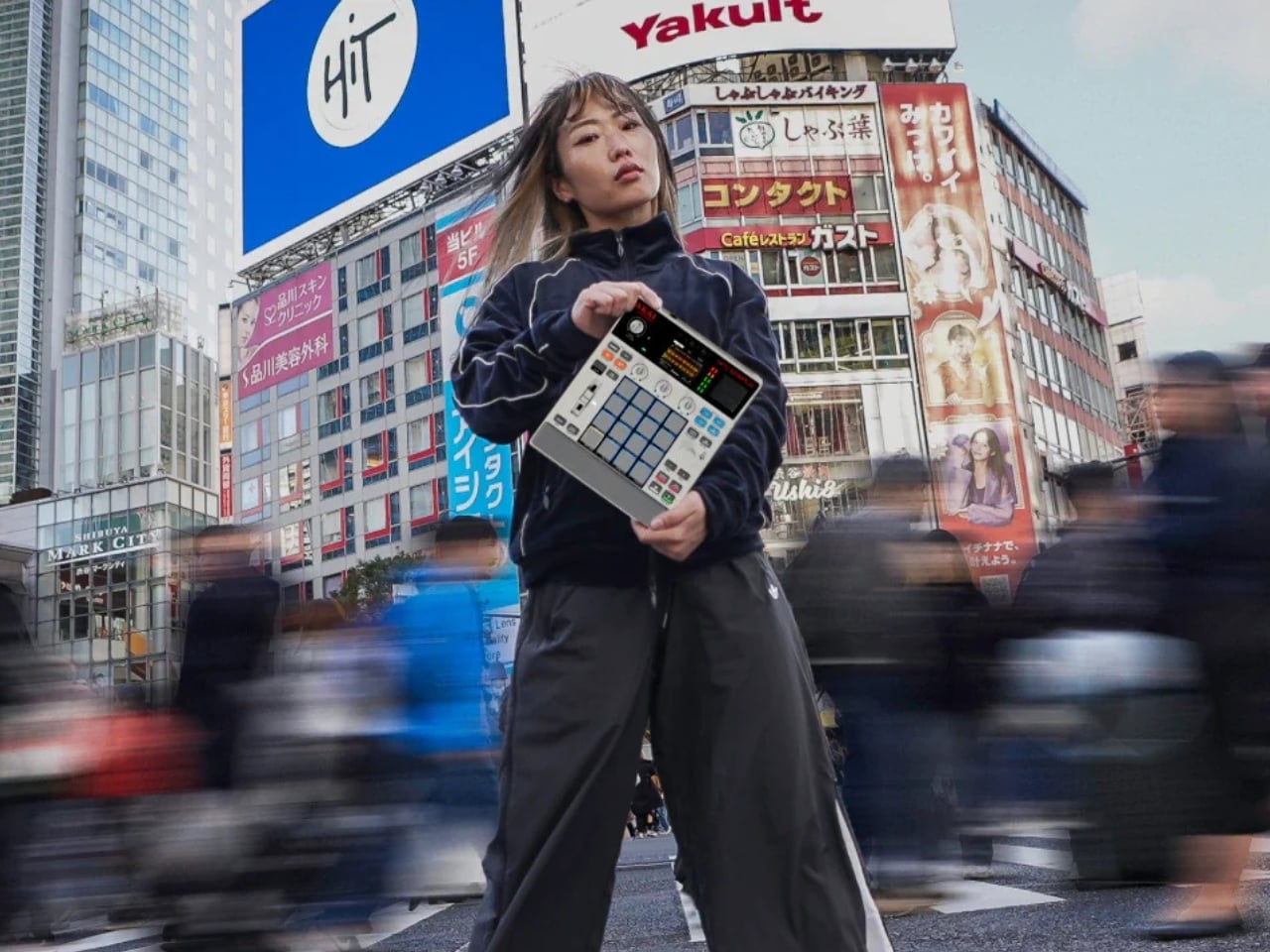
2 months agoAkai's MPC XL groovebox is the most powerful device the company has ever made
First of all, it offers four times the processing power of previous MPCs, which is enough to load up to 32 virtual instruments at the same time. This is assisted by a full 16GB of RAM, which is a whole lot in this era of AI tomfoolery. The XL can handle 16 audio tracks simultaneously. In my experience with previous units, this is more than enough for a full song.
Music
fromThe Verge
2 months agoRoland's Go:Mixer Studio turns your phone into a mobile music studio
Roland now offers a more capable audio mixer for phones and tablets with the launch of the Go:Mixer Studio. The Go:Mixer audio interface lineup has always been a bit limited, better suited for scrappy live streams and capturing quick demos on their phones than professional recording. The Go:Mixer Studio is an attempt to actually reach that lofty goal, with more inputs and outputs, built-in effects, and up to 24-bit / 192kHz audio.
Gadgets
[ Load more ]