#biblical-epic
#biblical-epic
[ follow ]
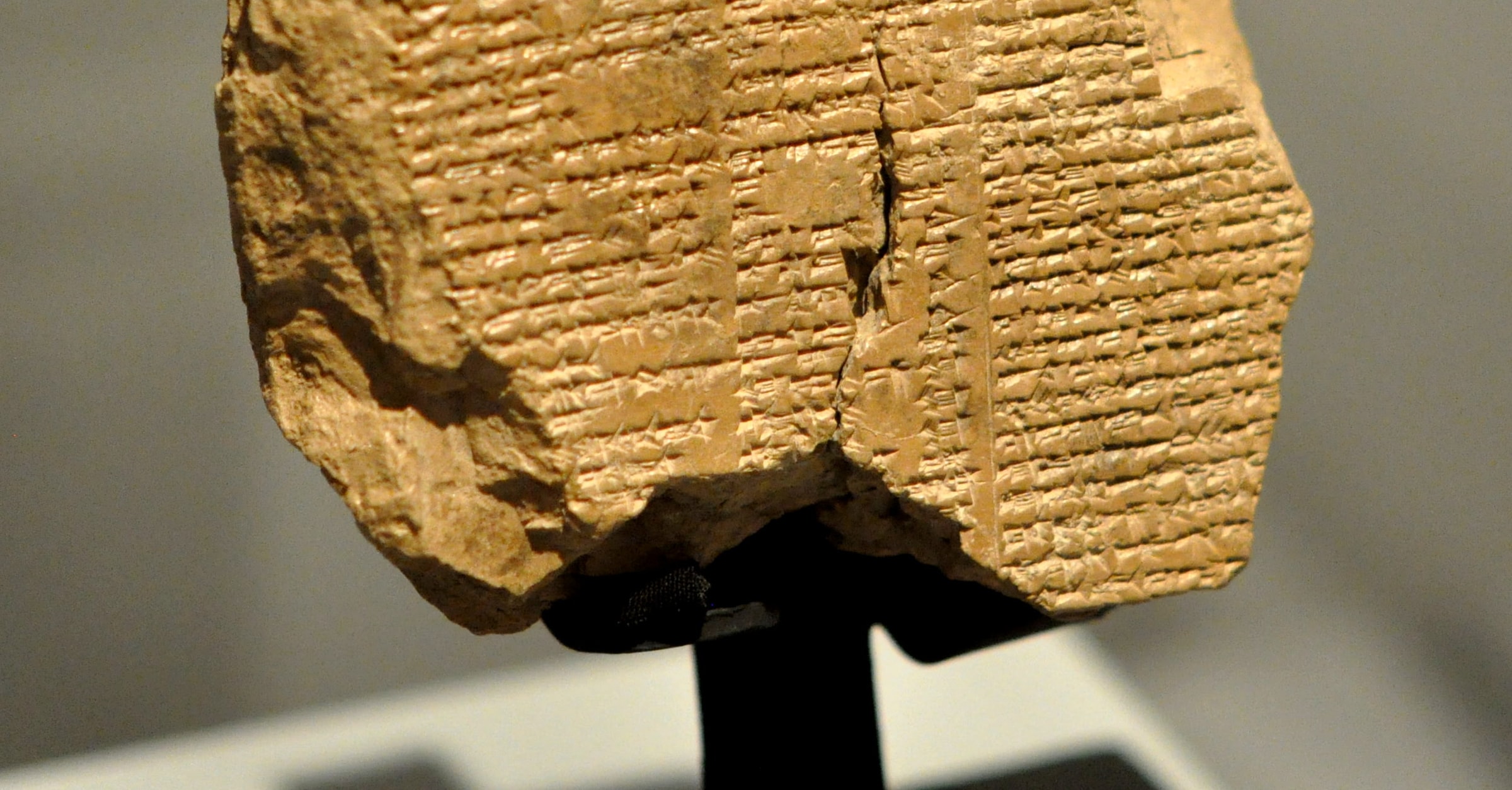

fromWorld History Encyclopedia
4 weeks agoSargon's legendary rise that may have inspired the story of Moses
The text, most likely composed circa 2300 BCE, and also known as The Birth Legend of Sargon, describes the king's humble origins and rise to power with the help of the goddess Ishtar and concludes with a challenge to future kings to go where he has gone and do as he has done.
History
fromPsychology Today
1 month agoLoss, Trauma, and the Book of Job
My patient's plea echoed in my ears as anguish and panic reverberated throughout the world in response to the COVID-19 pandemic, a modern plague that, at that time, felt almost Biblical in scale. Her question also brought me back to a discussion about the book of Job that took place in my study group of psychoanalysts, who met monthly for over a decade examining Biblical texts through a psychoanalytic lens.
Mental health
fromMail Online
2 months agoLong-lost Egyptian scroll fuels debate over real-life biblical giants
An ancient Egyptian papyrus held by the British Museum has been cited as possible evidence supporting some of the Bible's most controversial claims about giants. The 3,300-year-old document, known as Anastasi I, has been in the museum's collection since 1839 and has recently resurfaced on the Associates for Biblical Research, renewing interest in its possible links to biblical accounts. The papyrus describes encounters with the Shosu people, said to stand 'four cubits or five cubits' tall, up to eight feet in height.
Books
fromMail Online
1 month agoJesus' Bible prophecies that came true are finally proven
Mathematician Peter W Stoner tackled this question in his 1960 book Science Speaks, calculating the odds of a single first-century individual fulfilling just 48 of these prophecies by chance. The result was staggering: one in 10 followed by 157 zeros, a number so vast it far exceeds the total number of electrons in the observable universe. To make the math easier to grasp, Stoner began with eight key prophecies, including being born in Bethlehem, descending from David, and performing miracles.
Philosophy
[ Load more ]