#biometric-voter-id-failure
#biometric-voter-id-failure
[ follow ]
#cybersecurity #data-breach #privacy #election-security #voter-registration #voting-rights #privacy-concerns

#data-breach
Privacy professionals
fromSilicon Canals
2 days agoA fintech app asked users for their passports - then left 360,000 files unprotected for five years - Silicon Canals
A money transfer app exposed over 360,000 sensitive files on a public server for nearly five years, including unencrypted personal documents.
Privacy technologies
fromTechCrunch
3 days agoExclusive: Money transfer app Duc exposed thousands of driver's licenses and passports to the open web
A publicly accessible Amazon storage server exposed personal data of hundreds of thousands, including driver's licenses and passports, without encryption.

#election-security


US politics
fromTruthout
3 weeks agoDHS Official Responsible for Election Security Previously Called to Ban Voting Machines
A DHS official overseeing election infrastructure security co-founded a company with someone who promoted debunked 2020 election conspiracy theories and has publicly called for banning voting machines.
Privacy professionals
fromSilicon Canals
2 days agoA money-transfer app stored customer passports on an unencrypted, publicly accessible server for nearly five years - Silicon Canals
Fintech companies face regulatory pressure to collect identity documents but lack enforceable obligations to protect them, leading to data breaches.
fromComputerworld
2 days agoA core infrastructure engineer pleads guilty to federal charges in insider attack
Rhyne's attack involved unauthorized remote desktop sessions, deletion of network administrator accounts, and changing of passwords, showcasing significant security vulnerabilities.
Information security


fromTechCrunch
4 days agoHasbro says it was hacked, and may take 'several weeks' to recover | TechCrunch
Hasbro detected an intrusion on March 28, prompting the company to take down some of its systems. Parts of Hasbro's website appeared down, with error messages indicating maintenance.
Privacy professionals


fromTheregister
3 weeks agoSwiss e-vote snafu leaves 2,048 ballots unreadable
Three USB sticks were used, all with the correct code, but none of them worked. By the close of polling on Sunday, its e-voting system had collected 2,048 votes, but Basel-Stadt officials were not able to decrypt them with the hardware provided, despite the involvement of IT experts.
Canada news
Healthcare
fromNextgov.com
3 weeks agoCMS touts early uses of new biometric verification tools for Medicare.gov
CMS launched modern identity verification options (Login.gov, ID.me, CLEAR) on Medicare.gov, with 25% of users adopting them within five to six days and 60% of new accounts using these credentials.

#digital-id
UK politics
fromPinkNews | Latest lesbian, gay, bi and trans news | LGBTQ+ news
3 weeks agoDigital IDs won't require sex and gender data, government confirms
The UK government's relaunched voluntary digital ID scheme will not collect sex or gender information, addressing concerns that it could out trans people.
UK politics
fromwww.theguardian.com
3 weeks agoUK digital ID scheme to have limited use before next general election, minister says
Britain's £1.8bn digital ID scheme will initially offer limited functionality including vehicle tax payments and right-to-work checks by the next election, with broader services like benefits and pensions planned for the following parliament.

UK politics
fromPinkNews | Latest lesbian, gay, bi and trans news | LGBTQ+ news
3 weeks agoDigital IDs won't require sex and gender data, government confirms
The UK government's relaunched voluntary digital ID scheme will not collect sex or gender information, addressing concerns that it could out trans people.
UK politics
fromwww.theguardian.com
3 weeks agoUK digital ID scheme to have limited use before next general election, minister says
Britain's £1.8bn digital ID scheme will initially offer limited functionality including vehicle tax payments and right-to-work checks by the next election, with broader services like benefits and pensions planned for the following parliament.
US politics
fromwww.mediaite.com
3 weeks agoRepublican Candidate Paid Accused Forger to Collect Signatures To Get Name on Ballot
Republican congressional candidate Anthony Constantino allegedly hired an accused forger to collect ballot signatures, later terminating him upon discovering his criminal background.
Privacy professionals
fromMedCity News
2 weeks agoThe Evolving Landscape of Privacy and Cybersecurity: Essential Strategies for Legal and Compliance Professionals - MedCity News
Organizations must combine strong controls with comprehensive employee training and accountability culture to effectively protect sensitive data and comply with evolving privacy laws.
US politics
fromLGBTQ Nation
3 weeks agoRepublican governor signs bill urging citizens to rat on "suspect" voters - LGBTQ Nation
South Dakota's new law allows voters to challenge other residents' voting rights based on suspected non-citizenship, requiring signed sworn statements with documented evidence filed 90 days before elections.
Privacy professionals
fromTheregister
2 weeks agoAge verification isn't sage verification inside OSes
California's Digital Age Assurance Act attempts age verification for minors but is vague, incoherent, and creates liability risks without clearly defining compliance requirements or addressing practical implementation across diverse computing devices.
fromSilicon Canals
1 month agoThe global infrastructure of digital ID is being built right now - and nobody voted for it - Silicon Canals
What I walked through wasn't just an immigration gate. It was a node in a rapidly expanding global infrastructure of digital identity, one being constructed at extraordinary speed, across dozens of countries, by a mix of governments, multilateral organizations, and private technology vendors. The people building it believe they are solving real problems: fraud, statelessness, inefficient public services, financial exclusion.
Privacy technologies
Information security
fromSecurityWeek
3 weeks agoSIM Swaps Expose a Critical Flaw in Identity Security
SIM swap attacks exploit structural weaknesses in mobile-based identity verification, allowing criminals to intercept authentication codes and take over accounts by transferring victims' phone numbers to attacker-controlled SIM cards.
US Elections
fromwww.theguardian.com
1 month agoWill Trump try to seize voting machines to disrupt the midterm elections?
Trump advocates federal control of voting systems while officials investigate voting machine vulnerabilities, raising concerns about potential disruption to the 2026 midterm elections.
fromWIRED
1 month agoICE and CBP's Face-Recognition App Can't Actually Verify Who People Are
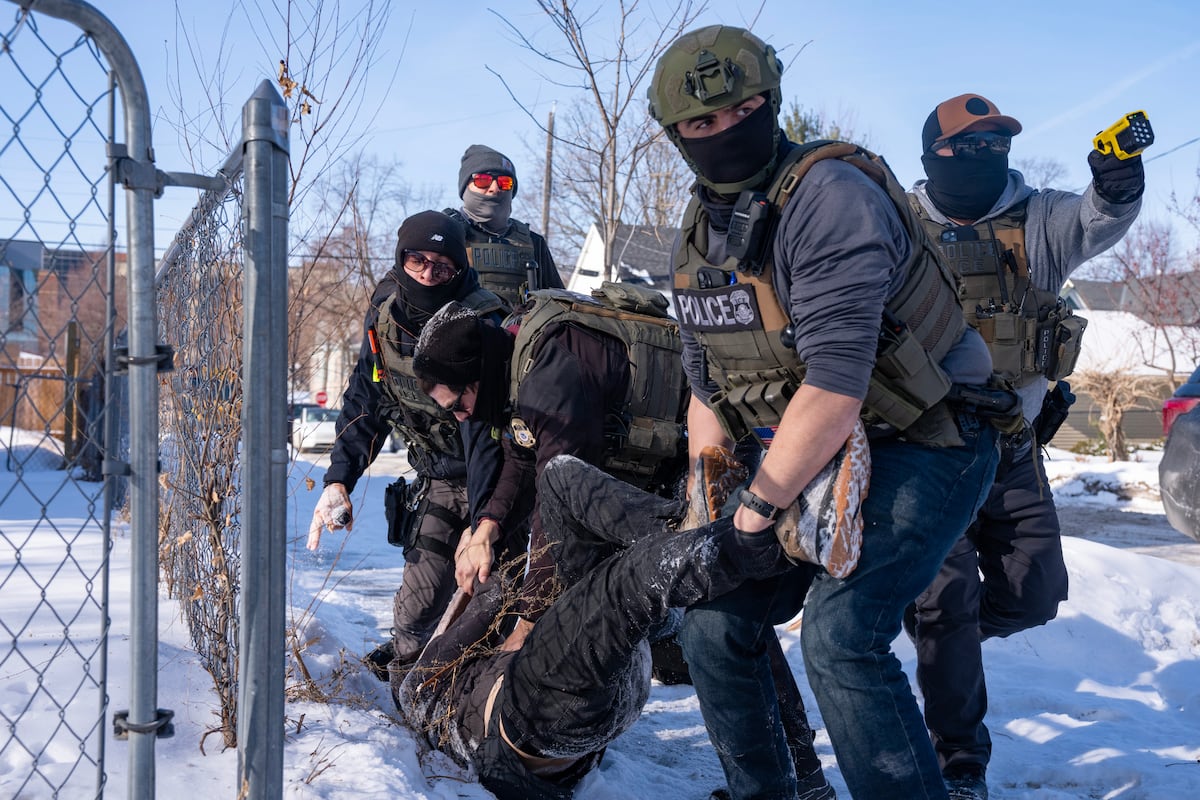
Mobile Fortify, now used by United States immigration agents in towns and cities across the US, is not designed to reliably identify people in the streets and was deployed without the scrutiny that has historically governed the rollout of technologies that impact people's privacy, according to records reviewed by WIRED. The Department of Homeland Security launched Mobile Fortify in the spring of 2025 to "determine or verify" the identities of individuals stopped or detained by DHS officers during federal operations, records show.
Privacy technologies




fromWIRED
2 months agoDHS's Data Grab Is Getting Citizens Kicked Off Voter Rolls, New Complaint Says
The Trump administration has since poured billions of dollars into immigration enforcement, and in March, Trump issued an executive order requiring the Department of Homeland Security to ensure that states have "access to appropriate systems for verifying the citizenship or immigration status of individuals registering to vote or who are already registered." In May, DHS began encouraging states to check their voter rolls against immigration data with the Systematic Alien Verification for Entitlements (SAVE) program, run by US Citizenship and Immigration Services (USCIS). SAVE now has access to data from across the federal government, not just on immigrants but on citizens as well.
US politics
Privacy professionals
fromPinkNews | Latest lesbian, gay, bi and trans news | LGBTQ+ news
1 month agoDiscord users must complete face or ID scans by next month
Discord will require face or government ID age verification by the end of the month, restricting access to graphic or sensitive content for unverified users.
fromWIRED
1 month agoPassword Managers Share a Hidden Weakness
An FBI informant helped run the Incognito dark web market and allegedly approved the sale of fentanyl-laced pills, including those from a dealer linked to a confirmed death, WIRED reported this week. Meanwhile, Jeffrey Epstein's ties to Customs and Border Protection officers sparked a Department of Justice probe. Documents say that CBP officers in the US Virgin Islands were still friendly with Epstein years after his 2008 conviction, illustrating the infamous sex offender's tactics for cultivating allies.
Information security
fromNextgov.com
1 month agoGabbard's expanded role in election security draws scrutiny
The concerns follow a series of election-related actions by Gabbard, including her recent appearance during an FBI raid of a Fulton County, Georgia elections office that was at the center of President Donald Trump's false claims of election fraud in 2020. Her team seized voting machines in Puerto Rico last year, per Reuters reporting, and has since said the systems contain cybersecurity vulnerabilities.
US politics
fromThe New Yorker
1 month agoHow to Protect the 2026 Elections from Donald Trump
The Washington Roundtable discusses Donald Trump's threats to "nationalize" elections in fifteen states, the recent F.B.I. raid to seize 2020 voting records at an election facility in Fulton County, Georgia, and the ways in which the Administration might meddle with a free and fair vote in 2026. Their guest, Richard Hasen, is the director of the Safeguarding Democracy Project at U.C.L.A.'s School of Law.
US politics
fromThe Hacker News
2 months agoPassword Reuse in Disguise: An Often-Missed Risky Workaround
Near-identical password reuse occurs when users make small, predictable changes to an existing password rather than creating a completely new one. While these changes satisfy formal password rules, they do little to reduce real-world exposure. Here are some classic examples: Adding or changing a number Summer2023! → Summer2024! Appending a character Swapping symbols or capitalization Welcome! → Welcome? AdminPass → adminpass Another common scenario occurs when organizations issue a standard starter password to new employees, and instead of replacing it entirely, users make incremental changes over time to remain compliant.
Information security
Information security
fromSecurityWeek
1 month agoWebinar Today: Identity Under Attack - Strengthen Your Identity Defenses
Adopt an identity-first security strategy to protect sensitive data, meet compliance requirements, and balance security, user experience, and operational efficiency against identity threats.
[ Load more ]