Medicine
fromThe New Yorker
56 minutes agoWhy Are People Injecting Themselves with Peptides?
Health and wellness influencers promote unapproved peptide treatments, raising concerns about consumer safety and the future of FDA regulations.
Incyte tops this list due to its rare combination of commercial scale, cash generation, and pipeline depth. The company posted FY2025 revenue of $5.14 billion, up 21.2% YoY, anchored by Jakafi generating $828.2 million in Q4 2025 alone (+7% YoY) and Opzelura delivering $207.3 million (+28% YoY). With $3.58 billion in cash and 14 pivotal clinical trials underway, Incyte offers an acquirer immediate revenue, margin expansion potential, and a deep oncology pipeline spanning KRASG12D, CDK2 inhibition, and mutCALR.
Modern scientific societies are increasingly vulnerable due to their dependence on membership fees and journal subscriptions, which are being challenged by the rise of virtual networking and open-access publishing.
Kelly Chibale describes the drug discovery process as a fairy-tale quest, stating, 'It doesn't mean that there aren't surprises or miracles. They do happen, but you have to kiss many frogs before you meet the prince.' This metaphor illustrates the challenges and unpredictability in finding effective medicines.
On that sunny March morning, in a small health center in Lobamba, a rural area of Eswatini, this 32-year-old sex worker has just become one of the first people in the world to receive lenacapavir, a drug that, administered twice a year, offers nearly 100% protection against HIV.
Ushering in the Golden Age of Innovation is about more than just winning the global tech race - it's about securing the safety and prosperity of our country for generations to come. Our bill is an important step in this effort and will better ensure the United States has the infrastructure in place to lead the 21st century.
Small organic molecules underpin modern life, from medicines and flavours to advanced materials. Much of this functional diversity comes from shape: modest changes in a molecule's 3D structure can completely change its properties.
X4 Pharmaceuticals drew a fresh initiation from Guggenheim, which assigned a Buy rating and $12 price target, framing the company as a "differentiated hematology play" with significant upside in the next 18 months. The firm's thesis centers on mavorixafor, a potential first-in-class oral CXCR4 antagonist already approved for WHIM syndrome and currently in Phase 3 development for primary chronic neutropenia.
But he'd been considering an idea for new technology-an autonomous, wind-powered cargo ship. Then, while on paternity leave in 2024, he discovered a free program that helps scientists and engineers launch businesses for the first time. Weeks after finishing the program, called 5050, Cymbalist had launched a startup called Clippership. The company's first ship is being built in the Netherlands this year. Without the accelerator, he says, the company likely wouldn't exist.
Last November, the UK government announced a bold plan to phase out animal testing in some areas of research. Animal tests for skin irritation are scheduled for elimination this year, and some studies on dogs should be slashed by 2030. The long-term vision is 'a world where the use of animals in science is eliminated in all but exceptional circumstances'.
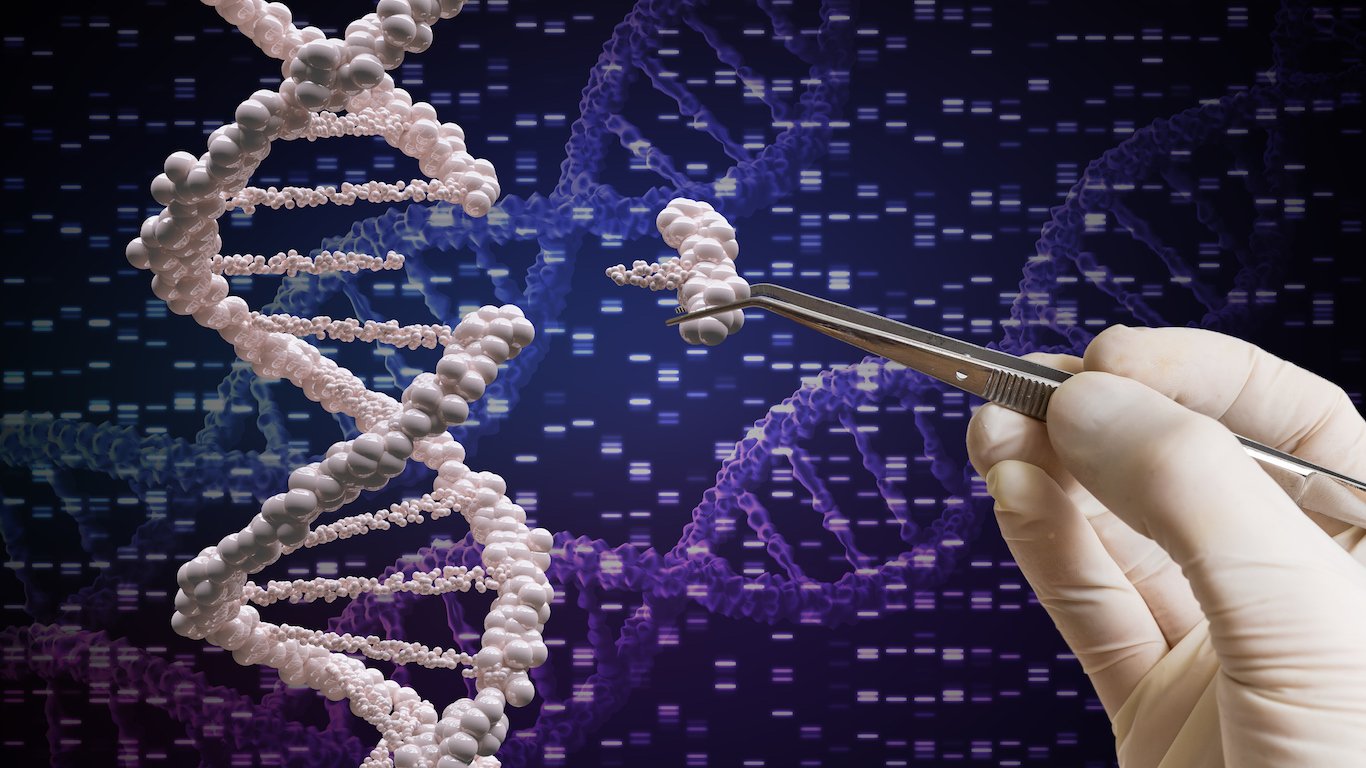
Biology is undergoing a transformation. After centuries of studying life as it evolves naturally, researchers are now using a combination of computation and genome engineering to intervene, generating new proteins and even whole bacteria from scratch. The use of artificial-intelligence tools to design biological components, an approach known as generative biology, is set to turbocharge this area of research. Just last year, scientists used AI-assisted design to produce artificial genes that can be expressed in mammalian cells.
Martschenko's argument is largely that genetic research and data have almost always been used thus far as a justification to further entrench extant social inequalities. But we know the solutions to many of the injustices in our world-trying to lift people out of poverty, for example-and we certainly don't need more genetic research to implement them. Trejo's point is largely that more information is generally better than less.
Now, researchers have created an artificial-intelligence system that vastly simplifies and accelerates the process of chemical synthesis. The system, which is called MOSAIC and is described in a study published in Nature on 19 January, recommended conditions that researchers were able to use to generate 35 compounds with the potential to become products like pharmaceuticals, agrochemicals or cosmetics without needing to do any further trawling or tweaking.
Laboratories turned to a smart workaround when COVID‑19 testing kits became scarce in 2020. They mixed samples from several patients and ran a single test. If the test came back negative, everyone in it was cleared at once. If it was positive, follow-up tests would zero in on who was infected. That strategy, known as group testing, saved valuable time, money, and resources.
We provide thought partnership. When a company is developing a drug, there's a lot of work involved, such as understanding the science, designing a study and generating good data. We come in and explain what the standard of care looks like today for their patient population, and what we think it will look like in five to eight years or whenever they plan to launch their therapy.
Many researchers are surprised and relieved over an unusual step taken by the US National Institutes of Health (NIH): the agency is rolling back the red tape on a host of basic-science experiments that involved human participants and had been classified as clinical trials. The decision, which was announced on 29 January and is part of a broader NIH effort to reduce administrative burden, should free such research from the heavy bureaucratic requirements that are designed for clinical trials but are sometimes ill-suited to other fields, such as basic psychology and behavioural studies.