#bison-herd
#bison-herd
[ follow ]
#animal-welfare #wildlife-conservation #conservation #wildlife-management #grand-teton-national-park
#wildlife-conservation


Environment
fromHigh Country News
2 weeks agoHow Trump's oil-and-gas agenda threatens critical Wyoming wildlife habitat - High Country News
Wyoming's Golden Triangle hosts the world's highest sage grouse concentration and critical wildlife migrations, but faces threats from potential oil and gas development.
fromSFGATE
2 weeks agoThe race to save endangered mountain lions in the Calif. desert
Before state Route 62 was built, there was seamless 95-mile-long habitat connectivity between the San Bernardino and Little San Bernardino mountain ranges, extending from the I-10 south of Joshua Tree National Park to the I-15 near the Cajon Pass. Now, plans for two new wildlife crossings across the highway aim to bring back some of that connectivity, while potentially saving a local population on the brink of extinction in the process.
SF parents
US Elections
fromHigh Country News
2 weeks agoMontana's wild week in politics could have national consequences - High Country News
Two Montana Republican incumbents unexpectedly withdrew from reelection races days before the filing deadline, opening half the state's congressional seats and potentially shifting the political landscape in Democrats' favor.
Agriculture
fromRealagriculture
2 weeks agoDucks Unlimited contributing 467 acres to Manitoba beef and forage research farm
Ducks Unlimited Canada contributes 467 acres to Manitoba Beef and Forage Initiatives, expanding the Brookdale Research Farm by 42 percent to advance beef production and grassland management research.
fromUnofficial Networks
3 weeks agoBackcountry Skiers Asked To Respect Bighorn Sheep Inside Grand Teton National Park
Tell your peeps to watch for sheep! Share the range with the Tetons' original mountaineers. Bighorn sheep have worked hard to survive the winter at high elevation. By late winter, their fat reserves are running thin and every bit of energy counts. Giving them space will help them make it through the final weeks of winter.
Snowboarding
History
fromHigh Country News
3 weeks agoHow Montana tribes are using sovereignty to restore their waterways - High Country News
The 2015 CSKT-Montana Compact Water Rights settlement restores tribal water rights from the 1855 Hellgate Treaty while enabling river restoration and shared management of the Jocko River watershed.
Travel
fromTravel + Leisure
3 weeks agoThis Is One of the Most Underrated National Parks in the U.S.-With Badlands, Wild Horses, and Presidential History
Theodore Roosevelt National Park offers pristine wilderness, abundant wildlife, and accessibility without crowds, making it an underrated destination shaped by the conservation legacy of the 26th president.
fromHigh Country News
1 month agoCoyotes and cougars and rats, oh my! - High Country News
An unnamed tourist saw it and told Aidan Moore, who works for Alcatraz City Cruises. Moore told SFGATE that he was initially skeptical, but the guest's iPhone footage left little room for doubt. The video shows, not a sea lion or an otter, but an actual Canis latrans, doggedly dogpaddling, then clambering out of the water, noticeably shaky and struggling to settle tired paws on the craggy rocks.
California
Chicago Bears
fromCalifornia Post
1 month agoDeadly apex predator being mulled for release in California after 100-year absence
California lawmakers are considering reintroducing grizzly bears through Senate Bill 1305, which would require a scientific assessment and consultation with Native American tribes about restoring the species extinct in the state for over a century.
fromRealagriculture
3 weeks agoRuminating with RealAg, Ep 39: Ranch economics, record-keeping, and real-world decisions
Profitability in the cattle business often hinges on understanding the real cost of production, something that can be difficult to pin down when labour, land, and opportunity costs aren't always clearly accounted for.
Agriculture
fromTravel + Leisure
3 weeks agoHere's How to Get the Most Out of Your National Park Trip, According to Rangers-Plus, The Biggest Mistake Visitors Make
A lot of people really underestimate the sizes of our national parks, as well as the accessibility of certain features. A lot of people come to Death Valley, and they want to see that, but they don't often realize that it's along a pretty crappy, 25-mile dirt road, and it often takes well over an hour and a half to get to.
Travel
Online Community Development
fromABC7 Los Angeles
1 year agoPowwows: Celebrating the culture and community of Indigenous people
The Dix Park Inter-Tribal Powwow brings together Indigenous communities from North Carolina's eight state and federally recognized tribes for cultural celebration, competition dancing, and traditional music.
Chicago Bears
fromHigh Country News
1 month agoCan Alaska save caribou by killing bears? - High Country News
Alaska's Mulchatna caribou herd has collapsed from 200,000 animals in the 1990s to 12,000 in 2022, devastating Indigenous subsistence hunting and prompting controversial wildlife management interventions including hunting bans and aerial predator culling.
fromwww.bbc.com
3 weeks agoFox family reunited after cubs found hiding in car
Our workshop has encountered all kinds of issues with vehicles over the years, but a set of fox cubs is a brand new one for us. At first, our technician thought they might be rats because the cubs are grey, rather than the typical red you would expect of a fox they gave him quite a fright.
Pets
Non-profit organizations
fromHigh Country News
1 month agoAn ode to Johnny Sagebrush - High Country News
Bart Koehler exemplifies the endangered role of community-based wilderness organizers in the rural West, protecting millions of acres through decades of grassroots advocacy and face-to-face engagement.
fromTravel + Leisure
1 month ago6 Best Dude Ranches in the U.S. for a Unique Western Vacation
On these spacious properties, Western culture is alive and well. You'll drift off to sleep under clear, starry skies and wake up to hot coffee and a warm meal. During the day, you might hop on your trusty steed for a tour of the land by horseback or sit on a sprawling deck with a glass of sweet tea and enjoy the expansive views.
Travel
fromHigh Country News
1 month agoIt's time to rethink how we care for our public lands and waters - High Country News
Wildlife populations are in decline. Recreation sites are crowded and often underfunded. Wildfires are larger, more destructive and harder to control. Climate change is reshaping natural systems, from ocean fisheries to mountain snowpacks, faster than institutions can respond. At the same time, communities are being asked to host new energy projects, transmission lines and mineral development - often without clear processes, adequate resources or trust that decisions are being made in the public interest.
Environment

fromwww.scientificamerican.com
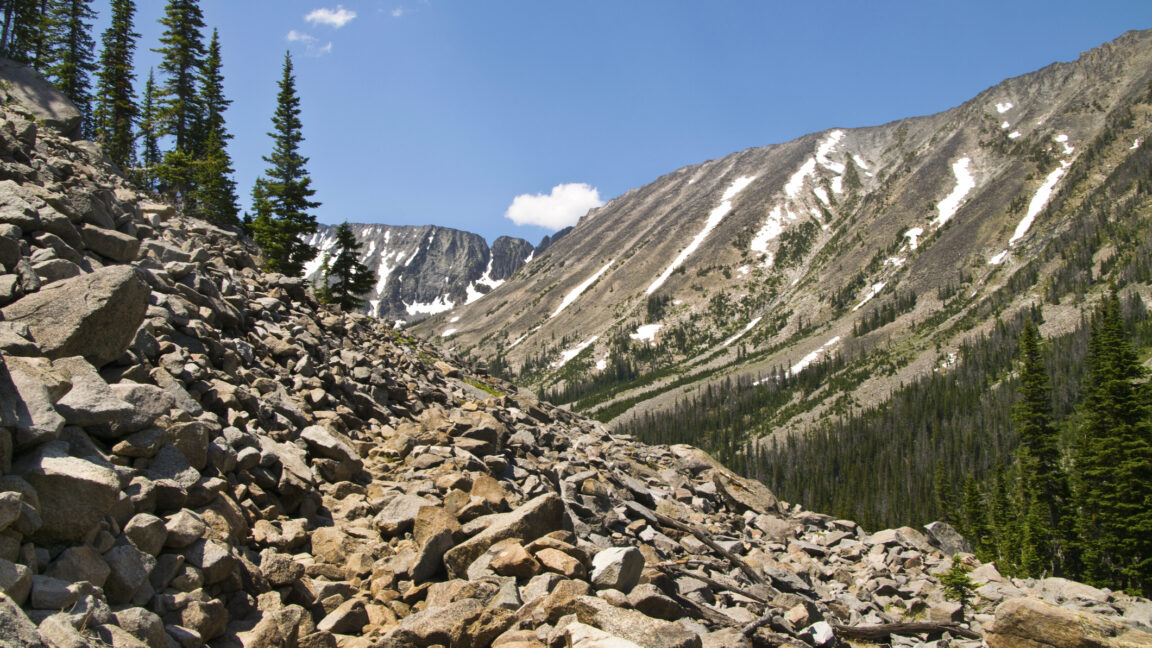
2 months agoHow zoos are preparing animals for this weekend's massive winter storm
In Texas, the Houston Zoo has prepared its buildings and barns with heaters designed to withstand extreme conditions, the zoo said in a blog post on Friday. Animals will have access to extra hay and bedding, and food was stocked in advance. Across the Zoo, sensitive plants are being protected with coverings, and generators are positioned to provide backup power if needed, the blog post said.
US news
fromYanko Design - Modern Industrial Design News
1 month agoWhen Zoo Design Tells the Story of Life Itself - Yanko Design
The House of Elements, set to become the crown jewel of Orientarium Zoo in Łódź, Poland, takes the classical elements (earth, ice, water, fire, and air) and transforms them into a 6,000-square-meter narrative experience. Rather than designing a building where you walk from exhibit to exhibit, VMA created a continuous downward-then-upward journey that mirrors the evolution of life itself. Designer: VMA Design Studio for Orientarium Zoo
Design

fromThe Atlantic
2 months agoToday's Atlantic Trivia: Our Deer Departed
Welcome back to Atlantic Trivia! Are you hungry for more? I hope that while I've been away, you have been enjoying plenty of food for thought-literally. Research shows that berries help improve memory and that a walnut-heavy diet is associated with higher cognitive performance. Fatty fish and leafy greens are linked to slower cognitive decline. Caffeine is a brain boost too.
World news
fromwww.dw.com
2 months agoHoly cow! Cattle may be a lot smarter than we thought
The 13-year-old Swiss Brown cow lives in the village of Notsch at the foot of the Carinthia mountains in southern Austria. She's kept as a pet by a local farmer, and can roam her meadow to her heart's delight. Like many other pets, she likes to have her back scratched. If no friendly humans are around to do the job, that's not a problem Veronika uses a brush or stick to do it herself.
Science
fromThe Walrus
2 months agoWhat a Standoff with a Black Bear Taught Me about Life in Northern Alberta | The Walrus
I was five years old when I had my first encounter with a black bear. In the spring of 1990, my father, a wildlife biologist, brought home an orphaned three-month-old cub in a cardboard box. The cub's mother, having burrowed beneath the roots of an old tree, had been killed in the den by a logging excavator, but the cub, weighing barely more than a bag of apples, survived. Forestry workers caught the young bear and dropped it off at the Fish and Wildlife office in Peace River, Alberta, where my dad worked, and he called my mom with the news.
Miscellaneous
fromThe Atlantic
1 month agoHow Many Wolves Is Enough?
The wolves arrived in May of last year, just days after Paul Roen had driven his cattle back up to their summer pasture in Northern California's Sierra Valley. He started finding the bleeding bodies of calves-some still alive, so badly paralyzed that they'd need to be shot. After weeks of this, Roen finally saw a kill himself. "One wolf grabbed a cow and spun her around, while another grabbed a calf," he told me. "He tore it into three pieces in 30 seconds."
Environment
fromwww.npr.org
2 months agoNational Park updates guidelines to stop visitors defacing Trump picture on pass
The National Park Service has updated its policy to discourage visitors from defacing a picture of President Trump on this year's pass. The use of an image of Trump on the 2026 pass rather than the usual picture of nature has sparked a backlash, sticker protests, and a lawsuit from a conservation group. The $80 annual America the Beautiful pass gives visitors access to more than 2,000 federal recreation sites.
US news
California
fromTravel + Leisure
2 months agoYou Can Get a Full 'Yellowstone' Experience at This California Dude Ranch With Horses, a Saloon, and Western Cuisine
Greenhorn Ranch is an all-inclusive Northern California dude ranch offering horseback riding, rustic accommodations, gourmet Western cuisine, and cowboy-style entertainment across 600 scenic acres.
fromTravel + Leisure
1 month agoThis Wyoming Destination Is Known for Its Access to National Parks, Luxury Lodges, and Iconic Cowboy Bar
Home to Grand Teton National Park, world-class ski slopes, and the Million Dollar Cowboy Bar, Jackson Hole, Wyoming, is a destination unlike any other. Victoria Gonzalez, lead Pathfinder at The Cloudveil, describes the region as "the intersection of wilderness and the resilient American spirit." In other words, it's somewhere travelers can go to experience a "flourishing cultural arts center with celebrated restaurants, a playground for year-round recreational opportunities ... and natural wonder."
Travel
fromHigh Country News
2 months agoHow pronghorn outran the Ice Age - High Country News
If they survived the summer and reached adulthood, they would become some of the fastest land animals on Earth. Adult pronghorn, a bit smaller than deer, can run seven miles in just 10 minutes, achieving short bursts of nearly 60 mph, much faster than horses or wolves. With their long thin legs and oversized hearts and lungs, they are built to cover ground in the wide-open sagebrush basins of Wyoming, my home state.
Environment
fromwww.theguardian.com
2 months agoExperience: a bear moved into my house
The next morning, I checked the critter-cams and saw the bear again, now captured by a camera I'd placed by a little mesh-covered opening near the small basement under my house. I watched as a massive shape emerged from the hole. My brain refused to believe it. The bear looked too large to fit in that tiny gap. I watched it again, shocked. My hands started to sweat.
Environment
fromHigh Country News
2 months agoThe nation's trails are disappearing - High Country News
Many of them were built for purposes that no longer exist - cattle drives, mining prospecting, early U.S. Forest Service fire patrols - while others were packed by the footprints of the Chumash people well before the colonization of North America. Sections of trail cling to steep slopes that seem to barely resist gravity, shedding soil and stone with each winter storm.
Environment
[ Load more ]