#blackwell-rtx
#blackwell-rtx
[ follow ]
#nvidia #dlss-5 #gaming #ai-technology #dlss-45 #ai-chips #rtx-50-series #smart-glasses #generative-ai




fromEngadget
3 days agoSony's gaming division just bought an AI startup that turns photos into 3D volumes
Following the acquisition, the Cinemersive Labs team will join SIE's Visual Computing Group (VCG) and contribute to our broader efforts in advancing state of the art visual computing within games. This includes applying machine learning to enhance gameplay visuals, improve rendering techniques, and unlock new levels of visual fidelity for players.
Marketing tech
#dlss-5
Data science
fromTechCrunch
2 weeks agoNvidia's DLSS 5 uses generative AI to boost photo-realism in video games, with ambitions beyond gaming | TechCrunch
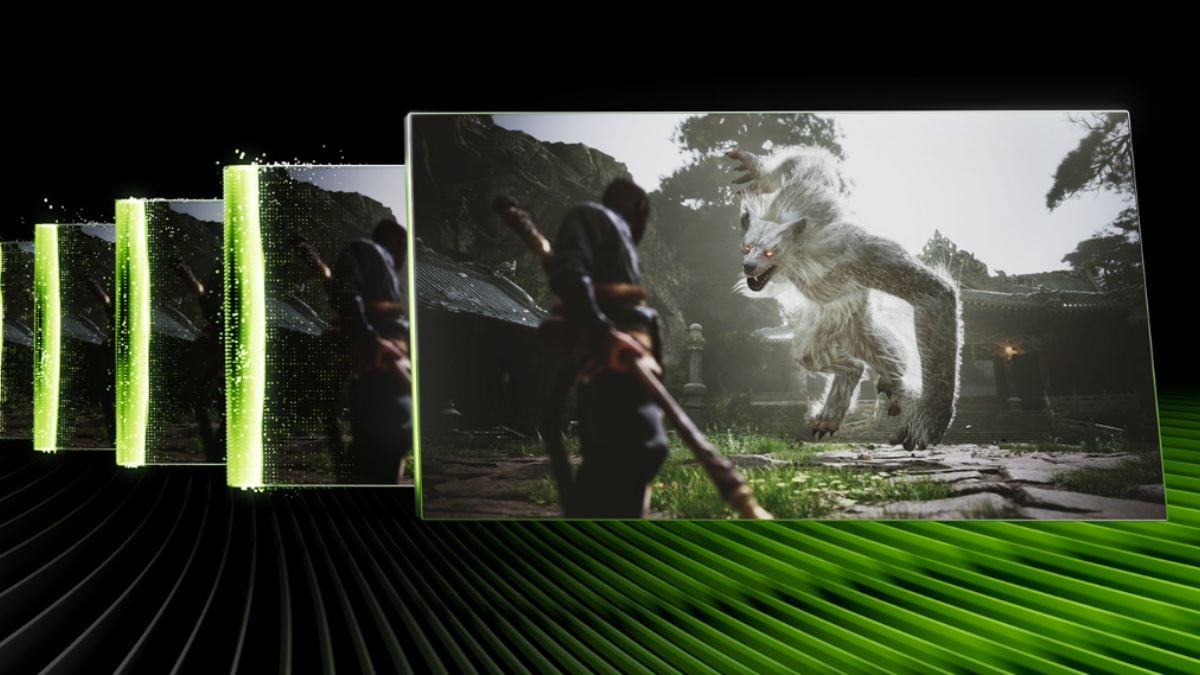
Nvidia introduced DLSS 5, combining 3D graphics with generative AI to create realistic video game visuals using less computational power, with applications extending beyond gaming into enterprise computing.
Graphic design
fromKotaku
2 weeks agoNvidia Says DLSS 5 Haters Just Don't Get How The Gen AI Works
Nvidia CEO Jensen Huang defends DLSS 5 generative AI upscaling technology against backlash, asserting developers retain full artistic control through fine-tuning capabilities at the geometry level rather than post-processing.

Data science
fromTechCrunch
2 weeks agoNvidia's DLSS 5 uses generative AI to boost photo-realism in video games, with ambitions beyond gaming | TechCrunch
Nvidia introduced DLSS 5, combining 3D graphics with generative AI to create realistic video game visuals using less computational power, with applications extending beyond gaming into enterprise computing.
Graphic design
fromKotaku
2 weeks agoNvidia Says DLSS 5 Haters Just Don't Get How The Gen AI Works
Nvidia CEO Jensen Huang defends DLSS 5 generative AI upscaling technology against backlash, asserting developers retain full artistic control through fine-tuning capabilities at the geometry level rather than post-processing.


fromArs Technica
3 weeks agoMicrosoft is working to eliminate PC gaming's "compiling shaders" wait times
Microsoft first rolled out Advanced Shader Delivery in its SDK last September and added support to the ROG Xbox Ally as a proof of concept by October. Microsoft said that the addition reduced launch times in games like Avowed by "as much as 85 percent," which is a big deal on battery-limited handhelds.
Gadgets
#ai-graphics-technology
Video games
fromFuturism
2 weeks agoNvidia Ridiculed for "Sloptracing" Feature That Uses AI to Yassify Video Games in Real Time
Nvidia's DLSS 5 AI upscaling feature received overwhelmingly negative backlash from gamers and developers who criticized it for distorting game art styles rather than enhancing visual clarity.
Video games
fromFast Company
2 weeks agoNvidia is reskinning games with AI. Gamers are angry about it, and wrong
Nvidia's DLSS 5 uses AI to re-render games in real time, dramatically improving visual realism, but divides the gaming community between those embracing enhanced graphics and those opposing AI-altered artistic intent.
Artificial intelligence
fromTechCrunch
2 weeks agoNiv-AI exits stealth to wring more power performance out of GPUs | TechCrunch
AI data centers waste significant power due to GPU demand surges, forcing operators to throttle performance by up to 30%, prompting startups like Niv-AI to develop precision power management solutions.


#ai-infrastructure
Artificial intelligence
fromTechzine Global
2 weeks agoDell gives AI Factory an Nvidia Vera Rubin upgrade
Dell's AI Factory has 4,000 customers achieving 2.6x ROI, addressing three critical requirements: data readiness, distributed AI infrastructure, and faster deployment through orchestration and automation.

fromWIRED
1 month agoPico's Project Swan XR Headset Wants to Go Where the Apple Vision Pro Failed
One of the big focuses of the new operating system version is what Pico calls PanoScreen, a feature that lets the wearer run multiple applications at once while also keeping a 360-degree view of the real-world space around them. Other users can pop into the space as 3D avatars while you spin around to see spreadsheets, browser tabs, design software, or whatever else you're working on.
Wearables
Video games
fromThe Verge
2 weeks agoSony's AI graphics upscaling for PS5 Pro games is getting a big update tonight
Sony's upgraded PSSR technology is rolling out to PS5 Pro titles including Cyberpunk 2077, Final Fantasy VII Rebirth, and Silent Hill 2, delivering crisper graphics with reduced visual artifacts.
fromGSMArena.com
2 months agoRazer unveils an "AI-native" headset with cameras that see what you see
The Motoko's dual first-person-view cameras are positioned at eye level to basically see what you see, enabling real-time object and text recognition - translating street signs, tracking gym reps, summarizing documents on the fly, all of that. There are also dual far and near-field mics, working together to capture voice commands and pick up dialogue within view.
Mobile UX

fromThe Verge
2 months agoAsus ROG's next ally is Xreal, with 240Hz AR glasses coming in 2026
In the one and only image that was shared with The Verge, the ROG Xreal R1 gaming glasses look like cyberpunk aviators. There's an LED strip on the stem to indicate... something. Perhaps battery life, or something previously unquantifiable, like leetness. Either way, the stems seem quite a bit thicker than those on the 1S, and whatever tech the companies are cramming inside may be necessary to allow for their marquee feature: a 240Hz refresh rate. These are apparently the first to double the normal 120Hz refresh rate that's common in AR glasses today.
Gadgets
Gadgets
fromGameSpot
2 months agoRazer's New Holographic AI Assistant Sits On Your Desk And Promises Help, Not Judgement
Razer's Project Ava is an AI-powered holographic desktop companion with animated personalities, contextual vision and audio sensing, real-time interaction, and PC-connected USB-C operation.
Gadgets
fromYanko Design - Modern Industrial Design News
2 months agoRazer's Project AVA Brings Holographic AI Companions to Your Desk - Yanko Design
Razer's Project AVA is a desk holographic AI that projects a 5.5-inch animated avatar which talks, learns habits, shows facial expressions, and syncs lip movement.
fromTechCrunch
2 months agoAMD unveils new AI PC processors for general use and gaming at CES | TechCrunch
In the years ahead, AI is going to be a multi-layered fabric that gets woven into every level of computing at the personal layer," Tikoo said. "Our AI PCs and devices will transform how we work, how we play, how we create and how we connect with each other.
Gadgets
fromYanko Design - Modern Industrial Design News
2 months agoAcer Gaming Stack Cuts Ping With Wi-Fi 7 and RTX 50 at CES 2026 - Yanko Design
This year's CES might finally be the time when gaming laptops and accessories start to look different because of AI and connectivity, not just because of higher model numbers. Intel Core Ultra Series 3 processors, NVIDIA RTX 50-series GPUs, and Wi-Fi 7 are all arriving at once, and the question for gamers is less "how fast is the GPU?" and more "how does the whole setup feel when you sit down to play or stream?"
Gadgets
Artificial intelligence
fromTechCrunch
2 months agoCES 2026: Everything revealed, from Nvidia's debuts to AMD's new chips to Razer's AI oddities | TechCrunch
CES 2026 emphasizes AI leadership: Nvidia unveils Rubin architecture and Alpamayo models for autonomous vehicles; AMD showcases new processors and AI partnerships.
[ Load more ]