Running
fromThe Manual
17 hours agoI used a Hypershell "exoskeleton" to make my home workouts harder
The Hypershell is a carbon fiber exoskeleton that enhances walking and running capabilities, making workouts more challenging and effective.
The boom in reformer pilates has created a wild west of studios where poor regulation has resulted in inexperienced teachers and a rise in injuries, professional standards bodies have warned.
After a tough workout, your body enters a state of stress: muscle fibers are damaged, energy stores are depleted, and hydration levels drop. This is a critical moment. If your body gets the right nutrients, it starts rebuilding immediately. If not, recovery slows down, and so does progress.
"What a good day, and what a stupid accident...again. Five years after [my previous nose break], my nose is f---ed up even worse [laughs]. As you see, it's even more cracked the same direction, and when I touch [my nose], my bones are broken inside."
Body agency is a power returned after an incident took it away from the user's physical form, and some wearable devices and technologies have this exact goal in mind.
Tyburski was a professional adventurer, financing his pursuits via magazine articles and speaking gigs, and even making a documentary about his quest. His whole raison d'etre was to push past his limitations, showing what a person is capable of when their mindset is strong enough.
I have evolved from someone who didn't think much of the bar except for resting my legs to thinking of it as an obvious life-saving precaution. Dr. Bourne shared several examples from Mammoth in which the bar could have saved lives, including the death of her former ski coach, who fell from a chairlift to his death, most likely from a medical event which may have been treatable.
It's the most ubiquitous, effective, totally no-side-effects drug in the world. Exercise is also something Metzl feels is sometimes overlooked in the longevity space, in favor of fancier products. A lot of this stuff we talk about with longevity is not validated, like full-body MRIs and these supplement stacks.
The brain is the conductor of the orchestra, the muscles are the instruments. When your body is out of alignment, the orchestra is playing out of tune. Misalignment in the musculoskeletal system is frequently the root cause of chronic pain and the resulting poor posture.
Cross training and running go together like peanut butter and jelly. If you build it into your schedule intentionally, strategically, and with a clear understanding of what you're trying to accomplish, you'll thrive. Megan makes the case that cross-training serves runners for several distinct reasons, and the right reason for you will shape how you approach it.
Those of us who watch the Olympics as bystanders tend to smugly judge athletes for succumbing to pressure without understanding what we even mean by the term. The first thing to know about pressure is that it has actual physical properties. Feeling it is not a sign of a too-thin veneer of character. Pressure might as well be a snakebite, given its very real qualities in the bloodstream and how it can paralyze even the strongest legs. The way to deal with pressure, and become
"It's not great, if I'm being honest. From amending my answer to the question "how ya doing Roth" at the very beginning of this week's episode of The Distraction, it is clear that things are not going great. But for the second straight week, we found a way to split our episode between the Not Great stuff and being stupid about sports, with the result being one of the most enjoyable hours of my week."
Eugene Teo, 34, began lifting weights at the age of 13, looking for validation. I was short, skinny and I thought it would give me confidence, he says. Bodybuilding for me was the ultimate expression of that. Now living on the Gold Coast in Australia, with his partner and daughter, the fitness coach spent from age 16 to 24 training and competing. At times, he lifted weights for up to four hours a day, aiming to get as muscular and lean as possible.
Don't put all your eggs in one basket when it comes to exercise - doing a variety of different physical activities every week is the key to boosting your health and living longer, a study suggests. After tracking the weekly exercise habits of 110,000 men and women in the US for 30 years, researchers found active people who did the greatest variety of exercise were 19% less likely to die during that time than those who focused on one activity. That effect was greater than for individual sports like walking, tennis, rowing and jogging. The total amount of exercise you do is still key, experts say, but doing a range of activities you enjoy can bring lots of benefits.
In 2018, Sharples and his research lab, now at the Norwegian School of Sport Sciences in Oslo, were the first to show that exercise could change how our muscle-building genes work over the long term. The genes themselves don't change, but repeated periods of exertion turns certain genes on, spurring cells to build muscle mass more quickly than before. These epigenetic changes have a lasting effect: Your muscles remember these periods of strength and respond favorably in the future.
Riding a mountain bike comes with risks, and injuries are common among most riders, from minor cuts and scrapes to broken bones and more severe head trauma. But what are the common injuries from mountain biking, and what is the recovery like for the most common MTB injuries? Well, I've had most of them over the years. From the minor scrapes and bumps to the more severe head trauma, fractured bones, and ligament damage.
When you have an acute injury, your body is sending signals through the peripheral and central nervous systems and the immune system to say, hold on, I need to stop doing this so we can allow the tissue to heal, says Ericka Merriwether, a physical therapist and pain researcher at New York University. Rest, after all, is the first part of the familiar RICE therapy, which stands for rest, ice, compression and elevation.
Kayla's not been 100% for the last three years, Abdelaziz told Submission Radio. Since her PFL days, she always had tingling. She couldn't lift her arm... The UFC flew her to New York, and the doctors said she immediately needs surgery because if she doesn't get surgery, it could paralyze her. But immediately after the surgery, all the pain is gone.
In 2017, Bjorn Mannsverk's phone rang. A year before, what was meant to be a special 100th anniversary for Bodo/Glimt ended in heartbreak as the Norwegian club were relegated from the top flight. A fresh approach was needed to get the club back on track. Having been stationed in Bodo before in his role as a fighter pilot with the Royal Norwegian Air Force, Mannsverk was familiar with the town, but not the football club.
Betley and his colleagues were curious about what happens in the brain as people get stronger through exercise. They decided to focus on the ventromedial hypothalamus, a brain region that regulates appetite and blood sugar. The team then zeroed in on a group of neurons in that region that produce a protein called steroidogenic factor 1 (SF1), which is known to play a part in regulating metabolism. A previous study found that the deletion of the gene that codes for SF1 impairs endurance in mice.
January might be coming to a close, but the focus on wellness doesn't have to die with it. If anything, it's a good time to check in with those 2026 goals and see what you want to prioritise for the rest of the year. To that end, we've gathered some of the best deals we've seen in the past few weeks that will help you tick off every good intention you set this month.
Bala Bangles Wrist & Ankle Weights Fit in a workout whenever you have time. Keep Bala Bangles in your bag so they're easy to grab. Wear them on your wrists or ankles to add comfortable resistance to yoga, walking, or any home workout. Gymreapers Barbell Squat Pad This squat pad helps prevent sore shoulders during back squats or after leg day. It spreads out the bar's weight so you can focus on your lift.
In this episode of the On Coaching Podcast, Steve Magness and Jon Marcus discuss the concept of 'fit but flat,' exploring the phenomenon where athletes excel in metabolic fitness but fail to perform competitively due to a lack of neuromuscular coordination. Using examples like middle-distance runner Ingram Brion, the hosts delve into how metabolic training alone can lead to race failures.
Your donation allows us to keep sending journalists to speak to both sides of the story. The Independent is trusted by Americans across the entire political spectrum. And unlike many other quality news outlets, we choose not to lock Americans out of our reporting and analysis with paywalls. We believe quality journalism should be available to everyone, paid for by those who can afford it.
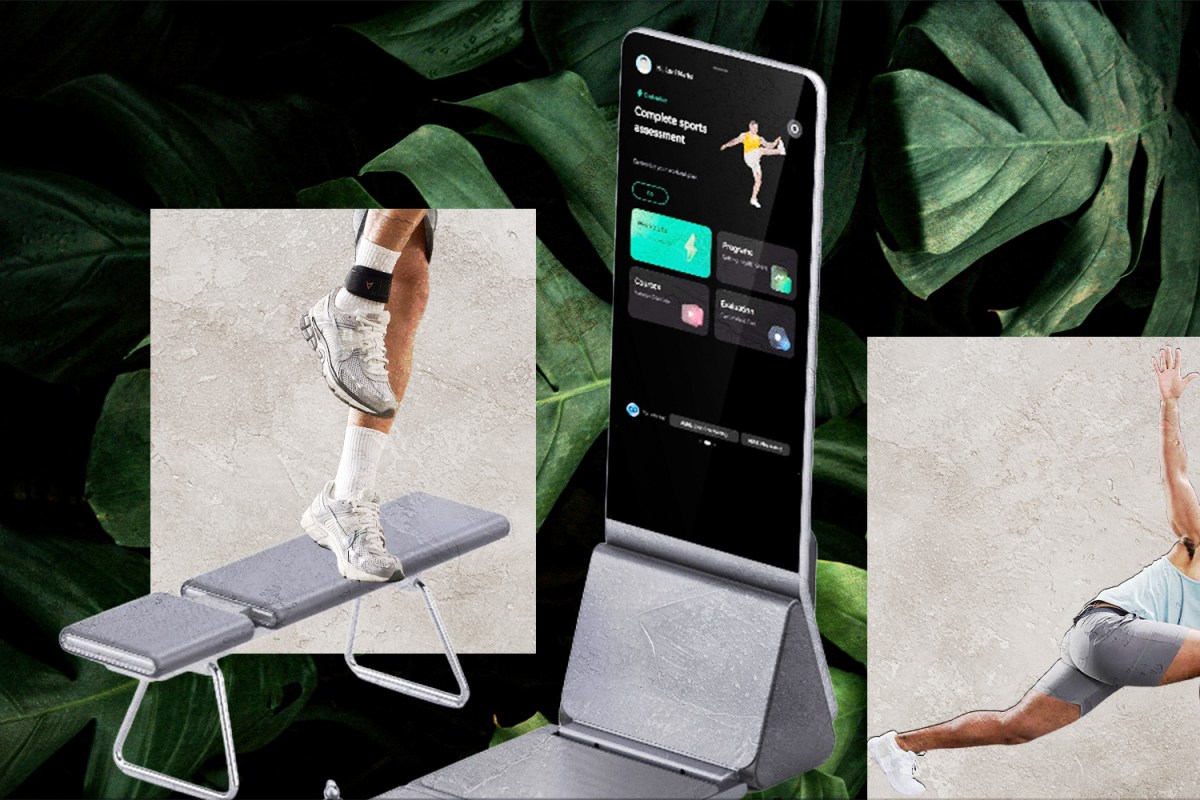
I got a 3D scan that measured my flexibility last August, hoping the predictably subpar results would finally inspire me to stretch more. Then, I did basically nothing. Even knowing my shoulder rotation movement was in the "red" zone - needing serious improvement if I wanted to avoid future pain - it wasn't enough to get me to devote three minutes of light stretching before my cardio and strength workouts as suggested by trainers I had spoken with.
When we say we want to lose weight, we typically mean shedding fat but not muscle. Muscle helps us to look "toned" and supports our metabolism. To lose fat without losing muscle, eat enough protein and strength train regularly, two top trainers said. If you want to lose fat without losing muscle, there are three things you need to know.
It's just what it looks like: I time my planks then file them away, determined to last a little longer tomorrow. And sometimes I do, for several days in a row, then one day I'll collapse nearly a minute short of my personal best. I'll pound the mat like Charlton Heston at the end of Planet of the Apes, then I'll get myself together - you've got to stay cool at Equinox - and move on with my day.
For runners, the hips can be one of the most confounding and frustrating parts of the physiological puzzle for efficient movement. Every runner knows how crucial hip strength is - and how mobile hips are essential for both fast and pain-free running. Yet healthy, happy hips remain elusive. For many of us, our hips stay stiff no matter how much we massage and stretch them.
It got me thinking. While everyone's obsessing over the latest fitness trends and biohacking protocols, these folks have been consistently moving their bodies for decades. No fancy equipment, no Instagram-worthy routines, just simple habits they picked up long before movement became a multibillion-dollar industry. So I started asking around, digging into research, and talking to people who've stayed active well into their golden years. What I found wasn't revolutionary or complicated. It was refreshingly simple.