Cancer
fromwww.nytimes.com
21 hours agoWhat Is It Like to Get Cancer When You're Young?
Cancer is increasingly affecting individuals under 50, impacting their lives and relationships significantly.
After worrying that he was somehow trying to scam me, I reluctantly sent him my address. A week later, the radiator arrived on my doorstop. A mate was able to help me install it and bingo the car worked again.
This walk works to raise awareness for people out there regarding screening for colon cancer. It's truly a preventable disease and at 45 years old, everybody should be screened. We are excited to have our community members join us, and I'm excited to say we've raised almost $20,000 for the Colorectal Cancer Alliance.
The revamped outpatient space folds in more infusion stations, extra exam rooms and added specialty clinics, which officials and neighborhood advocates hope will shrink travel times and long waits for patients across southern Brooklyn. The center now stretches South Brooklyn Health's outpatient cancer footprint with additional infusion bays, more exam rooms and extra clinical staff.
A report last year found unnecessary surgeries were carried out, cancers were missed and poor standards of care were delivered at the University Hospital of North Durham and Darlington Memorial Hospital. CDDTF said it wanted to support the patients it had let down, including by offering access to psychological support, and to ensure they knew how to make a claim or raise concerns with police.
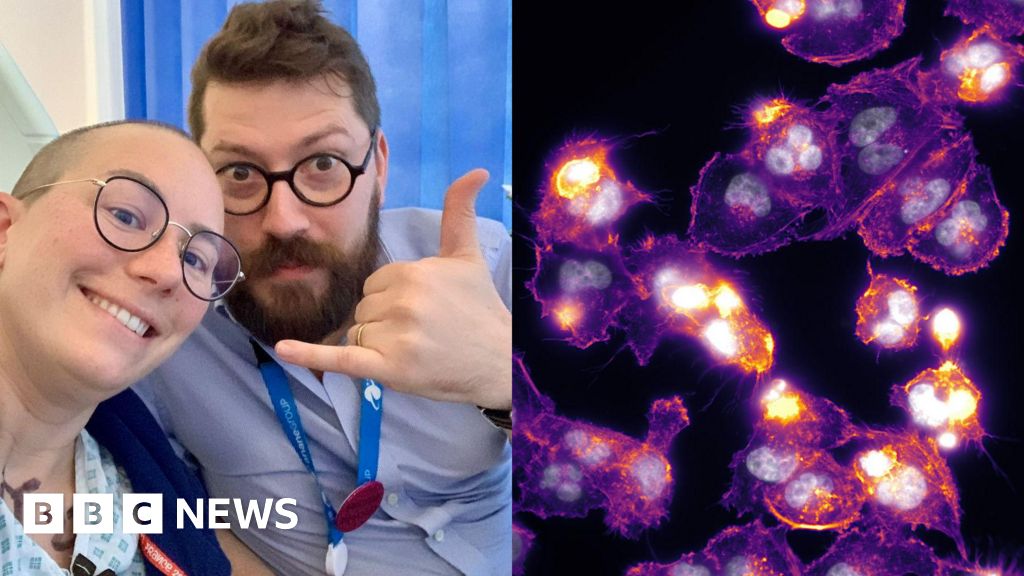
For years, scientists have viewed cancer as a localized glitch in which cells refuse to stop dividing. But a new study suggests that, in certain organs, tumors actively communicate with the brain to trick it into protecting them. Scientists have long known that nerves grow into some tumors and that tumors containing lots of nerves usually lead to a worse prognosis.
On Tuesday the American Cancer Society (ACS) released its annual report on cancer statistics in the U.S., and it offered a rare bit of good news: the proportion of people who were alive at least five years after a cancer diagnosis hit a record high. The report found that, among all cancer patients diagnosed between 2015 and 2021 in the U.S., the survival rate at the five-year mark relative to those who didn't have cancer was 70 percent.
Memorial Sloan Kettering Cancer Center took part in a study to find out if cancer patients would respond to music therapy. Members on the medical team were surprised to find out that it was just as effective as cognitive behavioral therapy or talk therapy. The Melody Study paired patients up with music therapists for a seven-week trial that involved activities that span from passive (listening to music) to active (creating music themselves).
The discovery, combined with her fibrocystic breasts -a common, noncancerous condition that can cause lumps and cysts-meant that she needed a more comprehensive diagnostic exam to investigate the symptoms. But her insurance covered just a basic screening mammogram, so she paid thousands of dollars out of pocket for the in-depth imaging, which includes an ultrasound.
When Lisa Dutton was declared free of breast cancer in 2017, she took a moment to celebrate with family and friends, even though she knew her cancer journey might not be over. As many as one-third of people whose breast tumours are cleared see the disease come back, sometimes decades later. Many other cancers are known to recur in the years following an initial treatment, some at much higher rates.
We're living in a curious moment for the status of cancer diagnosis and treatment, within the United States. The overall rate of prevalence for diseases that fall under the wide, wide title of "cancers" is increasing. At the same time, steady improvement to the standard of care and treatment, and newer breakthroughs in therapeutics, have raised survival rates higher than they've ever been before. But for all too many patients, the question is whether they'll be able to afford those
Nearly 40% of new cancer cases worldwide are potentially preventable, according to a new analysis. The study found that in 2022, smoking tobacco was the leading contributor to cancer cases, followed by infections and drinking alcohol. Reducing such risk factors is "one of the most powerful ways that we can potentially reduce the future cancer burden", says cancer epidemiologist and study co-author Hanna Fink.
Isla first went to the GP in July 2022 with a lump in her breast, but she was told it was likely to be benign and caused by hormonal changes. "She was told it was hormonal - a fibroadenoma - and she would grow out of it," Isla's father Mark said. Two years later, Isla became ill and was taken to hospital, where doctors suspected she had cancer and made an urgent referral for biopsies.