#broadband-partnership
#broadband-partnership
[ follow ]
#telecommunications #broadband-infrastructure #broadband #fiber-internet #bead-program #rural-connectivity

fromTelecompetitor
1 day agoEmpire Fiber announces expansion to Lehigh Valley, Pennsylvania
"Lehigh Valley residents deserve internet that works as hard as they do. We're not just expanding our network—we're giving customers a superior choice. By signing up now, residents can secure early access to faster speeds, better reliability, and a customer experience built for them."
Online Community Development
Business intelligence
fromComputerWeekly.com
1 day agoWilson Connectivity, Autonomous Systems team for in-building wireless service | Computer Weekly
Wilson Connectivity and Autonomous Systems partner to automate in-building wireless infrastructure management, enhancing deployment and ongoing optimization.

fromElectronic Frontier Foundation
1 week agoDigital Hopes, Real Power: From Revolution to Regulation
66% of internet users live where political or social sites are blocked, and 78% are in countries where people have been arrested for online posts. New social media regulations have emerged in dozens of countries in the past year alone.
World politics




SF politics
fromFortune
4 days agoHyperscalers often lack the "aptitude" on power as the political push picks up to expedite grid connections and pipelines | Fortune
Federal efforts to expedite power grid interconnections face challenges due to hyperscalers' communication issues and lack of understanding of processes.



#bead-program



Non-profit organizations
fromTelecompetitor
4 weeks agoNTIA's Roth addresses remaining BEAD funds
The BEAD Program achieved $21 billion in savings through Trump Administration reforms, with officials now determining how to allocate remaining funds while considering permitting improvements, workforce training, public safety communications, and addressing unserved locations.

fromTelecompetitor
1 week agounWired Broadband launches service in Lost Hills, California
"We share The Wonderful Company's vision of ensuring the entire Lost Hills community has access to reliable, high-speed Internet," said Matthew Murphy, CEO of unWired Broadband. "We're proud to play a role in making that vision a reality. Partnerships like this demonstrate how collaboration between the public and private sectors can expand critical infrastructure and help ensure families, students, and local businesses have the connectivity they need to succeed."
California
fromTelecompetitor
4 days agoHome internet costs up, consumers hate hidden fees: Report
"The most important aspect of pricing for consumers is knowing their total price rather than an advertised price that comes with hidden fees: 88% of respondents believe all fees should be included in advertised pricing."
Digital life
Marketing tech
fromTelecompetitor
2 weeks agoVendors introduce tools for the AI + broadband world: Roundup
Major vendors announce AI-integrated networking solutions for broadband service providers, including Wi-Fi 8 access points, unified platforms, and enhanced cloud services designed for enterprise edge optimization and agentic AI deployment.
fromTelecompetitor
1 week agoRecord fiber spending during next five years: Study
The firm's study, 'North American Fiber Broadband Report: FTTH Review and Forecast 2026-2030,' indicates that nearly $200 billion will be spent on fiber over the next five years, highlighting a significant investment in fiber-to-the-home services.
Roam Research
Higher education
fromTelecompetitor
3 weeks agoBEAD is important, but separate state initiatives are also vital: Pew study
State legislatures passed over 160 broadband-related bills in 2025, addressing regulatory changes, affordability, and workforce development alongside the $42.45 billion federal BEAD program.
UK news
fromComputerWeekly.com
3 weeks agoAltnets 'force to be reckoned with' in UK broadband | Computer Weekly
UK independent broadband providers (altnets) are matching established brands' full-fibre growth rates, gaining market share through superior customer service and competitive pricing despite sector consolidation pressures.
fromArs Technica
3 weeks agoGoogle Fiber will be sold to private equity firm and merge with cable company
Put together, the two companies pass ~7.1 [million] locations in 26 states. The two companies overlap in only three counties in Texas (109k locations). Texas and Illinois will have the largest footprint for the combined entity. Cable and Fiber will cover an almost equal share of locations for the combined company.
Boston real estate
fromTheregister
3 weeks agoGoogle's fiber biz and Stonepeak's Astound Broadband merge
Google Fiber, now just GFiber, will merge with Stonepeak's Astound Broadband to create a new network provider. Stonepeak will hold a majority ownership stake, while the existing GFiber executive team will run the company. According to the pair, the move gives GFiber the external capital and necessary focus to drive its next phase of expansion, allowing it to buildout its fiber footprint across the US.
Tech industry

UK news
fromBusiness Matters
3 weeks agoGovernment launches postcode checker to track gigabit broadband rollout across UK
The UK government launched an online address checker tool enabling households and businesses to track gigabit-capable broadband rollout timelines through Project Gigabit and commercial deployments.
European startups
fromComputerWeekly.com
3 weeks agoCityFibre, AllPoints Fibre introduce multi-gigabit FTTP | Computer Weekly
AllPoints Fibre Networks launched multi-gigabit FTTP services on its Aquila platform through CityFibre partnership, enabling ISPs and resellers to target high-value customers with enhanced connectivity speeds.

fromTelecompetitor
3 weeks agoTime to sunset rules mandating copper maintenance: USTelecom
The goal of the new USTelecom program is to show consumers, businesses, civic leaders, and policymakers why maintaining legacy copper for the small portion of end users is not an efficient approach. A key part of this is explaining why modern technology is better.
Digital life
London startup
fromComputerWeekly.com
2 weeks agoOfcom sets out regulation to push UK gigabit broadband to 'final phase' | Computer Weekly
Ofcom's regulatory framework aims to deliver full-fibre gigabit broadband to nearly all UK properties by 2027, with competition and investment driving productivity gains across the economy.
London startup
fromTheregister
2 weeks agoOfcom sees no need for change in next phase of fiber rollout
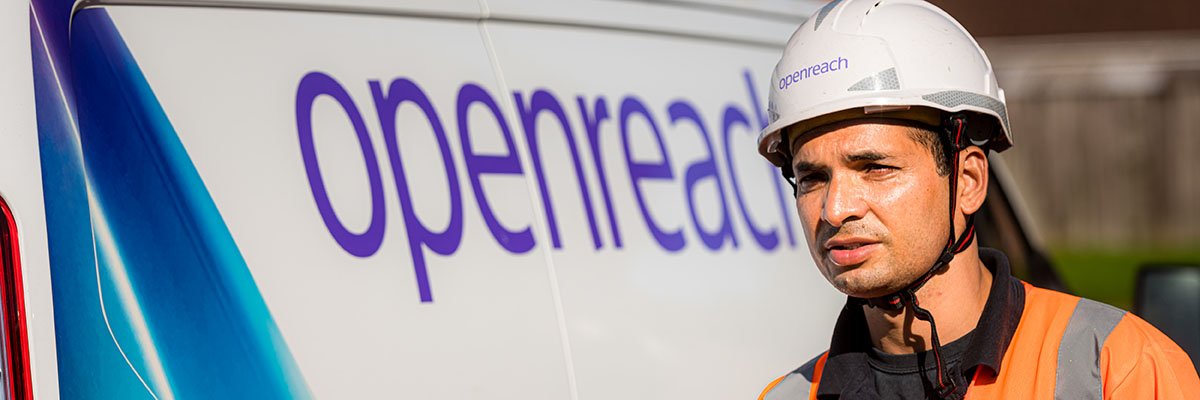
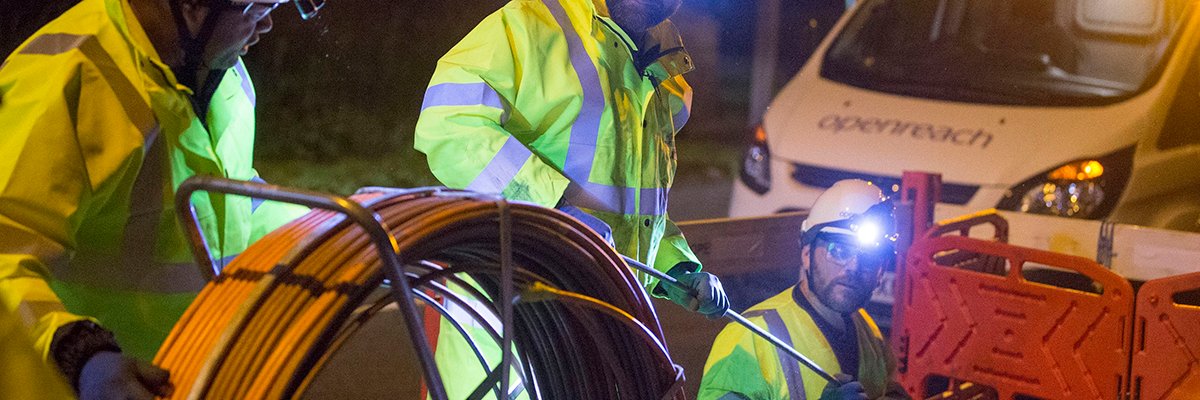
Ofcom's updated telecom regulations maintain existing framework while acknowledging BT's continued market dominance, requiring Openreach to share infrastructure and setting price controls for basic broadband services across most UK premises.
Digital life
fromTelecompetitor
4 weeks agoFiber access grew in the last half of 2025, but 5G growth slowed: Analysis
Fiber internet providers accelerated expansion to 8.4% growth in late 2025, adding 5.2 million addresses and achieving 99%+ coverage in 182 counties, while overall served locations increased and unserved locations decreased by 8.4%.
US news
fromTelecompetitor
1 month agoStudy calls for federal broadband pricing database, finds pricing disparity in Louisville
A study of Louisville broadband pricing reveals higher per-Mbps rates in lower-income neighborhoods, despite lower monthly bills, indicating disparate pricing practices across communities.
Digital life
fromTelecompetitor
4 weeks agoNational Broadband Master Plan looks to create secure national network
NEO Network Development proposes a five-year National Broadband Master Plan to build underground fiber infrastructure alongside U.S. transportation routes, connecting critical facilities and treating broadband as essential utility infrastructure.
fromTelecompetitor
2 weeks agoHow municipal networks compare with provider competitors: Ookla report
Eight of the municipal networks studied beat their local provider competitors in median upload speed. Sherwood Broadband - in the town of the same name in Oregon - was the only one to beat its local competitor in median download speed.
Online Community Development

fromTelecompetitor
4 weeks agoBroadband Forum announces Wholesale Access project
Wholesale access has been inherently supported by the Broadband Forum's network architecture over the past 20 years, and this project takes the best practices from copper‑based broadband to reshape and evolve them for fiber and cloud networks.
Online Community Development
fromTelecompetitor
2 months agoFCC approves major expansion for SpaceX
The FCC approval enables SpaceX to add 7,500 Gen2 Starlink satellites to orbit, doubling its current number and bringing its total network to 15,000 satellites. According to the FCC, the additional satellites will enable SpaceX to better provide low-latency, high-speed internet communications across the globe. The FCC approval should enable SpaceX to leverage its recently announced speed increases, which were announced on the social media platform X late last year. "Significant improvements in @starlink network performance in 2025, with median peak-hour network-wide speeds increasing by over 50%," Starlink Vice President of Engineering Michael Nicolls said in a tweet.
Science

Online Community Development
fromTelecompetitor
1 month agoStates and NGOs must bridge senior broadband gap: AARP
32% of older Americans lack home broadband access, affecting 19 million seniors, with disparities among low-income, oldest, and least-educated populations requiring urgent policy solutions.
fromTheregister
1 month agoStarlink speeds past terrestrial networks - and regulators
Stefanovic found that Starlink carried data more quickly than connections that started on European cellular networks, despite the space broadband service often requiring more network hops and not using Tier 1 networks. She hypothesized that Starlink's performance can be attributed to the satellite-to-satellite laser connections SpaceX employs, which route traffic across the satellite network so it can reach the most appropriate terrestrial egress point. That laser network, she suggested, should perhaps be considered a new routing layer for the internet.
Science


fromTelecompetitor
1 month agoClosing the global digital divide requires low-band spectrum: GSMA analysis
Spectrum below 1 GHz could significantly boost 4G and 5G coverage in rural areas, according to the report from GSMA Intelligence. Rural areas depend heavily on low-band spectrum because it allows signal to travel further and penetrate better through barriers such as buildings. Rural residents spend twice as much time connected to low bands as their urban and rural counterparts.
Digital life
[ Load more ]