#busan-opera-house
#busan-opera-house
[ follow ]
#south-korea #k-pop #bts #k-beauty #contemporary-art #seoul #soft-power #cultural-exports #global-trends
fromdesignboom | architecture & design magazine
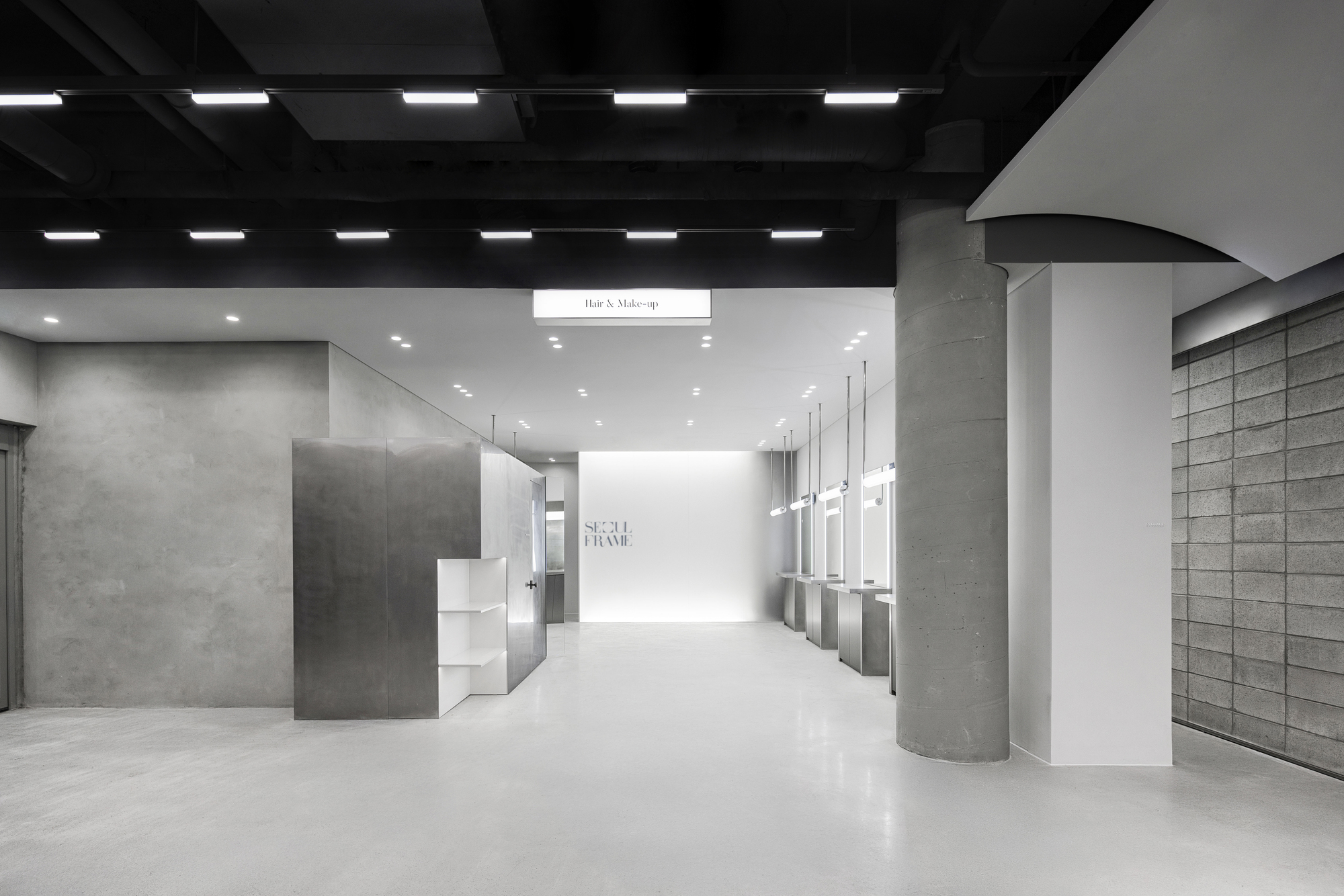
2 days agoblooming graphics and floral installations take over shinsegae department store for spring
The campaign explores the relationship between graphic identity and natural motifs, with the S-check pattern reinterpreted through cherry blossom imagery, establishing a contrast between graphic order and natural variation.
Graphic design






:max_bytes(150000):strip_icc()/TAL-seoul-south-korea-SAFEFRMTERRORISM0126-c733445703bc441c94a57dae316525b3.jpg)
London
fromThe Art Newspaper - International art news and events
1 week agoMuseums in Shenzhen and Guangzhou are building bridges between Hong Kong and mainland China
Integration of Hong Kong with mainland China has expanded into finance, culture, and infrastructure, fostering new art ecosystems and museums.
Film
fromTravel + Leisure
1 week agoYou Can Now Take a 'KPop Demon Hunters' Tour in Seoul-and It Includes a Sacred Mountain Hike and Your Own Debut Single
KPop Demon Hunters is a cultural phenomenon, winning major awards and inspiring a themed tour that blends traditional Korean heritage with K-pop excitement.
fromwww.businessinsider.com
2 weeks agoI moved my family to Korea for a job. Then I got laid off and I'm still glad we came.
The decision wasn't made lightly. I can remember walking the sidewalks of our Colorado exurb, trying to decide if this was the right choice. In that sunny winter weather, our daughter bundled up in a stroller, the dog investigating lawns, our conversations would go: "Are you happy here?" "I feel like if we stay we're going to get old in front of the TV." "Can you imagine how much better the food will be?" "If we don't do it now, we'll probably never do it."
Writing
fromKotaku
2 weeks agoKPop Demon Hunters Concert Tour May Come To An Arena Near You
Netflix is currently negotiating with concert promoters to stage an arena concert tour in venues that hold 10,000 to 20,0000 fans. At the moment, plans have not been solidified and the entire thing could fall through if Netflix decides to scrap the plan to save cash or some of the creative ideas don't work out.
NYC music
Film
fromwww.theguardian.com
2 weeks agoSouth Korea celebrates miracle' Oscar wins for KPop Demon Hunters
KPop Demon Hunters won two Academy Awards, becoming a cultural milestone that demonstrates South Korea's growing global artistic influence and the international recognition of Korean aesthetics and culture.
Renovation
fromArchDaily
4 weeks agoHeatherwick Studio Unveils Design for Daegyo Apartments Redevelopment in Seoul, South Korea
Heatherwick Studio transforms four 1975 Seoul apartment buildings with nature-inspired undulating rooflines, replacing 576 units with 900 homes while incorporating community facilities and public spaces.
fromBikeMag
4 weeks agoWhy Korea Is Mountain Biking's Most Exciting New Stage
South Korea doesn't immediately come to mind when you picture world-class singletrack, but with South Korea being mostly mountains, it makes sense that there would be plenty of mountain biking to uncover. When Giant Bicycles athlete Sascha Kim touched down in Seoul, he found himself connecting with a mountain bike scene bursting with life, a tight-knit community, and some seriously great trails.
Bicycling
fromArchitectural Digest
3 weeks agoA Design Lover's Guide to Seoul: The Most Inspiring Places to See, Eat, and Shop
Seongsu-dong is Seoul's creative hub, where old warehouses and factories have been transformed into design studios, cafés, and showrooms. Often referred to as 'the Brooklyn of Seoul,' the industrial infrastructure, pop-up scene, and design-led façades make it a photo-friendly destination favored by many design-loving visitors.
Berlin
Miscellaneous
fromArchDaily
1 month agoKumamoto Exhibition Explores Shoei Yoh's Pioneering Timber Structures and Computational Design
Shoei Yoh, a pioneering Japanese architect born in Kumamoto in 1940, revolutionized timber construction and computational design through rational methodology and elastic architecture principles.
Travel
fromTravel + Leisure
1 month agoThis Small City Was Just Named the Most Welcoming Destination in Asia
Magong, Taiwan was named the most welcoming destination in Asia and second most welcoming in the world by Booking.com's 2026 Traveller Review Awards, with friendly locals creating a relaxed, welcoming atmosphere.
Snowboarding
fromUnofficial Networks
1 month agoExploring Massive Abandoned Ski Resort Near North Korean Border
An abandoned ski resort near South Korea's DMZ contains vintage ski equipment and amenities, with its closure timing determinable from the rental fleet's age and failed Olympic reopening attempt.
fromRemodelista
3 weeks ago12 Pojagi-Style Patchwork Curtains in a Range of Styles and Prices
Making pojagi was a way of "economizing resources," and also "an act of affection," explains artist-fashion designer Christina Kim of Remodelista longtime favorite Dosa. Shown here: Dosa's cotton and silk Pojagi Scarves are "both a reminder of Christina's childhood in Korea and a beautiful expression of traditional recycling"-and would work well on a wall or in a doorway.
Fashion & style

Design
fromdesignboom | architecture & design magazine
3 weeks agogalerie philia presents 'human after all' within a converted bathhouse in seoul
Galerie Philia presents Human After All in Seoul, featuring contemporary Korean designers within a historic 1980s bathhouse with distinctive architectural character that shapes the exhibition experience.
fromwww.theguardian.com
1 month agoSouth Korea's birthrate rises for second year with experts saying echo boomers' behind boost
Much of the rebound reflects what demographers describe as the echo boomer effect. Roughly 3.6 million children were born between 1991 and 1995, when births briefly rose after the government in effect ended its family planning policy. That cohort is now in its early thirties, the age at which birth rates are highest. Women in their early thirties numbered an estimated 1.7 million in 2025, up 9% from 2020.
Public health
Design
fromArchDaily
1 month agoRotterdam's Sustainability Landmark and Brisbane's 2032 Olympic Stadium: This Week's Review
Architecture navigates legacy, authorship, and social responsibility while addressing sustainability, accessibility, and public engagement across cultural and institutional contexts.
UX design
fromYanko Design - Modern Industrial Design News
2 months agoLotte E&C Just Turned 5 Eggs Into the Welcome Gift You'll Use - Yanko Design
A birdhouse-shaped welcome kit contains five multifunctional egg-shaped magnetic objects designed to organize home entryways and convert packaging into a refillable tissue holder.
fromwww.dw.com
2 months agoJapan, South Korea vow stronger ties amid China challenge
"Both sides agreed on "shuttle diplomacy" three years ago, with regular meetings at the highest level. Lee's national security adviser, Wi Sung Lac, said the summit's goal was to build trust between the South Korean and Japanese leaders. Lee and Takaichi discussed ways to boost cooperation in a raft of areas including cutting-edge technologies such as artificial intelligence, combating cross-border crime, and promoting people-to-people exchanges."
World news
Film
fromwww.theguardian.com
2 months agoI haven't mellowed my violence': Park Chan-wook on cultural dominance, the capitalist endgame and why we can't beat AI
No Other Choice satirizes capitalism, portraying modern South Korea as industrially declining—downsizing, unemployment and male fragility—exacerbated by AI and precarious entertainment industries.
Travel
fromTravel + Leisure
2 months agoThis Vibrant Asian City Was Just Named the Most-visited in the World-and No, It's Not in Japan
Bangkok is the world's most visited city in 2025 with 30 million arrivals, driven by affordability, connectivity, infrastructure, cultural attractions, and hospitality growth.


Arts
fromThe Art Newspaper - International art news and events
2 months agoSingapore cements its role as a hub for art-and artists-in Southeast Asia
Singapore functions as a regional hub and melting pot for Southeast Asian art, offering institutional support, openness, and market access that boost the region's profile.
fromwww.archdaily.com
2 months agoTopology: Hanok / Yong Ju Lee Architecture
Topology: Hanok is an experiment that develops a topological design workflow using AI to reinterpret the sectional logic and spatial continuity of traditional Korean architecture beyond mere formal reconstruction or structural reproduction. Rather than directly restoring the structural joints or framing system of traditional Hanok, the project focuses on its nonlinear spatial organization, the fluidity of curves, and the continuous transitions between interior and exterior.
Design
fromArtnet News
2 months agoSingapore to Doha to Delhi: The New Cultural Corridor Shaping Asia's Art Market | Artnet News
This year's Art SG, which closed last month, featured an intriguing debut: South Asian Insights, a modest pavilion dedicated to contemporary art from the region. Part of the TVS Initiative for Indian and South Asian Contemporary Art, it was backed by India's TVS Motor Company, one of the world's largest two-wheel manufacturers, which has its global headquarters in Singapore. Eight galleries-five from India-were each given a wall to showcase art.
Arts
Arts
fromThe Art Newspaper - International art news and events
2 months agoFrom a bakery pop-up to an I.M. Pei survey: the exhibitions to see in Doha during Art Basel Qatar
Rirkrit Tiravanija's Untitled 2025 is an interactive bakery installation enabling communal baking sessions that foster cultural connectivity and participatory social exchange.
fromArchDaily
2 months agoCivic Architecture Opens to the City as Global Attention Turns to Africa: This Week's Review
Across this week's broader architecture news landscape, a central theme emerges around the advancement of civic architecture conceived as open, publicly engaged infrastructure, with cultural and institutional projects increasingly designed to strengthen their relationship with the city and everyday urban life. At the same time, renewed global attention turns toward Africa, where large-scale transport infrastructure and the conservation of modernist landmarks reflect interests in the region and the reassessment of the continent's architectural heritage.
Design
fromThe Art Newspaper - International art news and events
2 months agoFrom shopping malls to housing estates, Singapore Biennale integrates art into the city's urban fabric
"The idea is that intention is not the whole story," says Selene Yap, a co-curator of the Biennale. "Systems can generate a certain kind of afterlife, and there are side effects." While the waterfall impresses, it also has consequences, she adds. The work uncovers how Singapore imports hydropower through transnational infrastructure, including the Vajiralongkorn Dam, whose construction has displaced Thailand's indigenous Karen hill tribe, forcing many to live in floating homes on the reservoir.
Arts
[ Load more ]