#call-volume-trends
#call-volume-trends
[ follow ]
#customer-experience #email-marketing #customer-retention #ai-agents #automation #customer-service #social-media

fromMedium
5 days agoThe long and short of telephone progress
In 1952, Japanese technologist Masaru Ibuka learned that Western Electric was releasing its transistor patents to the public for $25,000, a significant investment for his struggling firm. This opportunity would allow access to essential patent portfolios and technical information, crucial for innovation in electronics.
Intellectual property law
#email-marketing

Deliverability
fromMarTech
1 week ago3 new email metrics that you need in 2026 | MarTech
Email performance metrics are shifting from traditional KPIs to engagement-focused measures like disaffection index and reply rate.
Deliverability
fromEntrepreneur
1 week agoThe 5 Email Layers Every Subscription Brand Needs to Reduce Churn
Retention increases when email guides customer behavior rather than solely promoting products.



fromTechRepublic
2 weeks agoAT&T Launches AI-Powered App for Millions of Customers - TechRepublic
AT&T is framing the launch as a broader overhaul of its digital customer experience, not just a visual refresh. In its announcement, the company said the app was built around customer demand for "simplicity, speed, and control," and introduced a GenAI assistant for shopping and support.
Mobile UX
Real estate
fromwww.housingwire.com
2 weeks agoICE launches AI voice and chat agents for mortgage servicing
ICE Mortgage Technology launches AI-driven productivity agents including voice and chat tools for homeowners and servicing teams to streamline mortgage management, reduce costs, and maintain compliance.
Online marketing
fromLondon Business News | Londonlovesbusiness.com
2 weeks agoFrom anonymous website visitor to phone caller: Call tracking is the attribution breakthrough marketers need - London Business News | Londonlovesbusiness.com
Call tracking software closes the attribution gap by assigning dynamic phone numbers to website visitors, enabling businesses to track which marketing campaigns drive phone call conversions.
Artificial intelligence
fromwww.housingwire.com
2 weeks agoICE's Matt Dowd on targeting mortgage servicing calls with AI
ICE developed AI agents for mortgage servicers to address borrower pain points by providing 24/7 instant answers to common questions like payment status, escrow, and tax documents through chat or voice, with intelligent routing to human agents when needed.
Business
from24/7 Wall St.
3 weeks agoT-Mobile's Customer Machine vs. Vodafone's Restructuring Gamble vs. SK Telecom's Surprise Rally: One Clear Winner Emerges
T-Mobile, Vodafone, and SK Telecom pursue distinct strategies in different markets: T-Mobile dominates customer acquisition, Vodafone restructures through mergers, and SK Telecom's stock surges amid limited transparency.

#ai-voice-agents

Marketing tech
fromSocial Media Explorer
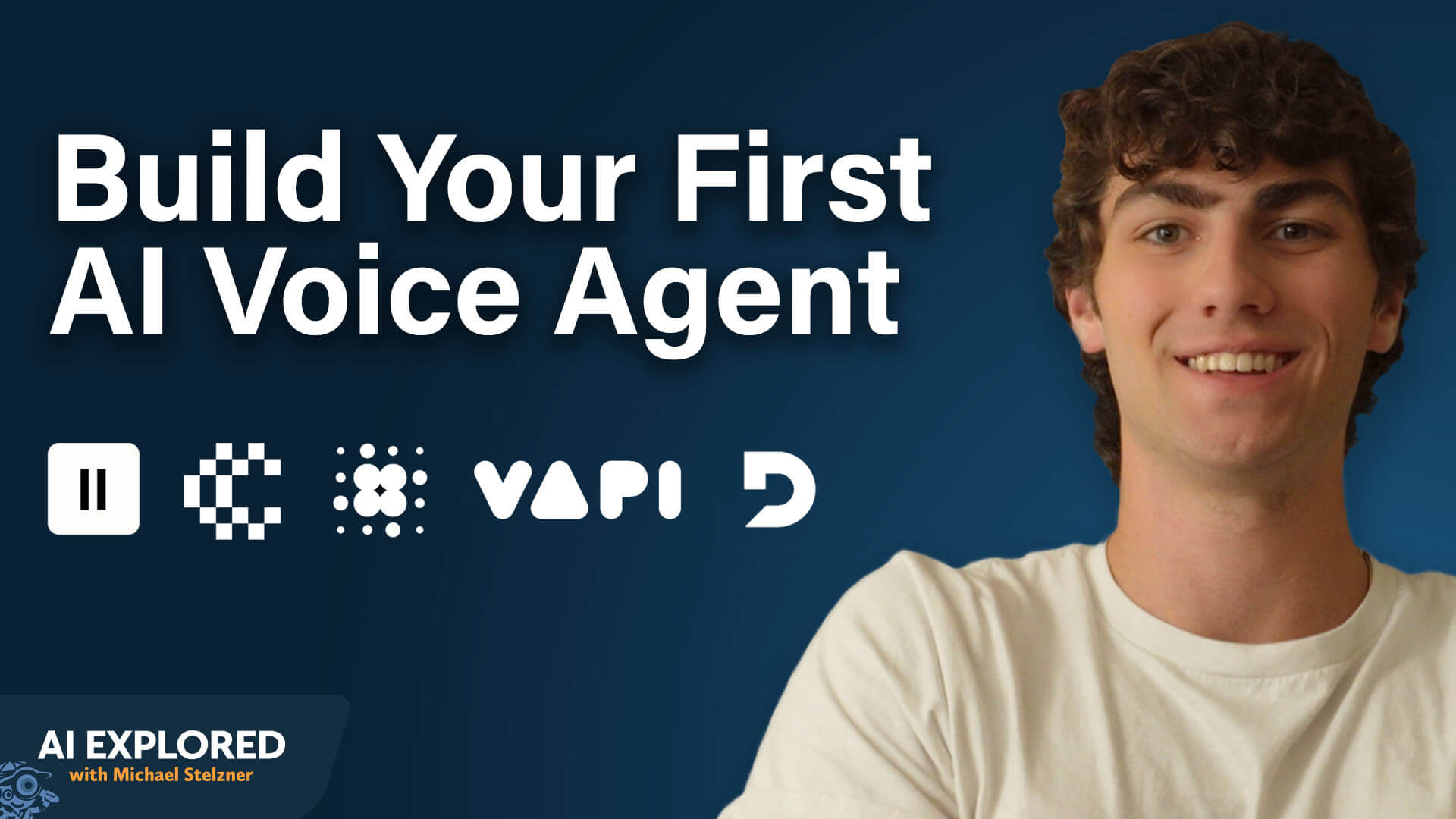
2 weeks agoAI Voice Agents in 2026 - How Businesses Are Replacing IVR With Conversational AI That Actually Works - Social Media Explorer
AI voice agents significantly improve customer service efficiency by resolving issues directly rather than routing through traditional IVR systems.


fromTelecompetitor
1 month agoMost consumers consider changing mobile plans once per year: Survey
Consumers are not passively renewing mobile plans. They are actively evaluating them, comparing value, scrutinizing pricing, and reassessing providers more frequently. Mobile is evolving from a static utility into a dynamic service relationship, and the next era will belong to those who reduce complexity, communicate transparently, and activate seamlessly.
Mobile UX
Deliverability
fromVerticalResponse
3 weeks agoThe 24-Hour Email Rescue Plan: What To Do After a Campaign Underperforms
Email campaign underperformance is recoverable within 24 hours using a data-driven diagnostic framework, fast tactical fixes, and strategic follow-up without requiring specialized expertise or expensive tools.
Growth hacking
fromFast Company
1 month agoIs AI driving away your best customers? 3 fixes for bridging gaps with growth audiences
Companies must treat underserved growth audiences as lead users to drive innovation and create solutions addressing real systemic problems rather than performative gestures.
Artificial intelligence
fromReuters Institute for the Study of Journalism
1 month agoAdvertising was always going to come for AI chatbots. The real question is how
AI companies are introducing advertisements to free and low-tier ChatGPT versions because subscription revenue alone cannot sustain their massive operational costs and investor expectations.
Business intelligence
fromZDNET
1 month ago90% of sales teams use AI agents - but half of them have the same data problem
94% of sales leaders with AI agents report they're critical for meeting business demands, with nine in 10 sales teams adopting agents to handle customer expectations and improve sales planning, retention, and prospecting.

Marketing tech
fromNeil Patel
1 month agoVoice Search Ads Are Changing Google's Search Term Report
Voice search queries have grown from 2.8 to 9-10 words, shifting Google Ads from keyword matching to semantic understanding, requiring agencies to fundamentally rethink intent tracking and budget management.
fromInc
2 months agoHow to Create a Social Listening Tool In 3 Easy Steps
You don't need to pay for expensive software tools in order to analyze what people are saying about your brand online, according to Jazmin Griffith, the founder of social listening agency Que Lo Que. Social listening, or the act of tracking customer sentiment through social media comments and posts, is an important practice for any business with an online presence. "There's a lot of data out there," John Box, the CEO of Meltwater, a SaaS platform that provides social listening services, previously told Inc.
Social media marketing
fromwww.dw.com
1 month agoThe telephone at 150: Are we hanging up on phone calls?
"Mr. Watson, come here, I want to speak to you." With these words, Alexander Graham Bell revolutionized communication. They were the first words to be intelligibly transmitted over distance the first telephone call. On February 14, 1876, Bell applied for a patent for his invention, signaling the rise of spoken communication as the primary way people stay connected. Real-time, long-distance communication stunned those experiencing it for the first time.
Digital life
Tech industry
from24/7 Wall St.
2 months agoThe Telecom Software Giant Shrinks Revenue but Expands Margins While Its Rival Beats Estimates
Amdocs prioritizes margin expansion with shrinking revenue while CSG delivers consistent revenue growth and consecutive earnings beats, reflecting divergent strategies in telecom software.
fromTheregister
1 month agoT-Mobile's new network-based AI will translate live calls
The self-described "Un-carrier" announced on Wednesday that beta signups were now available for live call translation powered not by an app or device-level capability, but AI that lives directly on the T-Mobile network. Eligible T-Mobile customers using a phone connected to 4G LTE or 5G - from flagship smartphones to bog-standard flip phones - can activate the feature by dialing * 87 *, with only one caller required to be on the carrier's network. Access is currently limited to customers admitted into the beta.
Gadgets


fromTelecompetitor
1 month agoTelcos use AI for network automation more than customer service: NVIDIA report
These AI tools drive profitability because they reduce outages, save energy, and obviate the need for manual intervention said Chetan Sharma, CEO of Chetan Sharma Consulting, who contributed to the report. The focus on AI-native networks and autonomous operations has overtaken customer service optimization as the leading use case for investment, according to findings from the firm's fourth annual State of AI in Telecommunications survey. The report also showed that AI has become profitable for 90% of telco operators.
Artificial intelligence
fromForbes
2 months agoSalesforce Holiday Survey Sees Surge In Use Of AI Agents
According to a new survey by Salesforce, consumers spent a record-breaking $1.29 trillion globally, and $294 billion in the U.S., amid higher average selling prices, up 7% year-over-year, during the recent holiday season. Sales growth reached 7% globally and 4% in the U.S., indicating that consumer appetite remained strong from the start of the season through the end. Order volumes were also up, 3% globally and and 1% in the U.S.
E-Commerce


fromTelecompetitor
2 months agoMobile problems few, experience strong: J.D. Power study
"Despite generational differences in the types of problems experienced, one thing is clear: wireless network quality is strong," Carl Lepper, J.D. Power senior director of technology, media and telecom, said in a prepared statement about the mobile study.
Mobile UX
fromeLearning Industry
2 months agoRedefining Sales Training: How To Build An Advanced Sales Training Strategy For Your Team
The complexity of the sales sector has grown immensely in recent years. Nowadays, buyers are more informed, competition is more brutal, and sales processes are made up of multiple and diverse stages. All of these changes have made it so that businesses, and specifically their sales departments, can no longer rely on ad hoc training or legacy knowledge. Instead, they need targeted and continuous training that supports their development, aligns with organizational objectives, and adapts to the industry's frequent changes.
Business
fromEntrepreneur
1 month agoYour Sales Team Might Be Slowing Down Your Growth - Here's Why
Abandon your focus on keyword optimization and start optimizing for citations Your human talent should focus on risk removal instead of pitching By the time a human conversation happens, the decision is often 80% to 100% made Businesses no longer find value in standard blog posts, which AI technology has made obsolete The traditional B2B growth engine is now showing signs of "leaking oil." The predictable path to revenue has followed a straight line for many years.
Growth hacking
fromForbes
1 month agoHow To Make Marketing Stand Out Amid A Din Of AI-Focused Messaging
How are marketers making sure the language they use around AI and the experiences they offer prospects and customers are meaningful? After testing hundreds of AI messages with customers and prospects, one truth stands out: Beneath most AI claims is a quiet fear about human value. The lesson is to be specific about business value and how AI supports, not replaces, people.
Artificial intelligence
fromTelecompetitor
2 months agoBig three carriers earn top places in mobile experience report
Opensignal's research found that T-Mobile led all carriers for reliability, experience, consistent quality, and access to 5G. Consistent quality is defined as how well a network supports the requirements for common applications that users consider acceptable to complete various "demanding" tasks, though Opensignal doesn't define what "demanding" is in this context. Reliability, on the other hand, refers to the ability of users to connect to and complete everyday tasks.
Mobile UX
fromForbes
1 month agoHow Customers Drive Your AEO Strategy Forward
B2B buyers now enter the purchasing process already considering at least one vendor. Increasingly, AI-powered answer engines like ChatGPT, Google Gemini, Perplexity, and Microsoft 365 Copilot inform their choices. These tools are becoming one of the first places buyers turn for vendor insights. If a company doesn't appear in these AI-generated answers, it risks being excluded from buyer shortlists. To improve visibility, companies must strengthen their answer engine optimization strategies by leveraging their customers.
Marketing
fromExchangewire
2 months agoAds in Chats: Your AI BFF Just Got a Sales Job
They said it would never happen, but of course it was always going to - ads are coming to ChatGPT. Shirley Marschall takes a look at this little bit of history repeating... Guys, honestly, there won't be ads... Jeff Bezos: "Advertising is the price you pay for having an unremarkable product or service." Elon Musk: "I hate advertising." Sergey Brin and Larry Page: "We expect that advertising-funded search engines will be inherently biased towards advertisers and away from the needs of consumers."
Artificial intelligence
fromMarTech
1 month agoThe secret to happy customers is... your data layer | MarTech
Mike Pastore is the Head of Content & Media at Third Door Media, the publisher of the Martech and Search Engine Land websites and the producer of the SMX and MarTech Conferences. In nearly three decades in B2B marketing, Mike has worked as an editor, writer, and marketer. He first wrote about marketing in 1998 for internet.com (later Jupitermedia). He then worked with marketers at some of the best-known brands in B2B tech, creating content for marketing campaigns at both Jupitermedia and QuinStreet.
Marketing tech
fromFast Company
1 month agoAI didn't kill customer support. It's rebuilding it
There were specialists monitoring dashboards, tuning AI behavior, debugging API failures, and iterating on knowledge workflows. One team member who had started their career handling customer questions over chat and email (resetting passwords, explaining features, troubleshooting one-off issues, and escalating bugs) was now writing Python scripts to automate routing. Another was building quality-scoring models for the company's AI agent. This seemed markedly different from the hyperbole I'd been hearing about customer support roles going away in large part due to AI.
Artificial intelligence
fromTelecompetitor
1 month agoAI adoption among telcos may taper off in 2026: Report
STL Partners predicts one AI-related growth area among telcos but warns of a slower adoption or pullbacks in three others. First, the AI optimism: Telcos will increasingly adopt voice-based AI, analysts believe. Already, some of the biggest global telcos are using embedded voice assistance in AI channels for enterprise customers. In 2026, telcos are likely to adopt voice technologies for customer calls as well. Immediate benefits could include live translation and integration of digital assistance services.
Artificial intelligence
fromDigiday
2 months agoThe fog between agencies and clients around data just keeps getting thicker: ID Comms report
In the 2026 installment of the State of Digital Media Benchmark, the media consultancy analyzed the governance protocols of 143 major advertisers representing about $35 billion in annual spend. One chilling if unsurprising conclusion: agencies blame clients for being so siloed the agency doesn't have clarity on client data, which is arguably the lifeblood of modern digital marketing. It all translates to what the report cited as a "dangerous disconnect between 'having data' and 'having visibility', particularly among the world's largest advertisers, those spending at least $1 billion in media annually.
Marketing tech
[ Load more ]