#cap-and-trade-funding
#cap-and-trade-funding
[ follow ]
#climate-change

Germany news
fromwww.dw.com
1 week agoGermany's big climate move bold step or bare minimum?
Germany's new climate package aims to enhance wind power and e-mobility, but critics argue it is insufficient for meeting emission reduction targets.
OMG science
fromNature
1 week agoDaily briefing: We've just had the 11 hottest years on record
Earth's climate is more out of balance than ever, with record heat and CO2 levels, highlighting the impact of fossil fuel dependency.


World news
fromIrish Independent
2 days agoEU warns it's 'preparing for worst scenarios' and assessing 'all possibilities' including fuel rationing as energy crisis deepens
Tehran plans to charge for passage through the Strait of Hormuz, aiming to ensure safe navigation amid rising tensions with the US.
SF politics
fromFortune
6 days agoHyperscalers often lack the "aptitude" on power as the political push picks up to expedite grid connections and pipelines | Fortune
Federal efforts to expedite power grid interconnections face challenges due to hyperscalers' communication issues and lack of understanding of processes.
fromwww.aljazeera.com
6 days agoG7 ready to take necessary measures' to ensure energy market stability
We stand ready to take all necessary measures in close coordination with our partners, including to preserve the stability and security of the energy market, said the G7 in a statement after a teleconference.
World news

Environment
fromLondon Business News | Londonlovesbusiness.com
1 week agoWhat decarbonisation means for the unseen machinery of trade - London Business News | Londonlovesbusiness.com
Decarbonisation in shipping relies on improving existing vessels' efficiency through retrofits, maintenance, and performance data rather than solely on new technologies.
fromwww.kaltblut-magazine.com
3 weeks agoThe Climate Crisis
At a young age, I learned quickly how oil wealth and power could burn the land while people struggled. I saw heat rise off the streets, the Nile strained, and the air thickened with injustice. In my teenage years, through Aotearoa, being on the edge of the Pacific, I felt the ocean breathing heavy, swallowing the shores of islands that have done the least to cause this harm.
Photography
fromKqed
2 weeks agoCalifornia Sues Trump Over Repeal of EPA's Authority to Fight Climate Change | KQED
As a result of these changes, engine and vehicle manufacturers no longer have any future obligations for the measurement, control, and reporting of GHG emissions for any highway engine and vehicle, including model years manufactured prior to this final rule.
US politics
California
fromLos Angeles Times
3 weeks agoFuel, energy prices raise the pressure as California officials take next steps on climate
California's cap-and-invest climate program faces opposition over concerns it could increase energy costs while tightening emissions caps and reducing free allowances to industrial facilities.
Germany news
fromwww.dw.com
2 weeks agoGermany's Climate Protection measures are barely on target
Germany's climate protection efforts have stalled under the new conservative government, with emissions falling only 0.1% in 2025 and plans to build new gas-fired power plants undermining previous environmental commitments.
fromEngadget
2 weeks agoStates are suing the EPA for relinquishing its role as a greenhouse gas emissions regulator
The lawsuit specifically argues that the EPA's decision to rescind a 2009 study that determined greenhouse gases are dangerous to public health was illegal. The study, which is the source of what's called the "Endangerment Finding," was one of several justifications - along with things like the Clean Air Act - for the agency's ability to regulate emissions.
Environment
fromwww.dw.com
1 month agoCan EU renewables outmuscle US oil and gas?
At a meeting at the Paris headquarters of the intergovernmental body dedicated to global energy security, Wright referred to the "destructive illusion" of the IEA's commitment to massively reducing greenhouse gas emissions sourced from fossil fuels. The US, one of 45 member and associate countries of the IEA that represent 75% of the world's energy demand, is threatening to withdraw from the body if it does not quit its energy transition goals in the next year.
Miscellaneous
Environment
fromwww.aljazeera.com
2 weeks agoUS states file lawsuit challenging Trump's revocation of climate finding
Twenty-three states filed a legal challenge against Trump's revocation of the 2009 endangerment finding that established climate change as a threat to human health and environment, which formed the basis for federal greenhouse gas emission regulations.
fromState of the Planet
2 weeks agoCan Capitalism Solve the Climate Crisis?
Absolutely, I have experienced investing in a way that green growth has led to both equitable growth and decarbonization, but also have lived experience of what degrowth can do to a country, and how, in my view, [degrowth] is not really a solution.
Environment
fromArs Technica
2 weeks agoEmerging legislation would shield polluters from liability for climate change
Dozens of local communities, states, and individuals are suing major oil and gas companies and their trade associations over rising climate costs and for allegedly lying to consumers about climate change risks and solutions. At the same time, some states are enacting or considering laws modeled after the federal Superfund program that would impose retroactive liability on large fossil fuel producers and levy a one-time charge on them to help fund climate adaptation and resiliency measures.
Environment
fromwww.theguardian.com
1 month agoDaunting but doable': Europe urged to prepare for 3C of global heating
as the EU's climate advisory board urges countries to prepare for a catastrophic 3C of global heating. Maarten van Aalst, a member of the European Scientific Advisory Board on Climate Change (ESABCC), said the continent was already paying a price for its lack of preparation but that adapting to a hotter future was in part common-sense and low-hanging fruit. It is a daunting task, but at the same time
Europe politics
fromwww.theguardian.com
1 month agoFerries emit more sulphur pollution than cars' in several EU capitals
Europe's ageing fleet of nearly 2,000 ferries are a large but overlooked source of foul air in coastal cities. Emissions of sulphurous oxides toxic gases that smell like burnt matches and rotten eggs react to form tiny particles that penetrate the lungs, ride the bloodstream and damage organs throughout the body.
Europe news
fromwww.theguardian.com
1 month agoClaims that AI can help fix climate dismissed as greenwashing
Tech companies are conflating traditional artificial intelligence with generative AI when claiming the energy-hungry technology could help avert climate breakdown, according to a report. Most claims that AI can help avert climate breakdown refer to machine learning and not the energy-hungry chatbots and image generation tools driving the sector's explosive growth of gas-guzzling datacentres, the analysis of 154 statements found.
Artificial intelligence
California
fromThe Mercury News
2 months agoLetters: If polluters paid for damage, state's deficit would be less
Fossil fuel companies should be held financially responsible for climate-driven damages to reduce taxpayer burdens and accelerate the transition to renewable electricity and all-electric buildings and vehicles.
Environment
fromMail Online
4 weeks agoGlobal warming has accelerated significantly since 2015, study reveals
Global warming has accelerated to 0.35°C per decade over the past 10 years, double the 1970-2015 rate, threatening to exceed the 1.5°C Paris Agreement limit before 2030 without urgent CO2 emission reductions.
fromNature
1 month agoThe world is getting hotter faster - its pace nearly doubled in the past decade
Because the past three years have shattered temperature records, researchers have been exploring whether global warming is accelerating, and if so, why. Many scientists agree that the rate at which it is increasing has picked up. This is mainly because of a reduction in air pollution following the introduction of fuel regulations for international shipping (which has resulted in fewer pollutant particles that reflect sunlight into space and seed insulating clouds).
Environment
US politics
fromABC7 San Francisco
1 month agoCalifornia leaders speak out against Trump administration's repeal of historic EPA findings
The Trump Administration repealed the EPA's 2009 endangerment finding and revoked vehicle greenhouse-gas standards, undoing federal emissions rules and triggering legal and political challenges.


fromwww.aljazeera.com
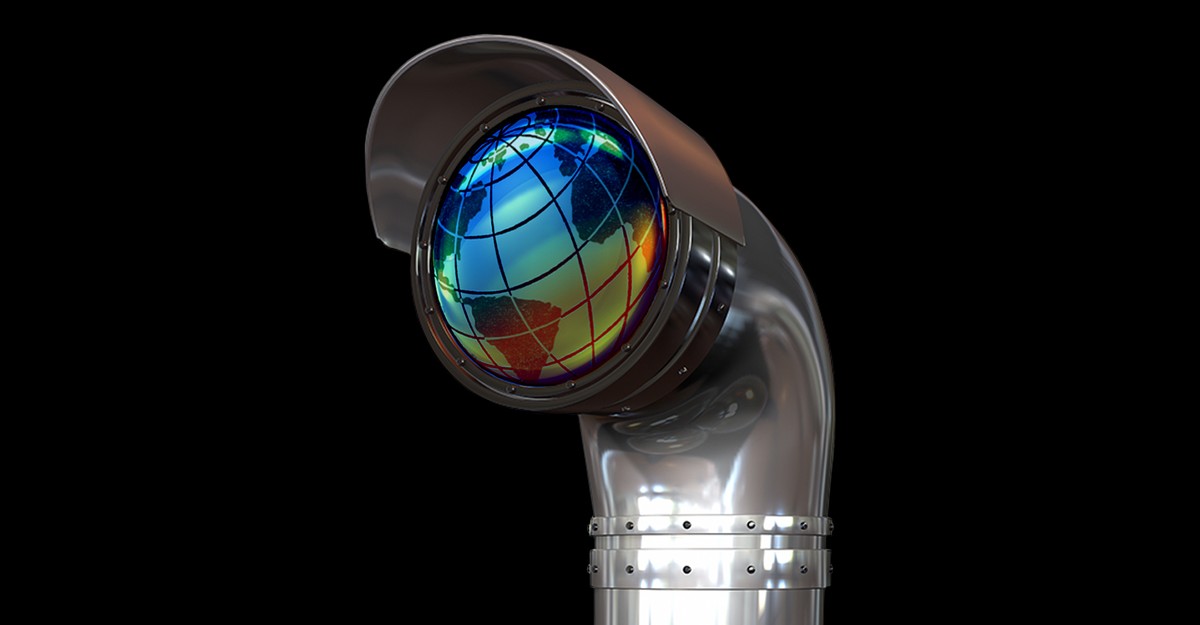
1 month agoUN approves first carbon credits under Paris Agreement market mechanism
The UN-run market allows companies and countries to offset their excess emissions by financing projects that cut greenhouse gases in other nations. The new initiative involves a clean cooking project in Myanmar, which distributes efficient cookstoves that reduce pressure on local forests. Implemented in partnership with a South Korean company, the project will generate credits that will count towards the climate targets of South Korea and Myanmar.
Environment
fromLos Angeles Times
1 month agoCalifornia wants millions of heat pumps. High power bills might get in the way
An all-electric, energy-efficient alternative to gas-burning furnaces, heat pumps are widely seen as the climate-friendly home heater of choice. They can do double-duty as both home heaters and AC units and are pretty good at maintaining a constant temperature inside a home without the blast-then-cool-off cycle typical of a furnace.
Environment
fromNature
1 month agoEU leaders should not rush to revamp green-hydrogen rules
Many planned projects have been delayed or scrapped. Adrian Odenweller and Falko Ueckerdt at the Potsdam Institute for Climate Impact Research in Germany tracked 190 projects globally that were due to begin operating in 2023. The researchers found that only 7% of these had begun operations as scheduled.
Environment
fromEarth911
2 months agoBest of Sustainability In Your Ear: Carbonfuture is Building the Trust Infrastructure for Carbon Removal
But as this nascent field grapples with questions of legitimacy, scalability, and accountability, a critical challenge remains: How do we build the infrastructure needed to track, verify, and certify that carbon has actually been removed and stays removed? Meet Hannes Junginger-Gestrich, CEO of Carbonfuture, a company helping define the monitoring, reporting, and verification (MRV) infrastructure that could transform carbon removal from scattered efforts into a functioning ecosystem.
Environment
Environment
fromwww.scientificamerican.com
2 months agoU.S. Greenhouse Gas Emissions Are Rising for the First Time in Two YearsThey Could Climb Far Higher
Rapid expansion of AI data centers and colder winter increased U.S. electricity use, driving a projected 2.4% rise in greenhouse-gas emissions in 2025.
fromArs Technica
2 months agoStates want to tax fossil fuel companies to create climate change superfunds
Last year, the nonprofit Climate Central launched an online database to track the most costly weather- and climate-related disasters across the country. The effort was led by the same lead scientist who tracked those costs for the National Oceanic and Atmospheric Administration-until the Trump administration axed the project in May. In 2025, the US experienced 23 such disasters with costs totaling at least $1 billion, for a total of $115 billion, Climate Central concluded.
Environment
fromwww.theguardian.com
1 month agoEnforcement of laws against polluters nearly non-existent in US, analysis finds
Enforcement of environmental laws against major polluters has virtually ground to a halt under the Trump administration, a new analysis of Environmental Protection Agency records from January 2025 to January 2026 shows. Major polluters typically include companies that are among the largest in the oil, gas, coal and chemical industries. Records show the EPA filed just one Clean Air Act consent decree compared with 26 in the first year of Trump's first term, and 22 during Biden's first year.
Environment
Environment
fromEarth911
2 months agoGuest Idea: Climate Risk Has Become A Defining Economic Issue
Climate-driven financial risks threaten housing and public budgets while large-scale clean-energy and durable carbon-removal investments (geothermal, biochar, novel hydrogen) accelerate to build resilience.
Environment
fromLos Angeles Times
2 months agoHow California lawmakers are trying to speed up spending on voter-approved climate projects
Assembly Bill 35 would exempt Proposition 4 funds from Administrative Procedure Act review to accelerate disbursement of $10 billion for water, wildfire, drought, and climate resilience projects.
fromWIRED
1 month agoThe Fight Over US Climate Rules Is Just Beginning
On Thursday, the Environmental Protection Agency is expected to roll back the endangerment finding, which underpins the US's ability to regulate the greenhouse gases that cause climate change. The rollback, the result of more than 15 years of work from right-wing special interest groups, represents the most aggressive move against climate regulation in the US to date-and will introduce a lengthy fight that's almost certain to wind up in front of the Supreme Court.
Environment
[ Load more ]