#capital-cities
#capital-cities
[ follow ]
#architecture #remote-work #london #adaptive-reuse #urbanization #mexico-city #urban-migration #labor-market
Business intelligence
fromLondon Business News | Londonlovesbusiness.com
5 days agoWhy GIS matters in modern infrastructure and urban planning: Building smarter, future-ready cities - London Business News | Londonlovesbusiness.com
GIS is essential for effective urban planning, enabling data-driven decisions that enhance infrastructure and quality of life in rapidly growing cities.
fromwww.bbc.com
1 week agoCampaigners celebrate after new town plans dropped
Campaigner Aysha Hawcutt stated that residents were 'not anti-homes', but believed the Adlington plan was 'the wrong proposal in the wrong place'. She expressed pride in the community's resilience against the development threats.
London politics
Real estate
fromInc
2 weeks agoWhy Connectivity Is the New 'Location' in Commercial Real Estate
Digital infrastructure and connectivity now rival or surpass traditional location as the primary factor determining real estate value for business properties, with 96% of U.S. business leaders willing to pay premium prices for reliable connectivity.
Arts
fromThe Art Newspaper - International art news and events
2 weeks agoNew book shows why physical maps have an important role to play in our digital world
A cartography professor discovered 96 historically significant maps in a forgotten university archive, revealing cartography's vital role in preserving sociopolitical memory and demonstrating maps' importance beyond navigation.
Russo-Ukrainian War
fromLondon Business News | Londonlovesbusiness.com
3 weeks agoOpinion: How did a regional conflict became a world war and who can we trust? - London Business News | Londonlovesbusiness.com
The Ukraine war has evolved from a regional conflict into a global geopolitical struggle involving multiple nations and alliances, with the Trump administration shifting U.S. policy toward pressuring Ukraine for negotiations while showing less pressure on Russia.
London
fromTime Out London
3 weeks agoLondon is officially one of the best cities in the world in 2026, according to Time Out
London ranked fourth globally in Time Out's Best Cities 2026 survey, based on votes from 24,000 residents and expert analysis, with major cultural attractions and events planned for the coming year.
fromArchDaily
3 weeks agoMobility Justice: Urban Equity in an Era of Innovation
Every city contains two transportation systems. One is the visible network of roads, rail lines, sidewalks, and bus routes mapped in planning documents. The other is the invisible geography of privilege and exclusion embedded within it: the neighborhoods that received highways instead of parks, the communities whose bus routes were cut, the sidewalks that abruptly end at the edge of a district.
Alternative transportation
Artificial intelligence
fromArchDaily
1 month agoCompute Isn't Weightless: AI Infrastructure and the Architecture of the City
AI development is reshaping urban infrastructure and spatial planning in the Greater Bay Area through government-led initiatives that translate computational needs into physical zones, data centers, and specialized districts.
Parenting
fromCN Traveller
1 month agoThese are the best cities in the world to raise a family in 2026, with one charming European capital claiming second place
Brisbane ranks first globally for raising families, excelling in green spaces per capita and safety while offering an outdoor lifestyle appealing to expats.
fromwww.theguardian.com
1 month agoAnalysis finds urban areas in England where no one lives within 15-minute walk of nature
While the data shows 80% of people live within walking distance of green or blue spaces such as a river, park or woodland, it also reveals a disparity between rural and poorer urban areas. In some areas of local authorities, fewer than 20% of residents live close to these spaces, according to data released by the Department for Environment, Food and Rural Affairs on Wednesday.
Environment
fromInfoQ
1 month ago[Video Podcast] AI Autonomy Is Redefining Architecture: Boundaries Now Matter Most
Earlier we did episode one of this with Grady Booch where we discussed the principled view of that what's changing and what remains unchanged, what is hyped and what is actually naturally coming with the AI changes. We also spoke about that what is the difference between the design and the architecture and what teams are focusing and what they might be missing.
Design
EU data protection
fromInfoWorld
1 month agoSovereignty isn't a toggle feature
European cloud alternatives like Hetzner and Scaleway can deliver comparable performance and capabilities to AWS while significantly reducing costs, though they require greater operational responsibility and architectural commitment to sovereignty.
Business
fromHarvard Business Review
1 month agoRethinking Strategy in a Hyperpolitical World
Corporate decisions face intense public scrutiny for political implications, resulting in boycotts, revenue loss, reputational damage, and executive terminations, yet political engagement remains unavoidable for businesses.
fromwww.theguardian.com
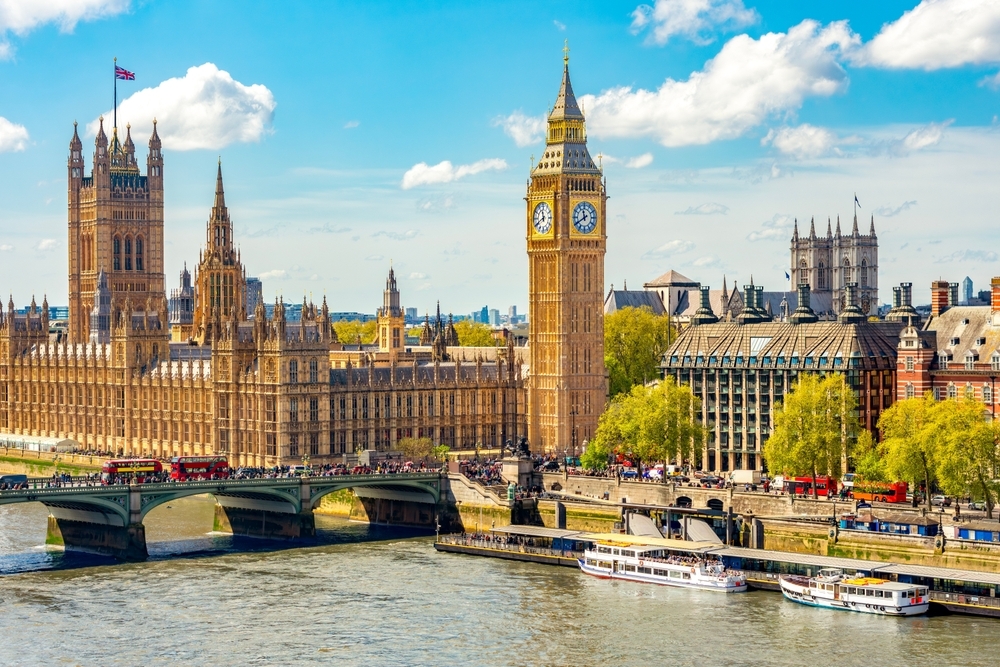
1 month agoThe Guardian view on saving Westminster: parliament should leave London | Editorial
The palace, rebuilt after a fire destroyed it in 1834, is falling apart. There have been 36 fire incidents since 2016. Water leaks, heating failures and sewerage problems plague the heart of this Unesco world heritage site. Fixing Westminster would save money in the long run. An upgrade is also a matter of safety and legacy.
UK politics
New York City
fromInc
1 month ago140 Cities in Maine, L.A.'s Olympic Committee, and NYC: The Urban Tool That's About to Change Everything
MIT researchers created the first complete pedestrian activity model for New York City, revealing movement patterns and crash vulnerabilities, applicable to any U.S. city and enabling better infrastructure funding allocation.
fromForbes
1 month agoTransit-Oriented Housing On Track For Continued Growth
Once a nice-to-have niche urban design concept, TOD has become an essential part of many urban neighborhoods. It has helped address the shortage of housing by enabling the development of higher-density residential communities near transit stations. It has helped revitalize countless once-deteriorating or static urban enclaves near transit hubs by activating sidewalks near the developments. And it has spurred walking and transit use, enabling residents of TODs to reduce or eliminate automobile dependency.
Real estate



fromBusiness Facilities Magazine
1 month agoWhy Corporate Real Estate Leaders Are Choosing Secondary Cities - Business Facilities Magazine
C orporate real estate strategy has entered a new phase. Expansion decisions are no longer driven by brand prestige or default gateway markets. Today's environment demands cost discipline, workforce stability, operational resilience, and long-term flexibility. For companies considering expansion or relocation, smaller metros - often called secondary cities - are increasingly landing on the shortlist. Not as compromises. As competitive, strategic options.
Real estate
Miscellaneous
fromwww.theguardian.com
2 months agoWe have a new role': mayors across the world increasingly taking on society's biggest challenges
Mayors are increasingly frontline leaders, implementing bold local policies on housing, mobility, environment, and culture to address global challenges and political backlash.
fromArchDaily
1 month agoMoving Capitals Across Global Contexts: From Strategic Planning to Environmental Necessity
Across history, the relocation of capital cities has often been associated with moments of political rupture, regime change, or symbolic nation-building. From Brasília to Islamabad, new capitals were frequently conceived as instruments of centralized power, territorial control, or ideological projection. In recent decades, however, a different set of drivers has begun to shape these decisions. Rather than security or representation alone, contemporary capital relocations are increasingly tied to structural pressures such as demographic concentration, infrastructural saturation, environmental risk, and long-term resource management.
World news
fromArchDaily
2 months agoWho Owns Public Space? Three Active Models of Shared Management Shaping Urban Commons in Europe and New York
Public space is often understood as belonging to no one in particular, collectively accessible yet institutionally maintained, yet a growing number of initiatives are challenging this assumption by testing shared management and distributed ownership models. In Paris, Adoptez un banc introduces a sponsorship-based approach, allowing individuals and groups to support temporarily and symbolically claim responsibility for historic public furniture without compromising its collective use.
France news
fromwww.mercurynews.com
2 months agoBrownstein: What's the endgame for White House's offensive against blue cities?
The siege of Minneapolis represents a fitting, if foreboding, capstone to the first year of President Donald Trump's second term. Since returning to office one year ago, Trump has pursued no goal more passionately or persistently than breaking the ability of blue jurisdictions and their leaders to resist him. In the process, he is straining the nation's fundamental cohesion in ways that may escalate beyond his control.
US politics
Design
fromArchDaily
1 month agoHeritage Transformations, New Capital Cities, and Residential Innovations: This Week's Review
Adaptive reuse, landscape integration, and conservation strategies extend the life and cultural relevance of built environments amid material, infrastructural, and geopolitical challenges.
fromwww.standard.co.uk
2 months agoThink tank calls for fewer London councils and 'opposition mayor' to Sadiq Khan
A leading think tank has recommended a number of organisational changes to local governments in order to reinvigorate democracy across the country. A report from Re:State recommends a major change to the number of London boroughs, as well as electing an official opposition mayor. The report, informed by interviews with a host of senior political figures, proposes that the existing 32 boroughs be drastically cut to between 10 to 12 local authorities.
UK politics
fromAxios
2 months agoExclusive: Inside Google's push to sell AI to cities
Between the lines: This isn't benevolence. It's customer acquisition. Mayors don't just buy "AI." They buy cloud, data modernization, cybersecurity, services, and long-term support - the tech stack underneath any serious deployment. In return, cities get tools that could fix long-standing challenges, Cris Turner, vice president of government affairs at Google told Axios last June when it first released its playbook.
Artificial intelligence
fromwww.aljazeera.com
2 months agoGaza's daily nightmare vs US talk of AI-driven smart cities
United States plans for Gaza amount to a theme park of dispossession for Palestinians, argues Drop Site News Middle East Editor Sharif Abdel Kouddous. Abdel Kouddous tells host Steve Clemons the draconian measures planned for the two million shell-shocked Palestinians in Gaza are an Orwellian labyrinth of biometrics, bureaucracy and a lab for government surveillance all meant to drive them out.
World politics
fromBusiness Insider
1 month agoI've lived in 4 different cities, each one smaller than the last. This pattern's been great as I've gotten older.
I've spent my whole life exploring new places. Growing up, my family moved all over the US, from my birthplace of Cincinnati to Boston, Dallas, and various other cities. As an adult, I've continued that trend, moving to progressively smaller cities over the years, before settling in my current home: a New Hampshire college town of under7,000 people. I've never once moved because I disliked where I lived; in fact, each place was exactly what I wanted at that time in my life.
Travel
fromTime Out London
2 months agoLondon is officially the most powerful city in the world right now
Seventy-two different metrics were assessed and divided into these categories: economy (GDP per capita, employment levels, wage rate); research and development (number of patents, startups and presence of top universities); cultural interaction (proximity to World Heritage Sites and number of theatres, museums, stadiums and hotel rooms); livability (life expectancy and rent prices); environment (air quality and waste recycle rate); and accessibility (the price of a cab and the number of international flights).
Miscellaneous
fromArchitectural Digest
2 months agoDesigning When Your City Is Under Siege
Life doesn't pause for grief or fear. You might be going through something devastating but you're still packing lunches, still driving your kids to baseball practice, still showing up to work. One minute I find myself prepping for a whole home presentation and the next minute I'm checking the news, hoping and praying that no one has been killed on the streets today.
Design
fromwww.aljazeera.com
2 months agoWhy is the US quitting international organisations?
There are more signs that the United States is disengaging from the global order established after World War II. President Donald Trump has ordered his administration to pull out of more than 60 agencies, half of them part of the United Nations. Trump argues that being a member of these organisations is contrary to his country's interests. The secretary of state went as far as saying they're useless or wasteful.
World news
fromArchDaily
1 month agoHealth, Habitat, and Civic Infrastructure: Designing the City as a National Park
Cities around the world share a common goal: to become healthier and greener, supported by civic infrastructure that restores ecosystems and strengthens public life. The question is how to reach this. Global climate targets, local building codes, and municipal standards increasingly guide designers and planners toward better choices. Still, many cities struggle to translate these frameworks into everyday, street-level comfort and long-term ecological protection.
Environment
fromArchDaily
2 months agoCivic Architecture Opens to the City as Global Attention Turns to Africa: This Week's Review
Across this week's broader architecture news landscape, a central theme emerges around the advancement of civic architecture conceived as open, publicly engaged infrastructure, with cultural and institutional projects increasingly designed to strengthen their relationship with the city and everyday urban life. At the same time, renewed global attention turns toward Africa, where large-scale transport infrastructure and the conservation of modernist landmarks reflect interests in the region and the reassessment of the continent's architectural heritage.
Design
fromemptywheel
2 months agoTime to Unplug the American Century and Restart the Machine - emptywheel
Three of the four things that gave Trump a foothold, in my opinion, were failures in this century (the fourth is the legacy of slavery and the organized political violence that replaced it). The other three, though, are the War on Terror, the financial crisis, and social media. (COVID was the final catalyst, I think; having moved during the height of COVID, I can't express how much worse the US dealt with it than much of the EU.)
World news
Design
fromFast Company
2 months agoTop architects on the biggest challenges they'll face in 2026
Architects must prioritize collaboration, community-centered design, faster delivery without quality loss, clear high-performance standards, streamlined approvals, and AI-enabled workflows to address housing and infrastructure crises.
fromArchDaily
2 months agoUnearthing the Ground: Architecture and the Politics of the Subterranean
Beneath the visible surface of cities lies an invisible architecture. Subways, tunnels, water systems, data cables, and bunkers form a dense network that sustains urban life while remaining largely unseen. The ground beneath our feet is not a void but a complex territory that holds the infrastructures, memories, and anxieties of our age. In recent years, as land becomes scarce and climate pressures intensify, architects and urbanists have turned their gaze downward, rediscovering the subterranean as both a physical and conceptual frontier.
Design
fromThe Globe and Mail
2 months agoBusiness Brief: Heralding the age of Western decline
U.S. President Donald Trump, with his lust for Greenland and hectoring of Europe, thinks the world is at his mercy,and thatthe U.S. is invincible. He's right on the first point. But he discovered this week that he's wrong about the second one. In Davos at the World Economic Forum, Trump climbed down on his Greenland threats after his actions caused chaos in the markets.
World news
[ Load more ]