#cellular-disruption
#cellular-disruption
[ follow ]
#immunotherapy #synthetic-biology #car-t-cell-therapy #clinical-trials #solid-tumors #cancer-immunotherapy
from24/7 Wall St.
4 days ago5 Biotechs That Big Pharma Could Snap Up as Oncology M&A Heats Up
Incyte tops this list due to its rare combination of commercial scale, cash generation, and pipeline depth. The company posted FY2025 revenue of $5.14 billion, up 21.2% YoY, anchored by Jakafi generating $828.2 million in Q4 2025 alone (+7% YoY) and Opzelura delivering $207.3 million (+28% YoY). With $3.58 billion in cash and 14 pivotal clinical trials underway, Incyte offers an acquirer immediate revenue, margin expansion potential, and a deep oncology pipeline spanning KRASG12D, CDK2 inhibition, and mutCALR.
Venture
fromwww.nature.com
1 month agoLipid metabolism drives dietary effects on T cell ferroptosis and immunity
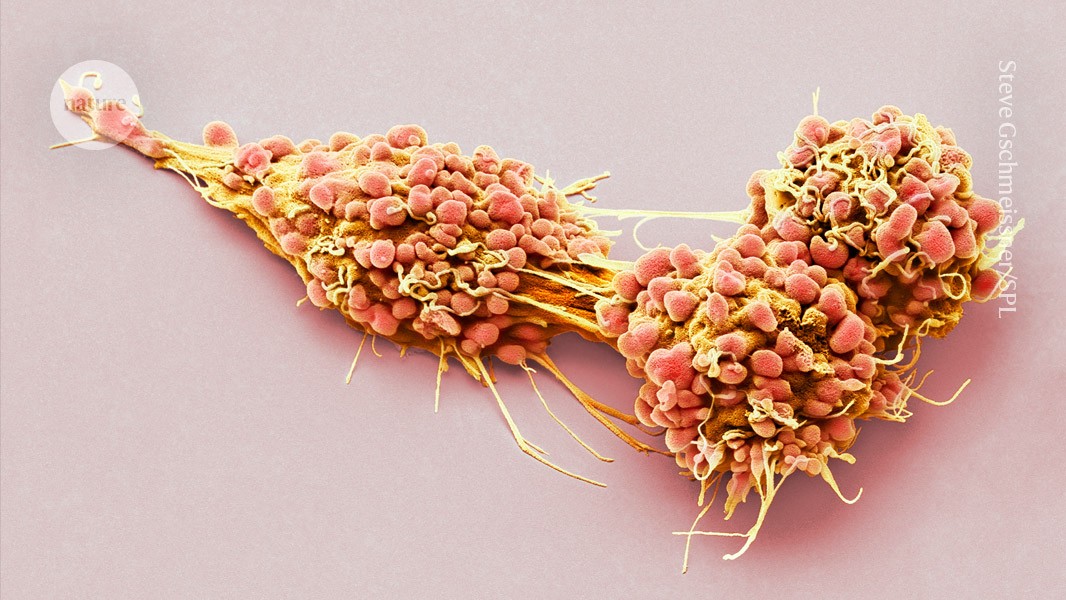
Ferroptosis, a major mechanism of non-apoptotic programmed cell death, critically regulates the homeostasis and functionality of peripheral CD4+ and CD8+ T cells. Here we demonstrate that in mouse, resistance of T cells to ferroptosis depends critically on the composition of standard rodent diets, and that dietary effects on ferroptosis have a crucial role in regulation of T cell homeostasis and immune responses.
Medicine
OMG science
fromHarvard Gazette
2 months agoWhy did that cancer cell become drug-resistant? - Harvard Gazette
TimeVault records and stores cellular gene-expression history inside living cells, enabling retrieval of past gene-activity information to study differentiation, stress responses, adaptation, and drug resistance.
Artificial intelligence
fromwww.scientificamerican.com
2 months agoCracking DNA's dark matter with AI, surviving two days without lungs, and uncovering a botanical mystery
AlphaGenome, an AI model, predicts DNA segment functions to expand understanding of genetic code and its links to proteins and disease.
Public health
fromIPWatchdog.com | Patents & Intellectual Property Law
4 years agoThe Innovation Ecosystem Behind COVID Vaccines is Now Targeting HIV/AIDS
Incremental scientific innovation transformed HIV from a fatal epidemic to a manageable disease, with advances including AZT, PrEP, and promising mRNA vaccine trials.
fromSilicon Canals
1 month agoA brain-based AI test could point to the best antidepressant for you - Silicon Canals
Before treatment began, participants underwent neuroimaging. Instead of relying on a single modality, the researchers fused structural connectivity (how regions are physically wired) with functional connectivity (how regions co-activate at rest). The goal was not to throw every possible feature at a black box, but to learn a constrained pattern-what the authors call structure-function "covariation"-that carries the most predictive signal for outcome. In other words, the model tries to find the smallest set of connections that meaningfully forecasts symptom change.
Mental health
fromBoston.com
1 month agoModerna says FDA refuses its application for new mRNA flu vaccine
The news is the latest sign of the FDA's heightened scrutiny of vaccines under Health Secretary Robert F. Kennedy Jr., particularly those using mRNA technology, which he has criticized before and after becoming the nation's top health official. Moderna received what's called a "refusal-to-file" letter from the FDA that objected to how it conducted a 40,000-person clinical trial comparing its new vaccine to one of the standard flu shots used today.
US news
Cancer
fromenglish.elpais.com
1 month agoDouglas Hanahan, biologist: We don't necessarily need a cure, what we really need is cancer without disease'
Cancer cells acquire hallmarks: uncontrolled proliferation, evasion of growth barriers, resistance to programmed death, and relative immortality, driving tumor diversity and treatment variability.
fromNature
2 months agoMicrobiota-induced T cell plasticity enables immune-mediated tumour control - Nature
Although specific bacterial taxa have been associated with favourable clinical responses to immune checkpoint blockade (ICB) in cancer patients12,13,18,19,20,21,22, the mechanisms by which the intestinal microbiota influences anti-tumour immune responses remain poorly defined. Products of the microbiota, including metabolites23,24,25 and innate receptor ligands26, may reprogramme myeloid cells27, lowering the activation threshold for antigen presentation and thereby facilitating priming and activation of tumour-reactive T cells.
Cancer
fromNews Center
1 month agoTargeting Cellular Mechanisms May Improve Immune Response in Chronic Infections - News Center
During viral infection and in the case of cancer, CD4+ helper T-cells release cytokines, or small signaling proteins, that activate and "give permission" to other immune cells to control and clear viral pathogens. In certain viral infections, such as lymphocytic choriomeningitis virus (LCMV), which is spread by infected rodents, CD4+ T-cells differentiate into different subpopulations, including one subset of progenitor CD4+ T-cells that replenish type 1 helper (Th1) and follicular helper (Tfh) T-cells.
Science
fromwww.scientificamerican.com
1 month agoLung cancer hijacks the brain to trick the immune system
For years, scientists have viewed cancer as a localized glitch in which cells refuse to stop dividing. But a new study suggests that, in certain organs, tumors actively communicate with the brain to trick it into protecting them. Scientists have long known that nerves grow into some tumors and that tumors containing lots of nerves usually lead to a worse prognosis.
Science

fromNature
2 months agoDaily briefing: The human cells in our bodies that aren't genetically ours
A virus that sickens marine mammals has been detected in Arctic waters for the first time. Scientists used drones armed with petri dishes to collect samples of blow - the air and mucus whales expel from their blowholes - from whales in northern Norway. The team identified cetacean morbillivirus in samples from humpback whales ( Megaptera novaeangliae) and one sperm whale ( Physeter macrocephalus), though the humpbacks showed no symptoms of disease.
Science
fromNature
2 months agoWhy cancer can come back years later - and how to stop it
When Lisa Dutton was declared free of breast cancer in 2017, she took a moment to celebrate with family and friends, even though she knew her cancer journey might not be over. As many as one-third of people whose breast tumours are cleared see the disease come back, sometimes decades later. Many other cancers are known to recur in the years following an initial treatment, some at much higher rates.
Medicine
fromenglish.elpais.com
2 months agoA vaccine to prevent colon cancer shows promising results
Eduardo Vilar-Sanchez has spent more than 10 years pursuing a goal that seemed very distant, but which he now sees as a little closer: to develop a preventive vaccine against cancer. The physician and researcher is leading a study that presented the first promising results of a colon cancer vaccine in a small group of patients suffering from a rare disease that makes them 17 times more likely to develop colon cancer than the general population.
Medicine
fromNews Center
2 months agoIdentifying Mechanisms Supporting Nanoparticle Therapy for Autoimmune Diseases - News Center
We knew that if you inject these nanoparticles into an animal model, the nanoparticles get taken up by antigen presenting cells and this resulted in increased regulatory T-cells and decreased inflammatory disease. However, we did not know how this happens,
Science
fromwww.nature.com
1 month agoAuthor Correction: The genomic landscape of response to EGFR blockade in colorectal cancer
In Extended Data Fig. 8 of this article, a micrograph shown in the left column (panel AZD) was inadvertently duplicated during figure preparation. The intended image was meant to show phospho-ERK (P-ERK) levels in a MAP2K1-mutant patient-derived xenograft (PDX) exposed to the MEK inhibitor AZD6244 (AZD). However, this image was accidentally overlaid with a micrograph from Extended Data Fig. 10 (left column, panel PAN), which displays P-ERK levels in an EGFR-mutant PDX exposed to panitumumab (PAN).
fromArs Technica
2 months agomRNA cancer vaccine shows protection at 5-year follow-up, Moderna and Merck say
As for side effects, the companies reported that little had changed from previous analyses; adverse events were similar between the two groups. The top side effects linked to the vaccine were fatigue, injection site pain, and chills. The results "highlight the potential of a prolonged benefit" of the vaccine combined with Keytruda in patients with high-risk melanoma," Kyle Holen, a senior vice president at Moderna, said. They also "illustrate mRNA's potential in cancer care," he said, noting that the company has eight more Phase 2 and Phase 3 trials going for mRNA vaccines against a variety of other cancers, including lung, bladder, and kidney cancers.
Medicine
fromHarvard Gazette
2 months agoHow COVID-era trick may transform drug, chemical discovery - Harvard Gazette
Laboratories turned to a smart workaround when COVID‑19 testing kits became scarce in 2020. They mixed samples from several patients and ran a single test. If the test came back negative, everyone in it was cleared at once. If it was positive, follow-up tests would zero in on who was infected. That strategy, known as group testing, saved valuable time, money, and resources.
Science
Science
fromNews Center
2 months agoNew Underlying Mechanisms May Support Proper Transcriptional Regulation and Improve Targeted Therapies - News Center
BET proteins, particularly BRD4, regulate transcription initiation and elongation independently of bromodomains, with implications for targeted therapeutic development.
Medicine
fromwww.theguardian.com
2 months agoSimple blood test can predict which breast cancer treatment will work best, study finds
A blood test measuring circulating tumour DNA predicts breast cancer treatment response before or within four weeks, enabling alternative therapies and avoiding ineffective drugs.
Medicine
fromwww.theguardian.com
2 months agoGut check: are at-home microbiome tests a way to hack your health' or simply a waste? | Antiviral
At-home gut microbiome tests can detect microbial markers but often lack consistent interpretation, limiting usefulness for most people unless clinically ordered and properly interpreted.
[ Load more ]