#charter-mark
#charter-mark
[ follow ]
#higher-education

Higher education
fromPsychology Today
3 days agoShould You Serve on the Board of Your Alma Mater?
Higher education is essential for the U.S. economy and requires significant institutional change to adapt to current challenges.


Higher education
fromInside Higher Ed | Higher Education News, Events and Jobs
1 month agoNational Ad Campaign Aims to Shift Narrative on Higher Ed
A national ad campaign uses everyday imagery and slogans to reframe higher education as broadly beneficial to national security, the economy, and the workforce.
Higher education
fromInside Higher Ed | Higher Education News, Events and Jobs
2 months agoWe Have Something Important to Offer Students: Agency
Minimal institutional guidance forced self-directed academic and social navigation, producing uneven learning but promoting independent discovery and personal growth.
Higher education
fromInside Higher Ed | Higher Education News, Events and Jobs
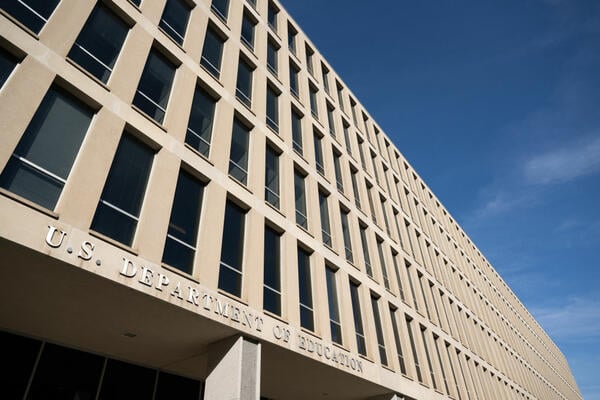
3 days agoHigher Ed Denounces GSA's Proposed Federal Funding Strings
The Trump administration's proposed pledge for colleges on diversity and inclusion is seen as vague and burdensome, risking federal funding for non-compliance.

#nonprofit-leadership
Non-profit organizations
fromNonprofit Quarterly | Civic News. Empowering Nonprofits. Advancing Justice.
2 days agoHow Dissolving Your Nonprofit Can Strengthen the Sector | Nonprofit Quarterly | Civic News. Empowering Nonprofits. Advancing Justice.
Nonprofit leaders must sometimes choose to dissolve organizations intentionally rather than forcing survival in a weakened state.

Non-profit organizations
fromNonprofit Quarterly | Civic News. Empowering Nonprofits. Advancing Justice.
2 days agoHow Dissolving Your Nonprofit Can Strengthen the Sector | Nonprofit Quarterly | Civic News. Empowering Nonprofits. Advancing Justice.
Nonprofit leaders must sometimes choose to dissolve organizations intentionally rather than forcing survival in a weakened state.
Non-profit organizations
fromNonprofit Quarterly | Civic News. Empowering Nonprofits. Advancing Justice.
3 days agoAI in the Nonprofit Sector Is a Question of Governance, Not Just Technology | Nonprofit Quarterly | Civic News. Empowering Nonprofits. Advancing Justice.
Nonprofits face a critical choice in shaping AI governance or risk external control over its implementation and impact.
Social justice
fromInside Higher Ed | Higher Education News, Events and Jobs
2 weeks agoThe Fight for Parents' Access to Higher Ed
Student parents face systemic barriers including childcare costs, food insecurity, and transportation challenges that limit college access and completion, requiring institutional and policy reforms.
Online learning
fromeLearning Industry
2 weeks agoCan An LMS Really Reduce Compliance Risk Before It Happens?
A strategically positioned LMS reduces compliance risk by ensuring consistent policy communication across organizations and enabling rapid regulatory updates, transforming it from a reporting tool into a proactive risk management system.
fromHarvard Business Review
1 week agoTreat Nonprofits as Strategic Partners, Not Just Philanthropic Recipients
Most for-profit companies still confine nonprofit relationships to corporate philanthropy. Donations flow through foundations, annual reports highlight community contributions, and nonprofit engagement is framed as evidence of corporate responsibility.
Non-profit organizations
Arts
fromThe Art Newspaper - International art news and events
3 weeks agoComment | Why museum leadership needs to decentralise
Traditional museum leadership models are failing under contemporary pressures, requiring a fundamental shift from centralized, individual authority to distributed, collaborative leadership structures.
#three-year-degrees
Higher education
fromSlate Magazine
3 weeks agoEmployers, Parents, and Politicians Have Requested a Drastic Change to American Colleges. They're Getting It.
Colleges nationwide are rapidly introducing three-year bachelor's degrees requiring 90 credits instead of the traditional 120, allowing students to save time and tuition costs while entering the workforce sooner.
Education
fromInside Higher Ed | Higher Education News, Events and Jobs
2 weeks agoStudents Build Belonging Through Service
Neumann University mobilized nearly 1,000 students, alumni, and faculty to complete 60,000 volunteer hours during its 60th anniversary, addressing community needs while strengthening institutional belonging.
Privacy professionals
fromInside Higher Ed | Higher Education News, Events and Jobs
1 month agoClearinghouse Severs Relationship With Student Voting Study
The National Student Clearinghouse ended its 13-year partnership with Tufts University's voting study after the Trump administration investigated potential Family Educational Rights and Privacy Act violations.




Online learning
fromeLearning Industry
1 month ago10 Lessons L&D Leaders Learned While Scaling Learning Programs
Scaling learning requires prioritizing relevance and operational efficiency over content volume, with successful programs using structured systems and automation rather than manual processes.
Higher education
fromInside Higher Ed | Higher Education News, Events and Jobs
2 weeks agoWhen Two Become One
Higher education leaders are increasingly exploring mergers and acquisitions as a survival strategy, with estimates suggesting 400 colleges face closure within five years without consolidation.
Higher education
fromInside Higher Ed | Higher Education News, Events and Jobs
2 weeks agoI Needed That
Community colleges Westmoreland and CCAC operate robust undergraduate research programs that prepare students for academic conferences through comprehensive coaching on both presentation skills and professional conference navigation.
Higher education
fromInside Higher Ed | Higher Education News, Events and Jobs
3 weeks agoNew Book Points Way Forward for Higher Education
Place-based learning rooted in community and shared purpose offers an alternative to transactional higher education models that have failed multiple generations of students.
fromFast Company
2 months agoHow will corporate CSR thrive?
Companies are under attack publicly and privately for policies viewed as "too progressive" or "woke." The reality, however, is that most companies have strongly reaffirmed their sustainability commitments but less so their DEI commitments. Corporate social responsibility (CSR) works in the grey area between the two. Many affirming companies have opted for "greenhushing," staying quiet about their strategies and leadership.
Public health
fromInside Higher Ed | Higher Education News, Events and Jobs
1 month agoAudit Finds 'Severe Noncompliance' at Utah State University
A state audit released Friday found a litany of issues at Utah State University, including "patterns of financial noncompliance" among university leaders and staff, and poor oversight by the Utah Board of Higher Education. The audit offered 26 recommendations for improvement.
US news
fromTalkNats.com
2 months agoJust because you don't see it, that doesn't mean there isn't work being done to improve! | TalkNats.com
You must be a TalkNats Subscriber to access this content. Subscribers have access to exclusive content on the TalkNats website and can engage in discussions with other Nats fans. First two weeks are free and then you will be billed $3.99/month. Cancel anytime. Secure payments using Stripe. If you are already a subscriber, simply log in using the form below.
Washington Nationals
US politics
fromLos Angeles Times
2 months agoCharter Reform Commission, L.A. City Council look to impose transparency rules
Los Angeles City Council passed an ordinance requiring Charter Reform Commission members to disclose private communications with elected officials and staff to boost transparency.
fromFast Company
2 months agoOur embrace of individuals over institutions isn't serving us well
In the early 20th century, sociologist Max Weber noted that sweeping industrialization would transform how societies worked. As small, informal operations gave way to large, complex organizations with clearly defined roles and responsibilities, leaders would need to rely less on tradition and charisma, and more on organization and rationality. He also foresaw that jobs would need to be broken down into specialized tasks and governed by a system of hierarchy,
History
fromBusiness Matters
2 months agoCompliance Is the New Creative: Why Your Channel Partners Are Your Biggest Liability (and How to Fix It)
If your partner in Munich mishandles customer data, or your reseller in Paris uses a "black box" AI tool to generate deceptive ads, it isn't just their reputation on the line. It's yours. With the EU AI Act now in full swing and GDPR entering its "mature enforcement" era, the distance between a partner's mistake and your company's $20 million fine has never been shorter.
EU data protection
Higher education
fromInside Higher Ed | Higher Education News, Events and Jobs
3 weeks agoPressure Mounts on Botstein
Bard College Faculty Senate urges the Board of Trustees to develop a leadership transition plan to replace President Leon Botstein, citing concerns about his ties to Jeffrey Epstein without demanding immediate resignation.


fromNonprofit Quarterly | Civic News. Empowering Nonprofits. Advancing Justice.
1 month agoBalancing Transparency and Timeliness in Organizational Decision-Making | Nonprofit Quarterly | Civic News. Empowering Nonprofits. Advancing Justice.
Dear Transparency-Committed Reader, You're not alone. So many of us want decision-making to reflect our collective values (like transparency, care, and shared power), but it's hard to actually put those values into practice. That gap between what we believe and how we decide can be frustrating. And getting stuck in the process is a common concern I hear from groups. I am happy to share, though, that decision-making doesn't have to be a nightmare.
Fundraising
fromInside Higher Ed | Higher Education News, Events and Jobs
4 weeks agoAn Article I'd Love to Read
Cuts that hurt are obvious: layoffs, program closures, college closures, furloughs, deferred maintenance, pay freezes, travel freezes, etc. It's a well-worn playbook at this point. Most of the moves in this category involve either attacking employee compensation, which causes obvious pain, or putting off necessary investments and living with gradual declines in quality.
Higher education
Higher education
fromInside Higher Ed | Higher Education News, Events and Jobs
1 month agoWill There Be a Second Compact?
The Trump administration is developing a revised higher education compact after universities rejected the initial version, with ongoing discussions aimed at implementing accountability measures and reforms across institutions.
fromPsychology Today
1 month agoHow We Should Measure the Success of Leaders
The average CEO makes over 280 times what their company's line worker earns. This is more than 10 times the ratio observed in the 1970s. Looking just at the salaries and bonuses of Fortune 500 CEOs, financial executives, top university presidents, and even some directors of the larger non-profit organizations, you would think that these leaders are performing at high levels-at least levels high enough to justify their huge compensation. Unfortunately, that's not often the case.
Business

Higher education
fromInside Higher Ed | Higher Education News, Events and Jobs
1 month agoResearch Offices Ask for Extension on Admissions Survey
Institutional research officials request a three-month deadline extension for federal admissions data collection, citing resource constraints and data accuracy concerns.



fromInside Higher Ed | Higher Education News, Events and Jobs
1 month agoCoaching Works-if Colleges Invest in Quality
Whether it's executive coaching or life coaching, people understand the concept and know that there is value to it in higher ed. However, what's been missing is this foundational research that really explains why coaching works in this context and how you can then leverage it to have the most impact on student success. What does a coach need to know, and at what skill level do they need to operate in order to have the impact on students that we want to see?
Higher education
Higher education
fromInside Higher Ed | Higher Education News, Events and Jobs
1 month agoUNC Student Group Illuminates Administration's Decisions
Student-run TransparUNCy exposes secretive university policies, mobilizes undergraduates, and serves as an effective watchdog against administrative actions like recording faculty and closing centers.


Higher education
fromInside Higher Ed | Higher Education News, Events and Jobs
1 month agoThe Collective Impact of Higher Ed Is Its Best Story
An HBCU museum exhibit shows that colleges can demonstrate impact through cultural storytelling, community programs, and preserved artifacts instead of costly mass-media advertising.
fromInside Higher Ed | Higher Education News, Events and Jobs
2 months agoHow Many Vice Presidents Does Any College Need? (opinion)
Not too long ago, in the time before they became chiefs, our VPs would have been called deans, directors or, in the case of our chief financial officer, treasurer. (Indeed, some retain a dean title along with their vice presidential one-the vice president of student affairs and dean of students, or the vice president and dean of admission and financial aid.) I respect and value the work that they do, regardless of their title. I know them and am aware of their dedication to the college and the well-being of its students, faculty and staff.
Higher education
fromInside Higher Ed | Higher Education News, Events and Jobs
2 months agoIn Times of Crisis, Actions Speak Louder Than Words
Colleges and universities hold huge influence in their communities. They can mediate differences and foster healthy debate. Indeed, several institutions have established schools of civic life that would, presumably, raise the alarm when constitutional rights are being violated. Academic research influences policy and informs public conversations. Scholars can put this violence into context and help remind us that this is not OK.
Higher education
fromInside Higher Ed | Higher Education News, Events and Jobs
1 month agoGetting an associate degree before transfer isn't always helpful
For many students, vertical transfer (transfer from an associate's to a bachelor's program) is less a bridge than a maze. Typically, about 80 percent of community college students say they intend to earn a bachelor's degree, yet only about 30 percent ever transfer and roughly 16 percent complete a bachelor's within six years. Yet under these topline numbers, outcomes vary widely. And figuring out which combinations of student actions and background factors matter, and which pathways are most promising, can be a complicated mess.
Higher education
fromInside Higher Ed | Higher Education News, Events and Jobs
2 months agoED Scraps Biden-Era Regulation for Corporate College Owners
"The Biden Administration's regulation was over broad as it required all private institutional owners, including at faith-based colleges, to sign program participation agreements,"
Higher education
Higher education
fromInside Higher Ed | Higher Education News, Events and Jobs
1 month agoHelping faculty build channels to audiences that matter
Higher-education communicators should enable faculty to publish directly via platforms like Substack and LinkedIn newsletters to expand reach, engagement, and institutional narratives.
Higher education
fromInside Higher Ed | Higher Education News, Events and Jobs
2 months agoOne-Third, One-Third, One-Third
Community college funding routinely fails to meet statutory one-third state, one-third county, one-third tuition splits, shifting the shortfall onto students and normalizing illegal underfunding.
fromInside Higher Ed | Higher Education News, Events and Jobs
2 months agoIncreased Sense of Belonging Boosts Student Graduation Rates
The survey measured belonging by asking students to rate their agreement with the statement "I feel that I am a part of [school]" on a five-point scale, where 1 means strongly disagree and 5 means strongly agree. Students who rated their sense of belonging in their second year one step higher on the five-point scale than they did in their first year-such as moving from neutral to agree-were 3.4 percentage points more likely to graduate within four years.
Higher education
Higher education
fromInside Higher Ed | Higher Education News, Events and Jobs
1 month agoGreat Grants Need Far Away Deadlines
Unreasonably tight grant timelines and limited grant-writing capacity disadvantage community colleges, reducing their ability to compete for Workforce Pell and civil discourse funding.
[ Load more ]