Parenting
fromFast Company
1 day agoParents: A valuable source of AI intelligence
AI-assisted parenting tools are being developed by parents who understand the real challenges of childcare.
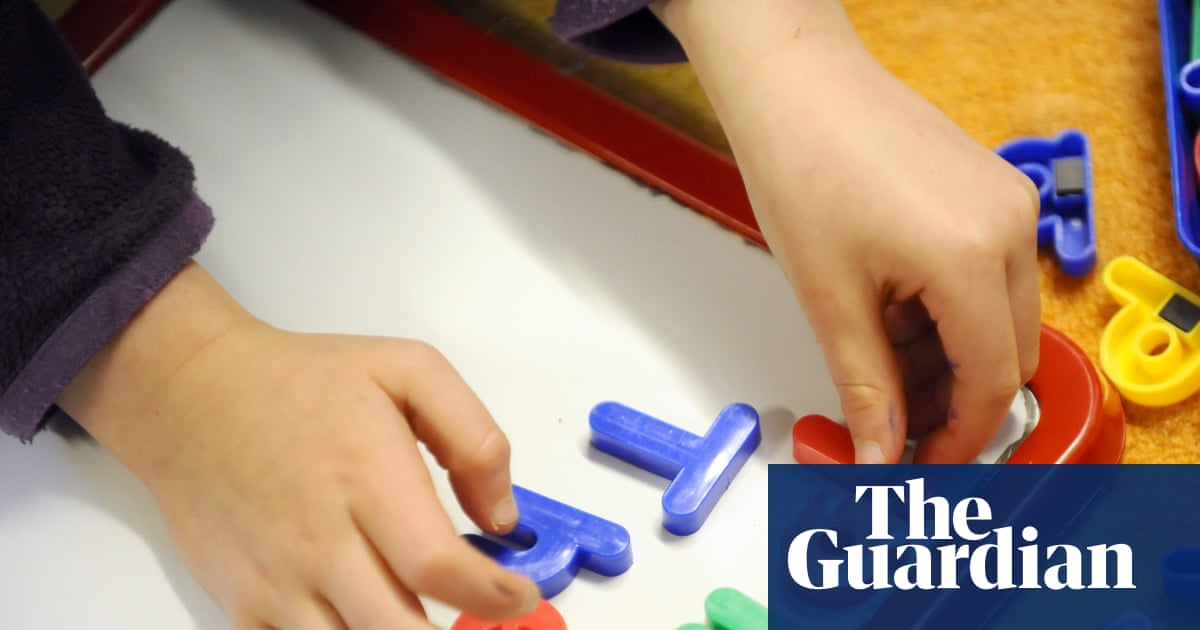
Research has shown there is a reading for pleasure crisis among children in the UK, where enjoyment of books has fallen to its lowest level in two decades. Not so here at Christ Church primary, a tiny Church of England school tucked behind the maze of HS2 construction works in Camden, north London, where children fizz with excitement about books.
'We absolutely should challenge stereotypes about ageing. Children do build their understanding of the world from these tiny repeated narratives. If old always equals useless or confused then that's going to shape their perception.'
For the study, a team from the Italian Institute of Technology played J.S. Bach's piano compositions for an audience of 49 sleeping newborns. This included 10 original melodies and four shuffled songs with scrambled melodies and pitches. While the babies listened, the researchers used electroencephalography - electrodes placed on their heads - to measure their brainwaves. When the babies showed signs of surprise, it meant they expected the song to go one way, but it went another.
The effort to get a snapshot of kindergarten readiness is part of the National Survey of Children's Health, which collected information from thousands of parents and guardians about their child in five areas - early learning, motor skills, social-emotional development, self-regulation and health. The goal was to answer an overall question: Is your child ready for school? Readiness in California is on par with the nation's average, which also puts kindergarten readiness at two-thirds of 3- to 5-year-olds.
We sit down for dinner. Declan (5) whines, 'You didn't get me my milk!' Not, 'Thank you so much for this delicious meal you have made after a long workday, Mommy. Can I please have some milk?' We get to the playground, and he complains, 'You didn't bring the right pail!' We read three books at bedtime, he accuses, 'We didn't get to read my favorite book about the pandas (because he hadn't chosen it!) The whining is out of control and driving us mad.
Rather than using the visual word form area in the reading brain, where images of correct spellings are stored in long-term memory for automatic proficient reading and composing, kids use technology tools, eliminating human thinking and making the machine do the work. These tools can circumvent cognitive processes, hindering elementary students from developing a large bank of correctly spelled words essential for automatic reading and literacy.
What makes me even crazier is that I know they can listen. I know this because they do all the time, mostly when they aren't supposed to. I can't tell you how many times I've been having an adult conversation with my husband and/or friends and my two children-who haven't listened to a word I've said all day-suddenly have very thoughtful and detailed questions