#childcare-shortage
#childcare-shortage
[ follow ]




fromTruthout
4 days agoLow-Income Moms Struggle to Keep Their Families Afloat Amid Gas Price Increases
Luna Rosado, a single mother, has seen her gas expenses rise by $40 weekly due to a 30 percent increase in prices after the war in Iran. This has resulted in $160 less for groceries and other necessities each month, forcing her to constantly adjust her budget.
Washington DC
Women in technology
fromFast Company
2 weeks agoThe gender gap no one talks about: men missing from care professions
Care professions dominated by women face severe labor shortages and will become increasingly critical as populations age, yet society undervalues these essential jobs compared to male-dominated tech sectors.
Parenting
fromScary Mommy
2 weeks agoFor The Overwhelmed Moms Trying To Do It All, You Can Blame "Institutional Lag"
Afternoon chaos for working mothers stems from institutional lag—outdated systems designed for single-income households with stay-at-home parents that fail to accommodate modern dual-income families.
Portland
fromPortland Mercury
4 weeks agoNew Preschool for All Data Challenges Idea That Wealthy People Are Fleeing County
Multnomah County's Preschool for All tax saw high-income filers increase 14 percent in 2024 after declining in 2022-2023, suggesting the program is not driving wealthy residents away.
Education
fromInside Higher Ed | Higher Education News, Events and Jobs
2 weeks agoChildcare Costs Put College Out of Reach for Bay Area Parents
California parents without degrees face major barriers to college enrollment, with childcare costs averaging $49,800 annually versus their average income of $33,765, creating significant financial obstacles to degree completion.
fromScary Mommy
3 weeks agoWhen Kids Get Sick, Working Moms Do The Impossible Math
A Genexa survey of 1,000 U.S. moms found that 70% use their own sick days to stay home when their child is ill, and 58% work from home while caregiving. In other words, many of us are doing the same impossible math: caring for sick kids while trying to keep our work lives moving.
Parenting




Public health
fromFortune
1 month agoA two-child household must earn $400,000 a year for childcare to be affordable, study says. 'It's easy to see why birth rates are falling' | Fortune
Typical two-child American household earns $145,656 but needs $402,708 to keep childcare at or below the 7% affordability benchmark.
US politics
fromBusiness Insider
1 month agoThousands of military families are stuck on childcare waitlists. More spots may not be enough to fix the deeper problems.
About 7,800 children are on US military childcare waitlists, revealing broader shortages that limit access to evening, weekend, and specialized care and strain families.
NYC parents
fromFortune
3 weeks agoHere's why childcare is getting more unaffordable and forcing families to make 'heartbreaking choices' | Fortune
Childcare providers face surging costs in insurance, rent, and wages while public funding declines, forcing difficult choices between business viability and affordability for families.
New York City
fromwww.amny.com
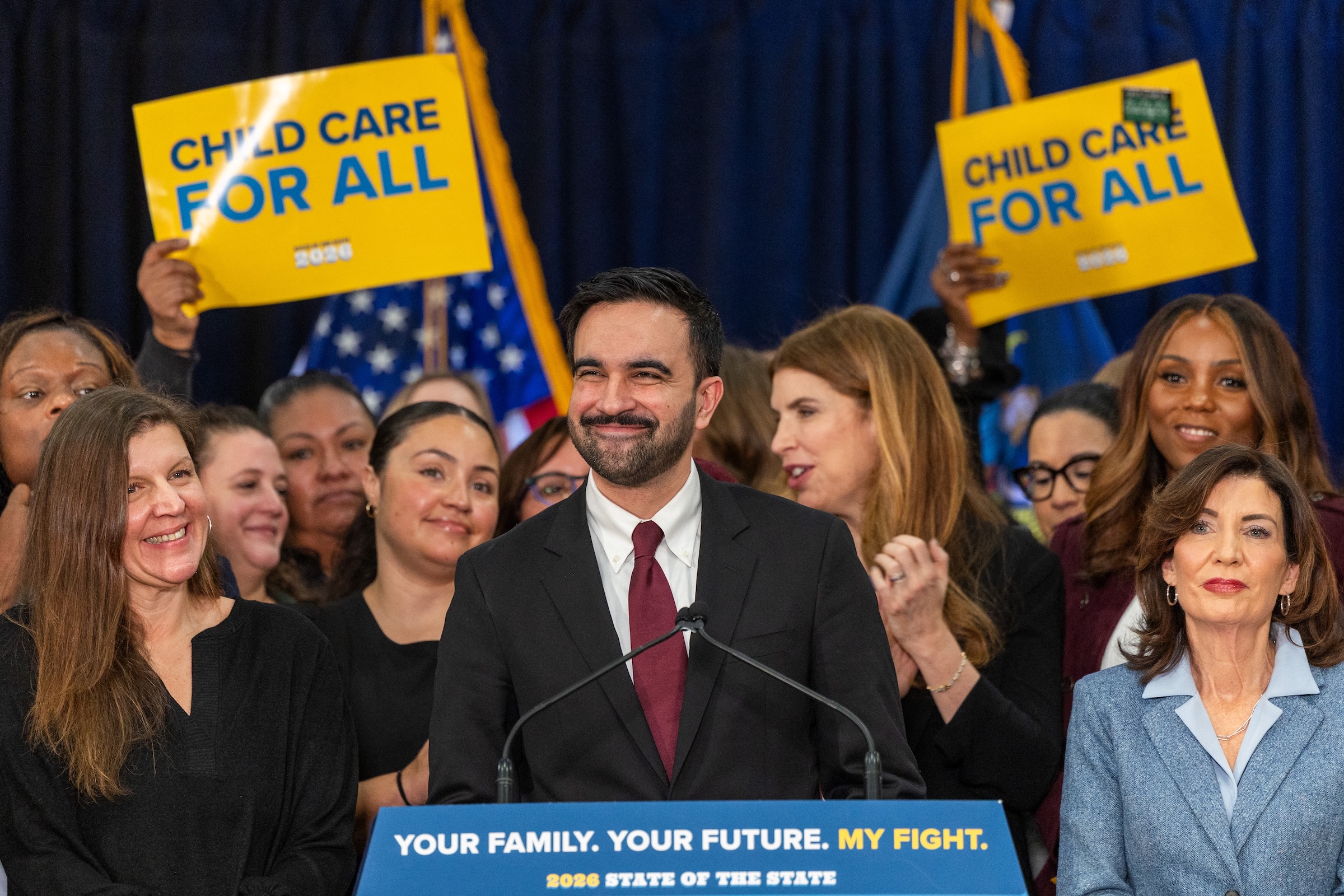
1 month agoMAMDANI'S FIRST 100 DAYS: Free childcare for two thousand two-year-olds coming to priority neighborhoods this fall | amNewYork
Mayor Zohran Mamdani launches first phase of 2K program providing free full-day child care to 2,000 toddlers in high-need neighborhoods across Manhattan, Bronx, Brooklyn, and Queens starting fall.
fromABC7 San Francisco
1 month agoGov. Newsom expanded free preschool. Now private daycares say they can't afford to stay open
There were once so many children at Frisha Moore's Elk Grove preschool that families filled up the waitlist. Now, one of her playgrounds and two classrooms sit empty because one key group of kids has stopped coming. Dozens of families in recent years have opted not to enroll their 4-year-olds at Moore Learning Preschool & Child Care Center, she said. Instead, they're putting their children in transitional kindergarten, California's new public pre-kindergarten grade.
California


NYC parents
fromwww.npr.org
1 month agoA Biden-era rule sought to stabilize child care. Why Trump wants it gone
Child care providers serving low-income families face financial instability when attendance drops, as state subsidies are based on daily attendance rather than enrollment, creating cash flow challenges especially during winter months.
fromwww.nytimes.com
1 month agoVideo: Vermont Made Child Care Affordable. Could It Lead by Example?
Not long ago, Vermont had a population problem. Then Act 76 ushered in affordable child care for the first time in the state's history. Vermont had a problem. Child care was too expensive. We would be paying $3,500 a month, more than twice our mortgage. Some parents were giving up their careers to stay home After daycare, you come home with maybe $60 extra a week. It's just not even worth it at that point.
US news
SF politics
fromABC7 San Francisco
1 month agoHere's why SF's subsidized child care program could have negative impact on some preschools
San Francisco expanded subsidized childcare eligibility to higher-income families to retain families, funded by Proposition C and raising qualifying thresholds significantly.


fromFast Company
1 month agoThe big red flag working parents look for in a job
For all the talk from employers who claim to understand the needs of working parents, childcare benefits remain elusive in many workplaces. Surveys have repeatedly shown that employees strongly value these benefits, which can run the gamut from childcare subsidies to backup care options. As working parents have demanded more from their employers, these perks have grown in popularity in certain workplaces, alongside more generous parental leave policies. But the companies that offer childcare benefits are still in the minority.
Parenting


California
fromInside Higher Ed | Higher Education News, Events and Jobs
2 months agoHow One Calif. College Helped Rebuild Child Care After the Eaton Fire
A major wildland fire damaged or destroyed nearly 60% of Altadena licensed child-care sites, displacing providers and disrupting community childcare services.

fromwww.bbc.com
1 month agoHow hotels could help solve your summer childcare crunch
As summer school breaks stretch longer and childcare becomes harder to secure, some families are turning to an unexpected solution: hotels offering full-day, structured kids' camps that allow parents to travel, work and keep routines intact.
Parenting
fromSlate Magazine
2 months agoEveryone Is Pressuring Me to Make the "Obvious" Choice When It Comes to Childcare. I Don't Want to.
I am a new mom to a very sweet 3-month-old boy. I am lucky to work somewhere with a very generous (for the U.S.) parental leave policy, and am preparing to go back to work when my baby will be 4 months old. I'm looking into childcare options, and feel torn. In our area, daycare is very expensive (everything is expensive), and hiring a nanny will be more affordable. This is very surprising to me, but that's how the numbers seem to be working out.
Parenting
fromSlate Magazine
2 months agoMy Son's School Is Treating Him Like He's Poor
We are a white, well-off (not extremely wealthy, but doing fine) family living in a mid- to lower-income neighborhood in a major coastal city. Our first grader goes to a Title I public school and a well-known, national non-profit (we'll call it "the ABC program") runs the school care. Our youngest will start kindergarten this fall. I grew up in a wealthy suburb with very minimal diversity of any kind, and I really appreciate that my children are growing up in a more diverse environment.
Parenting
fromCity Limits
2 months agoWhat You Need to Know: NYC's Free Child Care Pilot for Kids Under 2
The initiative is part of the NYC Bright Starts program, and it was pitched to reinforce New York City Public Schools' existing infant and toddler programs through the federal Head Start program, which offers a variety of services to support school-readiness for children from birth to age 5 for low-income families. Last year, the Trump administration attempted to bar undocumented immigrant children from enrolling in Head Start programs, but a federal judge's injunction put the effort on hold nationwide in September.
New York City
Parenting
fromBusiness Insider
1 month agoWe didn't need childcare, but we still paid $7,500 to send our toddler to a program for 4 hours a week. It helped her build independence.
Flexible remote work let the husband become primary stay-at-home parent while the mother resumed her career, creating an effective parenting split until childcare was needed.
US politics
fromKqed
2 months agoCalifornia Sues Trump Administration Over Attempts To Freeze Childcare Funding | KQED
A YouTube influencer surveilled Somali-run Minnesota daycares, prompting harassment reports; California faces a $2.9 billion deficit while Newsom defended his record and proposed reforms.
fromwww.theguardian.com
2 months agoWednesday briefing: Can we turn around the growing school readiness crisis?
What many reception teachers say they did not sign up for was spending large chunks of the school day managing toileting, feeding and basic self-care because growing numbers of children are arriving without those skills in place. New data points to a widening gap in England and Wales between what parents believe school ready means and what classrooms are actually experiencing
Education
[ Load more ]