Right-wing politics
fromwww.dw.com
1 day agoWhy have US-South Africa relations soured?
Cyril Ramaphosa criticized global right-wing forces, particularly Trump, amid deteriorating South Africa-US relations and a shift towards BRICS countries.
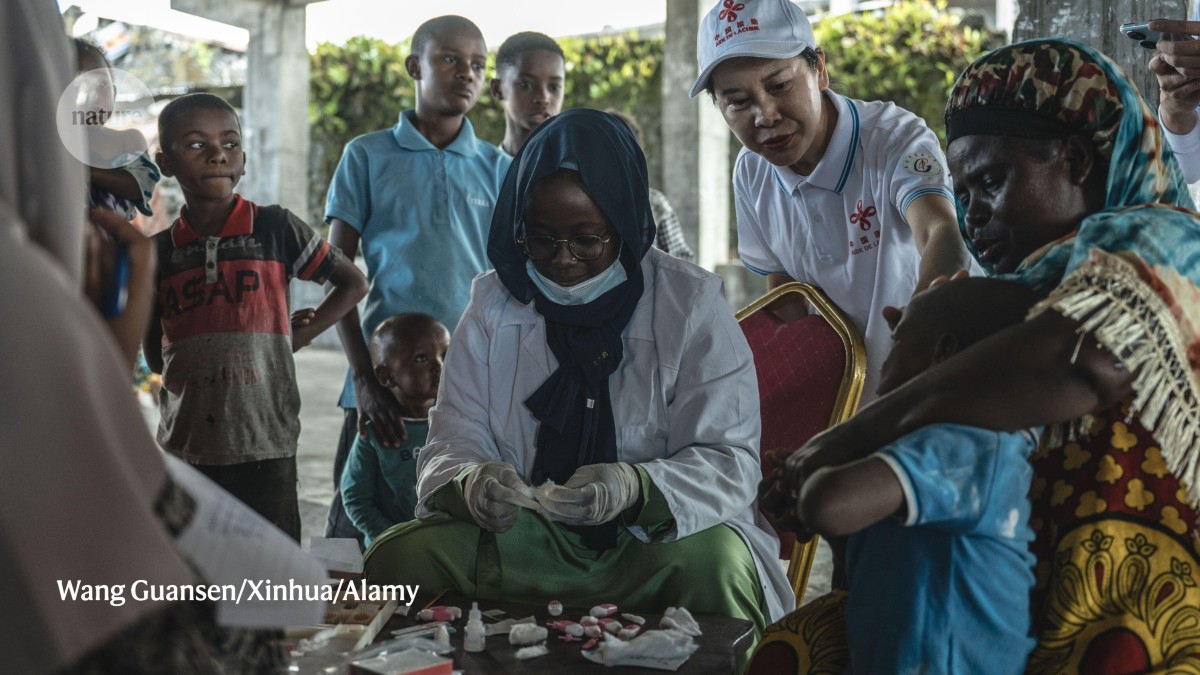
In late 2025, the United States shocked the world by suspending global health aid, leading experts to predict 700,000 additional deaths annually, primarily among children. This prompted the US to propose unusual bilateral health agreements with developing countries, which have drawn criticism for being exploitative.
"The resumption of train services suggests that exchanges of people and goods are gradually returning to normal. It also appears to send a message to the international community that China and North Korea are strengthening ties amid the current global situation."
Moses Chrispus Okello, a senior researcher at the Institute for Security Studies, states that there is a high risk of escalation in Somaliland, where Israel and the UAE have interests. He emphasizes that tensions could also rise in neighboring Djibouti, where the US and other powers are active.
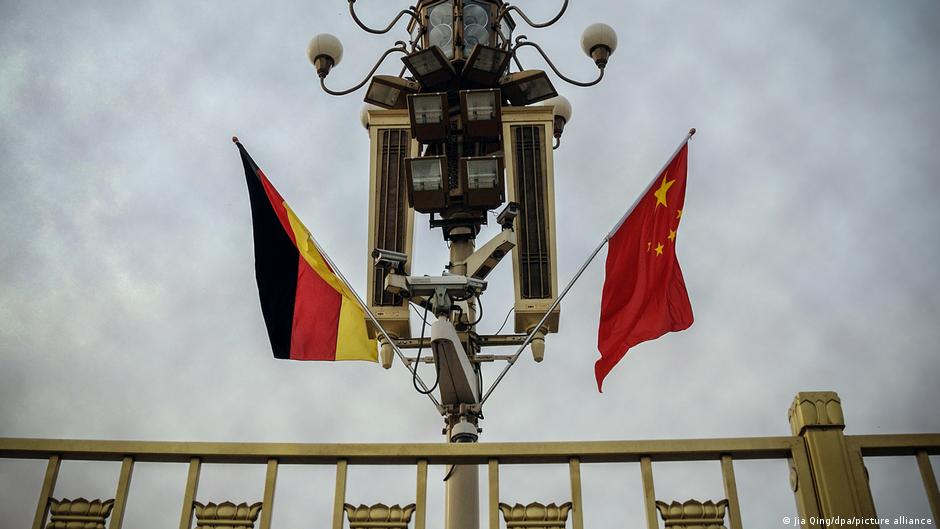
We have very specific concerns regarding our cooperation, which we want to improve and make fair, said Merz, in an acknowledgement of the strain faced by Germany's manufacturing sector from Chinese competition.
Friedrich Merz said he saw a "great opportunity" for the industrial exporters, while Xi Jinping called for "enhanced strategic cooperation." China has been courting Western leaders amid Trump's trade tensions. It's Merz's first trip to China since he became chancellor, his predecessor Olaf Scholz visited in 2024.
Expanding your startup into Africa is one of the most ambitious and potentially rewarding moves you can make as a founder. With a rapidly digitalising economy and a booming young population, the continent offers a growth trajectory that is hard to find elsewhere. However, as you begin to scale, you will quickly realise that the financial landscape is not a monolith. Navigating 54 different countries means managing dozens of volatile currencies and banking systems.
Jim O'Neill, the economist who coined the term BRIC' 25 years ago, argues that the group is losing its relevance. At its peak, the BRICS coalition of economies Brazil, Russia, India, China and South Africa was seen as a serious attempt to move away from the United States dollar and the domination of Western economic institutions like the World Bank, Group of Seven (G7), and International Monetary Fund (IMF).
Trump's historic cuts to foreign aid, his overhaul of US trade policy, and his sweeping changes to immigration admissions have all had an outsized impact on Africa, though he gave the continent only slight mention in his wider global agenda. Amid the upheaval, the Trump administration has sought to forge new, bilateral agreements with African countries, focused on resources and security gains.
China's "indispensable role" in the world has been praised by Taoiseach Micheál Martin during a face-to-face meeting with president Xi Jinping this morning in the capital Beijing. Starting a four-day visit to the country in a bid to deepen economic ties between Ireland and China, the Taoiseach met with the Chinese leader, key ministers and members of the Politburo, during which Mr Martin told the delegation that Ireland believes "in open trade" and a "rules-based multilateral order".
After nearly two decades of negotiations, India and the European Union announced Tuesday they have reached a free trade agreement to deepen economic and strategic ties. The accord, which the EU chief described as the "mother of all deals," could affect as many as 2 billion people. The deal between two of the world's biggest markets comes as Washington targets both India and the EU with steep import tariffs, disrupting established trade flows and pushing major economies to seek alternate partnerships.
The deal would forge a market of two billion people and nearly a quarter of global GDP, according to the European Commission. Follow DW for more. EU and India conclude trade negotiations after nearly two decades of on-off negotiationsImage: Altaf Hussain/REUTERS Skip next section What you need to know EU and India have finalized a trade deal after nearly two decades of negotiations
For the first time in our history, more than 70% of Africans are under the age of 30. This, along with entrenched inequalities, poverty, unemployment and socioeconomic fault lines, is reshaping how our societies interact with one another and the world. This is Africa's most consequential decade. Leaders who take office over the next 10 years will have to deliver on difficult mandates within a political, economic and social landscape that has been fundamentally altered.
China's official discourse centres on the idea of peaceful rise, the commitment to non-interference in internal affairs, respect for sovereignty and territorial integrity, and economic partnerships based on mutual benefit. Beijing insists that relations with Washington should not slide into conflict, calling for a system of global governance built on cooperation rather than confrontation. Yet the geopolitical landscape reveals a wide gap between this discourse and reality. Donald Trump's return to the White House has brought back rhetorical escalation and increased geopolitical pressure.
Bilateral ties between Egypt and Somalia continue to deepen. Egyptian President Abdel Fattah el-Sissi assured his Somali counterpart, Hassan Sheikh Mohamud on Sunday in Cairothat Egypt stands firmly behind "Somalia's unity and territorial integrity." On Wednesday, Cairo then followed up on an agreement from January 2025 and deployed 1,091 troops to Somalia's capital Mogadishu. The deployment of Egyptian forces to Somalia the first such deployment in their decades-old bilateral history marks a significant shift.
"Both sides agreed on "shuttle diplomacy" three years ago, with regular meetings at the highest level. Lee's national security adviser, Wi Sung Lac, said the summit's goal was to build trust between the South Korean and Japanese leaders. Lee and Takaichi discussed ways to boost cooperation in a raft of areas including cutting-edge technologies such as artificial intelligence, combating cross-border crime, and promoting people-to-people exchanges."
Indian Prime Minister Narendra Modi's government has unveiled its annual budget, aiming for steady growth in an uncertain global economy rocked by recent tariff wars. Finance Minister Nirmala Sitharaman presented the budget for the 2026-2027 financial year in Parliament on Sunday, prioritising infrastructure and domestic manufacturing, with a total expenditure estimated at $583bn. India's economy has so far weathered punitive tariffs of 50 percent imposed by United States President Donald Trump over New Delhi's imports of Russian oil.
Of all countries, China should appreciate the need to stop Mr. Maduro from smuggling these illicit drugs into the U.S., killing tens of thousands of Americans. China experienced this in the Opium War of 1839-1842, when Great Britain forced opium on China, despite government protestations, resulting in the humiliating Treaty of Nanjing, ceding Hong Kong to Great Britain. Mr. Maduro was violating U.S. laws, in a conspiracy to aid enemies and kill innocent Americans.
Your visit this time has drawn a lot of attention. Sometimes good things take time. As long as it is the right thing that serves the fundamental interests of the country and the people, then as leaders we should not shy away from difficulties and we should press ahead. As long as we take a broad perspective, rise above differences and respect each other, then we will prove ourselves able to stand the test of history.
The 39th African Union (AU) summit is set to be dominated by pressing security concerns across Africa, as the continent continues to face escalating conflicts. However, there are mounting questions on whether the pan-African body can actually deliver on peace and security strategies: A study conducted by the Institute for Security Studies (ISS) in 2023 revealed that a staggering 90% of the decisions made by the AU's Peace and Security Council (PSC) have not been implemented since the inception of the PSC in 2004.
A decade ago, China's political leaders laid out an ambitious industrial plan: By 2025, they pledged, their country would be a world capital, with the goal of moving from "Chinese speed to Chinese quality, the transformation of Chinese products to Chinese brands." This is the difference, they wrote, between "Made in China" and "Created in China." At WIRED, we never take what the government (ours or anybody else's) says at face value.