#china-nuclear-policy
#china-nuclear-policy
[ follow ]




#trump
US Elections
fromAxios
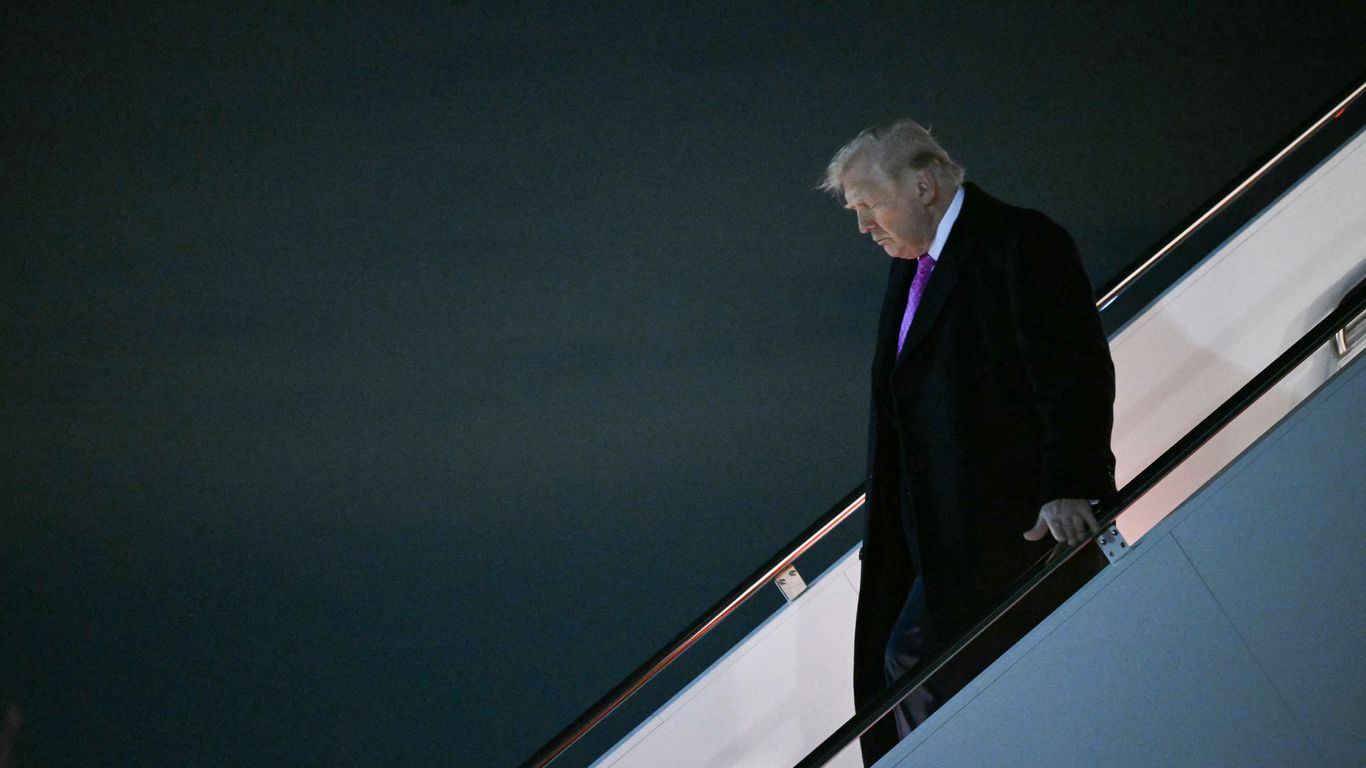
6 hours ago"We're fighting wars": Trump bets his presidency on the Pentagon
Trump's budget prioritizes military spending, significantly cutting non-defense programs amid declining approval ratings and rising gas prices.
Russo-Ukrainian War
fromLondon Business News | Londonlovesbusiness.com
1 day agoTrump's Ukraine threat is not what it seems, but it reveals a deeper strategic shift - London Business News | Londonlovesbusiness.com
Trump's threat to halt weapons supplies to Ukraine reflects leverage over European allies rather than a complete withdrawal of support.

Russo-Ukrainian War
fromLondon Business News | Londonlovesbusiness.com
1 day agoTrump's Ukraine threat is not what it seems, but it reveals a deeper strategic shift - London Business News | Londonlovesbusiness.com
Trump's threat to halt weapons supplies to Ukraine reflects leverage over European allies rather than a complete withdrawal of support.
Europe news
fromLondon Business News | Londonlovesbusiness.com
2 days agoTrump threatens Ukraine arms halt to force Europe into Hormuz coalition - London Business News | Londonlovesbusiness.com
Trump threatens to halt arms supplies to Ukraine to pressure European allies into reopening the Strait of Hormuz.



fromwww.npr.org
1 month agoU.S. releases new details on alleged secret Chinese nuclear test
but it originated around 450 miles away at China's main nuclear test site, known as Lop Nur, according to Christopher Yeaw, the assistant secretary for arms control and nonproliferation at the State Department. "There is very little possibility that it is anything other than an explosion, a singular explosion," Yeaw said at an event hosted Tuesday by the Hudson Institute, a conservative think tank in Washington, D.C. "It is quite consistent with what you would expect from a nuclear explosive test."
US news
fromwww.aljazeera.com
3 weeks agoNorth Korea fires ballistic missiles as US-South Korea hold military drills
Japan estimates that the missiles reached a maximum altitude of 80 kilometres (50 miles) and flew approximately 340 kilometres before landing near the east coast of the Korean Peninsula, outside Tokyo's exclusive economic zone. Early reports indicate that no damage has been reported by nearby aircraft or ships.
World news
fromwww.aljazeera.com
2 months agoPentagon downplays China threat: What it means for US allies
The major shift in the NDS lies in the shifting approach of the US Defense Department, which considers security of the homeland and Western Hemisphere its primary concern. The document noted that the US military would be guided by four central priorities: defend the homeland, push allies around the world away from reliance on the US military, strengthen defence industrial bases and deter China as opposed to a policy of containment.
US politics
fromwww.npr.org
2 months agoThe Taiwanese president's proposal to hike defense spending faces gridlock at home
Taiwan's President Lai Ching-te has spent his first year in office warning that time is running out to prepare for a possible conflict with China. In the past two months alone, he has proposed a sweeping special defense budget and backed a landmark $11 billion U.S. weapons purchase meant to strengthen the island's deterrence. But his commitments are colliding with Taiwan's domestic political reality.
US news
World politics
fromwww.theguardian.com
3 weeks agoTrump's Iran war will reinforce North Korea's view that nuclear weapons are the only path to security
North Korea's nuclear weapons program is driven by regime survival, accelerated by observing Iran's vulnerability to military strikes without nuclear deterrence.
World politics
fromThe Washington Post
4 weeks agoChina lowers growth forecast, boosts military, citing 'grave' environment
China lowered its economic growth target, raised defense spending by 7 percent, and unveiled a five-year technological dominance strategy amid U.S. rivalry and economic challenges.
World politics
fromwww.theguardian.com
1 month agoChina's Two Sessions to reveal Xi's economic and defence plans as military purge casts shadow
China's Two Sessions convene this week to set annual economic targets and launch the 15th five-year plan for 2026-2030, with the NPC serving as the formal legislative body despite the CCP holding ultimate decision-making power.

World news
fromenglish.elpais.com
1 month agoSale of nuclear secrets? Invasion of Taiwan? What the tea leaves reveal about the purge in China's military leadership
A senior Chinese general, Zhang Youxia, was placed under investigation for alleged serious violations, generating confusion and speculation about internal power struggles and military modernization.
fromwww.theguardian.com
2 months agoPentagon to reduce its role in deterrence of North Korea
South Korea hosts about 28,500 US troops in combined defence against North Korea's military threat and Seoul has raised its defence budget by 7.5% for this year. South Korea is capable of taking primary responsibility for deterring North Korea with critical but more limited US support, said the National Defense Strategy, a document that guides the Pentagon's policies. This shift in the balance of responsibility is consistent with America's interest in updating US force posture on the Korean Peninsula, the document added.
World news
fromBusiness Insider
2 months agoChina's military has a leadership problem, and it's serious
China's drive to modernize its military to rival the US armed forces is running parallel with an aggressive purge of its senior leaders. The People's Liberation Army has been repeatedly shaken by a massive anti-corruption campaign led by Chinese leader Xi Jinping. Now, the military leadership is under renewed scrutiny after one of China's most senior generals was placed under investigation.
World news
[ Load more ]