History
fromOpen Culture
3 days agoHow Everything in a Medieval Castle Worked, from Its Moats to Its Dungeons
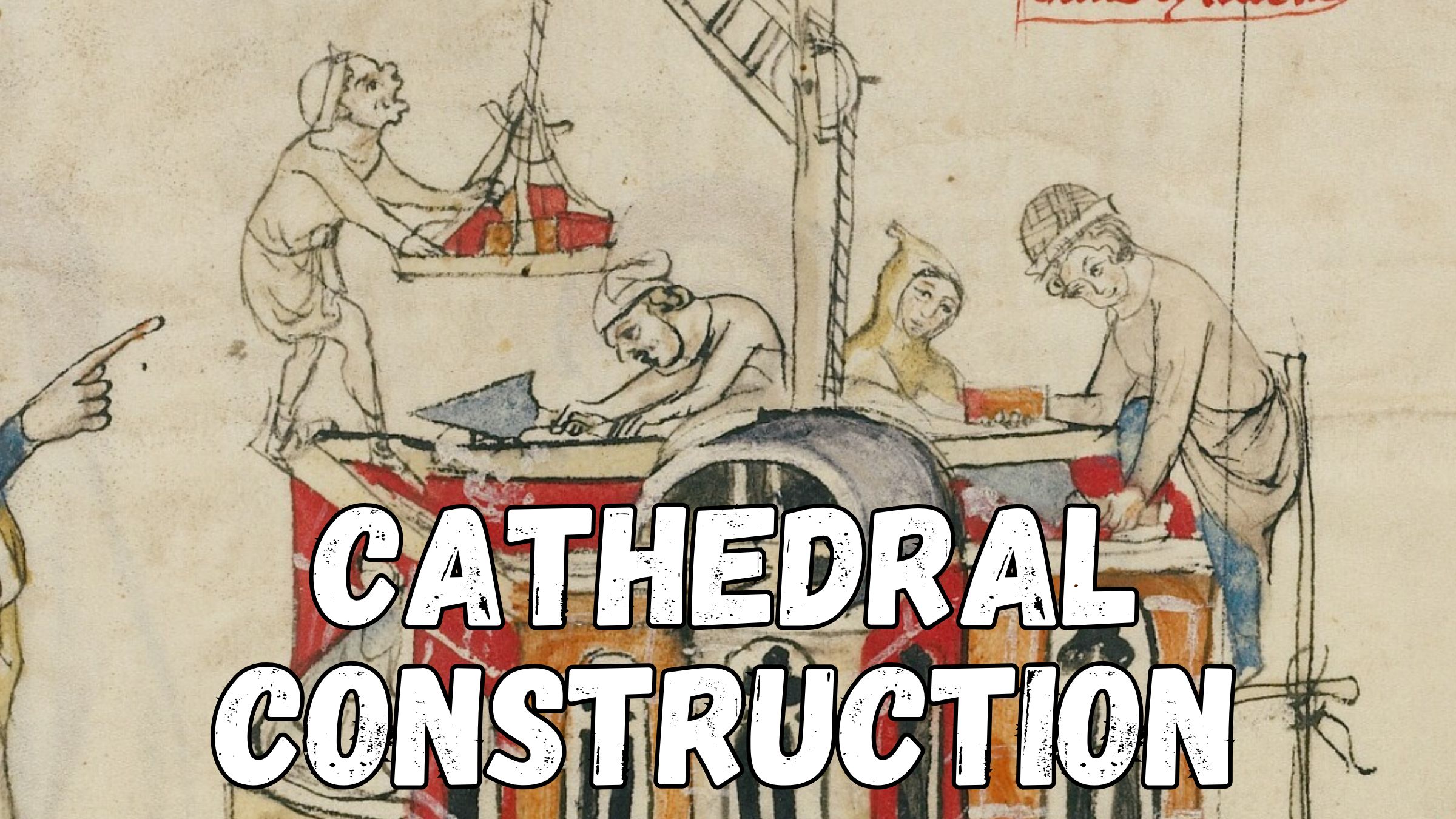
Medieval castles were complex structures designed for defense, featuring elements like barbicans, moats, and parapets.
Gropius, who from 1919 to 1928 directed the Bauhaus in Weimar and Dessau, designed the house in 1921-22 for lawyer Fritz Otte. The property is considered a dramatic evolution of Gropius's earlier seminal Haus Sommerfeld, which was also located in Berlin, but destroyed in World War II. The Bauhaus founder embraced a forward-looking approach with an unadorned, sharp-edged structure that rejected the heaviness of 19th-century historicism.
That is, if the church has a pipe organ. Most do, and pipe organs need periodic tuning as the seasons change. When organ tuners carry out that work, many will write down details of the ambient temperature and humidity at the time. Those observations are often recorded in small logbooks kept by the organ itself - and over time, they can build into a surprisingly detailed climate record.
Standing in the Bispebjerg district of Copenhagen, Grundtvigs Kirke, one of the most singular works of 20th-century ecclesiastical architecture, is the protagonist of David Altrath's latest photography series. Designed by Peder Vilhelm Jensen-Klint and completed in 1940, the church translates the vertical ambition of Gothic architecture into an austere expressionist language built entirely from yellow Danish brick. Structure, surface, and ornament collapse into a single architectural system, where material discipline replaces decoration.
"Medieval viewers understood Christ's body as both male and female," said Melanie Holcomb and Nancy Thebaut, the curators behind " Spectrum of Desire: Love, Sex, and Gender in the Middle Ages," a delightfully corporeal medieval art exhibition now on view at the Met Cloisters in New York. "In addition to being the son of God, he was also frequently described as a mother, and his wound was often likened to a lactating breast that could be a source of spiritual nourishment for others."
Renais­sance artist Albrecht Dür­er (1471-1528) nev­er saw a rhi­no him­self, but by rely­ing on eye­wit­ness descrip­tions of the one King Manuel I of Por­tu­gal intend­ed as a gift to the Pope, he man­aged to ren­der a fair­ly real­is­tic one, all things con­sid­ered.
Picture Book of the Life of St John and the Apocalypse is a unique and visually striking example of the picture-book Apocalypse - a distinctive group of medieval manuscripts that present the apocalyptic visions of the Book of Revelation primarily through images. Centred on the visions of St John and often framed by episodes from his legendary life, these manuscripts transform the biblical text into a continuous pictorial narrative.