#co-op-owners
#co-op-owners
[ follow ]
#leadership #affordable-housing #philanthropy #community-engagement #entrepreneurship #artificial-intelligence



Psychology
fromSilicon Canals
4 days agoThere's a specific kind of loyalty that keeps people in jobs, cities, and friendships years after the reason they stayed has disappeared. It's not inertia. It's that leaving would require admitting the time already spent wasn't building toward something, and that admission costs more than staying another year. - Silicon Canals
People remain in unfulfilling situations due to the fear of admitting past investments were unproductive, not because of passivity or fear of change.
Left-wing politics
fromNonprofit Quarterly | Civic News. Empowering Nonprofits. Advancing Justice.
6 days agoHow to Undermine Authoritarian Control: On Empowering Parallel Institutions | Nonprofit Quarterly | Civic News. Empowering Nonprofits. Advancing Justice.
Civil society must demonstrate the necessity of democratic institutions and social services to protect them from dismantling efforts by ultra-elites.
#nonprofit-leadership


Non-profit organizations
fromNonprofit Quarterly | Civic News. Empowering Nonprofits. Advancing Justice.
3 days agoHow Dissolving Your Nonprofit Can Strengthen the Sector | Nonprofit Quarterly | Civic News. Empowering Nonprofits. Advancing Justice.
Nonprofit leaders must sometimes choose to dissolve organizations intentionally rather than forcing survival in a weakened state.
fromSan Jose Inside
3 days agoCounty and Partners Celebrate Completion of Unique Affordable Housing Project
"To address housing affordability in our community, we need all types of affordable housing options, including affordable ownership opportunities that allow individuals and families an opportunity to build equity alongside housing stability," said Santa Clara County Supervisor Betty Duong.
East Bay real estate
fromTechCrunch
1 week agoMeta launches new initiative to support entrepreneurship, drive AI adoption | TechCrunch
In the AI era, it should be easier than ever for people to build new businesses. We want to build the services that enable this. This is important for ensuring that people broadly share in the prosperity created by superintelligence.
European startups
#sustainability

Online Community Development
fromDaily Coffee News by Roast Magazine
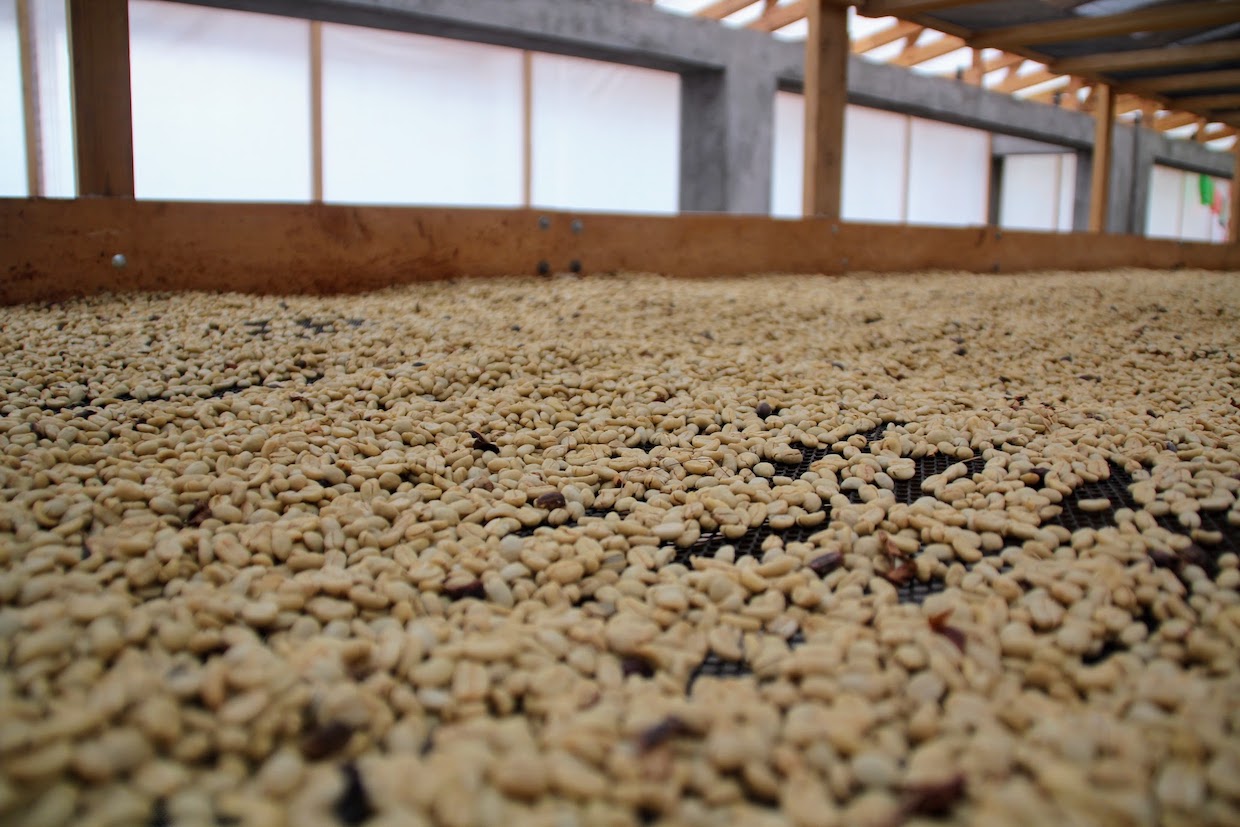
1 week agoStudy: Social Enterprises Beat Corporate Sustainability in Farmer Well-Being
Social enterprises significantly enhance farmer well-being compared to traditional corporate sustainability programs and cooperatives in the coffee and cocoa sectors.
Non-profit organizations
fromNonprofit Quarterly | Civic News. Empowering Nonprofits. Advancing Justice.
4 days agoAI in the Nonprofit Sector Is a Question of Governance, Not Just Technology | Nonprofit Quarterly | Civic News. Empowering Nonprofits. Advancing Justice.
Nonprofits face a critical choice in shaping AI governance or risk external control over its implementation and impact.
Media industry
fromNonprofit Quarterly | Civic News. Empowering Nonprofits. Advancing Justice.
5 days agoPolitics in an Attention Economy | Nonprofit Quarterly | Civic News. Empowering Nonprofits. Advancing Justice.
Candidates must be cultural figures to succeed in today's American politics, navigating an attention economy shaped by algorithms.
Relationships
fromPortland Monthly
2 weeks agoFrom the Editor: Building Community Isn't Always Fun. Do It Anyway.
Proximity-based community organizing builds solidarity across differences through sustained engagement and shared material goals, fostering understanding that transcends initial disagreements.
fromHarvard Business Review
1 week agoTreat Nonprofits as Strategic Partners, Not Just Philanthropic Recipients
Most for-profit companies still confine nonprofit relationships to corporate philanthropy. Donations flow through foundations, annual reports highlight community contributions, and nonprofit engagement is framed as evidence of corporate responsibility.
Non-profit organizations
Relationships
fromBusiness Insider
2 weeks agoWe went from being a 2-car household to just sharing one. So far, the benefits have outweighed the inconvenience.
Sharing a car after totaling one vehicle improved communication, reduced expenses, and preserved independence while helping save money for major life goals.
fromEntrepreneur
3 weeks agoShe Invited Homeless Men to Run. That Instinct Fueled Her $100M Business.
Why do I get to be the runner, and these guys get to be the homeless guys on the corner? Why can't we all be runners? She didn't have an answer. It would've been easy to let that question dissolve with her footsteps. Most people would have. But Mahlum saw something in those men that others had missed.
Running
fromApaonline
2 weeks agoGood Work and Economic Democracy
Within the workplace, the content and conditions of work are largely controlled by employers who often have an interest in degrading the quality of work, both to increase productivity and to increase their control over employees in the workplace. Outside the workplace, employers have both an incentive and the power to undermine measures that would improve the quality of work through the political process.
Philosophy
Real estate
fromBusiness Insider
3 weeks agoHe didn't want to move away from his friends, so he built them an apartment building. Now, they all own it.
Co-housing offers a sustainable alternative to traditional housing by combining private homes with shared amenities and collective community management, addressing the limitations of both isolated living and overly intimate shared spaces.
fromFast Company
1 month agoSmart businesses don't adapt to crony capitalism
Defense Secretary Pete Hegseth took the unprecedented step of designating a U.S. firm-Anthropic-as a supply chain risk. Anthropic's crime? It refused to violate industry-wide protocols against using AI for mass surveillance or autonomous weapons. Hegseth's designation, which has until now been reserved for foreign firms, bars U.S. military contractors from doing business with the company.
US politics
Non-profit organizations
fromNonprofit Quarterly | Civic News. Empowering Nonprofits. Advancing Justice.
2 weeks agoDisability Inclusion Isn't "Special Needs"-It's Smart Philanthropy | Nonprofit Quarterly | Civic News. Empowering Nonprofits. Advancing Justice.
Cuts to special education oversight threaten funding and services for millions of children with disabilities, risking progress in disability inclusion.

US politics
fromNonprofit Quarterly | Civic News. Empowering Nonprofits. Advancing Justice.
1 month agoIn the Face of Authoritarianism, Connection Is Resistance | Nonprofit Quarterly | Civic News. Empowering Nonprofits. Advancing Justice.
State lawmakers are implementing co-governance models where communities, advocates, and officials share power to build policy with people rather than for them, resisting authoritarian politics that undermines democratic institutions.
fromNonprofit Quarterly | Civic News. Empowering Nonprofits. Advancing Justice.
3 weeks agoRotating the Clipboard Built Our Workplace Democracy | Nonprofit Quarterly | Civic News. Empowering Nonprofits. Advancing Justice.
Losing staff could be detrimental to the projects we worked on, and there was a growing dissatisfaction with how meetings were run. These mostly one-sided discussions left the quieter half of us feeling pushed aside, like our thoughts didn't matter much. If things stayed this way, I worried the good people on our team would start quitting one by one.
Non-profit organizations
Online Community Development
fromNonprofit Quarterly | Civic News. Empowering Nonprofits. Advancing Justice.
1 month agoWellbeing Is Infrastructure | Nonprofit Quarterly | Civic News. Empowering Nonprofits. Advancing Justice.
NPQ launches a seven-part series examining how technology, systems, and processes shape workplace wellbeing and organizational sustainability in nonprofits.
Fundraising
fromNonprofit Quarterly | Civic News. Empowering Nonprofits. Advancing Justice.
1 month agoInformation as Civic Infrastructure-and How Philanthropy Can Support the Ecosystem | Nonprofit Quarterly | Civic News. Empowering Nonprofits. Advancing Justice.
Philanthropy should prioritize funding the information ecosystem as foundational infrastructure, since well-designed programs fail without reliable, trusted information enabling public understanding and collective decision-making.
fromArchDaily
1 month agoDesigning With, Not For: CatalyticAction's Participatory Practice
Architecture is often evaluated through finished forms, yet some practices operate in a different register, one where design unfolds through relationships, time, and use rather than through a single outcome. For CatalyticAction, participation is not a parallel social activity, but the means through which spaces are conceived, constructed, and sustained over time. Based between Beirut and London, the practice has worked across the Middle East and Europe, developing public spaces, schools, playgrounds, and everyday urban infrastructures through long-term collaboration with local communities.
Design
Fundraising
fromNonprofit Quarterly | Civic News. Empowering Nonprofits. Advancing Justice.
1 month agoWho's Doing the Work? How to Shift Power and Not Just Workloads | Nonprofit Quarterly | Civic News. Empowering Nonprofits. Advancing Justice.
Authentic community participation in philanthropy requires affected communities to actively shape strategy, influence funding decisions, and hold funders accountable, moving beyond traditional top-down donor-controlled models.
fromArchDaily
2 months agoWho Owns Public Space? Three Active Models of Shared Management Shaping Urban Commons in Europe and New York
Public space is often understood as belonging to no one in particular, collectively accessible yet institutionally maintained, yet a growing number of initiatives are challenging this assumption by testing shared management and distributed ownership models. In Paris, Adoptez un banc introduces a sponsorship-based approach, allowing individuals and groups to support temporarily and symbolically claim responsibility for historic public furniture without compromising its collective use.
France news


fromFast Company
2 months agoOur embrace of individuals over institutions isn't serving us well
In the early 20th century, sociologist Max Weber noted that sweeping industrialization would transform how societies worked. As small, informal operations gave way to large, complex organizations with clearly defined roles and responsibilities, leaders would need to rely less on tradition and charisma, and more on organization and rationality. He also foresaw that jobs would need to be broken down into specialized tasks and governed by a system of hierarchy,
History
Social justice
fromNonprofit Quarterly | Civic News. Empowering Nonprofits. Advancing Justice.
1 month agoGrowing a Solidarity Economy | Nonprofit Quarterly | Civic News. Empowering Nonprofits. Advancing Justice.
Solidarity economy centers people and planet and needs expanded capital, responsive infrastructure, international solidarity, and compelling stories to connect and scale cooperative practices.
US politics
fromNonprofit Quarterly | Civic News. Empowering Nonprofits. Advancing Justice.
2 months agoDemocracy Dies in the Homeowners Association | Nonprofit Quarterly | Civic News. Empowering Nonprofits. Advancing Justice.
Renters often lack voting rights in HOA governance, leaving them subject to private rules, fines, and decisions without representation.
fromHarvard Business Review
2 months agoThe Management Practices That Make Employee Ownership Pay Off
U.S. worker engagement has stagnated for decades, with more than two-thirds of workers feeling detached or disengaged. To reverse the trend, many executives have strived to build an "ownership culture," hoping personal responsibility will drive productivity. Yet most omit the most vital ingredient, actual ownership. We spent the past four years studying companies that committed to this missing piece, extending equity to all employees.
Business
History
fromNonprofit Quarterly | Civic News. Empowering Nonprofits. Advancing Justice.
2 months agoBeyond the Plantation Economy: How Alabama Can Benefit from Cooperatives | Nonprofit Quarterly | Civic News. Empowering Nonprofits. Advancing Justice.
Alabama's plantation legacy continues through labor-discipline, de-skilling, profit concentration, and wealth extraction shaping modern factories, prison workshops, and stalled local development.
fromFast Company
2 months agoWhy inclusion is the new standard for economic growth
In places where inclusion is part of the infrastructure of their economy-supply chains, procurement processes, capital access, or business ownership-people thrive. Inclusive economies create more resilience by expanding the base of potential business owners who can build, own, innovate, and hire. They allow more opportunities for homeownership and investing in the longevity of communities. As our economy becomes increasingly stratified and volatile, we need as much resiliency as we can get.
Social justice
fromNieman Lab
2 months agoJournalism coops seem utopian. What's it like working in one?
The pandemic changed Defector's course. New York shut down, the economy ground to a halt, and the offers of capital dried up. So the group decided to launch a new website on their own dime, this time structured as a worker-owned cooperative in which the journalists, rather than media executives, made all the decisions. The site became the kind of success that's rare in digital media nowadays, bringing in $3.2 million in revenue from over 40,000 paying subscribers in its first year alone.
Media industry
fromNonprofit Quarterly | Civic News. Empowering Nonprofits. Advancing Justice.
2 months agoThis Is Not a Retreat | Nonprofit Quarterly | Civic News. Empowering Nonprofits. Advancing Justice.
The change in the administration's tactics in Minneapolis is not a retreat. Instead, they are regrouping and planning another mode of attack, with the hopes that their repression might be met with resistance that is easier to control and contain. People who garner their relevancy and power through the dehumanization and oppression of others will do whatever it takes to cling to their soulless sense of self.
US politics


fromSlate Magazine
2 months agoWe Can't Afford to Buy Homes in Our City. So My Friends and I Are Considering Something Radical.
My friends and I are early 30s professionals living in one of America's most expensive cities and making middle-class incomes. None of us can afford to buy or save for a home here. We all rent, but we're not broke. We save for kids and retirement and illness, but a home isn't in the cards. But recently, we think we might have found an unconventional loophole.
Real estate
[ Load more ]