#co-packaged-optical-cpo
#co-packaged-optical-cpo
[ follow ]
fromTelecompetitor
1 week agoRecord fiber spending during next five years: Study
The firm's study, 'North American Fiber Broadband Report: FTTH Review and Forecast 2026-2030,' indicates that nearly $200 billion will be spent on fiber over the next five years, highlighting a significant investment in fiber-to-the-home services.
Roam Research
Marketing tech
fromTelecompetitor
2 weeks agoVendors introduce tools for the AI + broadband world: Roundup
Major vendors announce AI-integrated networking solutions for broadband service providers, including Wi-Fi 8 access points, unified platforms, and enhanced cloud services designed for enterprise edge optimization and agentic AI deployment.
Venture
from24/7 Wall St.
3 weeks agoOptical-Tech Stocks Looking Sharp: Ciena Up 9%, Lumentum Rises 8%, Coherent Climbs 7%
Optical-technology stocks surged on AI infrastructure demand, with Ciena leading after beating earnings and raising guidance, while Lumentum and Coherent gained from S&P 500 inclusion.
Business
from24/7 Wall St.
3 weeks agoCogent Communications Carries the Internet but Its Stock Has Been Crushed
Cogent Communications operates a critical internet backbone infrastructure across 57 countries while its legacy Sprint business declines, but high-capacity wavelength services are surging 73.7% year-over-year, positioning the company for significant growth.
European startups
fromTechzine Global
3 weeks agoFirst factory for InP photonic chips on 6-inch wafer scale in the Netherlands
Eindhoven is building the world's first industrial factory for indium phosphide photonic chips on 6-inch wafers, funded by €150 million from the EU Chips Act and PIXEurope consortium.
#silicon-photonics
Venture
fromTheregister
1 month agoAyar Labs raises $500M to mass-produce CPO chiplets
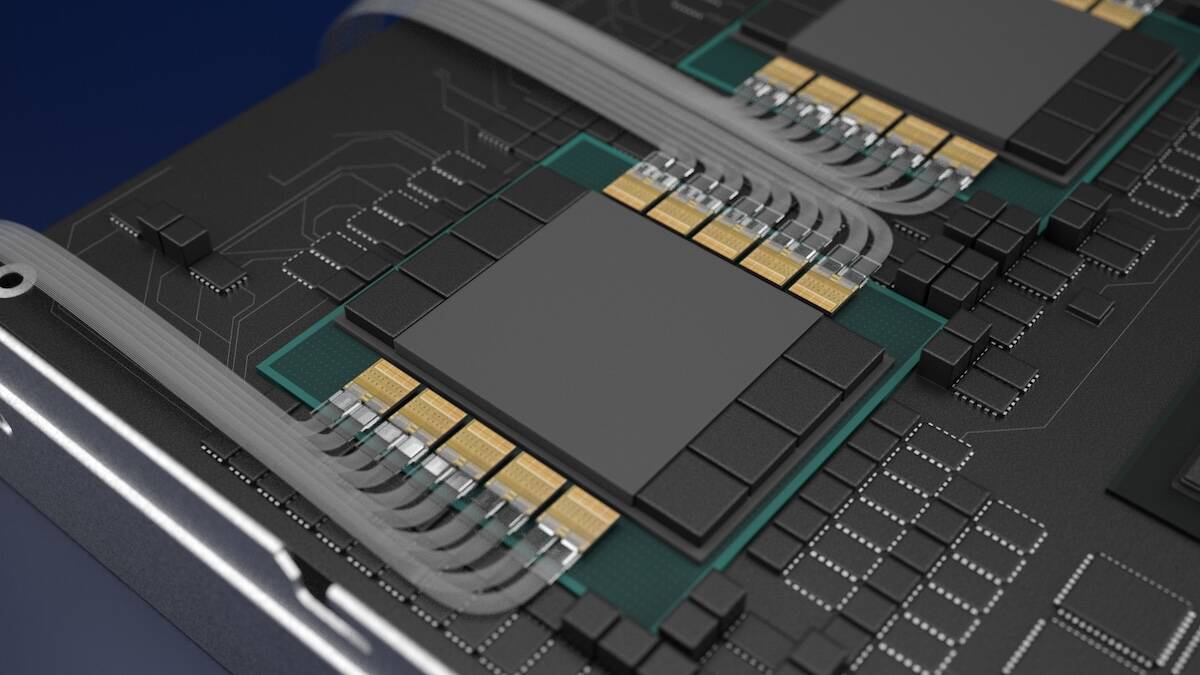
Ayar Labs raised $500 million to scale co-packaged optics technology that replaces copper interconnects with silicon photonics for higher bandwidth, longer distances, and lower power consumption in AI chip communications.
Science
fromTheregister
1 month agoEurope, China, achieve gigabit links to geostationary sats
The European Space Agency and China's Institute of Optoelectronics both achieved gigabit-speed laser communication links to geostationary satellites, demonstrating major advances in satellite laser communication technology.
Miscellaneous
fromDevOps.com
1 month agoI Learned Traffic Optimization Before I Learned Cloud Computing. It Turns Out the Lessons Were the Same. - DevOps.com
Cloud infrastructure requires understanding system behavior and costs to operate effectively at speed, similar to how skilled drivers anticipate conditions rather than simply driving fast.
fromThe Verge
1 month agoTaara Beam provides 25Gbps connectivity over invisible beams of light
Light-based internet provider Taara, which spun out of Alphabet's "moonshot" incubator last year, just launched Taara Beam to provide 25Gbps connectivity within cities over invisible beams of light - line of sight permitting. Unlike last year's Taara Lightbridge, which connects communities separated by water and mountains at distances up to 20km (over 12 miles), the shoebox-sized Beam can be mounted to street poles and roof tops for city-wide connectivity at distances up to 10km. The 8kg (less than 20 pounds) device typically consumes about 90W.
Tech industry
Artificial intelligence
fromComputerWeekly.com
1 month agoLumen targets AI bottlenecks with cloud gateway and metro expansion | Computer Weekly
Lumen launched a Multi-Cloud Gateway and upgraded metro datacentre connectivity to centralise multicloud routing, simplify hybrid data movement, and support AI and modern workloads.
fromTelecompetitor
2 months agoGFiber announces automatic speed increases while maintaining prices
The upgraded speeds for GFiber include: The previous Core 1 Gig is now Core 3 Gig, priced at $70 per month. Core 3 is 3x the symmetrical speed of GFiber's initial internet offering and is still the same price it was in 2012. Home 3 Gig is now Home 5 Gig, for $100/month. Customers at this tier are seeing about a 67% increase in speeds and will receive the GFiber Multi-Gig Wi-Fi 7 router.
Digital life

fromTheregister
2 months agoInternet spent Q4 '25 fighting with cables, power, itself
Across 2025 as a whole, the company tracked more than 180 significant disruptions, with the final quarter dominated by cable damage, power problems, and routine operational failures. There was just one confirmed government-directed shutdown during the period. Tanzania saw a sharp drop in internet traffic on October 29 as violent protests broke out during the country's presidential election, with traffic falling by more than 90 percent. Traffic returned briefly before declining again, and routing data pointed to throttling rather than a clean shutdown.
fromdzone.com
2 months agoManaging Changing Hardware/Peripherals in a Robust POS
Retail point-of-sale systems today offer a wide range of options for peripherals and hardware. Their technical specifications play a major role in selection, and big retailers often choose multiple vendors to reduce a single point of failure. This gives them an advantage to negotiate price or support as well. Technically, these peripherals also require updating with new models and may have new feature sets. This necessitates the redevelopment of point-of-sale applications, increasing development costs.
Information security
fromMedium
2 months agoHow Fiber Networks Support Edge Computing
Edge computing is a type of IT infrastructure in which data is collected, stored, and processed near the "edge" or on the device itself instead of being transmitted to a centralized processor. Edge computing systems usually involve a network of devices, sensors, or machinery capable of data processing and interconnection. A main benefit of edge computing is its low latency. Since each endpoint processes information near the source, it can be easier to process data, respond to requests, and produce detailed analytics.
Tech industry


fromTelecompetitor
2 months agoNMSurf on the decision to deploy Taara Lightbridge free-space optics: Interview
NMSurf is one of the largest fixed wireless providers in New Mexico, serving the central and northern area of the state. La Bajada was previously served by a 3-Gig microwave middle-mile connection. But, Catanach said, the bandwidth was becoming insufficient. New microwave licenses are hard to come by in New Mexico, he added, because the state itself claims many licenses for radio communications.
Tech industry
fromTelecompetitor
2 months agoAI requires stronger upload connections among U.S. carriers: Report
Ookla said the growing use of ChatGPT and other AI tools places much more demand on mobile networks than the typical activities of browsing social media and the web, watching videos, texting, and making the occasional phone call. As a result, more speed and expanded capabilities will be necessary. The report said advanced AI capabilities like AI-enabled glasses will put a particular strain on upload connections in the future.
Tech industry
fromTelecompetitor
2 months agoTalking quantum internet with Cisco's head of research
Cisco aims to "build high-fidelity quantum networks to unlock the potential for large-scale quantum data centers," Kompella told Telecompetitor in an interview. The company is working closely with IBM on the research, with IBM's role focused primarily on the computing side, while Cisco tackles the networking side. Quantum computers use concepts of quantum physics. They're more powerful than traditional non-quantum computers, known in quantum jargon as "classical" computers. But, as of today, there is no way to network quantum computers.
Tech industry
[ Load more ]