Artificial intelligence
fromInfoQ
16 hours agoChoosing Your AI Copilot: Maximizing Developer Productivity
Most developers are at an intermediate level of AI-assisted coding, with around 50% generating little to no code using AI.
Every iOS app I've shipped over the last nine years started the same way: a Rails developer with a great web app, users who want it in the App Store, and weeks spent on Xcode, signing certificates, and Swift boilerplate that has nothing to do with the actual product.
The most dangerous assumption in quality engineering right now is that you can validate an autonomous testing agent the same way you validated a deterministic application. When your systems can reason, adapt, and make decisions on their own, that linear validation model collapses.
A global survey of 2,039 Java developers published today finds 63% reporting that dead and unused code adversely affects their team's productivity, with 22% describing the impact of that technical debt as being severe. Conducted by Dimensional Research on behalf of Azul, a provider of a distribution of OpenJDK, the survey also finds that more than half (56%) now deal with a Common Vulnerability and Exposure (CVE) involving Java on a daily or weekly basis.
Which Algorithm Is This? If you step back, this maps almost perfectly to the Top K Frequent Elements problem.We usually solve it for integers in a list. Here, the "elements" are audience profiles age and body-type combinations. First, define what an audience profile looks like: case class Profile(age: Int, height: Int, weight: Int) What we want is a function like this:
port-killer A powerful cross-platform port management tool for developers. Monitor ports, manage Kubernetes port forwards, integrate Cloudflare Tunnels, and kill processes with one click. Features: 🔍 Auto-discovers all listening TCP ports ⚡ One-click process termination (graceful + force kill) 🔄 Auto-refresh with configurable interval 🔎 Search and filter by port number or process name ⭐ Favorites for quick access to important ports 👁️ Watched ports with notifications 📂 Smart categorization (Web Server, Database, Development, System)
Anthropic has launched Claude Sonnet 4.6, an update to the company's hybrid reasoning model that brings improvements in coding consistency and instruction following, Anthropic said. Introduced February 17, Claude Sonnet 4.6 is a full upgrade of the model's skills across coding, computer use, long-context reasoning, agent planning, design, and knowledge work, according to Anthropic. the model also features a 1M token context window in beta.
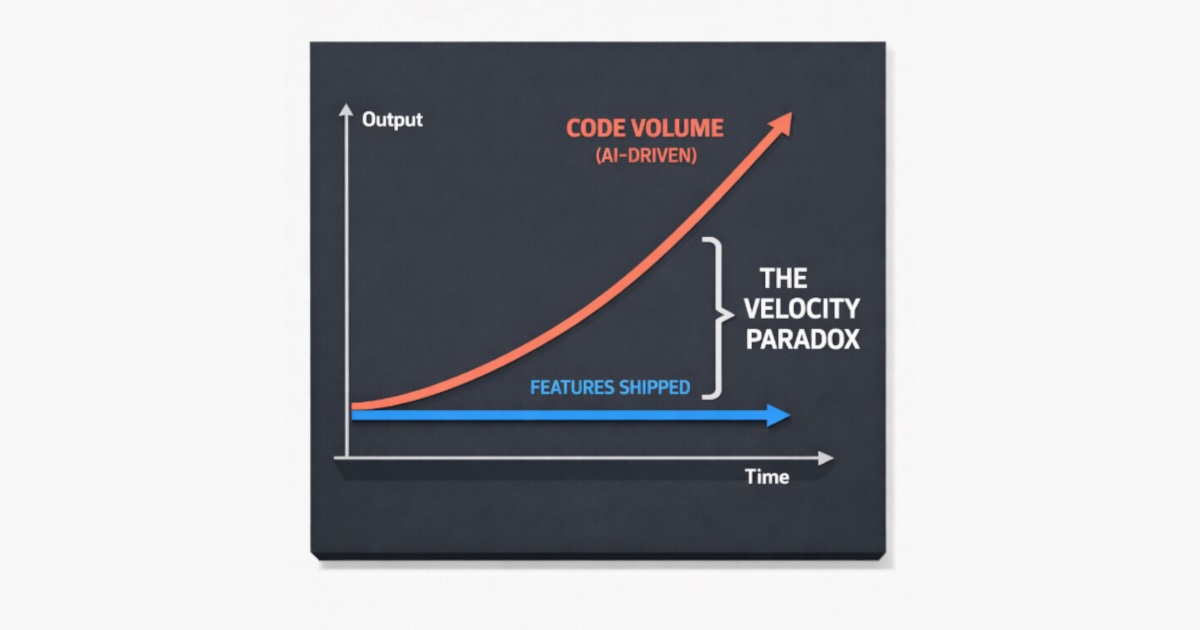
This is a state where we see that the teams that move fastest will be the ones with clear tests, tight review policies, automated enforcement and reliable merge paths. Those guardrails are what make AI useful. If your systems can automatically catch mistakes, enforce standards, and prove what changed and why, then you can safely let agents do the heavy lifting. If not, you're just accelerating risk,