#coen-brothers-influence
#coen-brothers-influence
[ follow ]
#gus-van-sant #coen-brothers #sundance-film-festival #new-directorsnew-films #film-festival #filmmaking
Film
fromDefector
2 weeks agoPaul Thomas Anderson Finally Gets His Coronation | Defector
Paul Thomas Anderson won the Best Director Oscar for One Battle After Another as a pseudo lifetime achievement award, recognizing his decades of critically acclaimed work that the Academy had previously overlooked.
fromInverse
2 weeks ago10 Years Later, One Underrated Sci-Fi Movie Shines A Light on The Genre's Corny Flaw
When Jeff Nichols set out to make 2016's Midnight Special, his intention was to create a film about parenthood, the feelings of powerlessness that come with it, and the faith required to let your child be their own person in the world. When his son had a seizure at 8 months old, Nichols realized that he 'had no real control over the health and well-being of [his] child.'
Independent films
Arts
fromwww.npr.org
1 month agoFor filmmaker Chloe Zhao, creative life was never linear
Director Chloe Zhao brings a sensitive, ritualistic approach to filmmaking, using meditation, breathing exercises, and dance to create intentional moods during production and premieres of her Oscar-nominated film Hamnet.
Film
fromwww.theguardian.com
3 weeks agoThe making of Fargo at 30: Man, you don't give me this role, I'm gonna shoot your dog'
William H. Macy secured the lead role in Fargo after impressing the Coen Brothers with his commitment and dark humor, transforming a modest detective part into an iconic performance as Jerry Lundegaard.
Independent films
fromwww.mercurynews.com
1 month agoPixar filmmakers really gave a dam about making Hoppers' authentic
Pixar's Hoppers prioritizes comedy and entertainment through a collaborative creative process where a teenage activist's consciousness transfers into a robotic beaver fighting to save a pond habitat.
Film
fromEntrepreneur
3 weeks agoThis Cult Filmmaker Learned Something About Audiences Every Entrepreneur Needs to Know'Make Them Feel Something'
Kevin Smith built a personal brand by connecting directly with fans, which created lasting career opportunities beyond individual film projects in an unpredictable industry.
Film
fromwww.theguardian.com
3 weeks agoGus Van Sant: My assistant wanted to erect a statue of Luigi Mangione. My generation thought: this is murder'
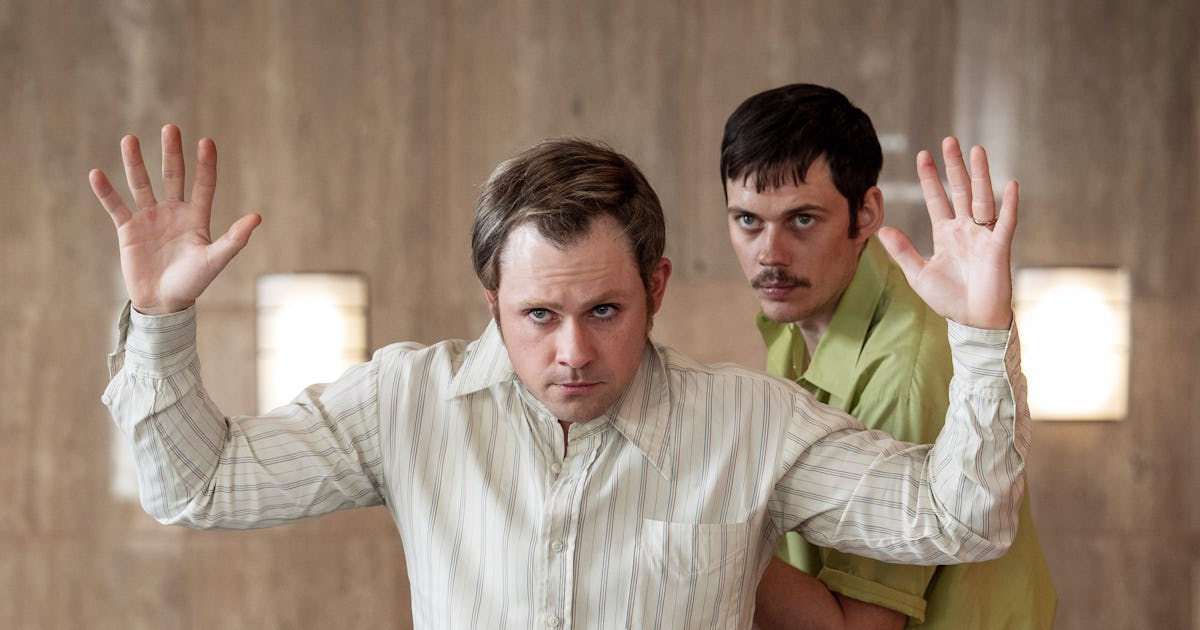
Director Gus Van Sant dramatizes the 1977 Tony Kiritsis hostage crisis, a 63-hour standoff involving a shotgun wire attached to a hostage's head, in the film Dead Man's Wire.
fromOregon ArtsWatch * Arts & Culture News
1 month agoFilmWatch Weekly: 'My Undesirable Friends: Part I' and other tributes to female power, plus Colombian dark comedy 'A Poet' and more * Oregon ArtsWatch
The project was prompted by a new practice requiring all journalists or outlets who received any non-Russian funding to self-identify as "foreign agents." At first, the reactions of TV Rain on-air host Anna Nemzer and her colleagues, forced to read an absurd disclaimer at the beginning of every story, is one of typically Russian dark humor.
Film
fromThe Independent
1 month agoSpielberg, Coppola and Lucas: The toxic friendship that built modern Hollywood
George Lucas should have died. It was 1962; the 17-year-old had just crashed his yellow Autobianchi convertible into a walnut tree, in Modesto, California. The car rolled, bounced and came to rest - it was "beyond mangled, flipped upside down and twisted like a crushed Coke can against the tree". When the teenager woke in hospital two weeks later, his heart having nearly stopped, he had a new philosophy: "Maybe there's a reason I survived this accident that nobody should have survived."
Film
Film
fromwww.theguardian.com
1 month agoPeople feel like they're in on the joke': the new wave of pseudo-biopics
Filmmakers increasingly create pseudo-biopics that borrow recognizable elements from real people and events while changing names and details to avoid legal liability and maintain creative freedom.
fromThe Independent
1 month ago17 great movies ruined by terrible endings
10 Cloverfield Lane Mary Elizabeth Winstead, John Goodman and John Gallagher Jr are locked in an underground bunker for the majority of this left-field sequel to Cloverfield, with thrilling results. In the film's final throes, Winstead's character exits the bunker, and finds that her captor was telling the truth about an alien invasion above - a twist that completely and ruinously dissipates the hard-earned tension that came before.
Film
Film
fromOregon ArtsWatch * Arts & Culture News
1 month agoFilmWatch Weekly: Alexander Skarsgard in 'Pillion,' Glen Powell in 'How to Make a Killing,' and more * Oregon ArtsWatch
Two new films show divergent strategies: Glen Powell's dark comedy uses impersonation and satire, while Alexander Skarsgård's Pillion pursues enigmatic, explicit provocation.
fromThe Independent
1 month agoGood Luck, Have Fun, Don't Die is the work of a very angry filmmaker - review
The value of imagination - the real, human stuff AI could never hope to touch - has been put to the test with Gore Verbinski's Good Luck, Have Fun, Don't Die. It's ideologically flawed, structurally jumbled, and a little too enamoured of its dystopian predecessors (shades of Terminator and Edge of Tomorrow here). But it's also sort of wonderfully personal, cranky and spiked - like an affronted hedgehog trying repeatedly to ram your shin.
Film
fromAnOther
2 months agoA Guide to the Searching Cinema of Richard Linklater
It's been 40 years since Richard Linklater founded the Austin Film Society, beginning his crusade to make scrappy, personal, romantic and boisterous cinema. It's fitting for a director who first broke out in the 1990s "Indiewood" boom that his latest film, Nouvelle Vague, is an origin story of cinema's enfant terrible par excellence, Jean-Luc Godard, mounting his iconic debut film Breathless. As Linklater's first non-English film, Nouvelle Vague feels like a film fanatic has staged and animated decades' worth of behind-the-scenes anecdotes - genuine and apocryphal alike - to show a turning point for cinema as the Texan director imagines it: lively and collaborative, tetchy and confounding, an amusing slew of rules broken and manifesto points declared.
Film

Film
fromIndieWire
2 months agoBob Berney on Five Wild Decades at Sundance, and Chasing Movies No One Else Wanted Like 'Memento' and 'Donnie Darko'
Bob Berney identifies promising films at Sundance, secures financing and distribution, and mounts release and awards campaigns that bring them to wide audiences.
fromIndieWire
2 months agoGuillermo del Toro and Martin Scorsese Celebrate the 'Extraordinary Artistry' of 'The Greatest Story Ever Told'
"The film was shot in Ultra Panavision 70 with lenses that yielded an aspect ratio of 2.76 to 1, and it was breathtaking," Scorsese said. "But it wasn't just the size of the image, it was the imprint of the man behind the camera who knew how to fill that frame, how to compose it. And composer seems like the right word to describe George Stevens and the extraordinary level of artistry he reached at that point in his life and career."
Film
fromFilmmaker Magazine
2 months ago"It's Like Funny Ordinary People": Jay Duplass on See You When I See You
I was a struggling filmmaker. I was trying to find myself and it wasn't happening. I was ready to give up on filmmaking as I was about to turn 30. I didn't feel like I could do this to myself, my family and friends any longer. I was living in South Austin making the minimum amount of money, eating peanut butter and jelly sandwiches, and making bad art. But then Sundance gave me my career with this $3 short film that we submitted to the festival on a lark.
Film
Film
fromOregon ArtsWatch * Arts & Culture News
2 months agoFilmWatch Weekly: 'The Testament of Ann Lee,' Gus Van Sant's 'Dead Man's Wire,' and more * Oregon ArtsWatch
Amanda Seyfried portrays Ann Lee in a visually splendid, narratively ingenious biopic that examines Shaker celibacy, utopian faith, and rejection of materialism.
fromThe Atlantic
2 months agoAn Office Worker's Fantasy Brought to Life
Sam Raimi is one of Hollywood's finest purveyors of junk. I say this with love and reverence, and with full acknowledgment that he's the man behind such masterpieces as Evil Dead II and A Simple Plan. But the director has spent decades digging for gold amid pulpier genres, turning out oddball horror, thriller, and comic-book movies. As his career went on, Raimi graduated to making blockbuster versions of junk, including the first Spider-Man trilogy and, most recently, a Doctor Strange sequel for Marvel.
Film
fromAnOther
2 months agoPark Chan-wook on His "Bitter" Black Comedy, No Other Choice
At the narrative midpoint, pathetic protagonist Yoo Man-su ( Lee Byung-hun) - also a hobbying horticulturist with a bonsai mag subscription - arrives at the home of a man he deems a rival for one of the only paper jobs on the market. He wields a pistol concealed inside several oven gloves, intending to kill vinyl enthusiast Goo Beom-mo (Lee Sung-min) as a means of levelling the playing field.
Film
fromIndieWire
2 months agoLav Diaz on 'Magellan,' His NYFF Joke About Casting Gael Garcia Bernal During Sex, and Bela Tarr's Stubborn Nature
Lav Diaz directed a more accessible biopic, Magellan, starring Gael García Bernal, filmed in the Philippines and foregrounding Magellan's abusive treatment of indigenous peoples.
fromThe Independent
2 months agoEthan Hawke's vow to Robert Redford at emotional Sundance gala
Filmmakers and actors whose careers were shaped by Robert Redford and the Sundance Institute he founded reflected on his legacy as the godfather of independent cinema at a star-studded gala Friday night during the first Sundance Film Festival since his death. The 2026 festival - its last in Utah, before relocating to Boulder, Colorado - is a love letter to the haven Redford established in the state decades ago for stories that didn't fit into the mainstream.
Film
fromwww.theguardian.com
2 months agoI haven't mellowed my violence': Park Chan-wook on cultural dominance, the capitalist endgame and why we can't beat AI
No Other Choice satirizes capitalism, portraying modern South Korea as industrially declining—downsizing, unemployment and male fragility—exacerbated by AI and precarious entertainment industries.
Film
fromOregon ArtsWatch * Arts & Culture News
1 month ago'Ernie & Emma': Bruce Campbell talks his Oregon-shot, change-of-pace comedy about a man sent on a mission by his dead wife * Oregon ArtsWatch
Bruce Campbell self-financed and starred in Ernie & Emma, a heartfelt, humorous film about a widower confronting grief through his late wife's instructions.
Film
fromOregon ArtsWatch * Arts & Culture News
1 month agoFilmWatch Weekly: 'Good Luck, Have Fun, Don't Die' with Sam Rockwell, plus Icelandic drama 'The Love That Remains,' and more * Oregon ArtsWatch
Sam Rockwell plays a ragged time-traveler who recruits a diner team to prevent an impending AI-driven apocalypse.
fromwww.theguardian.com
2 months agoDead Souls review Alex Cox rides into sunset with anti-Trump spaghetti western
English film-maker Alex Cox comes riding into town with this jauntily odd and surreal western which he has indicated will be his swansong, shot on the rugged plains of Almeria in Spain and also Arizona. Cox himself is the star an elegant, dapper presence and his co-writer is veteran spaghetti western actor Gianni Garko. The story has obvious relevance to contemporary America, and a flash-forward makes some of this clear.
Film
fromOpen Culture
2 months agoHow the "Netflix Movie" Turns Cinema into "Visual Muzak"
A quarter-century later, it's safe to say that those days have come to an end. Not only does the streaming-only Netflix of the twenty-twenties no longer transmit movies on DVD through the mail (a service its younger users have trouble even imagining), it ranks approximately nowhere as a preferred cinephile destination. That has to do with a selection much diminished since the DVD days
Film
[ Load more ]