#compressed-earth-construction
#compressed-earth-construction
[ follow ]
#architecture #sustainable-design #sustainable-architecture #sustainability #sustainable-construction #design


fromwww.theguardian.com
5 days agoEvery child wants to find joy': the scheme designing playground equipment for disaster zones
Meininger, who grew up in Germany but now lives in London, likes making things. So when he saw how much his young sons enjoyed the jungle gym and play forts at the local park, he made an indoor treehouse for them.
Parenting



Design
fromYanko Design - Modern Industrial Design News
4 days agoBiomimetic Architecture Reaches New Heights With This Bird-of-Paradise Yoga Space - Yanko Design
Thilina Liyanage's architecture translates animal gestures into functional designs, exemplified by the Rifle Bird Yogashala inspired by the Victoria's riflebird's courtship display.
Arts
fromArchDaily
1 month agoBuildFest Introduces "Acts of Construction," a Three-Year Exploration of Timber Installations
Bethel Woods launches BuildFest, a three-year initiative featuring large-scale timber installations and multimedia experiences on the historic 1969 Woodstock festival grounds, organized sequentially around construction, choreography, and performance themes.
#sustainable-architecture

fromdesignboom | architecture & design magazine
1 month agoDesign
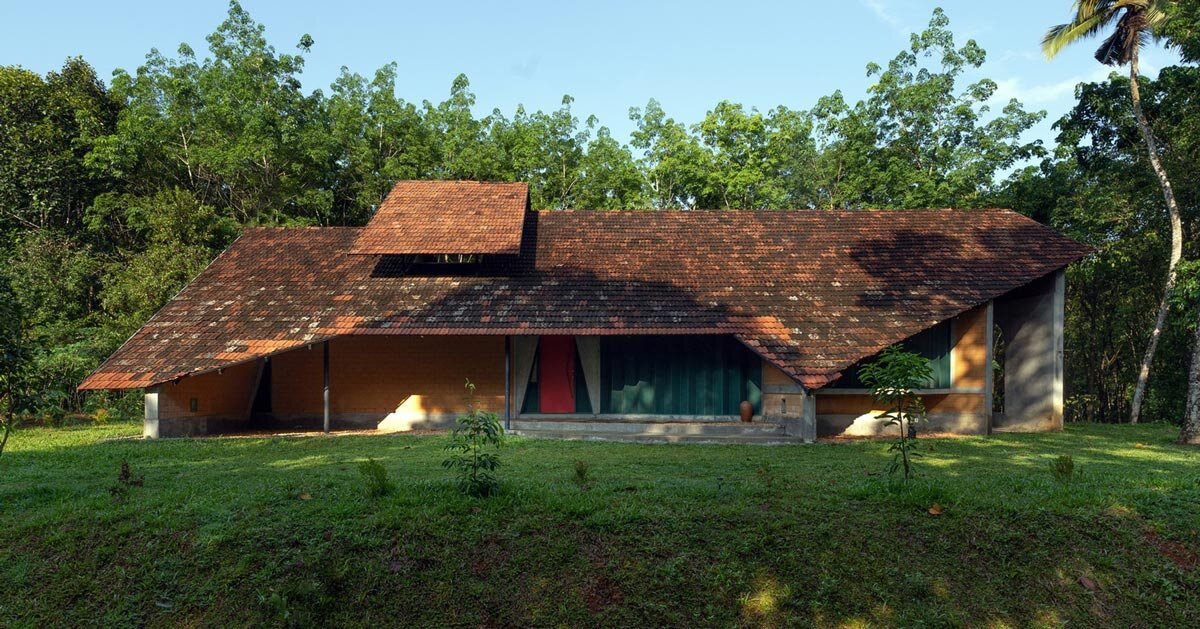
a semi-circular porous brick house stands amid rubber plantation in india
A semi-circular, low-slung home integrates with a Kerala rubber plantation using a porous metal skin, passive cooling, reclaimed materials, and low-impact construction.
fromFast Company
2 months agoDesign
'People need to ask more of their buildings': 6 ideas that will define architecture in 2026
Buildings designed in 2026 will emphasize sustainability, adaptability, biophilic integration, and technological systems driven by climate, materials, and shifting work/life demands.
Renovation
fromYanko Design - Modern Industrial Design News
3 days agoThis Tiny House Has 30 Feet of Glass and Feels Nothing Like a Tiny House - Yanko Design
The Shoreline Glass House redefines tiny living with spacious, light-filled design and single-floor layout, offering a unique blend of comfort and openness.
fromArchDaily
3 weeks agoHow Architecture Is Learning to Generate Its Own Energy
Photovoltaic (PV) solar energy represents a modular technology that can be manufactured in large-scale facilities, generating economies of scale, while also being adaptable to small-scale applications. From residential rooftop systems to large-scale power generation installations, photovoltaic solar energy has established itself as a cost-effective option for electricity production in many countries around the world.
Environment
Miscellaneous
fromdesignboom | architecture & design magazine
1 month agoequipo de arquitectura organizes compressed earth house around native trees in paraguay
Equipo de Arquitectura designs a 260-square-meter residence in Paraguay where mature trees determine the building's geometry, with compressed earth volumes and voids strategically positioned between trunks.
fromFast Company
1 month agoThese designers made a sustainable new building material from corn
This corn-based construction material was made by Manufactura, a Mexican sustainable materials company, and it imagines a second life for waste from the most widely produced grain in the world. The project started as an invitation by chef Jorge Armando, the founder of catering brand Taco Kween Berlin, to find ways he could reintegrate waste generated by his taqueria into architecture. A team led by designer Dinorah Schulte created corncretl during a residency last year in Massa Lombarda, Italy.
Science
Environment
fromArchDaily
1 month agoCan Shading Become Energy? From Passive Facades to Productive Envelopes
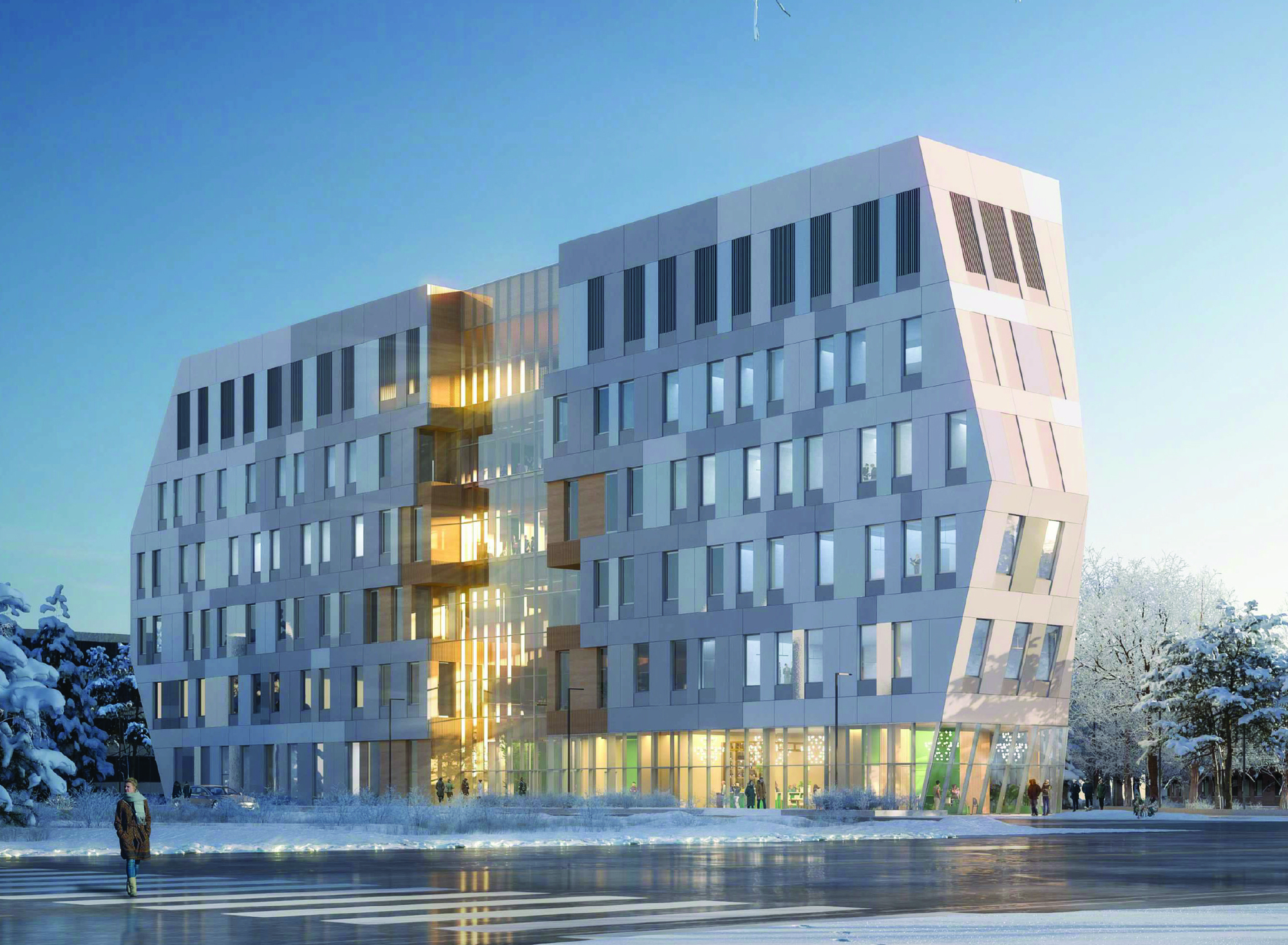
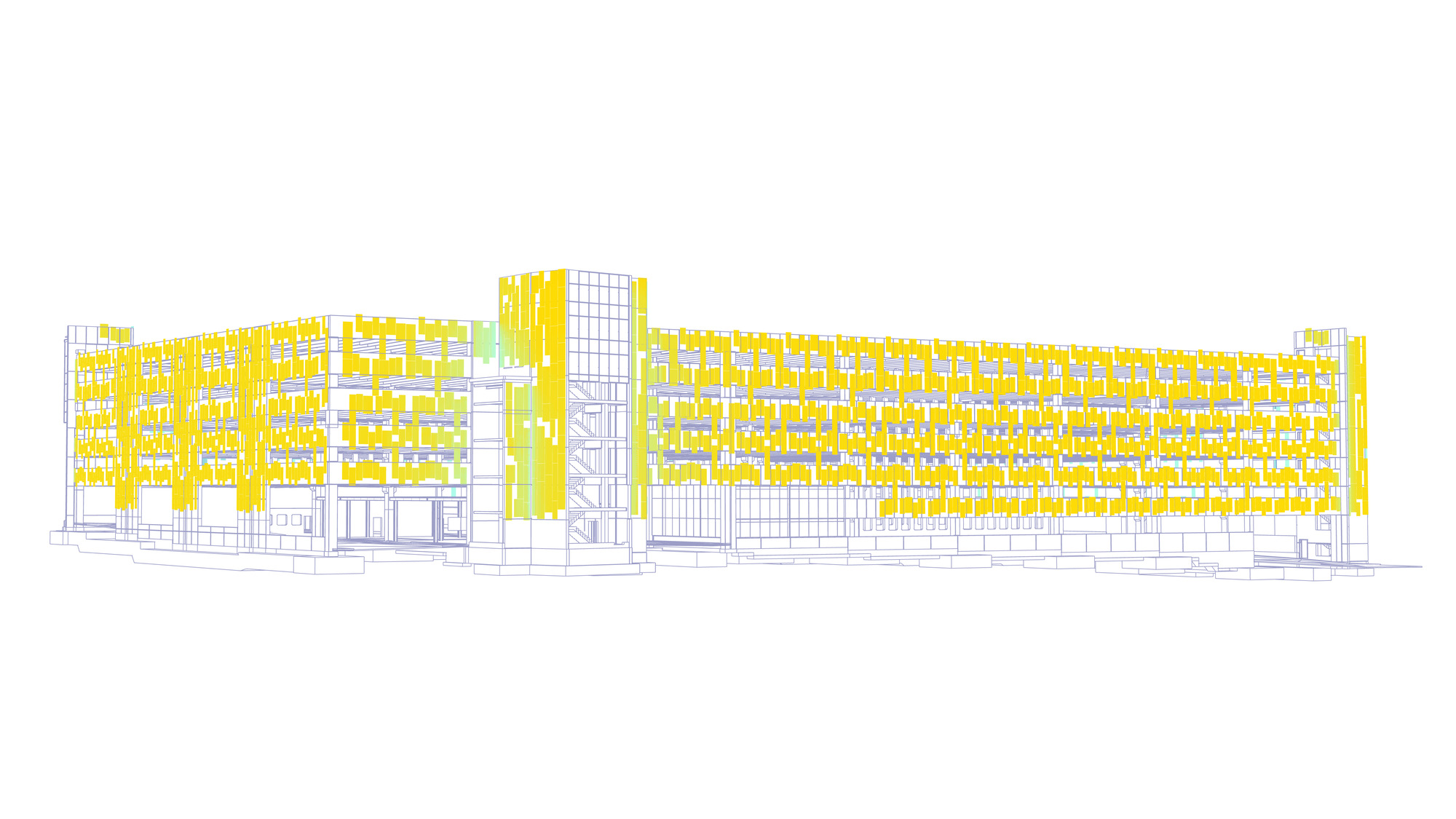
Facades can generate significant renewable energy by integrating colored photovoltaic shutters that combine shading, daylight control, and electricity production without adding envelope complexity.
fromdesignboom | architecture & design magazine
1 month agocan desert sand with plant-based materials be used to build houses and roads?
Researchers at the Norwegian University of Science and Technology and the University of Tokyo have made a prototype of botanical cement made of desert sand and plant-based additives in hopes that it can be used to build houses and roads. Once mixed, the team adds tiny pieces of wood together and presses them all with heat to produce the cement.
Science
Design
fromdesignboom | architecture & design magazine
3 weeks agorammed-earth prisms emerge from the utah desert to shape observatory house
A conceptual residential observatory in Utah's canyonlands uses prism-shaped rammed earth volumes that emerge from the landscape, integrating architecture with geological formations through embedded structures and strategic openings.
Public health
fromCity Limits
2 months agoCould This South Bronx Tenement Become NYC's First Hemp-Retrofitted Apartment Building?
Hemp-based building materials could retrofit aging South Bronx buildings to improve indoor air quality and reduce heating and cooling emissions, addressing asthma-linked housing problems.
fromArchDaily
3 weeks agoBuilding with Earth: Traditional Knowledge in Contemporary Architecture
Rather than representing a simple return to the past, this renewed interest reflects a broader reconsideration of how architecture engages with materials, local resources, and environmental conditions.
Renovation
Design
fromYanko Design - Modern Industrial Design News
3 weeks agoMIT Finally Built the House Your Great-Grandkids Will Inherit - Yanko Design
MIT's Heirloom House project uses nine modular concrete components engineered to last 1,000 years, assembled through gravity and friction rather than permanent fasteners.
Renovation
fromdesignboom | architecture & design magazine
3 weeks agothis 'underground house of the future' revisits ancient chinese cave dwellings
A University of Hong Kong team redesigned traditional underground 'dikengyuan' courtyard houses on China's Loess Plateau using modern construction methods and 3D printing to address climate challenges while preserving agricultural land and cultural living practices.
Environment
fromwww.theguardian.com
1 month agoWe can learn from the old': how architects are returning to the earth to build homes for the future
Unstabilised rammed earth provides a low-carbon, locally sourced building method with thermal mass, moisture control and potential for circular construction.
fromArchDaily
2 months agoFrom Desert to Forest: 8 Unbuilt Houses Designed as Contemporary Retreats
Residential architecture remains one of the most active fields for unbuilt architectural exploration, offering a lens through which architects rethink how domestic space can respond to landscape, climate, and contemporary patterns of living. In this Unbuilt edition, submitted by the ArchDaily community, the selected proposals bring together a range of residential projects that engage with houses, villas, and retreats as sites of withdrawal, mediation, and everyday inhabitation.
Remodel
Renovation
fromYanko Design - Modern Industrial Design News
3 weeks agoA House In Ecuador That Climbs the Land Instead of Changing It - Yanko Design
La Miradora in Ecuador's highlands uses natural terrain to shape its design, with wooden ribs as the primary structural system that adapts to the slope while providing shelter and framing views.
Renovation
fromdesignboom | architecture & design magazine
3 weeks ago3D printed street furniture recycles concrete and brick waste from demolished urban villages
Construction waste from demolished urban villages is converted into 3D printable composite material containing up to 85% solid waste, creating functional urban furniture through a closed-loop production system.
fromInsideHook
1 month agoCould Recycled Plastic Lead to More Housing?
When you think about building a house, what materials come to mind? Brick, wood and metal all come to mind; there are also some very distinctive glass houses out there. (Even if their occupants should refrain from throwing stones - though honestly, that's a good tip for indoor living in general.) A group of MIT researchers have come up with a very different way of making buildings, and it's one that also addresses an ongoing waste issue."We've estimated that the world needs about 1 billion new homes by 2050. If we try to make that many homes using wood, we would need to clear-cut the equivalent of the Amazon rainforest three times over," explained AJ Perez, who conducts his research in the MIT Office of Innovation. The title of a paper written by Perez and his colleagues - "Design, Manufacture and Testing of Structural Trusses Using Additively Manufactured Polymer Composites" - gives a sense of the solution that they have in mind.
Environment
fromArchDaily
2 months agoCircular Composites: Designing for a Sustainable Future
One of the earliest large-scale examples of composite materials can be found in the Great Wall of China, where stone, clay bricks, and organic fibers such as reeds and willow branches were blended to create a resilient and lasting structure. These early techniques reveal a timeless intuition: distinct materials, when combined thoughtfully, produce properties unattainable by any single element.
Environment
fromwww.theguardian.com
2 months agoSchools, airports, high-rise towers: architects urged to get bamboo-ready'
For many years, bamboo has been mostly known as the favourite food of giant pandas, but a group of engineers say it's time we took it seriously as a building material, too. This week the Institution of Structural Engineers called for architects to be bamboo-ready as they published a manual for designing permanent buildings made of the material, in an effort to encourage low-carbon construction and position bamboo as a proper alternative to steel and concrete.
Environment
fromdesignboom | architecture & design magazine
1 month agothousands of reclaimed bricks shape rural residence amid agricultural fields in india
Located on the outskirts of Mayiladuthurai in Tamil Nadu, , Paati Veedu by Koodu Architecture is a compact rural developed under financial constraint and material limitation. Built on a 1,200-sqft site within a neighborhood of small houses and agricultural fields, the project is defined by , adaptation, and resource-conscious construction. The house was constructed using 10,000 accumulated over time by the client, forming the primary material basis for the design.
Design
fromArchDaily
1 month agoWhen Light Meets Energy in Glass Ceilings
From the large industrial roofs and galleries of the 19th century to the contemporary atriums of museums and public buildings, glass has been a recurring material in shaping large and monumental interior spaces. More than a technological or engineering solution, these horizontal glazed planes introduce a distinct luminous quality: light that comes from above. Unlike lateral daylight entering through façades, zenithal light is more evenly distributed, reduces harsh shadows, and lends spaces a sense of continuity and openness that is difficult to achieve otherwise.
Design
Design
fromwww.archdaily.com
2 months agoFrom Material Intelligence to Circularity: Lessons from Architecture in 2025
Architects prioritize material innovation in 2025—agricultural waste, recycled plastics, and living materials—balancing tradition, circularity, and material intelligence for resilient, low-carbon construction.
Design
fromdesignboom | architecture & design magazine
2 months agorammed earth makes up wrot studio memorial proposal for new york city public cemetery
Rammed-earth burial mound with steel elements memorializes COVID victims on Hart Island, embracing material decay, temporal change, and marking mass graves.
fromFast Company
2 months agoThese $1,000 bamboo homes survived a major earthquake
When a 7.7-magnitude earthquake hit Myanmar last year, roads buckled and thousands of buildings collapsed. But a group of small, ultra-low-cost homes made from bamboo survived without any damage. Finished just days before the quake, the houses are emergency shelters for some of the millions of people displaced by Myanmar's ongoing civil war. Myanmar-based architecture studio Blue Temple worked with its spinoff construction company Housing Now to make the simple prefab homes as low-cost as possible while still able to withstand natural disasters.
Design
Design
fromdesignboom | architecture & design magazine
2 months agopermeable microhome proposal integrates groundwater recycling system in india
A prefabricated off-grid microhome captures, treats, and returns water to the aquifer, enabling hydro-positive habitation while minimizing ground disturbance.
[ Load more ]