#computational-composition
#computational-composition
[ follow ]

Graphic design
fromdesignboom | architecture & design magazine
2 days agohiggsfield brings art-directed quality to AI image generation at production scale
Higgsfield's Soul 2.0 revolutionizes AI photo generation for the creative industry, enhancing visual quality and efficiency in producing artistic imagery.


fromWIRED
6 days agoMeet the Man Making Music With His Brain Implant
Galen Buckwalter, a 69-year-old research psychologist and quadriplegic, participated in a brain implant study to contribute to science that aids those with paralysis. The six chips in his brain decode movement intention, allowing him to operate a computer and feel sensations in his fingers again.
Music production



Berlin music
fromdesignboom | architecture & design magazine
1 week agosonar+D 2026 reveals festival lineup on post-AI reality, digital culture and alternative futures
Sónar+D 2026 focuses on technology as a tool for engagement, exploring themes of AI, physicality in digital culture, and alternative futures.

Artificial intelligence
fromPsychology Today
2 weeks agoWhat QuantumAI Is, and Why We May Miss Its Importance
Quantum AI combines quantum computing with artificial intelligence to solve complex problems involving massive combinations of possibilities, particularly useful for drug discovery, materials design, logistics, and financial analysis.
Mobile UX
fromGSMArena.com
2 weeks agoAdobe announces partnership with Nvidia to build the next generation of its Firefly AI platform
Adobe and Nvidia partnered to integrate Nvidia's AI technologies into Adobe Firefly, enabling advanced generative AI capabilities across Adobe's creative products including 3D digital twins and autonomous agents.
fromThe Atlantic
3 weeks agoPlay It Again, Claude
By the early 1900s, player pianos had evolved to more fully reproduce a human performance, including subtle dynamics like tempo changes and the introduction of a damper pedal. The human role went from deskilled to fully deprecated as electric motors replaced foot-powered bellows. With the Seeburg Lilliputian Model L, the only job left for humans who wanted to play the piano in the 1920s was to put in a coin.
History




fromApaonline
1 month agoJust Fake! Why Generative AI Art is a Myth
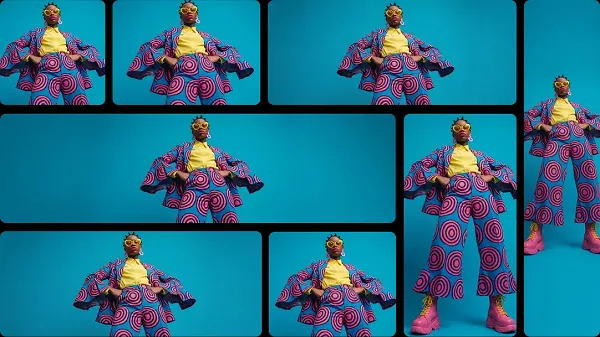
The Portrait of Edmond de Belamy seems to be a paradigmatic example of generative AI art. Generative AI art has to be distinguished from AI-assisted art. The latter involves AI just as a tool that supports human art creation, comparable to a brush or a typewriter. In generative AI art, in contrast, the artistic achievement supposedly lies solely with the AI, while humans play no or only a minimal role in the creative process.
Philosophy
fromThe Verge
2 weeks agoThe secret story of the vocoder, the military tech that changed music forever
The vocoder was never supposed to be a revolution in music. Its development began a century ago, when an engineer at Bell Labs was looking for a simpler way to send phone calls across copper telephone lines.
Music production
fromDEV Community
2 weeks agoI Built a 100% Private, On-Device AI Audio Stem Splitter (No Servers!)
If you've ever used tools like PhonicMind or LALAL.AI, you know the drill: Upload your MP3. Wait in a queue. Pay for "credits" or high-quality downloads. Your file sits on someone else's server. For musicians, producers, or just karaoke fans, this is slow and privacy-invasive.
Music production
Music
fromYanko Design - Modern Industrial Design News
1 month agoSynth Modular Controller Treats Music Making Like Building with Blocks - Yanko Design
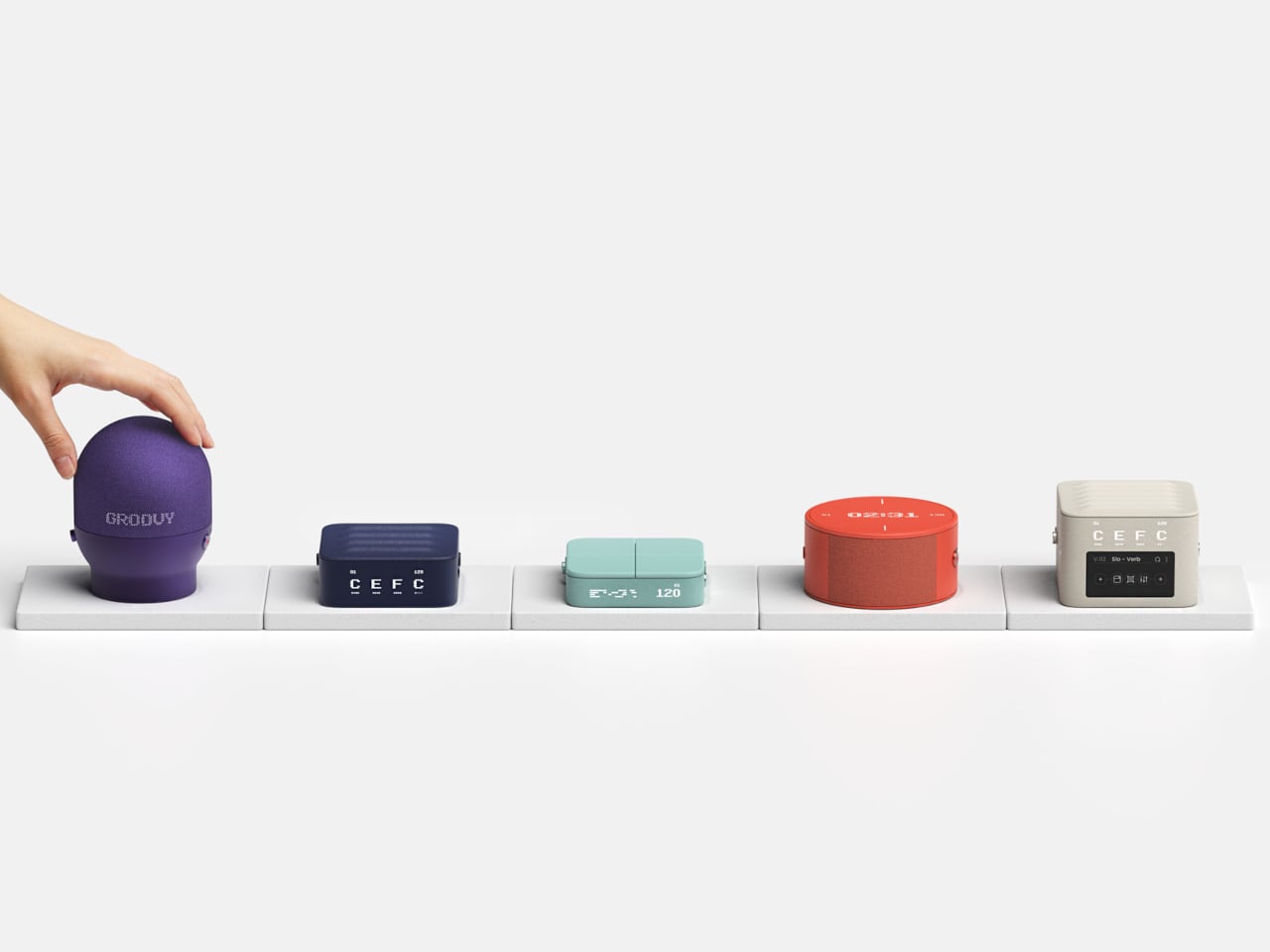
A modular synth system uses snap-together physical blocks for each function, making synthesis tangible, teachable, and scalable from beginner toy to serious performance instrument.
Music production
fromFuturism
3 weeks agoThe AI-Generated Tilly Norwood Just Dropped the Worst Music Video We've Ever Seen
Particle6's AI actress 'Tilly Norwood' and her music video 'Take the Lead' faced widespread criticism for tone-deaf promotion of AI technology amid industry concerns about performer replacement.
Artificial intelligence
fromFast Company
1 month agoThis charming pixel art game solves one of AI coding's most annoying UX problems
Pixel Agents is a Visual Studio Code extension that transforms Claude Code AI agent monitoring into an intuitive 8-bit video game interface, solving the usability problem of tracking multiple concurrent AI coding sessions.
fromYanko Design - Modern Industrial Design News
2 months agoTeenage Engineering-inspired Music Sampler Uses AI In The Nerdiest Way Possible - Yanko Design
Junho Park's graduation concept borrows all the right cues from TE's playbook, that modular control layout, the single bold color, the mix of knobs and buttons that practically beg to be touched, but redirects them toward a gap in the market. Where Teenage Engineering designs for people who already understand synthesis and sampling, the T.M-4 targets people who have ideas but no vocabulary to express them.
Gadgets
Music production
fromMetro Silicon Valley | Silicon Valley's Leading Weekly
1 month agoSJSU, MAX/MSP & the Roots of Computer Music
MAX, an object-oriented programming environment created in the late 1980s, revolutionized music production and became foundational to SJSU's pioneering electro-acoustic music concentration.
fromArchDaily
2 months agoDecomposition as Expression: Disassembled Axonometry as Design Tool
In the translation of three-dimensional reality onto a two-dimensional plane, axonometry stands as one of the graphic systems of representation that form the foundation of the language used by architecture and design professionals. Alongside plans, sections, and elevations, its exploded views often stand out for their ability to study the multiple layers that compose a project. Although axonometry is also employed in other disciplines such as
Design
Music production
fromenglish.elpais.com
1 month agoThe problem with Xania Monet: The AI-generated singer who has amassed millions of followers
AI-generated singer Xania Monet achieved mainstream success by combining human authorship with generative AI technology, reflecting a generational shift where emotional resonance matters more than creator authenticity.
Music production
fromwww.scientificamerican.com
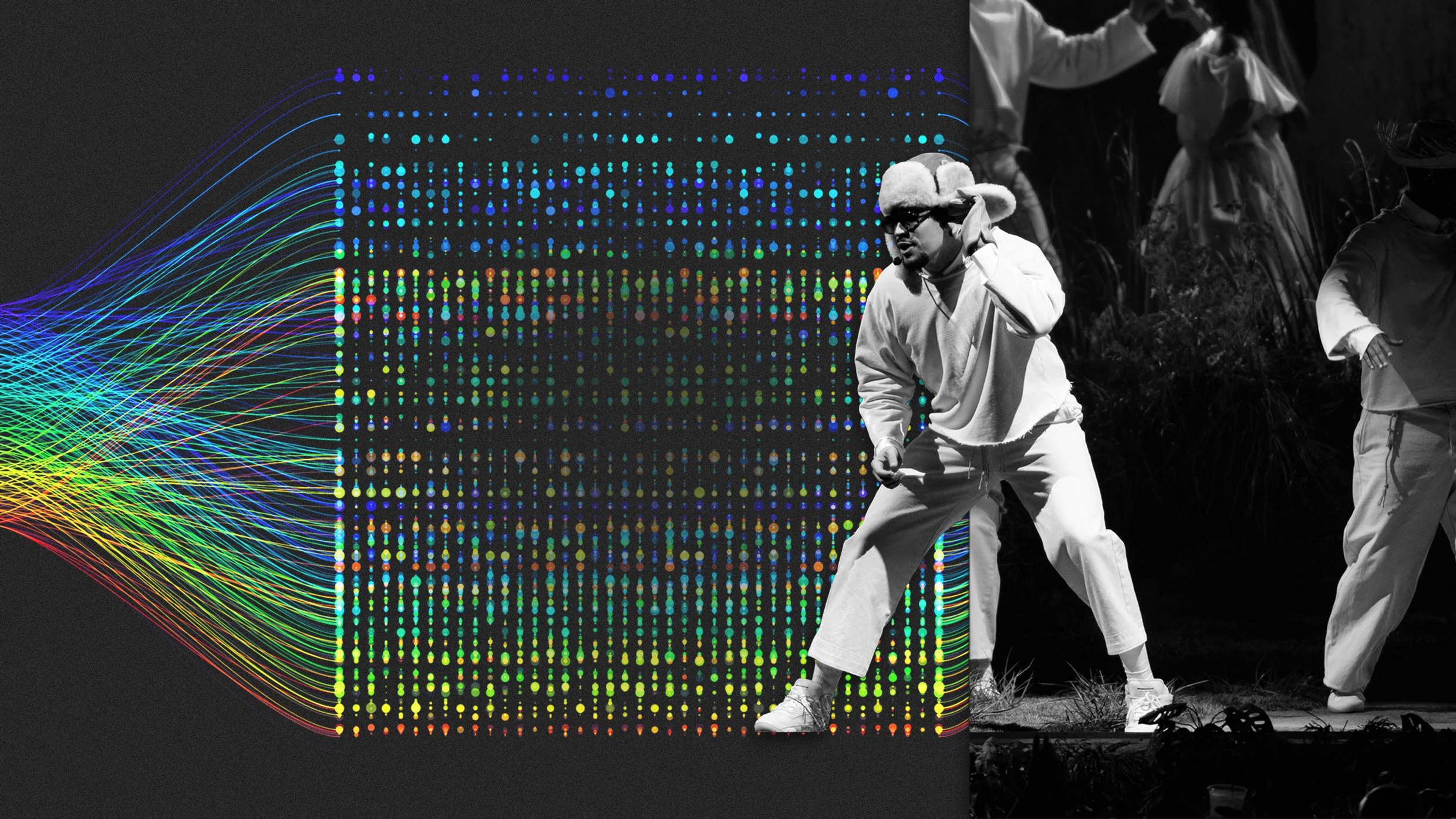
1 month agoExperimental composer Holly Herndon built an AI voice clone that anyone can use
Holly Herndon uses machine learning and AI models to create protocol art, where the creative act occurs in designing rule sets and datasets rather than in final media generation, making collective creativity visible.

Music
fromKALTBLUT Magazine
2 months agoChoosing the Artificial Over the Real in Dash Hammerstein's "Noise Machine" - KALTBLUT Magazine
Dash Hammerstein blends Americana songwriting and filmmaking to create intimate, melody-driven songs and film scores that mix folk-pop sensibility with subtle production flourishes.
fromNature
2 months agoAI can spark creativity - if we ask it how, not what, to think
When a scientist feeds a data set into a bot and says "give me hypotheses to test", they are asking the bot to be the creator, not a creative partner. Humans tend to defer to ideas produced by bots, assuming that the bot's knowledge exceeds their own. And, when they do, they end up exploring fewer avenues for possible solutions to their problem.
Artificial intelligence
fromEngadget
2 months agoKorg's new experimental synthesizer combines acoustic sounds with electronic control
The Phase8 uses a new form of "acoustic synthesis" that combines acoustic sound generation with electronic control. Takahashi says the synthesizer is "beyond analog vs. digital" and "beyond electronics" altogether. It features chromatically tuned steel resonators, which creates an acoustic sound similar to that of a kalimba. These signals can be manipulated via onboard effects and sequenced like a traditional synthesizer. Here's a video of the synth in action.
Music
fromMedium
2 months agoAI and Creativity: Why Human Imagination Still Matters in an Algorithmic World
As AI systems become more capable, more accessible, and more embedded in everyday workflows, creativity is emerging as one of the most important human skills in AI development and deployment. Not creativity as decoration or aesthetics, but creativity as problem framing, decision-making, and human judgment. In an era where many organizations are using the same models, tools, and platforms, creative thinking is what separates meaningful outcomes from generic ones.
Artificial intelligence
fromFast Company
1 month agoThis AI-powered machine turns photos into smells
One scientist at MIT, Cyrus Clarke, is working to do just that. Alongside a team of fellow researchers, Clarke has developed a physical machine called the Anemoia Device, which uses a generative AI model to analyze an archival photograph, describe it in a short sentence, and, following the user's own inputs, convert that description into a unique fragrance. The word "anemoia" was coined by author John Koenig and included in his 2021 book, The Dictionary of Obscure Sorrows.
Artificial intelligence
fromPsychology Today
1 month agoMusic and the Brain: Love in the Key of Everyday Life
Wooden spoons as microphones, siblings spinning in socks across the floor, a mother laughing as Whitney Houston's "I Wanna Dance With Somebody" fills the room for the third time in a row-this is love. Long before children understand romance, they learn connection this way, through synchronized movement, shared joy, and the safety of familiar songs. Research on rhythm and social bonding suggests that moving in time together can regulate the nervous system and strengthen feelings of connection.
Music
[ Load more ]