#continental-vs-american

[ follow ]
Writing
fromThe New Yorker
12 hours ago

He Wrote a Book About Interviewing. Here's His Interview.

Ben Lerner's 'Transcription' explores memory, language, and technology through the lens of a writer's relationship with his mentor.
Design
fromDesign Milk
2 days ago

OUTSIDERS Investigates the Space Between Society and Solitude

Modern design challenges conventional public seating to enhance social interaction and presence in urban spaces.
Right-wing politics
fromThe Atlantic
3 days ago

The Intellectual Right Is Mad at the Mess It's Made

William F. Buckley Jr. confronted the John Birch Society to maintain conservatism's mainstream appeal, a challenge echoed by conservatives in subsequent decades.
Mental health
fromPsychology Today
4 days ago

Talking About Death: The Depth of the Meaning of Life

Death is a certain aspect of life that is often uncomfortable to discuss, yet it shapes our relationships and understanding of existence.
Books
fromThe Atlantic
6 days ago

How Long Can You Live Your Ideals?

Pat Calhoun chooses parenthood over radicalism, paralleling Elsa Haddish's struggle between her militant past and raising her daughter safely.
World news
fromThe Nation
6 days ago

What Are Your Obligations When Your Country Is the Villain?

The U.S. executed a devastating missile strike on a school in Iran, killing many children and raising moral questions about its actions.
#frankfurt-school
Philosophy
fromwww.theguardian.com
2 weeks ago

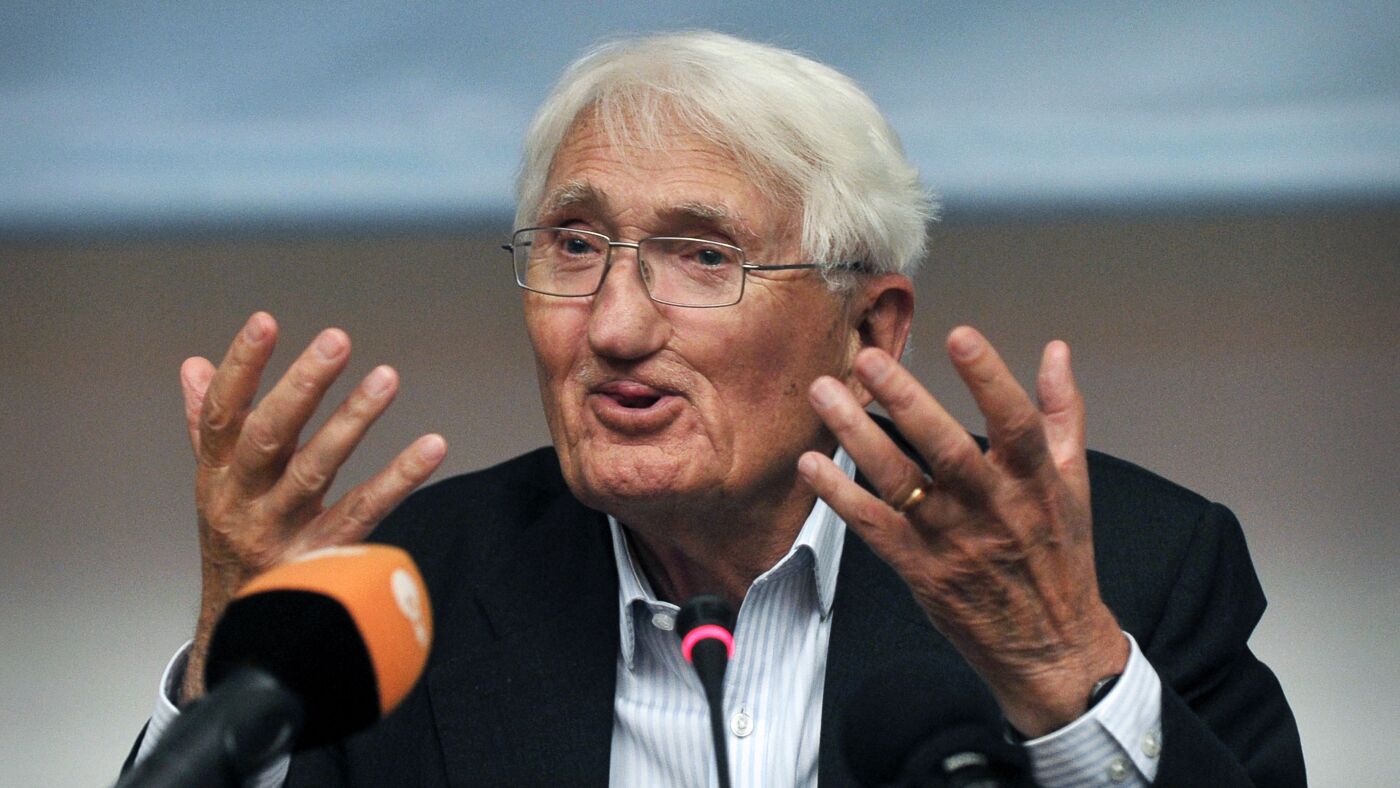
Talk is precious: in the age of communication collapse, Jurgen Habermas's message remains vital | Eva von Redecker

The Frankfurt School is a scholarly constellation pursuing critique as transformative description of reality, with Jürgen Habermas serving as a foundational figure who shaped generations of critical theorists despite controversies surrounding his positions on discourse ethics and power.
Philosophy
fromwww.theguardian.com
2 weeks ago

Talk is precious: in the age of communication collapse, Jurgen Habermas's message remains vital | Eva von Redecker

The Frankfurt School is a scholarly constellation pursuing critique as transformative description of reality, with Jürgen Habermas serving as a foundational figure who shaped generations of critical theorists despite controversies surrounding his positions on discourse ethics and power.
Philosophy
fromApaonline
2 days ago

Using the Absurd: How Erasmus Challenges His Students

Erasmus utilized humor, particularly absurdity, as a motivational tool in teaching Latin, enhancing engagement and challenging students.
#relationships
Relationships
fromSilicon Canals
2 days ago

Psychology says people who crave both complete freedom and deep companionship aren't confused - they're experiencing the central tension of the human condition, and the people who resolve it aren't the ones who choose a side but the ones who stop treating it like a choice - Silicon Canals

The autonomy-connection paradox highlights the human need for both independence and intimacy in relationships.
fromPsychology Today
2 days ago
Relationships

When Your Partner Doesn't Share Your Spiritual Path

Partners need common values and autonomy, while exploring codependency mindfully.
Relationships
fromSilicon Canals
2 days ago

Psychology says people who crave both complete freedom and deep companionship aren't confused - they're experiencing the central tension of the human condition, and the people who resolve it aren't the ones who choose a side but the ones who stop treating it like a choice - Silicon Canals

The autonomy-connection paradox highlights the human need for both independence and intimacy in relationships.
fromPhilosophynow
4 days ago

What do I have to fear, have I ever diminished by dying?

What do I have to fear, have I ever diminished by dying? I died as lifeless matter and became growing vegetation, then I died as a plant and reached animality. I died as an animal and became human.
Right-wing politics
fromWIRED
5 days ago

The Promise of 'Woke 2' Is Fueling a Leftist Fever Dream

Donald Trump's 2024 victory was seen as a rejection of 'woke' ideology, leading to a culture of offensive speech without fear of consequences.
fromPhilosophynow
4 days ago

Life Sacrifice

The widespread practice of showing the Eid Al Adha slaughtering to children can desensitize them to violence, as many families take pride in this tradition.
Philosophy
Writing
fromThe Nation
6 days ago

The Enigma of Gertrude Stein

Gertrude Stein's complex writing style and innovative use of language significantly influenced 20th-century literature, despite ongoing ambivalence from readers.
fromPhilosophynow
4 days ago

The Mirror & the Flame

Attar's 'Conference of the Birds' follows a flock of souls seeking the Simorgh, symbolizing the Divine, through seven valleys, ultimately revealing the Divine as a reflection of the self in relation with others.
Philosophy
#jurgen-habermas
Germany politics
fromwww.theguardian.com
3 weeks ago

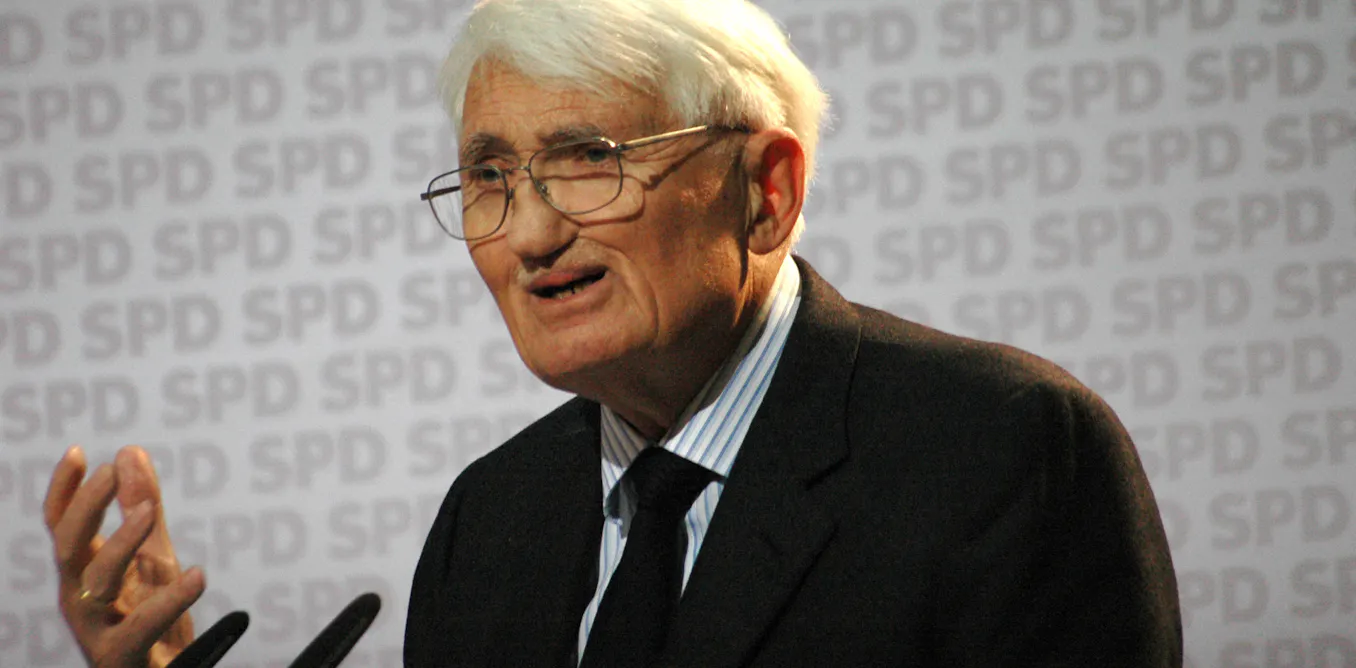
Jurgen Habermas, German philosopher and sociologist, dies aged 96

Jürgen Habermas, influential German philosopher and sociologist known for theories of political consensus-building and democratic discourse, died at age 96.
Mindfulness
fromPsychology Today
3 weeks ago

Ideas We Aren't Ready to Understand-Yet

Collect ideas you don't understand but sense are important, as they trigger deeper cognitive processing and eventual insight through incubation.
Psychology
fromPsychology Today
3 weeks ago

Why You Don't Have to Choose Just One Version of Yourself

Humans possess multiple self-aspects across different roles and contexts, and greater self-complexity provides psychological resilience against stress and setbacks.
Books
fromThe New Yorker
3 weeks ago

What Went Wrong When Susan Sontag Met Thomas Mann?

Susan Sontag recalled a disappointing 1947 meeting with Thomas Mann at age fourteen, experiencing profound disillusionment when the literary titan failed to match her idealized expectations of him.
Medicine
fromThe Atlantic
4 weeks ago

The Mind-Body Question

Witnessing the interior of one's body through medical imaging reveals the material nature of consciousness and confronts us with our own mortality and physical vulnerability.
#philosophy
Philosophy
fromPhilosophynow
4 days ago

Philosophers on Skiing

Philosophers occasionally write about unconventional topics like buildings, food, and winter sports, expanding their focus beyond traditional themes.
Philosophy
fromPhilosophynow
4 days ago

Philosophers on Skiing

Philosophers occasionally write about unconventional topics like buildings, food, and winter sports, expanding their focus beyond traditional themes.
#consciousness
fromSlate Magazine
1 month ago
Science

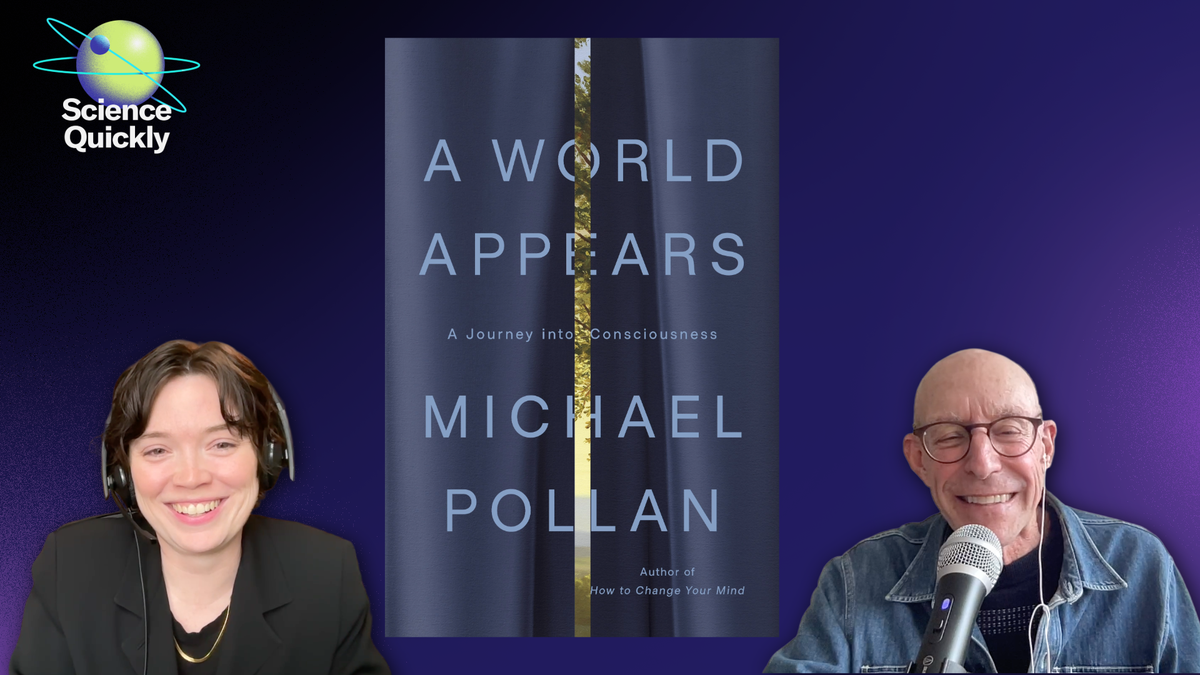
The New Book From One of Our Most Popular Nonfiction Writers Takes On the Mystery That's Haunted Philosophers for Millennia

fromSlate Magazine
1 month ago
Science

The New Book From One of Our Most Popular Nonfiction Writers Takes On the Mystery That's Haunted Philosophers for Millennia

fromInsideHook
1 month ago

Are the Humanities Poised for an Academic Comeback?

Many colleges and universities have made cuts in these programs, often bolstering STEM programs at their expense. It's a situation that has sparked no small amount of impassioned editorials. The headline of a recent article at The Guardian by Alice Speri referenced an 'existential crisis at U.S. universities,' and Speri's reporting features numerous examples of undergraduate and graduate programs facing cuts or outright elimination.
Higher education
fromThe Atlantic
1 week ago

How to Believe in God

Witnessing the presence of God at a bus stop in 2011, I felt overwhelmed by something indescribably majestic, which bared my soul to a profound realization.
Philosophy
fromPsychology Today
1 month ago

The Architecture of Identity: How the Brain Builds a Self

Attention is the brain's filtering mechanism; what passes through that filter is what gets encoded. What gets encoded becomes memory. And memory is the raw material of identity. So in the architecture of your identity, attention is the doorway.
Miscellaneous
Science
fromPsychology Today
1 month ago

What Is Life?

Life's definition remains scientifically elusive, with origin theories suggesting asteroids triggered chemical cascades enabling self-organizing molecules to develop memory, agency, and consciousness from inert matter.
fromwww.theguardian.com
2 weeks ago

The Guardian view on the legacy of Jurgen Habermas: philosophical sustenance for illiberal times | Editorial

The Theory of Communicative Action, his 1980s magnum opus, was not (to put it mildly) as accessible as some of his newspaper opinion pieces. But its central idea—that our nature as linguistic beings puts reason and the search for consensus at the core of who we are—remains an antidote both to intellectual relativism and Trumpian realism, which elevates national or individual self-interest above all other sources of human motivation.
Philosophy
Philosophy
fromWarpweftandway
2 weeks ago

CFP: Special Issue of The Journal of East Asian Philosophy, "Progressive East Asian Philosophy"

The Journal of East Asian Philosophy invites submissions for a special issue on Progressive East Asian Philosophy, with a deadline of August 31, 2026, focusing on how East Asian traditions address democracy, virtue, justice, moral progress, and contemporary social issues.
fromBig Think
1 month ago

How our view of "fundamental" has evolved over time

In antiquity, many opined about "the elements" in combination. Around 2500 years ago, Leucippus and Democritus founded the idea of atoms. Perhaps everything, they opined, was composed of indivisible building blocks. In the late 1700s, hydrogen and oxygen were discovered. Circa 1804, John Dalton revived atomism to explain chemical behavior. Then in 1869, Mendeleev developed the periodic table: organizing the atoms.
Science
Philosophy
fromThe Nation
2 weeks ago

The Hidden History of Free Choice

Choice became central to modern freedom through 17th-century developments in shopping and religious freedom, fundamentally reshaping how societies understand liberty across consumer, romantic, political, and ideological spheres.
Philosophy
fromwww.theguardian.com
3 weeks ago

Jurgen Habermas obituary

Jürgen Habermas transformed from a Hitler Youth member into a leading defender of Enlightenment values and democratic theory after witnessing Nazi atrocities, dedicating his philosophy to ensuring collective democratic influence over society.
US politics
fromThe Atlantic
1 month ago

America Needs 'Self-Evident' Truths

Public revulsion at ICE killings in Minnesota forced federal agents to withdraw and revealed a broad, shared moral opposition to violence against immigrants.
fromBig Think
2 months ago

Why the real revolution isn't AI - it's meaning

Peter Drucker saw this symbiosis first. He realized that the new industrial order would depend on a worker who produced ideas instead of widgets. The knowledge worker became the engine of prosperity, and management became the social technology that synchronized millions of minds. The modern firm was as much an invention as the transistor it depended on. Three decades later, Tom Peters caught the next wave.
Business
Europe politics
fromThe New Yorker
2 months ago

The Country That Made Its Own Canon

Sweden released a national culture canon, sparking controversy over national identity as immigration rises and the nationalist Sweden Democrats gain political influence.
Left-wing politics
fromThe New Yorker
1 month ago

How the University Replaced the Church as the Home of Liberal Morality

Universities have replaced churches and unions as primary institutions shaping young liberals' moral imagination, community, and political activism.
fromApaonline
3 weeks ago

Recommendation: U.K. Spinoza Circle

Spinoza was an heir to both Jewish and Christian culture-in Amsterdam he grew up in a Jewish community within a Protestant society-yet he distanced himself from both these religions. He did not want to be a member of a religious institution with strict, prescriptive codes of belonging and belief. He feared-quite rightly-that a [institutional religion would constrain philosophical freedom].
Philosophy
Philosophy
fromThe Atlantic
3 weeks ago

What Atheism Could Not Explain

Christopher Beha rejected atheism and returned to faith after falling in love, discovering that romantic love served as a catalyst for spiritual transformation rather than merely paralleling religious experience.
fromNature
1 month ago

'What are we doing here?' The polymaths who searched for the meaning of life

A mentor once told me that, when writing a research statement for a professorship, I had to start with the most ambitious pitch I could imagine - and then go ten times bigger. It's tricky enough to do this as a cosmologist, given that the topic of study is the entire Universe. But there is a quest that is more ambitious still: to find out 'what are we doing here?'
Books
Philosophy
fromHarvard Gazette
3 weeks ago

Where have all the public intellectuals gone? - Harvard Gazette

Public intellectuals are essential in democratic cultures to articulate unformed ideas and help citizens understand their values, but conditions supporting intellectual life in America are eroding due to social and economic shifts.
Philosophy
fromPsychology Today
4 weeks ago

Understanding Existential Psychology in a Global Context

Existential psychology was first labeled in the West but does not belong to the West; cultural humility and global dialogue are essential for advancing existential therapy across diverse contexts.
fromThe Nation
2 months ago

Fear of Nothing

February 2026 issue.When I was a child I was terrifiedof the space between One and Zero vast as the ages before my birthstrait as my death-late at night I heard my parents arguinglovingly in their locked room, the angora cat coming homewith a sparrow in her mouth, and the raindrops on the shinglescounting themselves-how to sleep, how to cross the empty placebetween the name "sparrow" and that limp thing crying,adamant, creating me with its cry
Writing
fromThe Conversation
4 weeks ago

Today's obsession with authenticity isn't new - being true to yourself has troubled philosophers for centuries

All of us live in an age where we're bombarded by social media and artificial intelligence - when striving to be your authentic self becomes an increasingly difficult task. Yet, even if it has somehow become a common goal, it is unclear how many of us can truly define the "authenticity" that we say we are pursuing.
Philosophy
fromPsychology Today
2 months ago

The Link Between Thinking and Being

Metaphors are linked to how we experience the world around us, according to seminal work by researchers George Lakoff and Mark Johnson. In English, we "move forward" with our lives and don't "retreat into" the past. We speak about people who are "cold as ice" and "heavy" matters we need to resolve. Some of these metaphorical expressions are more than just, well, expressions-they are actually based on our sensory experiences. This mind-body link is called "embodied cognition."
Science
Philosophy
fromApaonline
1 month ago

Why Engage with the Past? Philosophy and Its History

Philosophy departments distinguish between contemporary theoretical and practical philosophy addressing current issues, and history of philosophy studying outdated theories from past philosophers.
Philosophy
fromBig Think
1 month ago

The philosophy of indoctrination and how to fix it

Indoctrination occurs when beliefs are sealed off from questioning through prepackaged instructions that frame scrutiny as irrational or immoral, preventing rational evaluation of counterevidence.
fromThe Conversation
1 month ago

What is happiness? A philosopher looks for answers

Happiness today is narrowly defined by some positive psychologists as a joyous state of mind or well-being. The happiness sciences see it as something you can calculate and quantify. They developed a Happiness Index and the World Happiness Report. These basically measure happiness as satisfaction, with criteria like gross domestic product per capita (money) and life expectancy (health) as some of the factors considered.
Philosophy
Philosophy
fromWarpweftandway
1 month ago

Conference: Ethics in Chinese Philosophy

HKUST's Division of Humanities hosts an international conference on Ethics in Chinese Philosophy, examining Confucianism, Daoism, and Buddhism to address modern challenges through traditional ethical frameworks.
Philosophy
fromApaonline
1 month ago

The Humanities Challenge: Expanding the Circle of Philosophy

Philosophy offers transformative insights and vision into human life, and public humanities must evolve beyond traditional academic formats to make philosophy accessible to broader audiences through innovative, engaging methods.
Philosophy
fromThe Conversation
1 month ago

I'm a philosopher who tries to see the best in others - but I know there are limits

Interpreting others charitably—seeing them as protagonists who do their best—promotes understanding, cooperation, and productive learning across differences.
fromPsychology Today
2 months ago

A Third Kind of Philosophy

Many philosophers strike me as like Polish apparatchiks in 1983-they turn up to work and do what they did yesterday just because they don't know what else to do, not because they seriously believe in the system they are maintaining. I think it's not been fully appreciated how much of a blow it is to the confidence of the field's youth that scientific ambitions are increasingly abandoned as untenable.
Philosophy
Philosophy
fromPsychology Today
1 month ago

A Commonsense Critique of A Priori Metaphysics

Claims that metaphysics, rather than science, is the necessary foundation for scientific knowledge are false and revive pre-Enlightenment mystic scholasticism.
Philosophy
fromenglish.elpais.com
2 months ago

Peter Neumann, philosopher: Without the idea of progress, only resignation remains'

The twentieth century combined catastrophic events with persistent utopian projects that, despite failures, shaped cultural responses and attempts to reinvent society.
fromApaonline
1 month ago

Philosophy, Technology, and Mortality

This APA Blog series has broadly explored philosophy and technology with a throughline on the influence of technology and AI on well-being. This month's post brings those themes into focus recounting a vital Washington Post Opinion piece by friend of the APA Blog, Samuel Kimbriel. Samuel is the founding director of the Aspen Institute's Philosophy and Society Initiative and Editor at Large for Wisdom of Crowds. We collaborated on a Substack Newsletter about intellectual ambition, building on his essay, Thinking is Risky.
Philosophy
fromApaonline
2 months ago

Why We Should Doubt that Academic Philosophy Benefits the Broader Public

A professional philosopher outside the academy walls can act as a popularizer (the goal here is to make philosophy more accessible to the general public), an applied ethicist (the major task is to offer an analysis of various specific moral issues that arise within a society), and a public intellectual (I limit this role to questions that have political connotation). Of course, there are overlaps between these roles and they certainly do not exhaust all possible forms of public engagement of a professional philosopher.
Philosophy
Philosophy
fromPsychology Today
2 months ago

Is Metaphysics Useful?

Analytic metaphysics often relies on armchair intuition and common sense, making it unreliable and potentially obstructive compared with empirically grounded science.
Philosophy
fromPhilosophynow
2 months ago

A Very Short History of Critical Thinking

Sophistry prioritizes winning and approval over truth, using deceptive, manipulative arguments that undermine ethics and honest critical thinking.
Philosophy
fromPhilosophynow
2 months ago

News: February/March 2026

A university review of race and gender course content led to removal of Plato passages from a syllabus, effectively banning Plato's Symposium and prompting protest and syllabus revision.
Philosophy
fromThe New Yorker
2 months ago

Is Life a Game?

Play—self-directed, intrinsically scored activity—provides meaning by resisting external metrics and preventing value capture from ranking, quantification, and instrumental evaluation.
fromPsychology Today
1 month ago

If Justice Doesn't Exist, Then Numbers Don't Either

A drawn circle is at least something physical. You can see it, touch it, erase it. The skeptic can still say, "Circles are grounded in physical reality. Justice is different; it's just an idea in your head." So let's talk about the number two. Point to it. Not two apples, not two fingers, not a numeral on a page-that's just a symbol.
Philosophy
fromPsychology Today
2 months ago

The Mystery of Evil

It is easy to be good in a good world. What is difficult is to be good in an evil world, where the egoism of others and the egoism built into the institutions of society attack us and threaten to annihilate us. Under such conditions, the only possible reaction would seem to be to oppose evil with evil, egoism with egoism, hate with hate; in short, to annihilate the aggressor with his own weapons.
Philosophy
Philosophy
fromWarpweftandway
2 months ago

ToC: Asian Philosophy 36:1

Buddhist, Confucian, Daoist, and Islamic mystical traditions examine creation, uncertainty, relational personhood, epistemic virtues, commitment, and critiques of Confucian self-cultivation.
Philosophy
fromPsychology Today
2 months ago

How Did Meaning Emerge in a Meaningless Universe?

Meaning arises when physical correlations acquire evolutionary significance in living systems, grounding aboutness in biological value, neural representations, social symbols, and cultural narratives.
fromPsychology Today
2 months ago

Why You Can't Rely on Your Own Morality Alone

What does it mean to say that you are restrained solely by your own morality, by your own mind? The conscience is often described as an inner voice telling us what to do when others may be opposed. A moral compass is that which distinguishes between right and wrong, good and bad. Our conscience, our moral compass, sets the groundwork for doing the right thing.
Philosophy
fromAeon
1 month ago

The Japanese ethics of 'ningen' dethrones the Western self | Aeon Essays

In Rinrigaku, Watsuji argues that ethics is the study of what it means for us to be human. How we think about the nature of human existence, he says, dictates the ways in which we understand our ethical values. Hence, he criticises Western philosophical conceptions of the modern subject, arguing that the Western rendering of subjectivity is both problematic and foreign
Philosophy
Philosophy
fromApaonline
2 months ago

Recently Published Book Spotlight: The Rise of Polarization: Affects, Politics, and Philosophy

Prevailing accounts of affective polarization misdiagnose the phenomenon by focusing on survey patterns instead of the underlying narrative and affective practices that shape political life.
Philosophy
fromPsychology Today
2 months ago

The End of Analytic Philosophy?

Analytic philosophy is degenerating, but naturalized philosophy offers a viable successor paradigm emphasizing empirical methods and interdisciplinary integration.
Philosophy
fromPsychology Today
1 month ago

What We Get Wrong About Human Dignity

Dignity is inherent and unconditional; making dignity conditional, earned, or reduced to niceness or status destroys true human worth and respect.
Philosophy
fromPhilosophynow
2 months ago

The Post Paralysis Peace Paradox

Stoic philosophy transformed perspective after complete quadriplegia, fostering acceptance, resilience, and meaning despite health complications, caregiving strains, institutional barriers, and ableism.
Philosophy
fromPsychology Today
1 month ago

How Ancient Philosophy Lost Its Mind-Twice

The shift from Classical Attic to Koine Greek correlated with a philosophical simplification from Plato's multipart psyche to the Stoics' unitary rational mind.
fromThe New Yorker
1 month ago

Losing Faith in Atheism

Shortly after the orderlies wheeled Jim away to be intubated, an intensive-care doctor explained to me and Alice that our brother was suffering from acute respiratory failure. This man, whom we'd never seen before, casually added that Jim was unlikely to make it to morning. Then he continued on his rounds. The first thing we did, once he'd left, was pray.
Philosophy
fromApaonline
1 month ago

"Philosophical Projects: Bringing Everyday Life into Intro to Philosophy," Mateo Duque

I have been teaching Introduction to Philosophy at least once a year since 2012, beginning in my second year of graduate school at the CUNY Graduate Center. Teaching in New York City shaped me in countless ways, and each new iteration of "Intro" has pushed me to refine the course-even if only incrementally. The class I teach now at Binghamton University looks very different from the one I first taught as a graduate student using a borrowed syllabus.
Philosophy
Philosophy
fromPsychology Today
2 months ago

The Myth of Progress

Relentless pursuit of progress can shrink life, prioritizing efficiency and achievements over health, relationships, and meaningful depth—becoming a poisoned gift.
[ Load more ]