#conveyor-belt
#conveyor-belt
[ follow ]
#humanoid-robots #robotics #warehouse-automation #automation #industrial-automation #manufacturing #ai
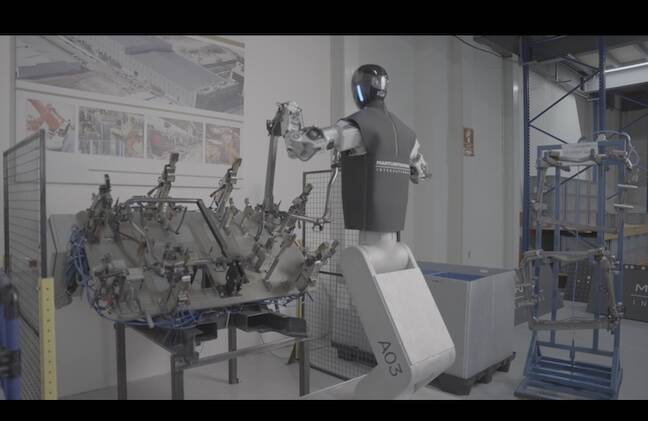
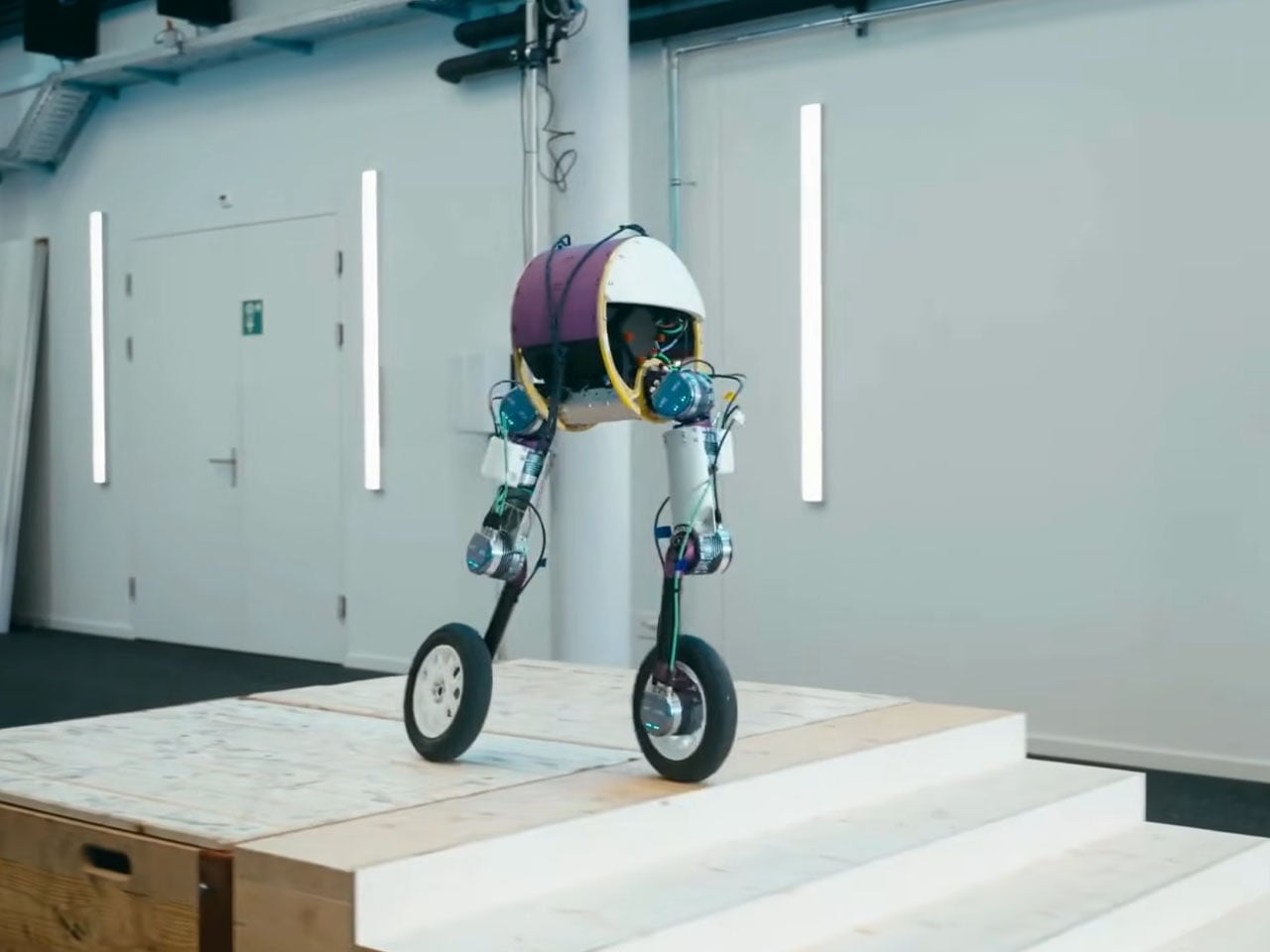
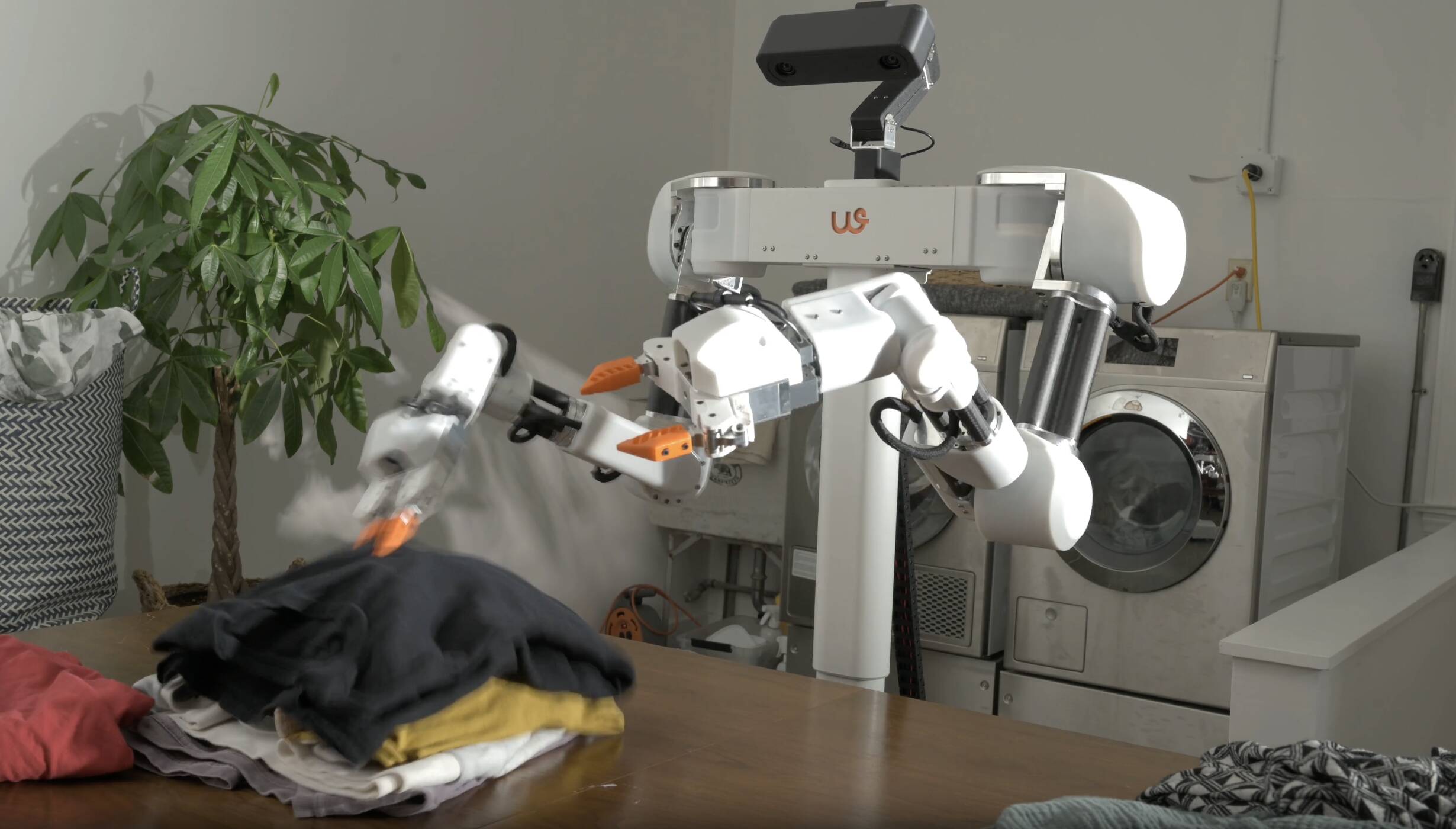
fromwww.businessinsider.com
1 week agoThe world's largest sporting goods retailer is seeing warehouse productivity boosts with robots
Decathlon's Portugal warehouse doubled its order preparation capacity from 57,000 to 114,000, showcasing the significant impact of Exotec's robotic systems on productivity.
European startups
#humanoid-robots


Artificial intelligence
fromTechRepublic
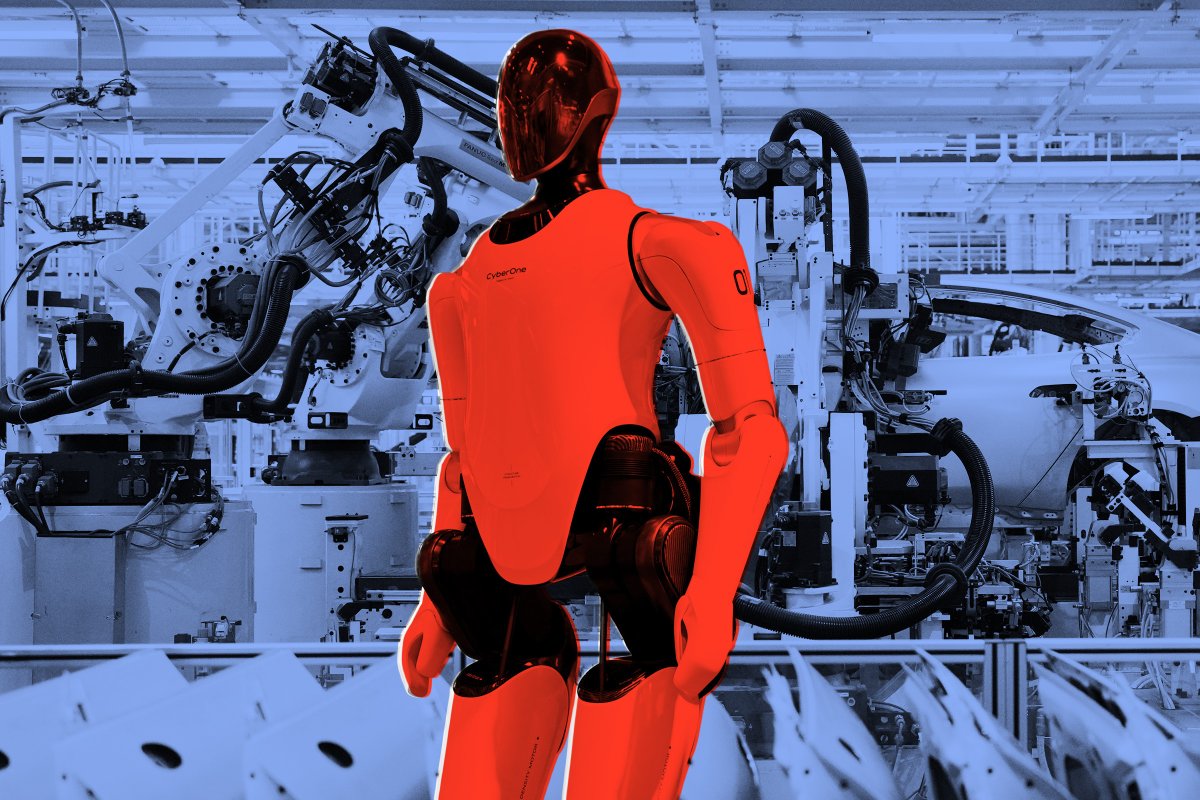
2 weeks agoHumanoid Robots Are Getting Cheaper - But Enterprise Costs Are Just Getting Started
Falling hardware costs and AI advancements are enabling real-world deployments of humanoid robots, shifting focus to operational infrastructure and software differentiation.
Artificial intelligence
fromFuturism
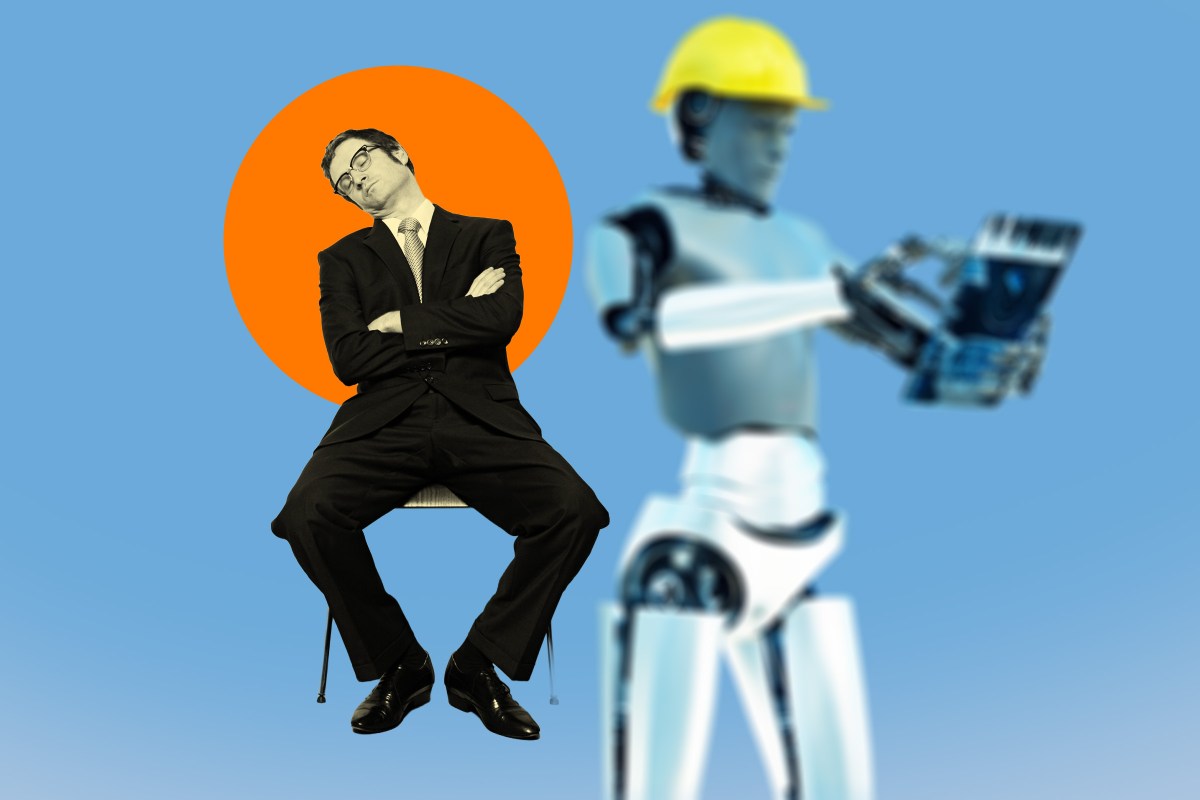
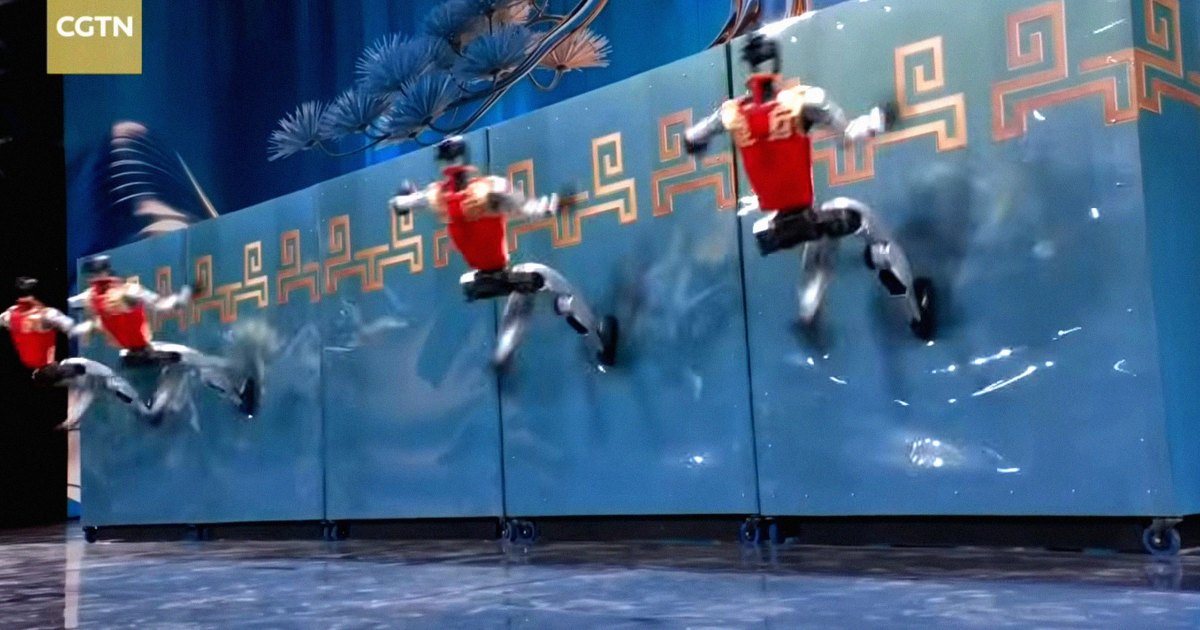
2 weeks agoFactory Paying Human Worker to Watch Robot Worker All Day
Humanoid robots like Digit are being deployed in factories with human supervisors, with costs expected to drop from $10-$25 per hour to $2-$3 per hour, potentially displacing workers earning $20 per hour.
UK news
fromComputerWeekly.com
3 weeks agoUnreliable fleet connectivity driving employee exodus | Computer Weekly
UK fleet operators face significant connectivity challenges that threaten competitiveness, with unreliable networks causing customer complaints and operational disruptions despite limited failover protections.
fromMedium
1 month agoFolding in Traceability
In enterprise commerce, totals don't drift because someone forgot algebra. They drift because reality changes: promos expire, eligibility changes when an address arrives, catalog data updates, substitutions happen, and returns unwind prior discounts. When someone asks "why did the total change?" you need more than narration. You need evidence - a trail of facts you can replay and a pure computation that deterministically produces the same result.
Scala
Artificial intelligence
from24/7 Wall St.
2 weeks agoAI Might Be Coming for BlueCollar Work-And These Robotics Stocks Still Look Wildly Underestimated
White-collar jobs face near-term AI automation risk, while blue-collar roles may follow as physical AI and robotics advance, creating uncertainty across employment sectors.
fromComputerWeekly.com
1 month agoDelivery comms, intelligent fulfilment, and AI's growing influence | Computer Weekly
Nine in ten retailers globally are planning to raise their spending on artificial intelligence (AI) to optimise their e-commerce operations over the next 12 to 24 months, with online delivery execution a key area of focus. A total of 38% of European retailers identify speed, tracking and proactive communication around the delivery process as areas where AI can deliver the greatest impact.
E-Commerce
fromFuturism
1 month agoFormer Delivery Drivers Are Getting Weird New Jobs as Delivery Robots Take Over
When delivery units operated by companies like Coco or Serve Robotics run into real-world obstacles - like a garden, for example - these robot wranglers spring into action, freeing them from potholes, helping them upright after a fall, and ferrying them back to headquarters for maintenance.
Los Angeles
Artificial intelligence
fromComputerWeekly.com
2 weeks agoLab for autonomous agents to drive boost in manufacturing in India | Computer Weekly
IBM Research launches Emergence India Labs to develop autonomous systems for manufacturing, logistics, and infrastructure, positioning India as a frontier AI research hub beyond traditional IT services.
fromYanko Design - Modern Industrial Design News
1 month agoThis 40-Pound Robot Dog Can Carry 143 Pounds of Cargo - Yanko Design
At about 18 kilograms, roughly 40 pounds with its battery included, the As2 is compact enough to move through tight spaces, yet built to handle a standing payload of up to 65 kilograms. That's more than 143 pounds sitting on top of a 40-pound robot, which is genuinely impressive and a little hard to picture until you actually see it in action.
Gadgets
fromBootstrap Creative
1 month ago5 Reasons Your Manufacturing Website Isn't Generating RFQs
If you're a manufacturer with a $10M+ business and your website is "just there," you are losing money to competitors who treat their site like a 24/7 sales rep. If the phone isn't ringing and the inbox is empty of RFQs, it's usually because of these five specific friction points.
E-Commerce
fromFuturism
1 month agoAI Is Destroying Grocery Supply Chains
Whole Foods shelves sit empty after a data breach shut down its wholesale distributor. Meat packers working for JBS Foods are paralyzed as an $11 million ransomware attack takes out their processing facilities. Some 2.2 million workers at Stop & Shop and Hannaford have their personal data exposed as the result of a cyberattack on parent company Ahold Delhaize USA. These scenarios, straight from a William Gibson novel, are becoming increasingly common in supply chains across the world.
Food & drink
Startup companies
fromBusiness Insider
1 month agoHow robotics could upend the US manufacturing industry
Machina Labs promotes distributed, flexible, portable robotics-enabled manufacturing to leapfrog centralized factories and accelerate U.S. reindustrialization in defense, aerospace, and automotive sectors.
Artificial intelligence
fromFortune
1 month agoI help manage one of the world's most constrained supply chains, up close to the defining energy bottleneck of the decade | Fortune
Power transformer shortages are the critical bottleneck limiting AI infrastructure expansion and corporate electrification globally.
fromBusiness Matters
1 month agoWhy Tolerance Management Is a Business-Critical Skill in Modern Manufacturing
We are now in a time of manufacturing where precision is more than a technical necessity; it's a business requirement. The more complex, globally dispersed and demanding things get, the less slack remains in the system. Under these circumstances tolerance management has become a decisive competence and affects competitiveness not only in terms of controlling costs, ensuring quality and improving production efficiency but also for long term market success.
Business
Design
fromYanko Design - Modern Industrial Design News
1 month agoTransformers-inspired Shapeshifting Machine Splits Into An Entire Road-Construction Robot Fleet - Yanko Design
Modular autonomous electric train deploys AI-guided construction robot modules, drone, and intelligent command hub to streamline road-building in remote, disaster, or difficult terrains.
Business
from24/7 Wall St.
2 months agoThe Warehouse Automation Seller Just Turned Profitable While the Retail Giant Builds Its Own
Investors face choosing Symbotic's newly profitable automation-as-a-service with volatile trading and insider selling or Amazon's scale-driven in-house robotics investment.
fromdzone.com
2 months agoManaging Changing Hardware/Peripherals in a Robust POS
Retail point-of-sale systems today offer a wide range of options for peripherals and hardware. Their technical specifications play a major role in selection, and big retailers often choose multiple vendors to reduce a single point of failure. This gives them an advantage to negotiate price or support as well. Technically, these peripherals also require updating with new models and may have new feature sets. This necessitates the redevelopment of point-of-sale applications, increasing development costs.
Information security
fromBig Think
2 months agoHow "tribology" became a new industrial science
the automation of heavy machinery enabled plants to operate continuously, increasing productivity and revenue. The downside was that any small hiccup was acutely felt, cascading through the production line. At first, it was assumed that inadequate lubrication of factory equipment was causing parts to seize up or break apart. And so, the Lubrication and Wear Group of the Institution of Mechanical Engineers, along with the Iron
Science
fromFuturism
2 months agoDelivery Robot Gets Stuck on Train Tracks, Gets Obliterated by Locomotive
Footage of the incident, which took place January 15, shows the robot sitting motionless on the tracks, seemingly making no attempt to get out of the way as the unmistakable blare of the train horn gets louder and louder. "Oh it's gonna crush it!" the onlooker taking the video can be heard saying moments before the train, operated by Brightline, flattens the unfortunate bot into the tracks. Sparks can be seen flying from beneath the train before the video cuts off.
Startup companies
fromLondon Business News | Londonlovesbusiness.com
2 months agoHow to build a more reliable end-of-line packaging process - London Business News | Londonlovesbusiness.com
End-of-line packaging often sits at the quiet end of a production line, yet it carries an outsized responsibility. This is the final checkpoint before products leave your facility, meet customers, and represent your brand in the real world. A single error here can undo hours of upstream efficiency and compromise overall product integrity. That's why building reliability into this stage is essential for both operational efficiency and customer satisfaction.
Business
fromLondon Business News | Londonlovesbusiness.com
2 months agoIs cantilever racking right for your warehouse? - London Business News | Londonlovesbusiness.com
Designed specifically for loads with length or irregular shape, cantilever systems are widely used across manufacturing, builders' merchants, and industrial storage environments. What is cantilever racking? Cantilever racking consists of vertical columns with horizontal arms extending outwards to support loads. Unlike pallet racking, there are no front uprights or obstructions, which makes loading and unloading long items safer and more efficient. This open design allows materials to be handled by forklift, side loader, or manually, depending on the application.
Business
fromThe Business of Fashion
2 months agoHow Integrated Technology Is Reshaping Retail Operations
The technology underpinning retail operations is under scrutiny in 2026 as fashion executives look to streamline systems with the aim to unlock efficiency, cut costs and meet consumer expectations for speed and personalisation in the shopping journey. At the retail event Lightspeed Edge on 12 January, Lightspeed - the unified point-of-sale (POS) and payments platform for SMEs such as Apricot Lane Boutique and Neal's Yard Remedies - convened industry leaders to explore the strategic imperative for integrated technology ecosystems over siloed systems.
E-Commerce

fromSocial Media Explorer
2 months ago10 Last Mile Technology Trends Transforming Urban Logistics in 2025 - Social Media Explorer
Urban logistics is entering a new era where practical technology drives meaningful results. Today, more than 55% of people live in cities, and urbanization is expected to rise to 68% by 2050, placing intense pressure on delivery networks to keep up with growing demand. U.S. e-commerce is projected to reach $1.1 trillion in sales by 2026, heightening expectations for faster and more reliable last-mile service.
E-Commerce

Artificial intelligence
fromwww.housingwire.com
2 months agoHome Depot launches AI tool to automate contractor material lists
Home Depot launched Material List Builder AI to rapidly generate construction materials lists, boosting pros' efficiency, protecting margins, and encroaching on pro-building market share.
[ Load more ]